
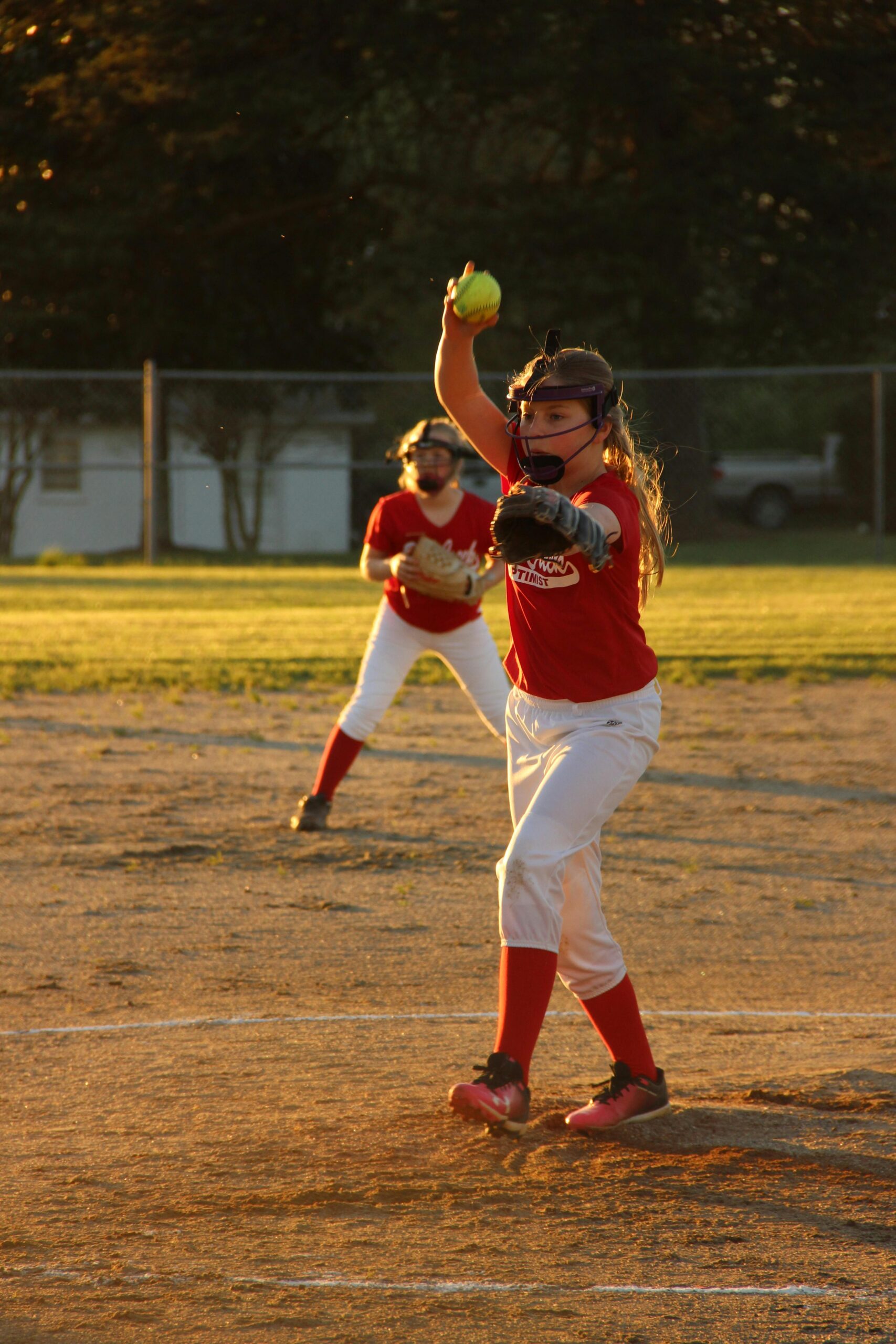
In softball, possessing a cannon for an arm is a tremendous asset, but pure velocity is entirely useless if the ball ends up in the dugout or sails over the first baseman’s head. You can have the arm strength to throw the ball from the deepest part of the outfield, but if your mechanics are erratic, your throws will consistently pull your infielders off the bag, turning routine outs into disastrous errors.
At Athletes Untapped, AU coaches notice that many young softball players treat throwing as an upper-body isolation movement. They stand flat-footed, open their front shoulder entirely too early, drop their throwing elbow below their shoulder line, and try to muscle the ball across the diamond using nothing but their rotator cuff. This lack of structural mechanics leads to tailing throws, severe shoulder pain, and a highly frustrating inability to hit the target under pressure.
The secret to throwing absolute strikes across the diamond lies in throwing accuracy mechanics. Proper training fixes these kinetic chain issues, allowing players to utilize their lower body for power, maintain a consistent release point, and ensure the ball flies on a perfectly straight, predictable line every single time.
Connect with a Private Softball Coach: https://athletesuntapped.com/browse/softball/
Why This Skill Matters for Athlete Development
Your throwing accuracy dictates your reliability as a defender. Without it, coaches will hesitate to put you in high-leverage positions like shortstop or center field, where precision is non-negotiable.
- Game Performance: Elite throwing accuracy directly translates to controlling the baserunners. When an infielder can cleanly field a backhand and fire a laser directly into the first baseman’s chest, or an outfielder can hit the cutoff perfectly on the fly, the opposing team is forced to stop taking extra bases. Accurate throws shrink the field and suffocate the opponent’s aggressive baserunning strategy.
- Confidence: AU coaches have seen athletes improve faster when they spend just 10 focused minutes on grip and arm path drills at the start of every practice. When a perfect four-seam release becomes muscle memory, players stop aiming the ball. They gain the composure to field the ball cleanly, trust their footwork, and execute a confident, fluid throw without second-guessing their release point.
- Long-Term Development: As you progress to high school and collegiate softball, the speed of the game requires incredibly fast transfers and throws from off-balance positions. A biomechanically sound throwing foundation protects your shoulder and elbow ligaments from unnecessary strain. It provides the elite kinetic efficiency needed to throw from multiple arm slots, ensuring your defensive value scales as you face faster, more aggressive hitters.
Best Drills / Tips / Techniques
You cannot master throwing accuracy by simply playing casual catch and letting your mind wander. You need isolated, highly intentional mechanics drills to train your grip, your front side, and your follow-through. Here are 5 techniques AU coaches use to build pinpoint throwing accuracy.
1. The Four-Seam Grip Isolation
How to perform it: Grab a softball and find the “C” shape made by the seams. Place your top three fingers (index, middle, and ring) across the widest part of the C, with your thumb directly underneath supporting the ball. Toss the ball straight up into the air to yourself, focusing entirely on generating perfect backspin.
Why it works: A ball thrown with a two-seam grip or a palm grip will naturally catch the air and tail away from the target. The four-seam grip ensures all four seams cut through the air uniformly, creating a vacuum that keeps the ball flying on a perfectly straight trajectory.
Coaching tips: The pads of your fingers should be doing the work. Leave a small gap between the ball and the palm of your hand to allow for maximum wrist snap.
Common mistakes: Choking the ball deep in the palm. This completely kills your wrist flexibility, causing you to “push” the ball rather than whip it.
2. The L-Drill (Arm Path Alignment)
How to perform it: Kneel on your throwing-side knee with your glove-side knee up. Raise your throwing arm so your elbow is level with your shoulder and your forearm is pointing straight up, creating an “L” shape. Point your glove directly at your partner’s chest. Without dropping your elbow, snap your wrist and throw the ball, following through across your opposite knee.
Why it works: Dropping the elbow is the leading cause of inaccurate, sinking throws. This drill isolates the upper half of the body and forces the athlete to feel the correct, elevated arm slot before the complex lower-body movements are introduced.
Coaching tips: Your throwing elbow must remain at or slightly above your shoulder line throughout the entire forward motion.
Common mistakes: Pushing the ball like a dart. You must allow the arm to externally rotate backward before whipping it forward.
3. Front Shoulder Directional Stepping
How to perform it: Stand sideways to your target in a wide athletic stance. Your front shoulder, front hip, and the toes of your front foot should form a straight line directly pointing at the target. Step aggressively toward the target with your front foot, keeping it completely closed (pointing sideways) until the absolute last second before you throw.
Why it works: The ball will always go where your front shoulder is pointing. If your front shoulder flies open and points toward the dugout, the ball will inevitably tail in that direction. This drill trains directional discipline, ensuring your kinetic energy moves linearly toward your target.
Coaching tips: Use your glove arm as a steering wheel. Point it at the target, and as you throw, pull the glove forcefully into your chest to help rotate your torso efficiently.
Common mistakes: Stepping “in the bucket.” This happens when the front foot steps away from the target line, forcing the hips to open prematurely and completely destroying your accuracy.
4. The Wall Target Velocity Drill
How to perform it: Place a small piece of tape at chest height on a concrete wall or a heavy net. Stand 20 feet away. Execute your full footwork and throw the ball as hard as you safely can, aiming exclusively for that specific piece of tape.
Why it works: Many players have great accuracy when they are warming up slowly, but lose all control when they try to throw hard in a game. This drill forces the athlete to marry maximum velocity with pinpoint accuracy, teaching the nervous system how to control the release point under extreme force.
Coaching tips: Do not slow your arm down to try and “guide” the ball to the target. Trust your mechanics and throw with full intent.
Common mistakes: Decelerating the arm right before release. This causes the ball to sail high. Always accelerate entirely through the release point.
5. The Shoelace Follow-Through
How to perform it: Execute a full, game-speed throw to a partner. After the ball leaves your hand, force your throwing shoulder to rotate completely downward so that your throwing hand finishes its path near the shoelaces of your front foot. Your back foot should naturally lift off the ground and swing forward.
Why it works: Accuracy issues often stem from stopping the arm abruptly after the ball is released, which causes the ball to sail high and puts immense stress on the elbow. A complete, aggressive follow-through ensures the ball stays on a low, driving line and naturally decelerates the arm safely.
Coaching tips: Exaggerate the motion during practice. Your chest should end up parallel to the ground after a hard throw.
Common mistakes: Standing straight up like a statue after throwing. If your back foot stays glued to the dirt, you are not using your lower body properly, and your arm is doing all the work.
Common Mistakes Athletes Make
Throwing accuracy errors are incredibly common in youth and high school softball, largely due to poor footwork and rushing the transfer.
Throwing Off the Back Foot: Trying to throw the ball while your body weight is falling backward away from the target. This completely eliminates your leg power, forcing you to use only your arm and causing the ball to float weakly in the air.
How to fix it: “Replace your feet.” Your back foot must aggressively step to where your front foot was, driving your body weight entirely onto your front leg as you release the ball.
The “Short Arm” Throw: Catching the ball and immediately throwing it from the ear without extending the arm backward to create a full circular path.
How to fix it: Get the ball out of the glove and swing the thumb down toward the thigh to create a long, fluid arm circle. This builds the momentum needed for a powerful, accurate strike.
Aiming Instead of Throwing: Slowing the arm down and trying to gently push the ball to the target out of fear of making an error.
How to fix it: Throwing accurately requires a fluid, confident whip of the arm. You must throw through your target, not to it.
Opening the Hips Too Early: Turning your belly button to face the target before your arm has even started moving forward. This causes the arm to drag behind the body, resulting in a severe tailing motion on the ball.
How to fix it: Keep your front shoulder locked onto the target for as long as possible. Your hips should only snap open at the exact moment your arm fires forward.
How Private Coaching Accelerates Improvement
Throwing mechanics involve a highly complex, interconnected chain of movements occurring in a fraction of a second. Trying to self-diagnose whether your four-seam grip was slightly off-axis, or if your front stride landed two inches too far to the left, is practically impossible during the speed of a live practice.
This is where private coaching is essential. Private coaching provides faster physical development by utilizing expert eyes, slow-motion video breakdown, and highly structured isolation drills. A private softball coach offers personalized feedback tailored to your specific arm slot, making it easy to catch habits like dropping the elbow immediately. This targeted instruction allows athletes to focus on correcting their kinetic chain safely before bad habits become ingrained and lead to injury. Ultimately, mastering your throwing mechanics in a 1-on-1 environment provides massive confidence building, allowing you to step onto the diamond knowing you have the precise, powerful arm required to lock down the defense.
Find a Private Softball Coach: https://athletesuntapped.com/browse/softball/
Frequently Asked Questions about Throwing Accuracy Mechanics in Softball
Why does my throw always tail to the right or left?
A tailing throw is almost always caused by a poor grip (not finding the four seams), opening your front shoulder too early, or dropping your elbow below your shoulder line, which causes your hand to push the side of the ball rather than staying directly behind it.
Should infielders and outfielders have the same throwing mechanics?
The fundamental mechanics (four-seam grip, high elbow, pointing the front shoulder) are identical. However, infielders often use a shorter, more compact arm circle for a quicker release, while outfielders use a longer arm circle and a crow-hop to generate maximum velocity.
How can I get more power on my throws without losing accuracy?
Power comes from the ground up, not from the arm. To throw harder accurately, you must improve your leg drive, step aggressively toward the target, and ensure your hips are rotating powerfully to whip your arm forward.
Is it okay to throw sidearm?
Sidearm throwing is a necessary skill for infielders making plays on the run, but it should not be your default arm slot. A high three-quarter arm slot is much more reliable for consistency and accuracy. Master the traditional overhand mechanics before experimenting with different release points.
Do private coaches help with this?
Absolutely. Private softball coaches are essential for breaking down the biomechanics of your arm circle, providing specific footwork drills to improve your lower-body momentum, and isolating specific release flaws so you can become a vastly more accurate and reliable defender.
Conclusion
Mastering throwing accuracy mechanics is the undeniable foundation of an elite, trustworthy softball defender. Without it, you are leaving your defensive execution entirely up to chance and placing an unfair burden on the players receiving your throws. Improvement is highly achievable with proper technical training, but it requires extreme discipline, a meticulous grip, and a willingness to use your entire body to throw the ball. Encourage yourself to focus on your four-seam grip and your front shoulder alignment before you focus on throwing harder, and consistent practice will inevitably yield laser-like precision and total command of the field.
Train With a Private Softball Coach
- Athletes Untapped connects athletes with vetted private coaches across the country for one-on-one training.
- Private coaching helps athletes:
- improve faster
- build confidence
- receive personalized feedback
- reach their full potential
About Athletes Untapped
Athletes Untapped connects softball players with experienced private coaches who specialize in throwing mechanics, defensive footwork, and arm care. Through personalized instruction and structured training plans, AU coaches help infielders, outfielders, and catchers eliminate throwing errors, master their accuracy, and build an explosive, reliable arm.
Find an experienced coach near you: https://athletesuntapped.com
Learn from our very best AU coaches!


