
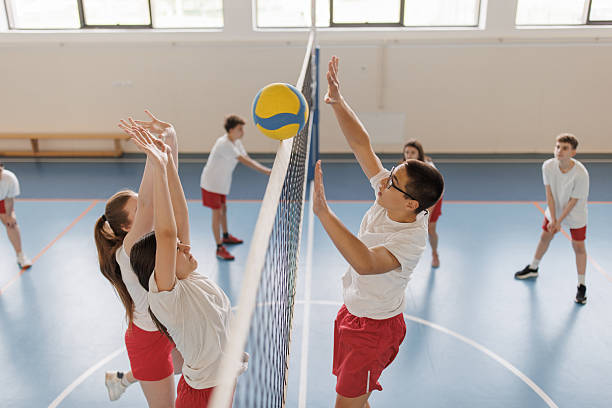
Why Blocking Is Essential in Volleyball
Blocking is one of the most important defensive skills in volleyball. It is the first line of defense against an opponent’s attack and can directly result in points. A well-timed block can stop a powerful hit or force the opposing team into making errors.
For youth players, learning proper blocking technique helps improve overall defensive performance. Even when a block does not result in a point, it can slow down the ball and make it easier for teammates to dig.
Strong blocking also puts pressure on opposing hitters, forcing them to adjust their attacks.
Proper Blocking Stance and Positioning
A strong blocking stance sets the foundation for success at the net. Players should be balanced and ready to react quickly.
Key elements of proper positioning include:
- Feet shoulder-width apart
- Knees slightly bent
- Hands raised and ready
- Eyes focused on the setter and hitter
Maintaining this stance allows players to move quickly and prepare for the jump.
Footwork for Effective Blocking
Footwork is critical for getting into the correct position before jumping. Players must move quickly along the net to align themselves with the hitter.
Court positioning is another crucial aspect of effective blocking. Read this blog to learn more to help you dominate at the net!
Common blocking footwork techniques include:
Side Step Movement
Used for short distances along the net.
Crossover Step
Used for covering larger distances quickly.
Practicing these movements helps players stay in position and react effectively during plays.
Timing the Block
Timing is one of the most important aspects of blocking. Jumping too early or too late can result in missed opportunities.
Players should watch the hitter’s approach and jump at the right moment to meet the ball at its highest point.
Coaches often emphasize patience, encouraging players to wait and react rather than guessing.
Hand Position and Technique
Hand positioning plays a major role in successful blocking. Players should aim to press their hands over the net rather than simply reaching upward.
Important techniques include:
- Keeping fingers spread wide
- Pressing hands forward over the net
- Angling hands toward the opponent’s court
This technique helps direct the ball downward and increases the chances of a successful block.
Blocking Drills for Youth Players
Several drills help players improve blocking skills and confidence.
Shadow Blocking Drill
Players practice footwork and hand positioning without a ball.
Partner Blocking Drill
Teammates simulate hitting while blockers practice timing and positioning.
Reaction Blocking Drill
Coaches or players hit balls toward the net, forcing blockers to react quickly.
These drills build muscle memory and improve timing.
Communication at the Net
Blocking is often a team effort. Players must communicate to coordinate their movements and cover the net effectively.
Calling out information such as “Line!” or “Cross!” helps teammates understand where to position themselves.
Good communication improves overall defensive organization and reduces confusion.
Transitioning from Block to Defense
After attempting a block, players must quickly transition to defensive positioning. If the ball passes the block, they need to be ready to react and continue the play.
Practicing this transition helps players stay involved in the rally and support their teammates.
Fun Fact: Blocks Can Shift Momentum
A single successful block can energize a team and shift the momentum of a match. Big defensive plays often boost team confidence and put pressure on opponents.
This makes blocking not only a physical skill but also a psychological advantage.
Building Strong Net Defenders
Blocking requires a combination of timing, positioning, and confidence. Youth athletes who practice consistently and focus on technique can significantly improve their defensive impact.
Even small improvements in timing and hand placement can make a big difference during matches.
Conclusion: Strengthening Defense at the Net
Blocking is a crucial skill that helps teams control the net and limit opponent scoring opportunities. By developing proper stance, footwork, and timing, youth players can become more effective blockers.
With consistent practice and attention to detail, athletes can build confidence and contribute to their team’s defensive success.
Athletes Untapped: Private Volleyball Coaching
Athletes Untapped connects youth volleyball players with experienced private coaches who specialize in blocking technique, defensive skills, and overall game performance. Personalized training sessions focus on improving timing, positioning, and net awareness.
Through one-on-one coaching, athletes receive individualized instruction that helps them develop stronger defensive habits and improve their confidence at the net. Targeted drills and feedback accelerate skill development and enhance performance.
With improved blocking skills and greater defensive awareness, youth volleyball players can make a bigger impact during matches and support their team’s success.
Find an experienced coach near you: https://athletesuntapped.com
Learn from our very best Coach Mike and Coach Jeremy!


