
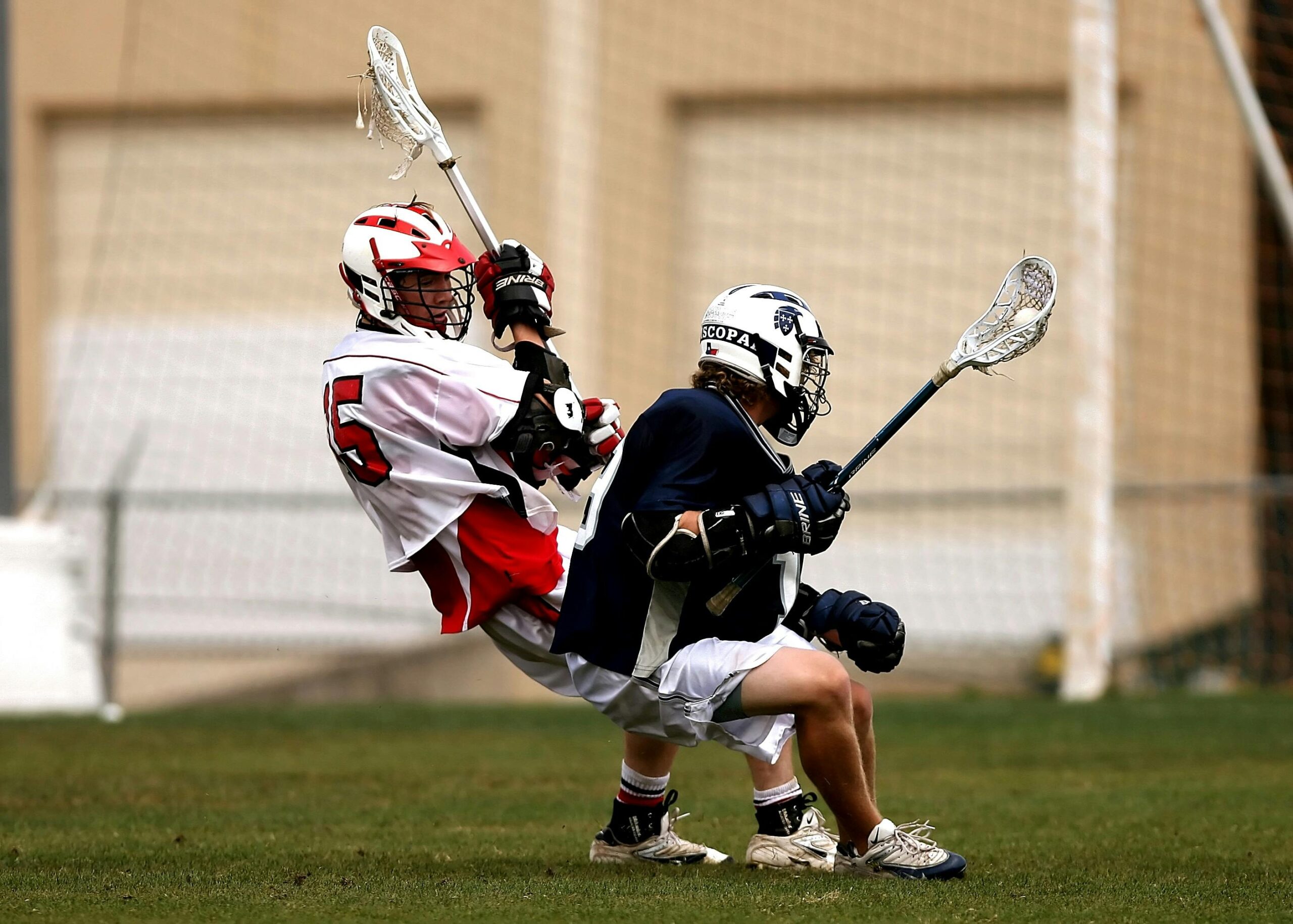
In lacrosse, you can have the fastest, most aggressive long-pole defenders on the field, but if they operate in total silence, your defense will get carved to pieces. No matter how good your 1-on-1 footwork is, an elite offensive player will eventually beat their man. When that happens, a defense that does not communicate will instantly collapse, leaving the goalie completely exposed to a point-blank shot.
At Athletes Untapped, we notice that many young defensive units play like six isolated individuals rather than a cohesive wall. They wait until the ball carrier is already five yards past his defender before they decide to slide, they leave the crease completely unguarded, and they never tell the on-ball defender where their help is coming from. This lack of structural communication leads to late slides, wide-open step-down shooters, and a highly frustrated goaltender.
The secret to suffocating an elite offense lies in slide package communication. Proper training fixes these auditory and spatial issues, allowing players to identify threats early, declare their roles (“Hot,” “Two,” “Three”), and execute violent, perfectly timed slides while seamlessly rotating to cover the backside.
Connect with a Private Lacrosse Coach: https://athletesuntapped.com/browse/lacrosse/
Why This Skill Matters for Athlete Development
Your communication dictates the structural integrity of your entire defense. Without loud, early, and continuous talk, a slide package is just a chaotic scramble.
- Game Performance: Elite slide communication directly translates to shutting down dodging lanes. When the on-ball defender hears “I’m hot right, push him right!” they gain the confidence to aggressively dictate the dodger’s path directly into the waiting slide. This forces the offense into contested passes, resulting in unforced errors and immediate turnovers.
- Confidence: I have seen defensive units improve faster when they spend just 10 focused minutes on communication terminology at the start of every session. When shouting “Fire!” becomes an automatic reflex, players stop second-guessing their rotations. They gain the composure to leave their own man, trust that their teammates will cover the crease behind them, and execute a confident, bone-crushing slide.
- Long-Term Development: As you progress to high school and collegiate lacrosse, offenses utilize complex pick-and-rolls, continuous motion, and elite ball movement to confuse the defense. A biomechanically and tactically sound understanding of slide terminology protects your defense from getting picked apart. It provides the high-level lacrosse IQ needed to run adjacent slides, crease slides, and zone pressures, ensuring your defensive value scales as you face faster, smarter playmakers.
Best Drills / Tips / Techniques
You cannot master slide packages by simply drawing circles on a whiteboard and hoping your players talk during the game. You need isolated, high-intensity scenario drills that force players to use their voices under pressure. Here are 5 drills AU coaches use to build an impenetrable, vocal defense.
1. The “Hot and Two” Declaration Drill
How to perform it: Set up four defenders around the perimeter and one on the crease, facing five offensive players passing the ball rapidly around the outside. The defense is not allowed to use their sticks. Their only goal is to continuously, loudly declare their role every time the ball moves: the on-ball defender yells “I got ball!”, the primary slider yells “I’m Hot!”, and the secondary slider yells “I’m Two!”
Why it works: Defense requires constant neurological updating. This drill removes the physical distraction of playing defense and isolates the auditory processing. It forces the brain to internalize the habit of constantly reassessing your responsibility based on the ball’s location.
Coaching tips: The communication must happen the exact millisecond the ball is in the air. If you wait until the attacker catches the ball to declare you are “Hot,” you are already too late to slide.
Common mistakes: Whispering or mumbling. Defensive calls must be loud enough for the goalie and the opposite side of the field to hear clearly over the noise of the game.
2. The 4v4 Shell (Adjacent Sliding)
How to perform it: Set up four offensive players and four defenders around the perimeter (no crease player). An offensive player dodges hard to the alley. The adjacent defender (the “Hot” man) must slide aggressively to stop the ball. The most critical part of the drill: the defender furthest from the ball must instantly sprint across the field to cover the slider’s man (the “Two” slide).
Why it works: Adjacent sliding requires a defense to operate like they are connected by an invisible string. This drill trains the backside of the defense to anticipate the slide and rotate early, ensuring the offense cannot simply dump the ball to the adjacent man for an easy shot.
Coaching tips: The “Hot” slide stops the ball, but the “Two” slide saves the goal. The backside defender must be moving to the middle of the field before the primary slide even arrives.
Common mistakes: Sliding to the pass instead of the dodge. You only slide when the offensive player poses a direct threat to the goal, not just because they are running fast on the perimeter.
3. The “Hold” vs. “Fire” Read
How to perform it: An offensive player drives down the alley. The “Hot” defender steps halfway toward the dodger, maintaining a stick-length distance. If the on-ball defender is playing great defense and has the dodger contained, the Hot man loudly yells, “Hold! Hold!” If the on-ball defender gets beaten, the Hot man screams “Fire!” and executes the full slide.
Why it works: A defense should not slide if they don’t have to; sliding inherently leaves an offensive player open. This drill teaches the slider to read the body language of the on-ball matchup, building the tactical patience to show help without over-committing prematurely.
Coaching tips: The on-ball defender must dictate the dodge. If you hear “Help right,” you must forcefully angle your hips to push the dodger down the right alley.
Common mistakes: Sliding when the dodger is fading away from the goal. Only slide if the dodger is actively gaining a high-percentage shooting angle.
4. The Recovery and Bump-Down
How to perform it: Execute a standard slide. The moment the slide arrives and the ball is passed away, the original on-ball defender (who just got beat) must instantly sprint to the crease to find the open man. Once he arrives, he loudly yells “Bump!” to signal the secondary slider to return to his original matchup.
Why it works: The most dangerous time for a defense is not during the slide, but during the recovery. This drill trains the chaotic scramble that happens after a double-team, teaching the defense how to seamlessly pass off offensive players and reset their base structure without leaving the middle open.
Coaching tips: Recover to the “hole” (the front of the crease) first, find the ball second. Do not recover to the perimeter; you must protect the most dangerous area on the field instantly.
Common mistakes: The original on-ball defender standing still and watching after the slide comes. The millisecond the slide arrives, your new job is to sprint to the crease and cover the “Two” man’s assignment.
5. Blindfolded Goalie Directing
How to perform it: During a half-field 6v6 scrimmage, the goalie turns their back to the field (or closes their eyes) while the ball is on the perimeter. The defense must communicate so loudly and descriptively that the goalie knows exactly where the ball is, who is “Hot,” and who is “Two” without ever looking.
Why it works: The goalie is the quarterback of the defense. If the defense is not giving the goalie enough auditory information to build a mental map of the field, they are not talking enough. This drill forces the defenders to take complete ownership of their vocal volume and descriptive accuracy.
Coaching tips: Use names and locations. “I’m Hot left!” is infinitely better than just yelling “Help!”
Common mistakes: Stopping communication the moment the ball is on the ground. A ground ball is the most important time to talk, calling out “Man!” or “Ball!” to coordinate the scrum.
Common Mistakes Athletes Make
Slide communication errors are incredibly common in youth and high school lacrosse, but they are easy to fix once you build a culture of loud, aggressive talk.
The Silent Slide: A defender seeing their teammate get beat and executing a perfect, hard slide, but never saying a word. The on-ball defender doesn’t know the slide is coming, resulting in two defenders colliding and the offensive player easily rolling back to the middle.
How to fix it: The slide does not exist until it is verbalized. You must scream “Fire!” or “Go!” to release the on-ball defender so they know to recover.
Watching the Ball (Head on a Swivel): The backside defenders staring strictly at the ball carrier and completely losing track of the offensive player cutting back door behind them.
How to fix it: “Pistols.” Point one finger at the man you are guarding and one finger at the ball. You must constantly snap your head back and forth to maintain spatial awareness of both.
Sliding Upfield: A crease defender sliding out to a dodger at the top of the box, but taking a flat angle that allows the dodger to simply run past them down the alley.
How to fix it: Always slide to the “upfield shoulder.” You must intersect the dodger’s path, forcing them to roll back or pass, rather than giving them a footrace to the cage.
Failing to Release: The on-ball defender staying on the dodger even after the slide arrives, creating a permanent double-team while the rest of the offense plays 5-on-4.
How to fix it: Unless a dedicated double-team is called, the moment you hear “Fire!” and the slide makes contact, you must immediately sprint to the crease to recover.
How Private Coaching Accelerates Improvement
Slide packages are highly complex, multi-player geometric puzzles. Trying to self-diagnose whether your angle of approach was too shallow, or if you failed to bump down correctly during the recovery, is incredibly difficult when you are exhausted in the middle of a live game.
This is where private coaching is essential. Private coaching provides faster tactical development by utilizing expert eyes, whiteboard film sessions, and highly specific footwork drills. A private lacrosse coach offers personalized feedback tailored to your specific defensive position (e.g., close defense vs. LSM), making it easy to catch habits like ball-watching immediately. This targeted instruction allows athletes to focus on correcting their angles and communication early before they become exploitable weaknesses. Ultimately, mastering your defensive IQ in a 1-on-1 environment provides massive confidence building, allowing you to step onto the field knowing you have the communication skills to anchor an elite, uncrackable defensive unit.
Find a Private Lacrosse Coach: https://athletesuntapped.com/browse/lacrosse/
Frequently Asked Questions About Lacrosse Slide Defense
What is the difference between a “Crease Slide” and an “Adjacent Slide”?
A crease slide (or coma slide) means the primary help comes from the defender guarding the man on the crease (the middle of the field). An adjacent slide means the help comes from the defender guarding the offensive player right next to the ball carrier on the perimeter.
When should I slide?
You slide when the on-ball defender is beaten and the offensive player has gained a dangerous angle toward the goal. Do not slide if the offensive player is just running fast down the sideline with no angle to shoot.
What does “Hot” and “Two” mean?
“Hot” (or “One”) is the defender designated to make the very first slide if the ball carrier beats his man. “Two” is the defender designated to slide to the Hot man’s assignment once the Hot man leaves.
Why does the coach always yell at me to “get in the hole”?
“The hole” is the 5-yard radius directly in front of the goal. It is the most dangerous area on the field. When your team is recovering from a slide, you must sprint to the hole first to protect the cage, then figure out who you are supposed to guard.
How do I know if I’m supposed to be the “Hot” slide?
It depends on your team’s specific defensive package. In a crease package, the man guarding the crease is always Hot. In an adjacent package, it is usually the defender to the left or right of the ball. You must know your playbook and communicate constantly.
Do private coaches help with this?
Absolutely. Private lacrosse coaches are essential for breaking down the geometry of the slide, teaching you how to use your stick to dictate the dodge, and isolating specific recovery footwork so you can practice effectively and raise your lacrosse IQ.
Conclusion
Loud, precise slide package communication is the undeniable foundation of a suffocating, elite lacrosse defense. Without it, you are leaving your goalie out to dry and playing directly into the hands of an offense that wants to isolate weak 1-on-1 matchups. Improvement is highly achievable with proper tactical training, but it requires extreme vocal discipline and unselfish play. Encourage yourself to focus on your recovery sprints and your loud declarations before you focus on throwing flashy checks, and consistent practice will inevitably yield an impenetrable defense that dominates the tempo of the game.
Train With a Private Lacrosse Coach
- Athletes Untapped connects athletes with vetted private coaches across the country for one-on-one training.
- Private coaching helps athletes:
- improve faster
- build confidence
- receive personalized feedback
- reach their full potential
About Athletes Untapped
Athletes Untapped connects lacrosse players with experienced private coaches who specialize in defensive positioning, slide package communication, and lacrosse IQ. Through personalized instruction and structured training plans, Athletes Untapped helps close defenders, LSMs, and short-stick defensive midfielders improve their angles, master their recoveries, and completely shut down the opposition.
Find an experienced coach near you: https://athletesuntapped.com
Learn from our very best Coach!


