
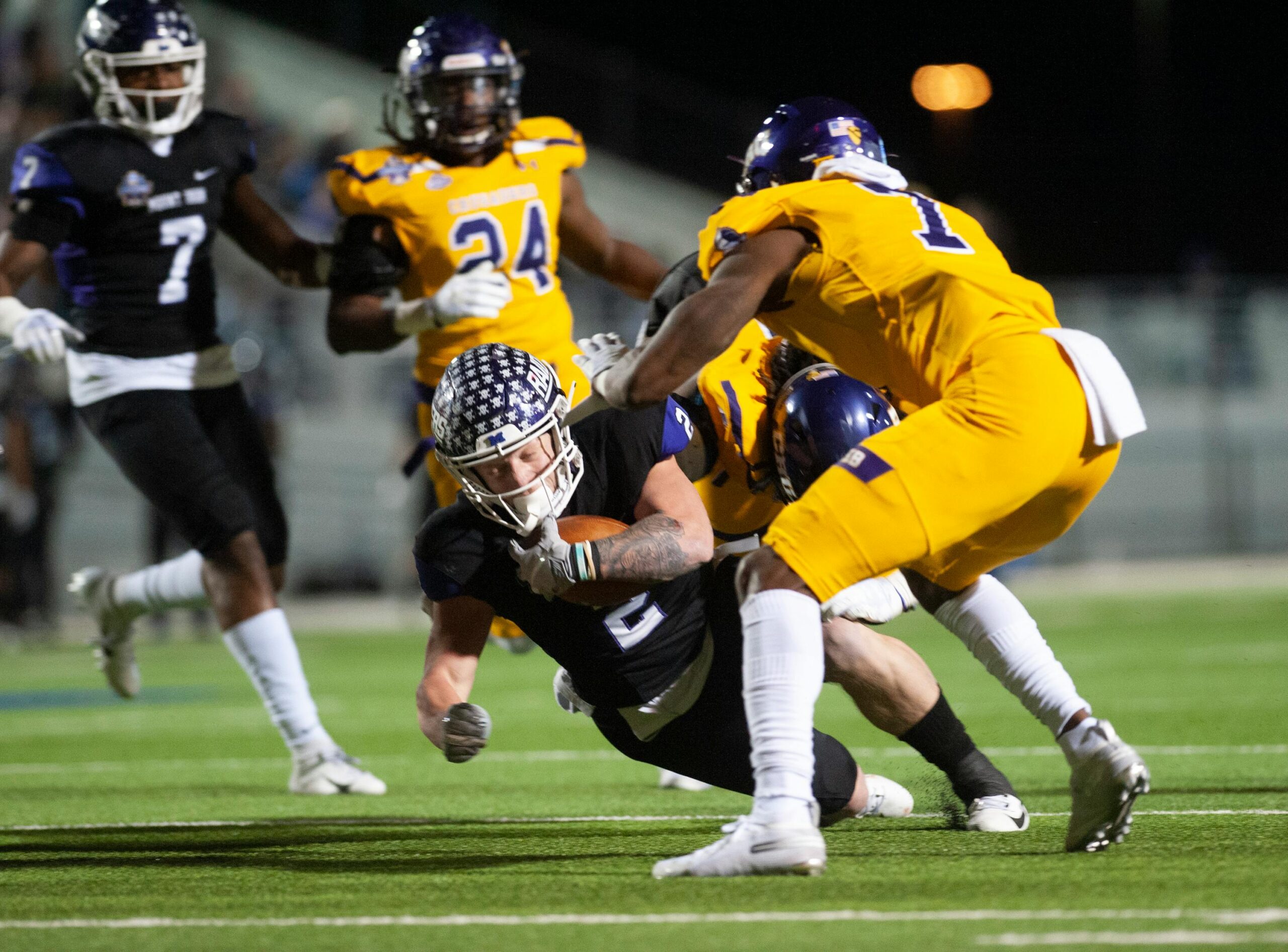
AU coaches have spent over 15 years on the gridiron, helping athletes turn raw athleticism into game-breaking football speed. When parents and athletes ask how speed training impacts football performance, they usually think purely about the 40-yard dash at a combine. While a fast 40-time is great for recruiting, true football speed is about how quickly a wide receiver can eat up a defensive back’s cushion, or how fast a linebacker can shoot a gap to make a tackle behind the line of scrimmage.
Many athletes hit a plateau because they mistake general conditioning for speed training. Running gassers at the end of a hot August practice builds mental toughness and endurance, but it actually makes athletes slower by training their central nervous system to operate under heavy fatigue. Proper, individualized speed training isolates the biomechanics of sprinting. Knowing how to apply maximum force into the ground efficiently is the absolute fastest way to separate from the competition on Friday nights.
Why Speed and Biomechanics Matter for Football Development
Football is a game of explosive bursts. The average football play lasts just four to six seconds. Therefore, top-end speed is rarely reached; acceleration is what truly matters. Developing elite individual mechanics—like a violent arm drive, proper shin angles, and an aggressive forward lean during the drive phase—translates directly to winning the first three steps of any route or pass rush.
When a football player trusts their speed mechanics, their entire game opens up. A running back hits the hole without hesitation, knowing they have the burst to break through arm tackles. In-game performance improves because the athlete is moving with maximum efficiency, wasting zero kinetic energy on sideways movements. For long-term development, mastering proper sprint mechanics protects the hamstrings and hip flexors from the devastating pulls and strains that ruin entire seasons, keeping athletes explosive and healthy.
Best Drills to Accelerate Football Speed
To actually get faster, athletes must stop running mindless laps and start focusing on ground force application. A top-tier AU coach will implement drills that build explosive power and correct running posture. Here are the foundational drills used to build elite football speed:
- Falling Starts (Acceleration Angle)
- How to perform: The athlete stands tall with their feet together. They slowly lean forward from the ankles, keeping their body perfectly straight. Right before they lose their balance and fall, they violently drive their lead knee up and sprint out for ten yards.
- Why it works: The biggest mistake football players make is standing straight up on their first step. This drill forces the body into the optimal 45-degree forward lean required for maximum acceleration.
- Coaching tip: Keep the chin tucked slightly and look at the ground five yards ahead during the initial drive phase.
- Common mistake: Breaking at the waist during the lean instead of keeping a straight line from the ankles to the shoulders.
- Seated Arm Swings (Upper Body Mechanics)
- How to perform: The athlete sits flat on the field with their legs straight out in front of them. On command, they pump their arms exactly as they would in an all-out sprint, trying to bounce their hips off the grass using nothing but the violent momentum of their arms.
- Why it works: If the arms move slowly, the legs will move slowly. This drill completely isolates the upper body, forcing the athlete to throw their elbows straight back to generate speed.
- Coaching tip: The hands should move from the cheek to the hip pocket. Keep the shoulders relaxed.
- Common mistake: Crossing the arms horizontally over the chest, which causes the torso to twist and wastes forward energy.
- The Broad Jump to Sprint (Explosive Power)
- How to perform: The athlete stands behind a line, drops their hips, and performs a maximum-effort standing broad jump. Immediately upon landing, they transition fluidly into a ten-yard sprint.
- Why it works: Football speed requires horizontal power. The broad jump forces the athlete to recruit fast-twitch muscle fibers in the glutes and quads, teaching them how to transition raw horizontal power directly into running speed.
- Coaching tip: Land on the balls of the feet and aggressively push the ground away on the very first sprint step.
- Common mistake: Landing flat-footed and pausing to gather balance before starting the sprint.
- Flying 10s (Maximum Velocity)
- How to perform: The athlete gets a twenty-yard running start to build up to absolute top speed. Once they hit a designated cone, they maintain exactly 100 percent maximum effort for ten yards before gradually decelerating.
- Why it works: You cannot increase your top speed unless you train at top speed. This drill isolates the maximum velocity phase without exhausting the athlete cardiovascularly.
- Coaching tip: Run tall through the flying zone. The hips should be high and the foot strikes should feel incredibly light and fast.
- Common mistake: Clenching the jaw and tightening the neck muscles. Tension is the enemy of speed; the face and shoulders must stay relaxed.
Connect with a Private Football Coach: https://athletesuntapped.com/browse/football/
Common Mistakes Athletes Make in Speed Training
Even the hardest workers will get slower if they practice bad habits. A great AU coach will identify and fix these common speed-killing mistakes immediately:
- Overstriding: Trying to take massive steps to cover more ground acts like a brake. If the heel strikes the ground out in front of the body’s center of mass, the athlete slows down on every single step. The foot must strike the ground directly under the hips.
- Popping Straight Up: When the ball is snapped, athletes often stand completely upright. Running tall during the acceleration phase gives up all leverage. The athlete must stay low and push the ground away behind them.
- Training Tired: You cannot build speed when you are exhausted. Running sprints at the end of a two-hour football practice only builds endurance. True speed training requires full recovery between repetitions so the nervous system can fire at maximum capacity.
- Ignoring Single-Leg Strength: Running is essentially a series of explosive single-leg bounds. If an athlete only does heavy two-legged barbell squats but ignores lunges and split squats, they will lack the unilateral stability required to run fast.
How Private Coaching Accelerates Speed Development
A football team has too many players for a head coach to evaluate everyone’s ground contact time. A team coach blows a whistle and watches fifty kids run a sprint, mostly looking to see who is giving maximum effort. This is exactly where private speed coaching accelerates improvement.
In a one-on-one setting, an AU coach can utilize slow-motion video breakdown to show the athlete exactly what their stride looks like frame by frame. If a wide receiver is rounding off their starts or failing to achieve triple extension in their ankles, knees, and hips, a private coach can instantly apply a mechanical fix. This hyper-focused environment builds immense confidence, corrects wasted motion instantly, and gives the football player a customized blueprint to become the fastest athlete on the field.
Frequently Asked Questions About Football Speed Training
Can You Teach a Football Player to Be Faster?
Yes. While genetics dictate the absolute ceiling of an athlete’s potential, almost every high school football player has poor running mechanics. By fixing arm drive, posture, and foot strike, AU coaches routinely help athletes drop significant time off their 40-yard dash and game speed.
How Often Should Football Players Train for Speed?
For max velocity improvement, less is more. AU coaches recommend two high-quality, fully rested speed sessions per week during the offseason. Sprinting at 100 percent effort taxes the central nervous system heavily, so athletes need 48 to 72 hours of recovery between true speed days.
What Is the Difference Between Track Speed and Football Speed?
Track speed is linear and predictable, starting from a static block. Football speed is chaotic. It requires accelerating out of an athletic stance while wearing heavy pads, reacting to an opponent, and changing direction instantly. Good football speed training incorporates reaction and agility.
Do Linemen Need Speed Training?
Absolutely. Linemen arguably need acceleration training more than anyone. The battle in the trenches is won in the first two steps. Building explosive speed helps an offensive tackle kickslide faster and helps a defensive end blow past a blocker before they can even set their feet.
How Long Does It Take to Get Faster for Football?
Athletes will feel a difference in their balance and acceleration mechanics after just a few sessions. However, true neurological adaptation and physical increases in top-end speed usually take 8 to 12 weeks of consistent, focused, and fully-rested training.
Find a Private Football Coach: https://athletesuntapped.com/browse/football/
Conclusion
Developing game-breaking speed requires stepping away from the grueling team conditioning sessions and committing to the science of sprinting. Football players need an instructor who will break down their acceleration angles, correct their foot strikes, and build their explosive power from the ground up. When athletes prioritize biomechanics, proper recovery, and precise force application over mindless running, they return to the gridiron noticeably faster and more dangerous. Drop your hips, drive your arms, and leave the competition behind.
About Athletes Untapped
Athletes Untapped connects athletes of all sports with experienced private coaches who specialize in mental performance, sports psychology concepts, and competitive mindset training. Through personalized instruction and structured training plans, AU coaches help athletes eliminate performance anxiety, master their internal dialogue, and completely dictate their emotional response to adversity.
Find an experienced coach near you: https://athletesuntapped.com
Learn from our very best AU coaches!


