
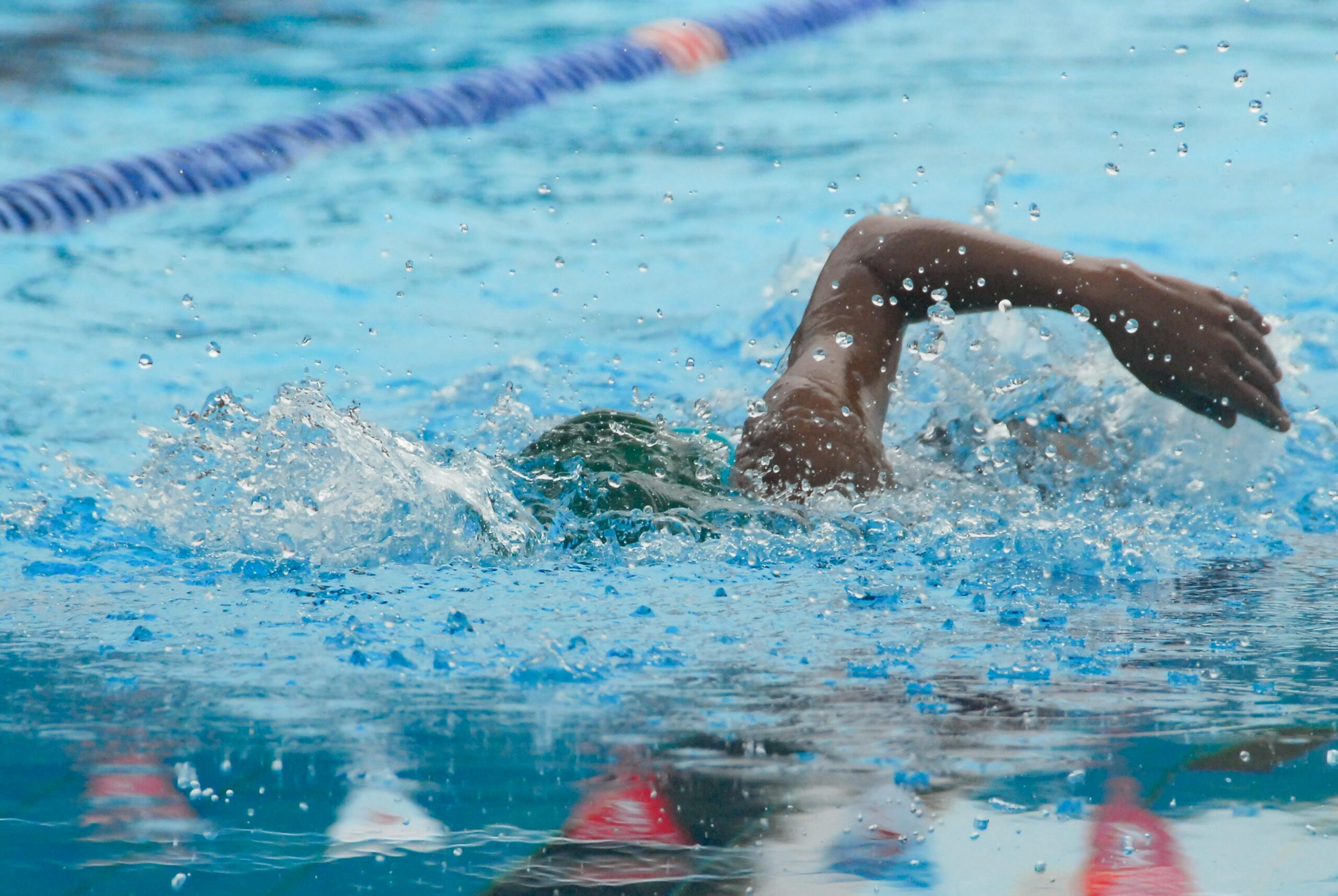
Swimming should feel like flying, not fighting. When I watch beginners swim freestyle, I usually see a lot of splashing, gasping for air, and frantic kicking. They are fighting the water, and the water always wins.
The best swimmers in the pool aren’t necessarily the strongest. They are the most efficient. They move through the water with long, smooth strokes, barely making a ripple. This is what we call “holding water.”
Freestyle (or front crawl) is the most efficient stroke, but it is also technically demanding. It requires coordination of breathing, rotation, kicking, and arm pull. If one piece is off, the whole stroke falls apart. Here is how to stop fighting the water and start gliding.
Why Technique Matters More Than Fitness
You can be a marathon runner on land, but if your swim technique is poor, you will be exhausted after one lap.
Water is roughly 800 times denser than air. This means drag is your biggest enemy. Every time you lift your head too high or let your legs sink, you create resistance.
Good technique reduces drag. It allows you to slice through the water rather than plow through it. When you master the technique, you can swim faster and longer with less effort.
Best Drills & Techniques for a Smooth Stroke
To build a great freestyle stroke, you need to break it down into pieces. Here are 5 drills to master the essential components.
1. The Streamline Push-Off (Body Position)
How to perform it: Push off the wall underwater with your hands stacked one on top of the other, arms squeezing your ears, and legs straight. Glide as far as you can without kicking or stroking. Why it works: This teaches you the most hydrodynamic position possible. If you can’t hold a straight line here, you won’t hold it while stroking. Coaching Tip: Look down at the bottom of the pool. If you look forward, your hips will drop, creating drag.
2. Catch-Up Drill (Timing)
How to perform it: Swim freestyle, but leave your leading arm extended in front of you until your other arm completes its stroke and taps your leading hand. Wait for the “tag” before starting the next stroke. Why it works: It prevents “windmilling” and ensures you are fully extending with every stroke. It forces you to glide. Coaching Tip: Don’t just touch hands; reach forward. Imagine you are trying to grab something on a high shelf.
3. Fist Swimming (High Elbow Catch)
How to perform it: Swim normal freestyle but with your hands clenched into fists. Why it works: Without your palms to grab water, you are forced to use your forearms. This teaches the “high elbow catch,” which is critical for propulsion. Coaching Tip: You will feel like you are slipping. That is the point. Engage your forearms to find the water.
4. Side-Kicking (Rotation)
How to perform it: Kick on your side with one arm extended forward and the other resting on your hip. Your ear should be on your shoulder. Keep your face in the water, only turning to breathe. Why it works: Freestyle is driven by hip rotation, not just arm strength. This drill gets you comfortable on your edges. Coaching Tip: Keep your kick small and fast (flutter kick). Big kicks will throw you off balance.
5. The Zipper Drill (Recovery)
How to perform it: As your arm exits the water for the recovery phase, drag your thumb up along the side of your body, past your hip, ribs, and armpit, before extending forward. Why it works: It forces a high-elbow recovery and prevents you from swinging your arms wide. Coaching Tip: Pretend you are zipping up a wetsuit along your side.
Find a Swimming Coach near you: https://athletesuntapped.com/browse/swimming/
Common Mistakes Beginners Make
Water amplifies mistakes. Here are the most common errors that slow beginners down.
- Lifting the Head to Breathe: This is the number one mistake. When you lift your head forward to breathe, your hips and legs sink immediately. You must rotate your head to the side, keeping one goggle in the water.
- Crossing the Midline: When your hand enters the water, it should be in line with your shoulder. Many beginners cross over in front of their head. This causes the body to snake side-to-side.
- Bicycle Kicking: Bending the knees too much causes a lot of drag. The flutter kick should come from the hips with relatively straight legs, like you are kicking off a blanket.
- Dropping the Elbow: Pulling with a straight arm puts strain on the shoulder and loses power. You want to bend the elbow and pull back like you are climbing a ladder.
How Private Coaching Accelerates Improvement
Swimming is one of the hardest sports to self-teach because you cannot see yourself. You might feel like you are streamlined, but your legs could be sinking two feet underwater.
This is where private coaching is essential.
A private swim coach can:
- Provide instant visual feedback: A coach on the deck can see exactly where your drag is coming from and correct it between laps.
- Fix breathing panic: Many beginners panic when water gets in their nose or mouth. A coach teaches specific rhythmic breathing techniques to keep you calm.
- Drill specifically for you: If your issue is the kick, we do kick drills. If it’s the catch, we do pull drills. We don’t waste time on what you already do well.
- Video analysis: We can record your stroke and show you exactly what needs to change. Seeing is believing.
Frequently Asked Questions About Improving Freestyle Swimming Efficiency
How do I breathe without swallowing water?
The key is to create a “bow wave” with your head. As you swim forward, water pushes around your head, creating a small pocket of air near your mouth. If you rotate correctly, you can breathe into that pocket without lifting your head.
Why do my legs always sink?
This is usually caused by lifting your head. Your body is like a seesaw; if the head goes up, the legs go down. Press your chest down into the water and look at the bottom of the pool to bring your hips up.
Should I kick fast or slow?
For distance freestyle, a steady, rhythmic kick is best. It helps with balance more than propulsion. Think of a 2-beat or 4-beat kick per stroke cycle rather than a frantic sprint kick.
Is freestyle the same as front crawl?
Technically, “freestyle” is a category of race where you can swim any stroke, but front crawl is the fastest, so everyone uses it. In casual terms, yes, they are the same.
Connect with a Swimming Coach near you: https://athletesuntapped.com/browse/swimming/
Conclusion
Swimming freestyle is a lifelong skill. It is low impact, high cardio, and incredibly rewarding. But it all starts with technique.
Don’t worry about how many laps you can do. Worry about how many good strokes you can take. Slow down, focus on your body position, and stop fighting the water.
About Athletes Untapped
Athletes Untapped connects swimmers with experienced private coaches who specialize in stroke technique and water safety. Through personalized instruction and structured training plans, Athletes Untapped helps swimmers improve efficiency, endurance, and confidence in the water.
Find an experienced coach near you: https://athletesuntapped.com
Learn from our very best Coach!


