
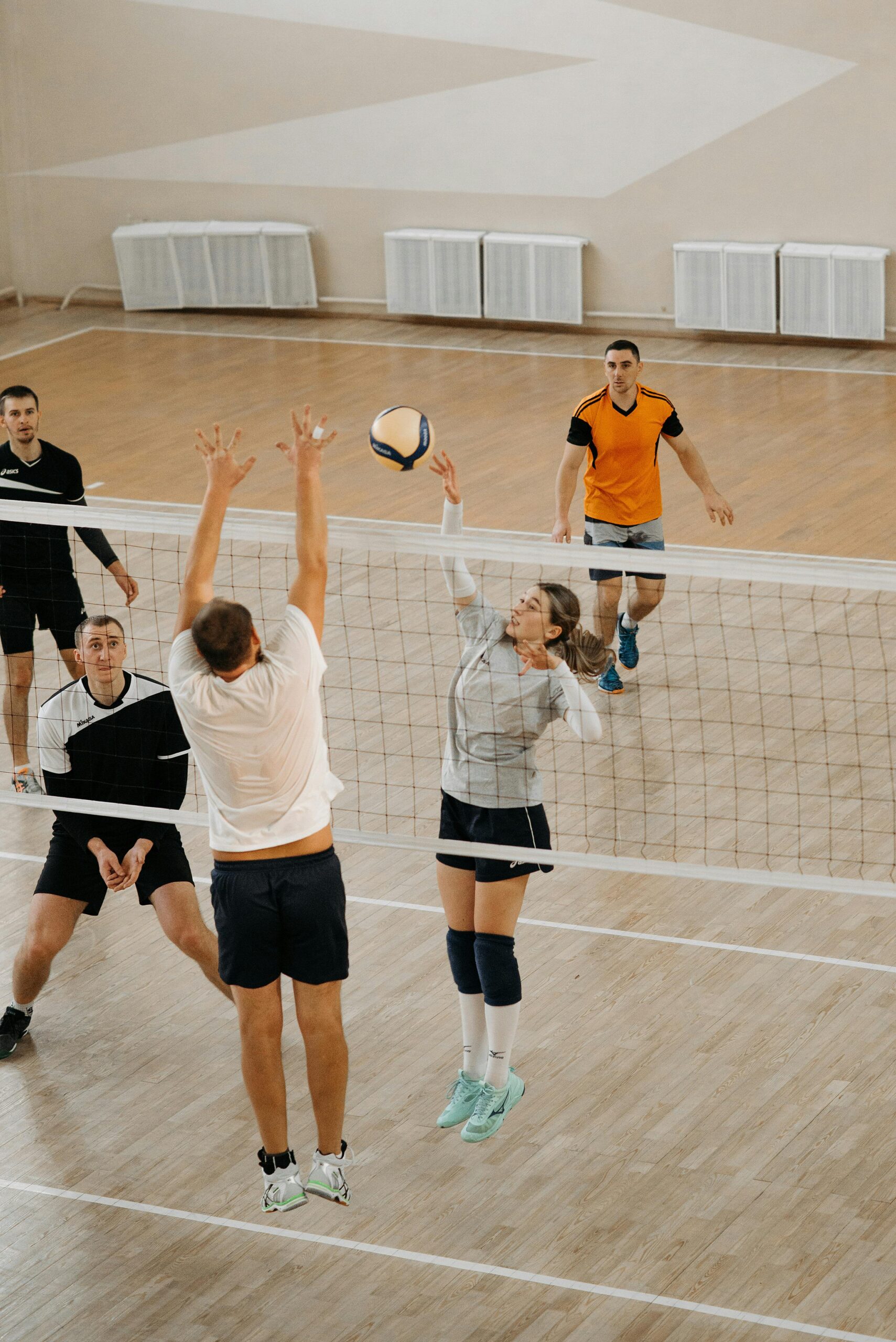
In volleyball, jumping high gets you above the net, but arm swing velocity is what actually terminates the rally.
At Athletes Untapped, we notice that many young players struggle to generate true power on their attacks. They rely entirely on their shoulder joint, swinging with a slow, disconnected motion that resembles a windmill. This lack of structural mechanics leads to weak roll shots, easy digs for the defense, and chronic shoulder pain.
The secret to a heavy, unreturnable spike lies in arm swing velocity. Proper training fixes these mechanical sequencing issues, allowing players to transfer rotational core energy into a lightning-fast whip that drives the ball straight to the floor.
Connect with a Private Volleyball Coach: https://athletesuntapped.com/browse/volleyball/
Why This Skill Matters for Athlete Development
Your arm swing velocity is the engine that drives your offensive termination rate. Without a fast, biomechanically sound swing, your vertical jump is essentially wasted.
- Game Performance: Elite arm swing velocity directly translates to hitting through the block and overwhelming the defense. When your hand strikes the ball with maximum speed, it leaves the defenders with virtually zero reaction time, making it significantly harder for the opposing libero to dig your attacks.
- Confidence: I have seen athletes improve faster when they spend just 10 focused minutes on this drill at the start of every session. When a fast, fluid arm swing becomes muscle memory, players stop tipping the ball out of fear. They gain the composure to trust their mechanics, swing aggressively out of system, and execute a confident, powerful attack in crucial moments.
- Long-Term Development: As you progress to higher levels of volleyball, the blocks get taller and the defense gets faster. A biomechanically sound arm swing protects your rotator cuff by utilizing the core and hips rather than isolating the shoulder. It provides the torque needed to hit heavy balls consistently, ensuring your offensive game scales safely as you face collegiate-level competition.
Best Drills / Tips / Techniques
You cannot master arm swing velocity by simply hitting hundreds of balls with bad form. You need isolated, high-repetition drills to build sequential torque. Here are 5 drills AU coaches use to build a lightning-fast arm.
1. The Kneeling Tennis Ball Throw
How to perform it: Kneel on both knees facing a wall. Hold a tennis ball in your hitting hand. Rotate your torso backward, drawing your hitting elbow high and back while pointing your non-hitting hand at the wall. Violently rotate your hips and shoulders forward, whipping your arm through to throw the tennis ball at the wall.
Why it works: It completely removes the lower body jump from the equation. It forces the brain to internalize the core rotation and elbow-lead mechanics required to create a whip-like arm action.
Coaching tips: Your elbow must lead the throw. The hand should trail behind until the very last millisecond when it snaps forward over the top.
Common mistakes: Throwing the ball like a dart with a stiff shoulder. The motion must be fluid, starting from the core and ending with the wrist snap.
2. The Wall Trap Drill
How to perform it: Stand facing a wall. Hold a volleyball in your non-hitting hand, pinning it lightly against the wall high above your head. Draw your hitting arm back into a bow-and-arrow position. Swing fast and trap the ball against the wall with your hitting hand, replacing your non-hitting hand instantly.
Why it works: This drill isolates the point of contact and teaches the athlete to accelerate entirely through the ball. It builds the fast-twitch muscle fibers required at the exact moment of impact.
Coaching tips: Do not slap the ball. You must swing through it so firmly that the ball compresses against the concrete wall.
Common mistakes: Dropping the hitting elbow before contact. Keep your elbow high and strike the ball at the absolute peak of your reach.
3. The Towel Snap
How to perform it: Hold a medium-sized towel in your hitting hand. Get into your mid-air hitting posture with your core engaged and your arm drawn back. Swing forward as fast as possible, snapping the end of the towel against the ground or a wall.
Why it works: A fast arm swing is identical to the cracking of a whip. This drill provides auditory feedback; if you swing with a stiff, slow arm, the towel will simply swoosh. If your sequence is correct, the towel will pop loudly.
Coaching tips: Keep your grip on the towel relaxed until the exact moment you snap your wrist forward.
Common mistakes: Using only the arm to swing the towel. You must crunch your core forward to generate the speed required for a loud snap.
4. The Resistance Band Pull-Through
How to perform it: Attach a light resistance band to a fence at shoulder height. Stand with your back to the fence, holding the band in your hitting hand. Get into your loaded hitting position. Drive your hip forward, pull your elbow through against the resistance, and fully extend your arm.
Why it works: This drill marries resistance training with proper biomechanics. It strengthens the exact muscles used during the acceleration phase of the arm swing, building raw speed and torque.
Coaching tips: The movement must start with your core. Rotate your torso first, letting your shoulder and hand lag behind to create massive elastic tension.
Common mistakes: Pushing the band forward like a chest press. The arm must travel in a high, circular, throwing motion.
5. The Heavy Ball and Light Ball Alternation
How to perform it: Stand at the net. Have a coach toss a slightly weighted training volleyball. Attack the heavy ball with a full swing, focusing on core engagement to move the extra weight. Immediately have the coach toss a standard, lightweight volleyball, and attack it with maximum effort.
Why it works: This utilizes contrast training. The heavy ball forces the central nervous system to recruit more muscle fibers. When you immediately switch to the standard ball, your arm moves significantly faster because those extra fibers are still firing.
Coaching tips: Maintain the exact same mechanics for both balls. Do not change your swing path just because the ball is heavier.
Common mistakes: Swinging wildly at the light ball and losing control. The goal is controlled velocity, not chaotic power.
Common Mistakes Athletes Make
Arm swing errors are incredibly common in youth and club volleyball, but they are easy to fix once identified on film.
The Goofy Arm Drop: This happens when a player drops their hitting elbow down toward their ribs before swinging forward, rather than keeping it high. This results in a slow, upward pushing motion that completely eliminates all rotational power and invites shoulder injuries.
How to fix it: Implement a strict bow-and-arrow focus. Keep the elbow high and pulled back so that the hand stays above the ear throughout the entire loading phase.
Swinging with Only the Shoulder: Players often keep their torso completely stiff and try to generate power purely by flexing their shoulder joint. This limits your velocity and puts immense, dangerous strain on your rotator cuff.
How to fix it: Constantly remind yourself to use your core. The sequence of power must be hip rotation, then shoulder rotation, then elbow extension, and finally the wrist snap.
Opening Up Too Early: Turning your chest to face the net before you even begin your forward swing. This wastes all of your rotational torque before your hand even starts moving toward the ball.
How to fix it: Keep your non-hitting arm pointed high at the ball to keep your chest closed to the setter. Only open your chest exactly as you pull your hitting arm forward.
The Slow Wrist Snap: Having a fast arm but a stiff, rigid wrist at the point of contact. This causes the ball to float slowly out of bounds rather than diving sharply to the floor with heavy topspin.
How to fix it: Drill the wall trap and focus entirely on snapping the hand over the top of the ball to create instant, aggressive downward rotation.
Find a Private Volleyball Coach: https://athletesuntapped.com/browse/volleyball/
How Private Coaching Accelerates Improvement
Arm swing velocity is a game of subtle angles and sequential muscle firing. Trying to self-diagnose whether your elbow dropped prematurely or your core rotation was slightly late is incredibly difficult while you are suspended in the air.
This is where private coaching is essential. Private coaching provides faster skill development by utilizing expert eyes and slow-motion video analysis. A private coach offers personalized feedback tailored to your specific shoulder mobility and swing path, making it easy to catch habits like opening up too early immediately. This targeted instruction allows athletes to focus on correcting mistakes early before they become ingrained muscle memory. Ultimately, mastering your arm mechanics in a 1-on-1 environment provides massive confidence building, allowing you to step onto the court knowing you have the tools to hit through the toughest blocks.
Frequently Asked Questions About Volleyball Arm Swing Mechanics
How often should athletes practice arm swing mechanics?
Athletes should practice their arm swing drills, like the towel snap or wall trap, for at least 10 to 15 minutes before every hitting session. Daily repetition without jumping is required to build the pure upper body muscle memory.
What age should athletes start working on this?
Players as young as 10 or 11 can begin learning the basic concepts of high elbows and core rotation. The earlier the mechanics of the kinetic chain are introduced, the less un-teaching has to happen later.
How long does it take to improve?
With focused, intentional practice, players can see a dramatic improvement in their arm speed and hitting power in just 3 to 4 weeks. Breaking the habit of an elbow drop may take slightly longer.
Can beginners learn this?
Yes. In fact, it is often easier for true beginners to learn because they do not have the deeply ingrained habit of relying entirely on their shoulder to push the ball over the net.
Does core strength affect arm swing velocity?
Absolutely. Your core is the bridge that transfers power from your lower body to your upper body. A weak core makes a fast arm swing biomechanically impossible.
Do private coaches help with this?
Yes. Private coaches are essential for breaking down the biomechanics of the swing, providing slow-motion video feedback, and isolating specific mechanical flaws so the athlete can practice effectively.
Conclusion
Arm swing velocity is the undeniable foundation of a lethal, dominant volleyball attacker. Without it, you are leaving your offensive capability to chance and playing directly into the opponent’s defensive schemes by hitting soft, predictable shots. Improvement is highly achievable with proper training, but it requires discipline. Encourage yourself to focus on your core rotation and your high elbow before you focus on jumping higher, and consistent practice will inevitably yield heavy, explosive attacks.
Train With a Private Volleyball Coach
Athletes Untapped connects athletes with vetted private coaches across the country for one-on-one training.
Private coaching helps athletes:
- improve faster
- build confidence
- receive personalized feedback
- reach their full potential
About Athletes Untapped
Athletes Untapped connects volleyball players with experienced private coaches who specialize in arm swing velocity, biomechanics, and attacking power. Through personalized instruction and structured training plans, Athletes Untapped helps hitters improve core rotation, hand speed, and offensive termination rates.
Find an experienced coach near you: https://athletesuntapped.com
Learn from our very best Coach!


