
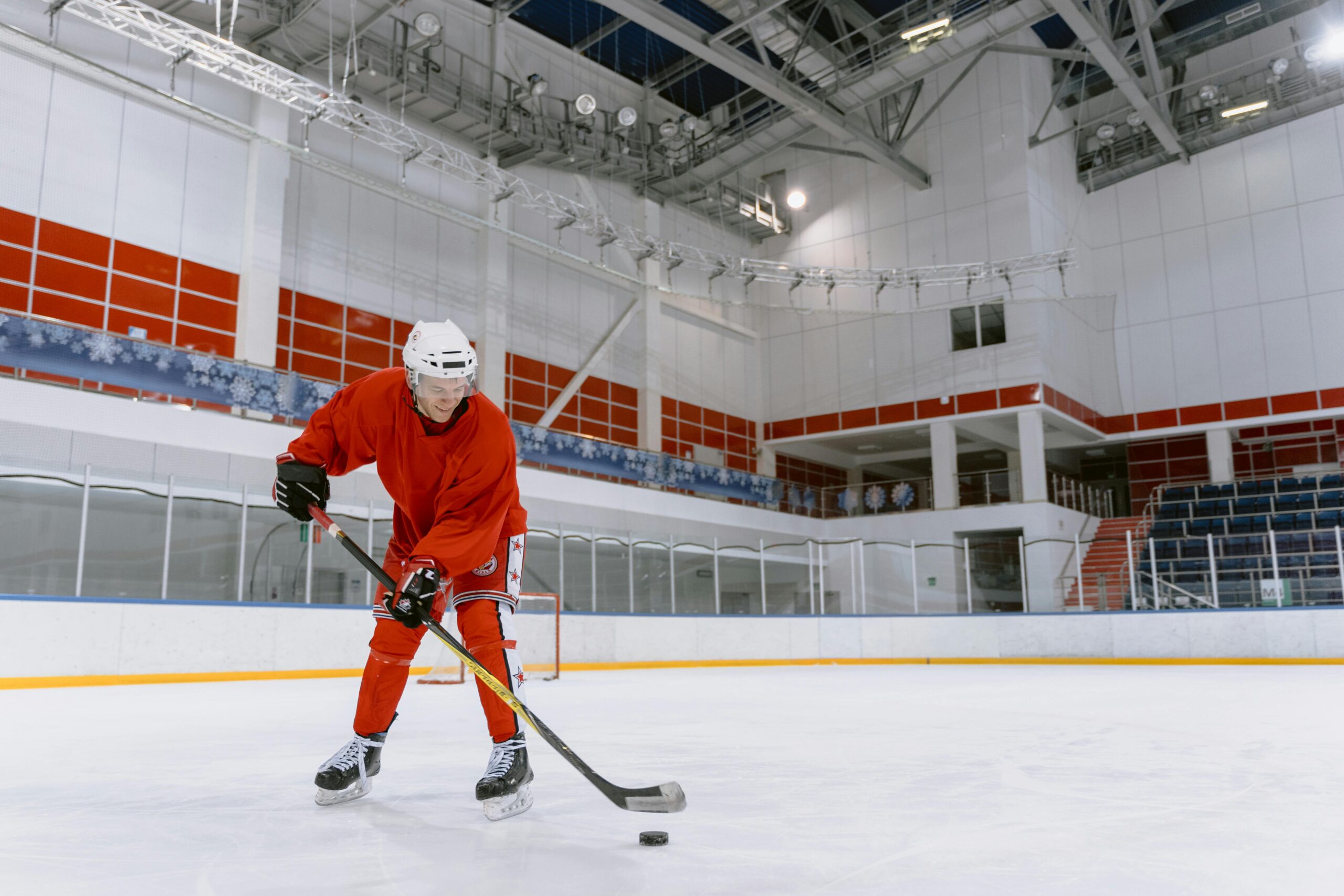
In ice hockey, skating is how you get there, but stickhandling is what you do when you arrive. At Athletes Untapped, we tell players all the time: If you have to look at the puck to control it, you cannot see the ice. And if you cannot see the ice, you cannot make a play.
For beginners, the stick can feel like a foreign object. The puck bounces over the blade, slides off the toe, or gets stuck in their skates. This is normal. The goal of stickhandling training isn’t just to learn cool dekes; it is to build the muscle memory so your hands work automatically.
When you master the basics, the game slows down. You stop panicking when a defender approaches because you know you can protect the puck. Here is how to build those “soft hands” from the ground up.
Connect with an Athletes Untapped Ice Hockey Coach: https://athletesuntapped.com/browse/ice-hockey/
Why Stickhandling Matters for Player Development
Stickhandling is the bridge between possession and playmaking.
Head Up Hockey: This is the most critical factor. Good stickhandling allows a player to keep their head up to spot open teammates, read the defense, and avoid checks.
Puck Protection: It allows you to use your body to shield the puck from defenders while maintaining control.
Shot Setup: You cannot get a hard shot off if the puck is wobbling or in your feet. Good handling sets up a quick release.
Confidence: A player who isn’t fighting the puck is a player who wants the puck.
Best Drills to Develop Soft Hands
You do not need ice to improve your hands. A smooth garage floor, a golf ball, or a “Green Biscuit” works perfectly. Here are 5 drills AU coaches use to help beginners master the basics.
1. The Wide Dribble (Range of Motion)
How to perform it: Stand in your hockey stance (knees bent, chest up). Move the puck from far outside your left foot to far outside your right foot. Do not just tap it in front of you; extend your arms fully to each side. Why it works: It teaches you to use your top hand to control the reach. Beginners often keep the puck too close to their feet (in the “phone booth”), which limits their options. Coaching Tip: Your bottom hand should be loose. It is just a guide. Your top hand does all the turning and rolling.
2. The Figure 8
How to perform it: Place two pucks or cones about shoulder-width apart. Stickhandle the puck in a figure-8 pattern around them. Go forwards through the cones, then pull the puck backward around the outside. Why it works: It forces you to use both the forehand and backhand sides of the blade and requires constant wrist rolling. Coaching Tip: Focus on “cupping” the puck. Roll your wrist over the puck to protect it as you go around the cone.
3. Top Hand Only Control
How to perform it: Take your bottom hand off the stick completely. Hold the stick only with your top hand. Dribble the puck back and forth in front of you. Why it works: This is the single most important drill for beginners. It strengthens the top wrist and forearm, which is the engine of your stickhandling. Coaching Tip: If your forearm burns, you are doing it right. Keep your knees bent.
4. Side-to-Front-to-Side (The L-Drill)
How to perform it: Move the puck to your forehand side, pull it quickly to the front of your body, then push it to your backhand side. Create an L-shape or a box shape. Why it works: Hockey is not played in a straight line. You need to be able to move the puck laterally to change the angle of attack. Coaching Tip: Make the movements snappy. Quick pulls and pushes are harder for goalies to track.
5. The Obstacle Course (Chaos Drill)
How to perform it: Scatter 5-10 pucks or obstacles randomly on the floor/ice. Stickhandle through them in random patterns without touching any of the obstacles. Why it works: It simulates the randomness of a game. You have to react to traffic and find open lanes. Coaching Tip: Keep your head up. Try to look at the far wall, not at the obstacles.
Common Mistakes Beginners Make
Bad habits formed early are very hard to break later. Our coaches often look out for these issues.
- The “Dusting” Habit: This is when a player stickhandles the puck 15 times just to move 5 feet. You should only stickhandle when necessary to beat a defender or settle the puck. Over-handling slows you down.
- Stiff Bottom Hand: Beginners often grip the stick too tight with their bottom hand. This locks the wrist and prevents the blade from rolling over the puck. The bottom hand should be loose enough to slide up and down the shaft.
- Standing Up Straight: If your legs are straight, your reach is limited and your balance is poor. You must stay low in a hockey stance.
- Looking at the Puck: Staring at the blade is dangerous. You must learn to feel the puck so your eyes can scan the ice.
How Private Coaching Accelerates Improvement
Stickhandling is a finesse skill. It is very difficult to teach the nuances of wrist roll and top-hand control in a large group practice where the focus is often on flow drills.This is where private coaching changes the game.
A private hockey coach can:
- Correct grip mechanics: Often, a player’s hands are too close together or their top hand is positioned wrong. A coach fixes this instantly.
- Force “Head Up” habits: We use visual cues (holding up fingers, colored cards) while you stickhandle to force you to look up.
- Teach puck protection: We teach you how to use your body to shield the puck, not just your stick.
- Customize progression: We move you from stationary drills to movement drills at the exact pace you need to build confidence.
Frequently Asked Questions About Stickhandling for Beginners
How long should I practice stickhandling each day?
15 to 20 minutes a day is plenty. The key is consistency. A player who practices for 15 minutes every day will have better hands than a player who practices for 2 hours once a week.
Can I use a golf ball for practice?
Yes. Golf balls are great because they are light and bounce, which forces you to have “soft hands” to control them. If you can control a bouncing golf ball, a flat puck on ice feels easy.
Should I tape my stick for off-ice practice?
If you are using a street hockey ball or Green Biscuit on concrete, tape will rip up quickly. However, tape provides friction that helps control the object. Use an old stick or a dedicated “wraparound” protector for off-ice training.
What is the best age to start stickhandling drills?
As soon as they can hold a stick (Mites/U8). At this age, the focus should be on fun and getting comfortable with the tool in their hands.
Connect with an Athletes Untapped Ice Hockey Coach: https://athletesuntapped.com/browse/ice-hockey/
Conclusion
Stickhandling is the art of making the puck an extension of your body. It allows you to dictate the play rather than react to it.
Start with these fundamental drills, focus on your top hand, and keep your head up. The best players in the world are the ones who put in the work in their driveways and garages when no one is watching.
About Athletes Untapped
Athletes Untapped connects ice hockey players with experienced private coaches who specialize in stickhandling mechanics and puck control. Through personalized instruction and structured training plans, Athletes Untapped helps players improve hand speed, creativity, and on-ice confidence.
Find an experienced coach near you: https://athletesuntapped.com
Learn from our very best Coach!


