
Why Defensive Skills Are Essential in Softball
Strong defense is the backbone of successful softball teams. While powerful hitting often gets the spotlight, preventing runs is just as important as scoring them. Youth athletes who master defensive fundamentals—such as catching, throwing, positioning, and communication—become reliable contributors in every inning. A team that consistently makes routine plays and limits errors puts constant pressure on opponents.
Defensive skill development also builds confidence. When young players trust their glove and arm, they play faster and more aggressively. Instead of hesitating, they attack ground balls and fly balls with purpose. Over time, solid defensive habits reduce errors, improve game awareness, and strengthen overall team performance.
Proper Glove Positioning for Ground Balls
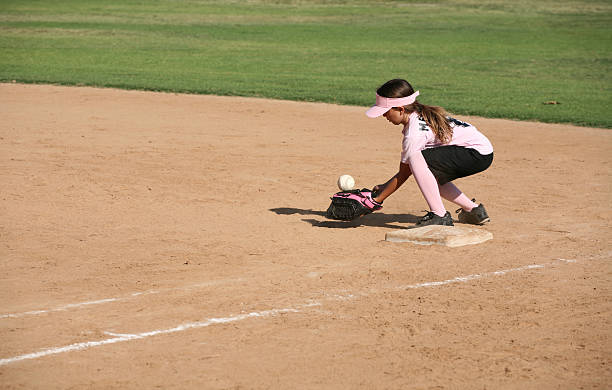
Glove positioning is one of the first defensive fundamentals youth players must learn. When fielding ground balls, athletes should keep their glove low to the ground, open toward the ball, and out in front of their body. Fielding the ball out front allows for smoother transfers and quicker throws.
Players should bend at the knees and hips rather than at the waist. This athletic posture keeps the eyes level and improves balance. Two hands should be used whenever possible—one securing the ball in the glove and the other ready to secure it for transfer.
Consistent repetition with proper glove positioning builds muscle memory. Over time, clean fielding becomes automatic, reducing bobbles and rushed throws.
Footwork and Body Positioning
Good footwork allows players to move efficiently and get into proper fielding position. Quick, controlled steps help defenders stay balanced while approaching the ball. Maintaining a low center of gravity improves stability and reaction time.
Body positioning matters just as much as speed. Players should aim to get their body in front of the ball, cutting off angles and preventing it from getting past them. Proper angles reduce recovery time and increase defensive range.
When footwork and body control are developed early, young athletes become more confident in challenging plays. Clean movement patterns directly translate to fewer errors during games.
Fielding Fly Balls and Pop-Ups
Catching fly balls requires strong tracking skills, communication, and timing. Outfielders and infielders alike must judge the ball’s distance, height, and speed immediately after contact. Taking the correct first step is often the difference between making a catch and giving up extra bases.
Players should call for the ball loudly to avoid collisions and confusion. Clear communication builds trust among teammates. Drills that vary angles, heights, and spin prepare players for real-game scenarios.
Repeated practice builds confidence under pressure. As players improve their ability to read the ball off the bat, their defensive range and reliability increase significantly.
Quick Release Throws
Efficient throws are essential for stopping runners from advancing. Youth players must learn to combine speed with accuracy. A quick release begins with clean fielding and a smooth glove-to-hand transfer.
Proper throwing mechanics protect the arm while maximizing velocity. Players should step toward their target, rotate their shoulders, and follow through completely. Cutting corners with throwing form can lead to wild throws or arm discomfort.
Developing a fast and accurate release helps defenders make impactful plays, especially in close game situations.
Double Plays and Team Coordination
Executing double plays requires precision, timing, and strong communication. Middle infielders must understand footwork around the base, while teammates anticipate where the ball will go next.
Practice builds chemistry. Repeated reps allow players to develop rhythm and trust in one another. Clear verbal cues and defined responsibilities prevent hesitation.
Learning team coordination early enhances situational awareness. Players begin to anticipate game scenarios, making defensive decisions faster and more confidently.
Reaction Drills for In-Game Situations
Softball is a fast-paced sport that demands quick reactions. Hard-hit line drives, unpredictable hops, and bunt situations require split-second decisions. Reaction drills that simulate these scenarios sharpen reflexes and anticipation.
Coaches can incorporate short-distance reaction work, rapid-fire ground balls, or deflection drills to challenge focus. The more unpredictable the drill, the more prepared players will be in games.
Repetition strengthens confidence. When athletes trust their reaction ability, they play assertively instead of cautiously.
Catching and Transferring the Ball
A smooth glove-to-hand transfer is critical for efficient defense. Even a perfectly fielded ball can become ineffective if the transfer is slow or awkward. Players should practice bringing the ball quickly from glove to throwing hand while maintaining control.
Keeping hands close to the body during the transfer minimizes wasted movement. This efficiency is especially important for infielders making quick throws to first base.
Consistent transfer drills improve rhythm and accuracy, turning routine plays into automatic outs.
Infield vs. Outfield Specific Drills
Different defensive positions require specialized skills. Infielders focus on quick hands, short reaction times, and rapid throws. They must handle ground balls, bunts, and hard-hit line drives with precision.
Outfielders emphasize speed, tracking ability, and strong overhand throws. They often cover more ground and must judge fly balls accurately. Position-specific drills ensure players master the demands of their role.
Targeted training builds confidence and effectiveness, allowing each player to contribute fully to the team’s defensive strength.
Common Defensive Mistakes and How to Avoid Them
Common mistakes among youth players include rushing throws, poor glove positioning, and overcommitting to the ball. These errors often stem from a lack of repetition or nervousness under pressure. Read this blog to learn more about bolstering up your defensive game in softball!
Coaching guidance and constructive feedback help correct these issues early. Slowing the game down during practice and emphasizing fundamentals prevents bad habits from forming.
Repetition builds correct habits. As players refine their mechanics, defensive consistency improves dramatically.
Conditioning for Defensive Success
Defenders frequently perform short bursts of high-intensity movement throughout a game. Sprinting, diving, and quick lateral movements require strength and endurance.
Conditioning programs that focus on agility, lower-body strength, and core stability support defensive performance. Improved fitness reduces fatigue, which is often responsible for late-game errors.
Well-conditioned athletes maintain focus and sharpness from the first inning to the last, strengthening overall team defense.
Athletes Untapped: Private Softball Fielding Coaching
Athletes Untapped connects youth softball players with private coaches who specialize in defensive fundamentals. Personalized sessions focus on glove work, footwork, throwing mechanics, and situational awareness.
With individualized instruction, players receive targeted feedback that accelerates improvement. Structured coaching builds reliability, confidence, and game readiness. By developing strong defensive skills early, youth athletes position themselves for long-term success on the softball field.
Find an experienced coach near you: https://athletesuntapped.com
Learn from our very best Coach Bert and Coach Gwyn.


