
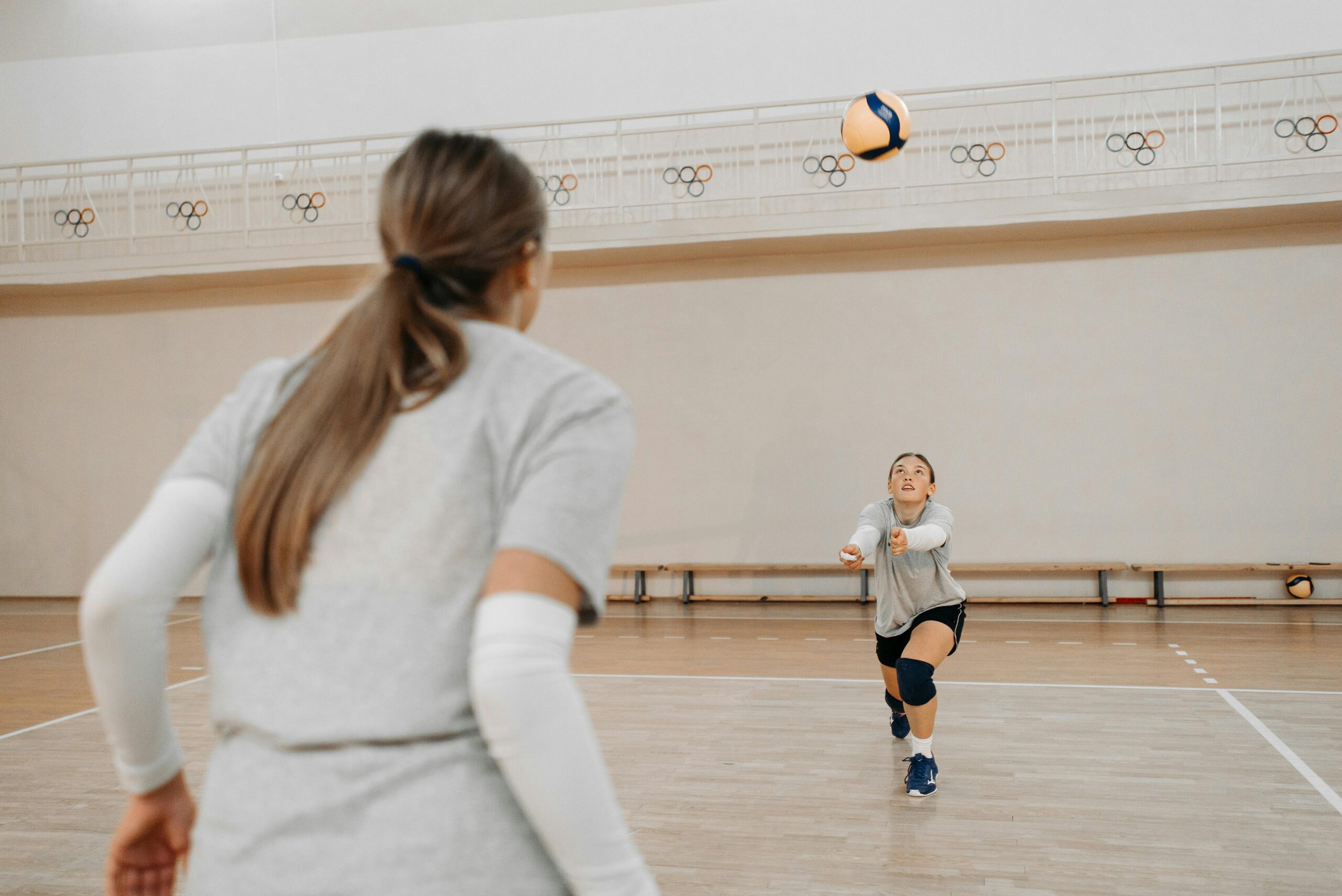
If you are looking into a “personal volleyball trainer: benefits of one-on-one coaching,” you or your athlete are likely frustrated with the current rate of progress. As a coach who has spent over 15 years developing youth, high school, and college volleyball players, I see it every club season. An athlete will come off the court in tears after a tough tournament because they shanked three serve-receives in a row or continuously hit the ball into the net.
Volleyball is a game of precise angles and fractions of a second. In a standard club or high school practice, 12 to 15 girls are sharing one net. Your athlete might get 15 actual attacking swings in a two-hour block. If their arm swing mechanics are flawed, those 15 swings aren’t helping—they are just cementing a bad habit.
Proper training fixes this. A top-tier personal trainer strips away the chaos of a 6v6 scrimmage. We break down the exact angle of your passing platform, fix the timing of your approach footwork, and build the rotational core strength needed to hit a heavy ball. Let’s dive into exactly what elite one-on-one volleyball training looks like and why it is the ultimate game-changer for your development.
Why Finding the Right Coach Matters for Athlete Development
Choosing to invest in private coaching fundamentally alters an athlete’s trajectory in the sport. I’ve worked with plenty of players who had incredible vertical jumps but were benched because their coach didn’t trust them to pass a free ball.
When you invest in a high-quality private volleyball coach, the performance impact is massive:
- Unshakeable Confidence: Passing and serving are highly mental skills. A great coach creates a controlled environment where athletes can repeat a skill hundreds of times. When an athlete fully trusts their platform and footwork, they step onto the court wanting the ball to come to them.
- Game Performance: Elite coaches bridge the gap between pepper warm-ups and live-game action. We teach athletes how to transition quickly from base defense to hitting, how to read a setter’s hands, and how to see the opponent’s block before swinging.
- Long-Term Development: Good coaches protect their athletes’ bodies. Teaching a player to generate hitting power through hip-to-shoulder separation (torque) rather than just whipping their rotator cuff prevents devastating shoulder injuries. We also prioritize proper landing mechanics to protect the knees and ankles.
Best Drills and Techniques to Expect from a Top-Tier Coach
When you pay for a personal volleyball trainer, they should be meticulously dissecting your mechanics. If they just toss balls over the net and yell “good job,” you are wasting your money. Elite coaches use dynamic isolation drills. Here are 5 essential drills a high-quality coach will use:
1. The Wall-Sit Platform Isolation
- How to perform it: The athlete holds a wall-sit position (knees at 90 degrees). The coach throws rapid downballs directly at the athlete. The athlete must pass the ball back to the coach’s hands without moving their legs or swinging their arms, using only the subtle angles of their platform.
- Why it works: Many young players have “noisy” arms—they wildly swing their arms at the ball when passing. This drill completely removes the lower body, forcing the athlete to create a quiet, flat platform by squeezing their shoulders together and angling their wrists down.
- Coaching tips: Keep your thumbs perfectly aligned. Shrug your shoulders to your ears to create a fleshy, flat surface on your forearms.
- Common mistakes: Breaking the wrists apart just before contact, causing the ball to shank sideways.
2. The 3-Step Approach (Without the Ball)
- How to perform it: For a right-handed hitter, the coach walks the athlete through the “Left, Right-Left” footwork pattern on the attack line. The athlete focuses entirely on a slow first step, followed by an explosive “brake step” (the final two feet planting to transfer forward momentum into vertical height).
- Why it works: You cannot be a great hitter if you are always early or late to the ball. Stripping the ball away forces the athlete to focus entirely on their explosiveness and timing.
- Coaching tips: Your arms should swing aggressively backward on the “Right” step, and punch violently upward on the final “Left” step to lift you into the air.
- Common mistakes: Taking a massive first step and tiny last steps, which kills all vertical momentum.
3. The Tennis Ball Torque Throw
- How to perform it: The athlete stands at the net holding a tennis ball. They execute their full jump approach and throw the tennis ball sharply over the net and down into the opponent’s 10-foot line.
- Why it works: It teaches the “bow and arrow” arm action and hip-to-shoulder separation. By throwing a light object, the athlete learns how to use their core to generate arm speed without straining the shoulder.
- Coaching tips: Open your chest to the setter when you jump. Your non-dominant hand should point high at the ball to track it before you rotate and pull the trigger.
- Common mistakes: Dropping the elbow below the ear, which results in a weak, flat trajectory instead of a heavy downward spike.
4. The Float Serve Toss and Drop
- How to perform it: The athlete goes through their full pre-serve routine, tosses the ball, takes their serving step, but does not hit the ball. They let the ball drop to the floor, ensuring it lands slightly inside the court, directly in front of their hitting shoulder.
- Why it works: 90% of missed float serves are the result of a bad toss. A great coach will isolate the toss until it is mathematically perfect before ever letting the athlete swing.
- Coaching tips: Hold the ball in your non-dominant hand like a glass of water. Lift it smoothly; do not flick it with your fingertips.
- Common mistakes: Tossing the ball too far backward or chasing a bad toss by contorting the body mid-swing.
5. The Setter’s Heavy Ball Wall Touches
- How to perform it: Using a weighted setter’s training ball (or a standard ball if a beginner), the athlete stands one foot from a wall and rapidly sets the ball against it 50 times in a row without letting it drop below their forehead.
- Why it works: Setting requires incredible finger strength and a rapid, fluid wrist flick. This drill builds the hand strength necessary to push the ball all the way to the outside pin from the center of the court.
- Coaching tips: Shape your hands exactly like the ball before it arrives. Make contact with the pads of all 10 fingers, not your palms.
- Common mistakes: Catching the ball deeply in the palms, which leads to double-contact calls in matches.
Connect with a Private Volleyball Coach: https://athletesuntapped.com/browse/volleyball/
Common Mistakes Athletes Make When Training and Playing
Even highly athletic players fall into bad habits that prevent them from reaching the varsity or college level. Here are the most common mistakes I see:
- Swinging the Arms on Serve Receive: When a hard float serve is coming at you, swinging your arms up to meet it is a guaranteed shank. You must move your feet to get your body behind the ball, drop your hips, and let the ball deflect off a quiet platform.
- The “Goofy-Footed” Approach: A right-handed player jumping off a “Right, Left-Right” footwork pattern is goofy-footed. It completely closes off their hips to the setter, draining their power and making it impossible to hit cross-court effectively. Fixing this takes dedicated, frustrating un-learning in a private setting.
- Hitting the Ball on the Way Down: Many hitters jump too early. By the time their hand strikes the ball, gravity is already pulling them back to the floor, robbing them of their vertical reach and power. You must learn to attack the ball at the absolute peak of your jump.
- Playing Standing Up: Volleyball is played low. If your knees are locked while you wait in base defense, you will never react fast enough to dig a hard-driven ball. You should constantly be in an athletic, loaded stance.
How Private Coaching Accelerates Improvement
Club and high school practices are fantastic for learning team defensive systems, serve-receive rotations, and offensive plays. However, they are highly inefficient for fixing individual biomechanics.
A personal volleyball trainer accelerates improvement because they provide a relentless, personalized feedback loop. If your wrist is snapping late on your topspin serve, a private coach catches it on the first rep. We stop the drill, physically adjust your hand contact, and run it again. This immediate correction prevents bad habits from cementing. By focusing solely on your individual flaws, private coaching gives you the technical foundation required to step back into your team environment with absolute confidence.
Find a Private Volleyball Coach: https://athletesuntapped.com/browse/volleyball/
Frequently Questions About Personal Volleyball Trainer: Benefits of One-on-One Coaching
How often should I train with a personal volleyball coach?
For consistent skill development, once a week is highly recommended, paired with your standard team practices. Advanced high school players looking to get recruited often bump this to twice a week during the off-season to refine specific mechanics.
What age should a volleyball player start private lessons?
Athletes can begin working on foundational skills like passing posture and serving tosses around ages 8 to 10. However, bringing in a specialized private coach becomes incredibly valuable between ages 11 to 13, right as players transition to playing with a heavier ball and a higher net.
Can a private coach help me make the varsity volleyball team?
Absolutely. Elite private coaches know exactly what high school varsity coaches look for: a consistent serve, aggressive communication, and the ability to pass a free ball perfectly to the setter target. They will tailor your sessions to eliminate weaknesses before tryouts.
How long does it take to fix my hitting mechanics?
To see a permanent change in muscle memory—especially fixing a goofy-footed approach or a dropped elbow—it generally takes 4 to 8 weeks of consistent private lessons. Re-wiring your brain to jump and swing correctly requires thousands of repetitions.
Is a personal volleyball trainer worth the cost if I already play club?
Yes. Club volleyball gives you the stage to perform; private training gives you the tools to succeed on that stage. A club coach’s job is to win matches. A private coach’s job is to ensure your individual mechanics are flawless so you can actually stay on the court during those matches.
Conclusion
When you search for a “personal volleyball trainer: benefits of one-on-one coaching,” you are looking for the missing piece in your athletic journey. Stop settling for team practices where your specific flaws go unnoticed. You need a dedicated instructor who understands the kinetic chain of an attacker, prioritizes perfect footwork, and communicates precise, actionable feedback. When you commit the time and find a coach who truly understands the science of the game, your confidence will soar, and your on-court performance will completely transform.
About Athletes Untapped
Athletes Untapped connects athletes of all sports with experienced private coaches who specialize in mental performance, sports psychology concepts, and competitive mindset training. Through personalized instruction and structured training plans, AU coaches help athletes eliminate performance anxiety, master their internal dialogue, and completely dictate their emotional response to adversity.
Find an experienced coach near you: https://athletesuntapped.com
Learn from our very best AU coaches!


