
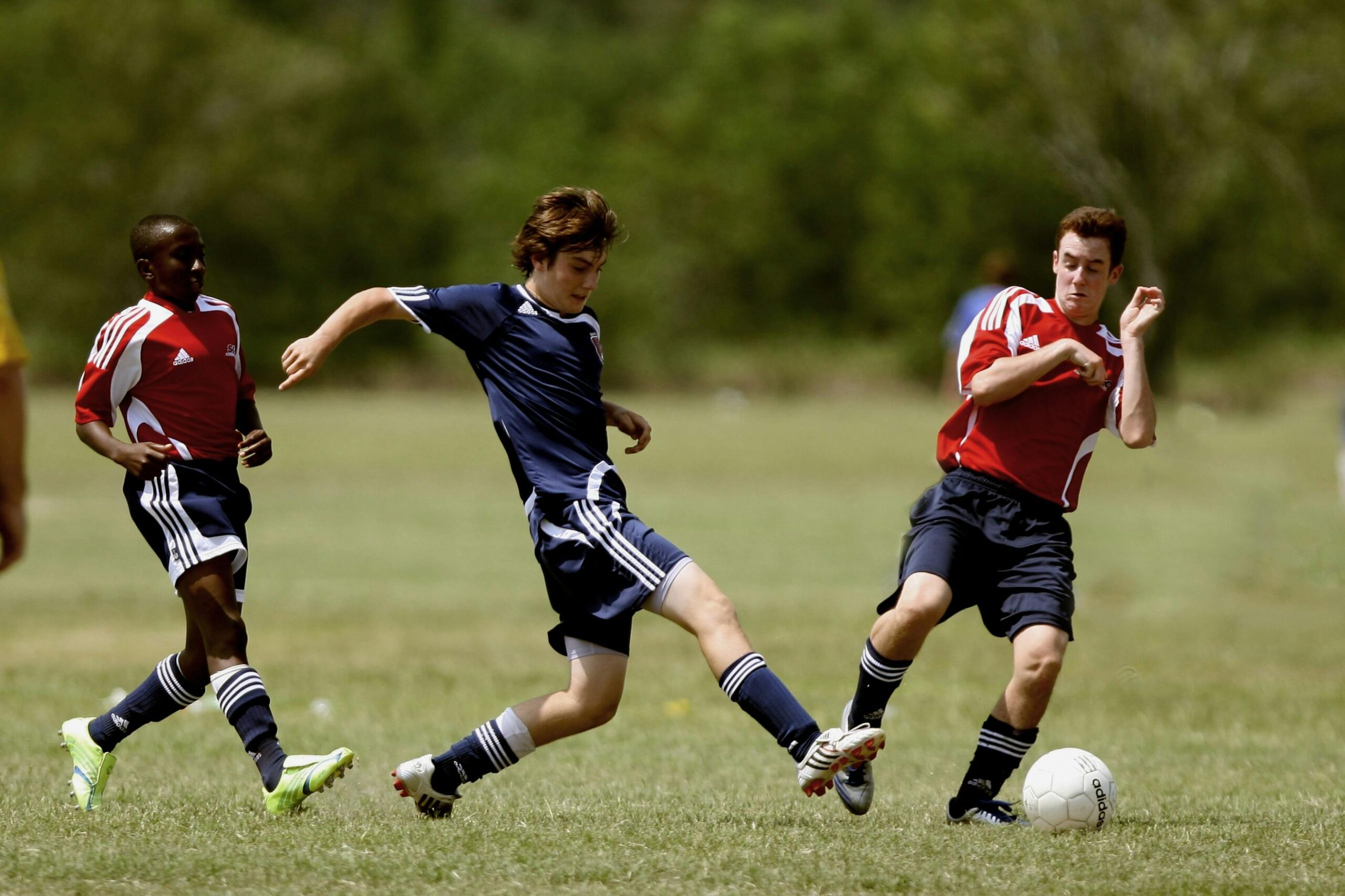
If you watch an average youth soccer game, most eyes are on the ball. It’s natural that everyone wants to be involved. But if you analyze the best midfielders in the world, players like Kevin De Bruyne, Jude Bellingham, or Luka Modrić, you’ll notice they play a different game.
They are constantly moving, scanning, and adjusting their position before the ball ever reaches them.
At Athletes Untapped, we emphasize a core concept to every midfielder we train: “Soccer is played with one ball, but 21 other players are moving without it.”
For a midfielder, 90% of the game is played without the ball at your feet. Yet, most young athletes spend the majority of their training time perfecting their dribbling or shooting. While those skills are vital, off-the-ball movement is the silent skill that separates average players from elite playmakers. It is the difference between being constantly marked out of the game and being the engine that drives it.
In this guide, we’re going to break down why movement is your superpower, the specific drills AU coaches use to sharpen it, and how to fix the common mistakes seen on the sidelines every weekend.
Connect with an Athletes Untapped private coach today: https://athletesuntapped.com/browse/soccer/
Why Off-the-Ball Movement Matters for Midfielders
Great movement isn’t just about running distance; it’s about running smart. You can run 10 miles in a game and never touch the ball if your timing is wrong. Here is why elite movement changes your game:
Buying Time (The “Panic” Killer): Most turnovers happen because a player panics. By moving into open space (finding the “pocket”), you buy yourself 2-3 seconds to make a decision before a defender closes you down.
Breaking Lines: A well-timed run can split a defense wide open. It turns a harmless possession into a goal-scoring threat instantly.
Being the Link: Midfielders are the bridge between defense and attack. If you are hiding behind a defender, that bridge collapses, and your team loses possession.
Dictating Play: When you know where to be, you don’t chase the game, the game comes to you.
Best Off-the-Ball Movement Drills for Midfielders
These aren’t just fitness drills; they are cognitive drills. We are training the brain to scan and the body to react.
1. The “Check-Shoulder” Passing Square (Scanning)
This drill fixes the bad habit of “tunnel vision” (staring only at the ball). The Setup: Set up a small square with cones. Have a partner/feeder outside the square with the ball. The Action: Before you call for the ball, you must physically turn your head (“check your shoulder”) to identify a color or number held up by a coach/parent behind you. Then, receive the ball on the “half-turn.” Why It Works: It forces you to disconnect your eyes from the ball. Coaching Cue: “Head on a swivel! If you haven’t scanned, don’t call for the ball.”
2. The “Ghost” Run (Blind Side Movement)
The Setup: Place a mannequin or cone representing a defender. The Action: Instead of checking to the ball in front of the defender, make a curved run across their back (blind side) before darting into space. Why It Works: Defenders hate what they can’t see. If they are watching the ball, they can’t watch you moving behind them. Coaching Cue: “Stay in their shadow until you’re ready to strike.”
3. Finding the Pocket (Receiving Between Lines)
The Setup: Create three zones (Defense, Midfield, Attack). The Action: The goal is to drift into the middle zone (the “pocket”) at the exact moment your teammate looks up to pass. Why It Works: It teaches timing. Arrive too early, you’re marked. Arrive too late, the window is closed. Coaching Cue: “Don’t plant a tent. Arrive in space, don’t wait in it.”
4. The Triangle Rondo (3v1 Support Angles)
The Setup: A simple 10×10 yard grid. 3 attackers vs 1 defender. The Action: The two players without the ball must always move to form a clear passing lane (triangle) for the player with the ball. Why It Works: It punishes standing still. If you stop moving, the passing angle gets cut off immediately. Coaching Cue: “Never hide behind the defender. Be an option!”
5. Pass and Sprint (Aggressive Give-and-Go)
The Setup: Pass to a wall or teammate. The Action: The moment the ball leaves your foot, sprint explosively into a new space to receive the return pass. Why It Works: It breaks the habit of “passing and admiring.” Coaching Cue: “The pass is the signal to run. Go!”
6. The Third Man Run
The Setup: Player A passes to Player B. Player C (The Third Man) runs to receive from B. The Action: Player C must recognize the pattern and start running before Player B even touches the ball. Why It Works: This is high-IQ soccer. It is nearly impossible to defend because the defense is focused on the first two players.
Common Mistakes Athletes Make
Our coaches see these errors in almost every youth game, from U10 to high school varsity.
- Magnet Ball (Crowding): Players want to help, so they run towards the teammate with the ball. This just brings more defenders to the ball. Learn to move away to open space.
- Hiding in the “Cover Shadow”: Standing directly behind a defender where your teammate literally cannot pass to you. You must step laterally to open a “passing lane.”
- The “Spectator” Mode: Passing the ball and then standing still to watch what happens. In soccer, your job isn’t done when you pass; it’s just starting.
- Single-Speed Movement: Jogging everywhere. Effective movement involves changes of speed, slow to lull the defender, then fast to explode into space.
How Private Coaching Accelerates Improvement
Off-the-ball movement is arguably the hardest skill to learn in team practice. Why? Because a team coach has 18 players to watch. They can’t stop the scrimmage every 10 seconds to tell one midfielder, “You didn’t scan your left shoulder.”
This is where private coaching is a cheat code for development.
A private soccer coach can:
- Fix Your “Scanning” Frequency: We count how many times you check your shoulder and drill it until it becomes muscle memory.
- Teach Body Orientation: We work on receiving on the “half-turn” so you can play forward instantly, a detail often missed in team drills.
- Video Analysis: Sometimes you need to see yourself not moving to understand it. Private coaches can break down your game film.
- Build Confidence: When you know exactly where to move, you stop panicking. You start demanding the ball.
Common Questions About Off-The-Ball Movement in Soccer
What exactly is off-the-ball movement?
It refers to everything you do when you don’t have possession. This includes making runs to receive a pass, dragging defenders away to create space for teammates, and positioning yourself defensively to stop a counter-attack.
How can I improve my vision as a midfielder?
You must treat “scanning” like a physical skill. Practice checking your shoulder every 3-5 seconds, even when the ball is far away. Build a mental map of where everyone is so when the ball comes, you already know your next move.
At what age should players learn tactical movement?
Basic concepts like “pass and move” and “don’t bunch up” can be taught as early as 8 years old. By age 12-14, players should be learning more complex movements like third-man runs and blind-side cuts.
Can you practice off-the-ball movement alone?
Yes, but it requires discipline. Use cones to represent defenders and practice checking your shoulder before receiving a rebound from a wall. Visualize the defender and the pressure.
Do private coaches teach off-the-ball movement?
Absolutely. In fact, it’s one of the most common requests we receive. Private sessions allow us to isolate the movement mechanics without the chaos of a full game, ensuring the player understands why they are making a run.
Connect with an Athletes Untapped Soccer coach: https://athletesuntapped.com/browse/soccer/
Conclusion
Becoming a dominant midfielder isn’t just about who can juggle the most or shoot the hardest. It’s about intelligence, anticipation, and the willingness to work hard when no one is watching.
The best midfielders are the ones who make the game look easy because they’ve already done the hard work, moving, scanning, and finding space, before the ball even arrives.
Start applying these drills. Focus on your scanning. Be the player who is always an option.
About Athletes Untapped
Athletes Untapped connects soccer players with experienced private coaches who specialize in tactical movement and game IQ. Through personalized instruction and structured training plans, Athletes Untapped helps midfielders improve vision, positioning, and playmaking ability.
Find an experienced coach near you: https://athletesuntapped.com
Learn from our very best Coach!


