
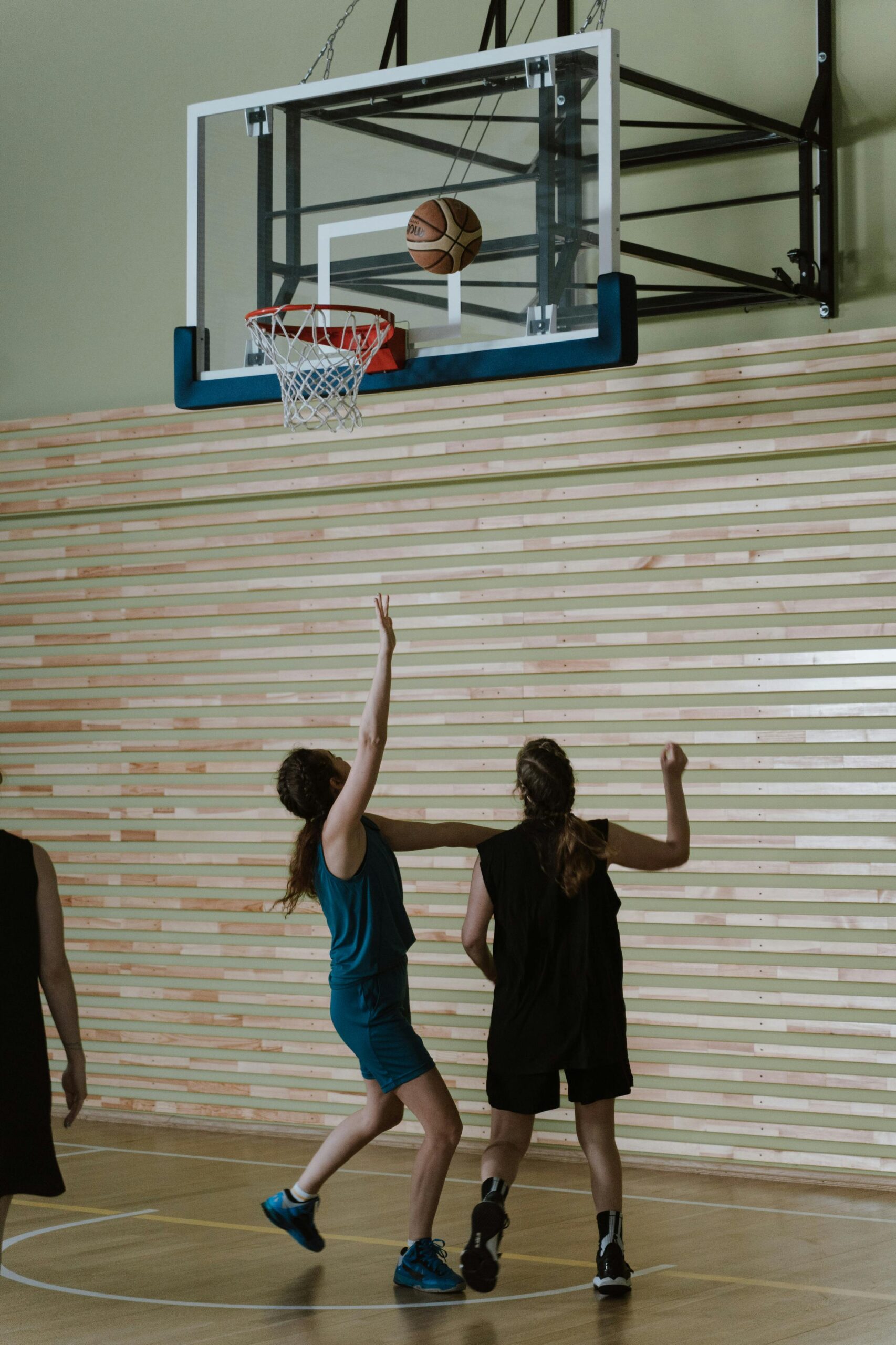
In basketball, making a flashy crossover might get the crowd out of their seats, but perimeter shooting consistency is what actually keeps you on the floor and wins championships. You can have the quickest first step in your league, but if the defense knows you cannot consistently hit an outside jumper, they will simply pack the paint and completely shut down your driving lanes. Shooting is not a dark art; it is a repeatable, biomechanical process.
At Athletes Untapped, AU coaches notice that many young players treat shooting like a lottery ticket. Some days they are unguardable, and other days they cannot hit the broad side of a backboard. They change their release point on every shot, fade away unnecessarily, or rely entirely on their upper body for power. This lack of structural mechanics leads to massive scoring slumps, hesitation when left wide open, and a highly frustrating inability to translate practice makes into live-game points.
The secret to becoming a lethal threat from the outside lies in mastering basketball perimeter shooting consistency. Proper training fixes these mechanical and footwork issues, allowing players to build a repeatable, highly efficient shooting stroke that holds up perfectly under late-game fatigue and heavy defensive pressure.
Why Basketball Perimeter Shooting Consistency Matters for Athlete Development
Your shooting percentage dictates your overall offensive gravity. Without a consistent perimeter stroke, you become a one-dimensional player that smart defenses can easily neutralize.
Game Performance: Elite shooting consistency directly translates to spacing the floor. When you prove you can knock down the catch-and-shoot three-pointer, the defense is forced to guard you tightly out to the perimeter. This creates massive driving lanes for your teammates and completely opens up the offensive flow. You turn a crowded half-court set into an expansive, high-scoring attack simply by being a reliable threat from the outside.
Confidence: Our coaches have seen athletes improve faster when they master the mechanics of their release at the start of every single practice. When you have a deeply ingrained, repeatable shooting pocket and follow-through, the fear of missing a big shot instantly vanishes. You gain the composure to step into a transition three-pointer, trusting your muscle memory because it is backed by thousands of perfectly executed repetitions.
Long-Term Development: As you progress to high school and collegiate basketball, the three-point line moves further back and the defenders close out significantly faster. A biomechanically sound foundation protects you from having to completely rebuild your jump shot later in your career. It provides the elite shooting mechanics needed to generate effortless power from your legs, ensuring your range safely scales as the physical demands of the game increase.
Connect with a Private Basketball Coach: https://athletesuntapped.com/browse/basketball/
Best Drills / Tips / Techniques
You cannot master shooting consistency by simply walking into a gym and casually launching deep three-pointers. You need isolated, high-repetition drills that build muscle memory from the ground up. Here are 5 drills AU coaches use with their athletes to build an automatic perimeter stroke.
1. One-Hand Form Shooting
The Setup: Stand just three feet away from the rim, directly in front of the basket. Hold the basketball entirely in your shooting hand, balancing it on your finger pads.
The Action: Place your guide hand behind your back. Bend your knees slightly, bring the ball up through your shooting pocket, and execute a perfect release. Focus entirely on creating backspin and snapping your wrist so the ball snaps the net without touching the rim.
Why It Works: This is the absolute foundation of shooting mechanics. It eliminates the guide hand from the equation, preventing the common habit of thumbing the basketball. It trains the shooting arm to stay perfectly aligned with the rim and builds the fine motor control required for a soft touch.
Coaching Cue: Hold your follow-through high in the cookie jar until the ball physically hits the floor.
Common Mistakes: Letting the ball rest flat on the palm of the hand rather than the finger pads, which kills the backspin.
2. The 1-2 Step Catch and Shoot
The Setup: Start at the top of the key. Spin the ball out to yourself or have a coach pass it to you on the wing.
The Action: As the ball approaches, step into the pass with an aggressive 1-2 footwork pattern (left-right for a right-handed shooter). Catch the ball already in your shooting pocket, sink your hips, and rise straight up into your jump shot without any hesitation.
Why It Works: Shooting consistency is heavily dictated by footwork. This drill trains the lower body to generate momentum before the ball even arrives. By mastering the 1-2 step, you eliminate the slow, wasted motion of catching the ball flat-footed and then dipping it down to your knees.
Coaching Cue: Be shot-ready. Your knees should be bent and your hands should be showing a target before the pass is ever thrown.
Common Mistakes: Catching the ball standing straight up, which completely breaks the kinetic chain of power from the legs to the arms.
3. The 5-Spot Star Drill
The Setup: Identify five spots on the perimeter: both corners, both wings, and the top of the key.
The Action: Start in the corner and shoot. Immediately sprint to the opposite wing for a catch and shoot. Then sprint to the other wing, then the opposite corner, and finally the top of the key. You must make a specific number of shots (e.g., 7 or 10) at each spot before moving on.
Why It Works: Game shots happen when you are tired. This drill combines cardiovascular conditioning with shooting consistency. It teaches the athlete how to properly set their feet and find their balance even when their lungs are burning and their legs feel heavy, perfectly simulating a late-game scenario.
Coaching Cue: Sprint to the spot, but slow down your brain. Find your balance before you rise up.
Common Mistakes: Fading sideways on the shot because the momentum of the sprint carried the shooter off their center of gravity.
4. Block-to-Block Movement Shooting
The Setup: Start on the right block near the basket. A coach or rebounder stands under the rim with a ball.
The Action: Backpedal out to the perimeter, catch a pass, and shoot. Immediately sprint to the left block, tap it with your hand, backpedal out to the left wing, and shoot again. Continue this side-to-side movement continuously.
Why It Works: Shooters rarely get to stand still in a real game. They have to use screens, cut through the paint, and pop out to the perimeter. This drill trains spatial awareness and rapid foot alignment, ensuring the shooter can square their shoulders to the rim instantly after changing directions.
Coaching Cue: Whip your eyes to the rim the exact moment you catch the ball to lock in your target depth.
Common Mistakes: Landing with the feet crossed or too close together, resulting in a wildly unbalanced release.
5. Beat the Pro Mental Pressure Drill
The Setup: Pick your favorite perimeter spot on the court.
The Action: You are playing a game to 10 points against a “Pro.” Every shot you make is worth 1 point for you. Every shot you miss is worth 2 points for the Pro.
Why It Works: You cannot build consistency without mental pressure. This drill introduces a massive consequence for missing. It forces the athlete to treat every single repetition like a game-winning shot, building the extreme mental focus required to knock down open looks when the pressure is at its highest.
Coaching Cue: Go through your exact pre-shot breath and routine on every single attempt. Do not rush just because you missed the previous shot.
Common Mistakes: Rushing the release out of frustration after missing two shots in a row, allowing the Pro to easily win the game.
Common Mistakes Athletes Make
Shooting errors are incredibly common in youth and high school basketball, often because players try to emulate the deep range of NBA stars before they have established their baseline mechanics.
The Guide Hand Thumb Flick: Using the thumb of the non-shooting hand to help push the ball forward. Fix this by practicing one-hand form shooting. The guide hand is merely a wall to keep the ball balanced; it should completely fall away right before the wrist snaps forward.
Inconsistent Base and Footwork: Landing with your feet incredibly wide on one shot, and completely together on the next. Fix this by focusing on shoulder-width alignment. If your base changes every time you jump, your upper body has to mathematically compensate in the air, ruining your consistency.
Short-Arming the Follow-Through: Pulling the shooting arm back toward the body immediately after releasing the ball. Fix this by exaggerating the finish. Your elbow should finish above your eyebrow, and your wrist should stay snapped down until the ball goes through the net.
Shooting a Flat Ball: Pushing the ball directly at the rim like a dart, resulting in a flat trajectory that brutally hits the front iron. Fix this by shooting the ball up, not out. A high arc increases the physical size of the rim from the ball’s perspective, giving you a much higher margin for error on your distance.
How Private Coaching Accelerates Improvement
Basketball perimeter shooting consistency is a game of microscopic angles and exact timing. Trying to self-diagnose your elbow flare, your guide hand interference, or your lower-body energy transfer while playing at game speed is nearly impossible for most players. This is where private coaching is a cheat code for development.
A private basketball coach can:
- Audit Your Mechanics: We watch exactly where you start your shooting pocket, teaching you how to eliminate wasted hitches and dips that slow down your release time.
- Teach Game-Speed Footwork: We work on your ability to step into your shot off the dribble and off the catch, ensuring your feet are perfectly set before the ball even touches your hands.
- Video Analysis: Sometimes you need to see yourself thumbing the ball to truly understand why your shot is missing left. Private coaches can break down your shooting film frame by frame to highlight exactly where the kinetic chain breaks.
- Build Confidence: When you possess an elite, repeatable shooting stroke, you stop passing up open looks. You step onto the court knowing you are the most dangerous offensive threat in the gym.
Find a Private Basketball Coach: https://athletesuntapped.com/browse/basketball/
Frequently Asked Questions about Basketball Perimeter Shooting
What is perimeter shooting consistency?
It refers to a player’s ability to utilize identical, biomechanically sound shooting mechanics on every single jump shot, resulting in a highly predictable and reliable shooting percentage from mid-range and three-point territory.
How many shots should I take a day to get consistent?
Quality heavily outweighs quantity. Taking 200 perfectly focused, game-speed shots with strict mechanics will improve your consistency much faster than casually throwing up 500 lazy shots while listening to music.
Why do I shoot better in practice than in games?
Game speed introduces physical fatigue, defensive pressure, and mental anxiety. In practice, you have time to set your feet and think. AU coaches bridge this gap by using conditioning shooting drills that artificially replicate the exhausted feeling of the fourth quarter.
At what age should players start shooting three-pointers?
Players should only move back to the three-point line when they can physically reach the rim using perfect form. If a youth player has to heave the ball from their chest or heavily contort their body to reach the basket, they are actively destroying their shooting consistency and need to step closer.
Do private coaches help with shooting mechanics?
Absolutely. Shooting is the most heavily requested skill for private instruction. Private sessions allow coaches to isolate your exact release point without the distraction of a crowded team practice, ensuring you build a flawless, repeatable stroke.
Conclusion
Mastering perimeter shooting consistency is the undeniable foundation of a lethal, high-scoring basketball player. Without it, you are just an athlete relying entirely on layups, leaving your offensive success to luck and hoping the defense gives you a clear path to the rim.
The best shooters on the court are the ones who make the game look incredibly easy because they have already done the hard work, perfecting their one-hand form, mastering their 1-2 step footwork, and holding their follow-through on thousands of empty-gym repetitions.
Start applying these shooting routines today. Focus on your base balance and your high arc. Be the player your coach trusts to take the final shot when the game is on the line.
Train With a Private Basketball Coach
Athletes Untapped connects athletes with vetted private coaches across the country for one-on-one training.
Private coaching helps athletes:
- improve faster
- build confidence
- receive personalized feedback
- reach their full potential
About Athletes Untapped
Athletes Untapped connects basketball players with experienced private coaches who specialize in shooting mechanics, footwork, and perimeter consistency. Through personalized instruction and structured training plans, AU coaches help guards and forwards eliminate mechanical hitches, master their release point, and completely dictate the spacing of the floor.
Find an experienced coach near you: https://athletesuntapped.com
Learn from our very best AU coaches!


