
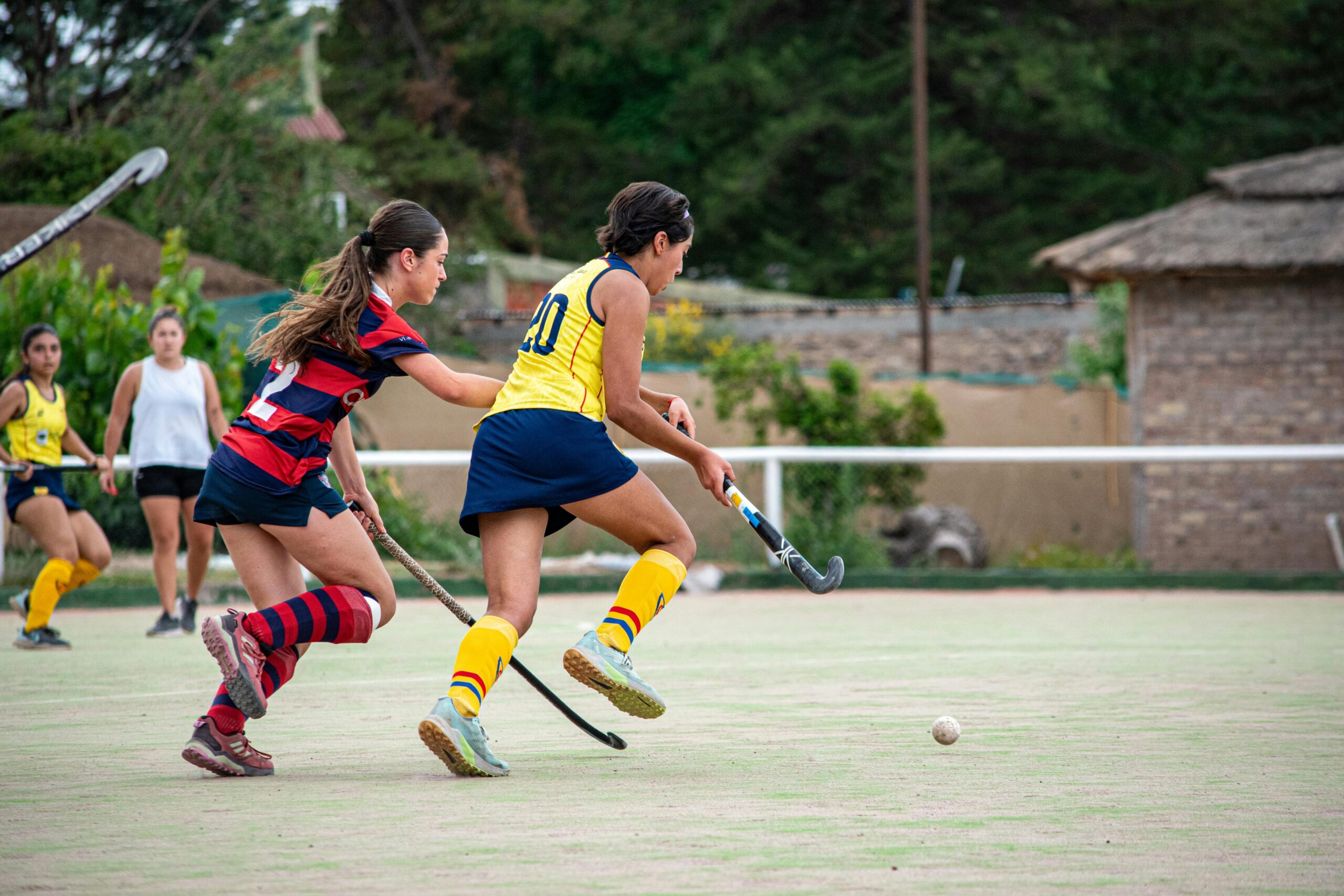
In field hockey, the penalty corner is the most high-percentage scoring opportunity in the entire sport. However, a penalty corner is only as dangerous as the shot at the end of it. You can have a perfect injection and a flawless stick stop, but if you cannot lift the ball past the goalkeeper with velocity, the opportunity is completely wasted.
At Athletes Untapped, we notice that many young players struggle to generate the immense power and lift required for a true drag flick. They try to muscle the ball entirely with their arms, stand too upright during their approach, and release the ball far too early. This lack of structural mechanics leads to weak, flat shots that are easily cleared by the first runner or comfortably kicked away by the goalkeeper.
The secret to becoming a lethal penalty corner specialist lies in the drag flick technique. Proper training fixes these kinetic chain and posture issues, allowing players to transfer their forward running momentum into a massive rotational whip, slinging the ball into the top corners of the net at blistering speeds.
Connect with a Private Field Hockey Coach: https://athletesuntapped.com/browse/field-hockey/
Why This Skill Matters for Athlete Development
Your drag flicking ability dictates how much fear you strike into the opposing defense during a penalty corner. Without a consistent, powerful flick, your team’s offensive conversion rate will plummet in tight matches.
- Game Performance: Elite drag flick technique directly translates to scoreboard dominance. When you can consistently lift the ball with speed, you take the goalkeeper’s leg guards completely out of the equation. It forces the defense to rush out frantically, which naturally opens up passing lanes for slip variations to your teammates.
- Confidence: Coaches consistently see athletes improve faster when they spend just 10 focused minutes on this drill at the start of every session. When the complex footwork and wrist snap become muscle memory, players stop panicking at the top of the shooting circle. They gain the composure to read the goalkeeper’s positioning, trust their runway, and execute a confident, aggressive flick under the pressure of a tied game.
- Long-Term Development: As you progress to higher levels of field hockey, goalkeepers and runners get incredibly fast and agile. A biomechanically sound drag flick protects your lower back from the severe strain of forced, awkward twisting. It provides the technical leverage needed to generate power through the hips and core, ensuring your shot speed scales safely as you face collegiate and international-level defenses.
Best Drills / Tips / Techniques
You cannot master the drag flick by simply running up to the ball and swinging as hard as you can. You need isolated, high-repetition drills to build specific core strength and stick awareness. Here are 5 drills AU coaches use to build an unstoppable drag flick.
1. The Seated Sling Drill
How to perform it: Sit on the turf with your legs extended in front of you, spread in a wide V-shape. Place a ball on your stick on your right side. Using only your core rotation and wrists, drag the ball across your body and flick it into the net or against a fence.
Why it works: It completely removes the complex footwork and lower body momentum from the equation. It forces the brain to internalize the feeling of the ball rolling up the shaft of the stick and the aggressive wrist snap required to generate lift.
Coaching tips: Keep your hands low and wide on the stick. The power comes from a violent pull with the left hand and a simultaneous push with the right hand.
Common mistakes: Trying to scoop the ball like a shovel. The ball must stay in contact with the turf for as long as possible before being slingshotted upward.
2. The Lunge and Drag (Stationary)
How to perform it: Get into a deep, exaggerated lunge position with your left foot forward and your right leg stretched far back. Place the ball slightly behind your right foot. Shift your weight from your back foot to your front foot, dragging the ball along the turf and releasing it with a flick.
Why it works: The drag flick requires an incredibly long “runway” to generate speed. This drill isolates the wide base and low center of gravity needed to keep the stick almost parallel to the turf during the drag.
Coaching tips: Your stick should be angled so the face covers the ball. Drag the ball all the way past your front left foot before you even think about releasing it.
Common mistakes: Releasing the ball while it is still between the feet. You must maximize the distance the ball travels on your stick to build kinetic energy.
3. The Crossover Walk-Through
How to perform it: Put your stick down. Practice the specific three-step approach: take a step with your left foot, execute a deep crossover step bringing your right foot behind your left, and then take a massive, explosive lunge step forward onto your left foot to plant. Repeat this 20 times to build rhythm.
Why it works: A powerful drag flick is heavily reliant on momentum transfer. This drill isolates the lower body mechanics, ensuring the athlete learns how to generate lateral running speed and convert it into rotational torque.
Coaching tips: Stay extremely low during the crossover. Your hips should drop closer to the turf with every single step you take.
Common mistakes: Taking tiny, choppy steps. The final plant step onto the left foot must be an aggressive, long stride to establish a powerful base.
4. The Wall Whip Drill
How to perform it: Stand roughly five yards away from a concrete wall or rebound board. Perform your full drag flick motion, but focus entirely on the sound and speed of the ball hitting the wall, rather than aiming for a specific high target.
Why it works: Many players sacrifice power because they are too obsessed with lifting the ball into the top corner. This drill removes the goalpost, teaching the nervous system to prioritize pure, unadulterated arm speed and stick whip.
Coaching tips: You should hear a distinct “whoosh” sound from your stick cutting through the air if your wrist snap is fast enough.
Common mistakes: Decelerating just before releasing the ball. Your stick must accelerate entirely through the release point.
5. The Live Target Progression
How to perform it: Set up at the top of the shooting circle. Place targets (like cones or pinnies) in the four corners of the goal. Have a teammate inject the ball and another teammate execute the stick stop. Run your full approach and aim for a specific target called out by the coach just before the injection.
Why it works: In a real match, the timing of the injection, the trap, and the flick must be perfectly synchronized. This drill marries top-speed mechanics with live timing and visual accuracy.
Coaching tips: Do not start your run until the ball has left the injector’s stick. Timing your run perfectly is the only way to catch the ball in stride.
Common mistakes: Looking down at the ball during the final release. Your eyes must snap up to look at your target exactly as your stick whips the ball forward.
Common Mistakes Athletes Make
Drag flick errors are incredibly common as players transition to high school and club field hockey, but they are easy to fix once identified on the pitch.
Standing Too Upright: This happens when a player does not bend their knees deeply enough during the final plant step. This creates a steep stick angle, drastically shortening the drag runway and killing all potential power.
How to fix it: Constantly remind yourself to get your right knee practically scraping the turf on your final stride. The lower your hips, the longer your drag can be.
Releasing the Ball Too Early: Letting the ball leave the stick while it is still in line with the middle of the body. This results in a weak, flat shot that rolls harmlessly on the ground.
How to fix it: Drill your stationary lunges. You must physically drag the ball past your lead foot, using the full length of your body to whip the ball upward.
All Arms, No Core: Trying to generate speed entirely by pulling with the shoulders and arms, while keeping the hips completely frozen. This leads to a painfully slow shot and frequent lower back injuries.
How to fix it: The power comes from the hips. Drive your right hip violently forward toward the goal to initiate the drag, letting your arms and the stick trail behind like a rubber band snapping.
Incorrect Ball Placement on the Stick: Trying to drag the ball on the toe of the stick rather than cradling it lower down the shaft.
How to fix it: Rotate your left wrist heavily so the toe of the stick points toward the turf, capturing the ball securely against the shaft during the entire drag phase.
Find a Private Field Hockey Coach: https://athletesuntapped.com/browse/field-hockey/
How Private Coaching Accelerates Improvement
The drag flick happens in a highly explosive, complex sequence of movements taking less than two seconds. Trying to self-diagnose whether your crossover step was too narrow, your stick angle was too steep, or your hip rotation was slightly late is incredibly difficult during a live penalty corner practice.
This is where private coaching is essential. Private coaching provides faster skill development by utilizing expert eyes and slow-motion video analysis. A private coach offers personalized feedback tailored to your specific height and strength, making it easy to catch habits like an early release immediately. This targeted instruction allows athletes to focus on correcting mistakes early before they become deeply ingrained muscle memory. Ultimately, mastering your drag flick in a 1-on-1 environment provides massive confidence building, allowing you to step up to the top of the circle knowing you have the technical efficiency to score at will.
Frequently Asked Questions about the Drag Flick in Field Hockey
How often should athletes practice the drag flick?
Athletes should limit their full-power drag flick practice to 15 to 20 minutes a few times a week. Because it is a highly explosive, asymmetrical movement, over-practicing can lead to lower back and core strain. Focus heavily on the stationary technique drills daily instead.
What age should athletes start working on this?
Players usually begin learning the drag flick around ages 12 to 14, once they have developed enough foundational core strength to support the explosive rotational movement safely.
How long does it take to improve?
With focused, intentional practice, players can learn the basic mechanics of lifting the ball in 4 to 6 weeks. However, mastering a truly powerful, elite-level drag flick takes years of dedicated physical and technical development.
Can beginners learn this?
It is highly recommended that beginners master the standard hit, the sweep, and the push pass perfectly before attempting the drag flick. It is an advanced skill that requires a masterful understanding of stick angles.
Why does my flick always stay flat on the ground?
A flat flick is almost always caused by an early release, a stick angle that is too vertical (standing too tall), or failing to snap the wrists forcefully at the very end of the motion.
Do private coaches help with this?
Absolutely. Private field hockey coaches are essential for breaking down the biomechanics of the approach, providing video feedback, and isolating specific kinetic flaws so the athlete can practice safely and effectively.
Conclusion
The drag flick is the undeniable ultimate weapon of an elite, scoring-focused field hockey player. Without it, your team’s penalty corner strategy is severely limited, allowing the defense to dictate the play. Improvement is highly achievable with proper training, but it requires extreme discipline regarding posture and core rotation. Encourage yourself to focus on your low center of gravity and your long runway before you focus on simply swinging harder, and consistent practice will inevitably yield explosive, unstoppable goals.
Train With a Private Field Hockey Coach
- Athletes Untapped connects athletes with vetted private coaches across the country for one-on-one training.
- Private coaching helps athletes:
- improve faster
- build confidence
- receive personalized feedback
- reach their full potential
About Athletes Untapped
Athletes Untapped connects field hockey players with experienced private coaches who specialize in drag flick mechanics, penalty corner execution, and advanced stickwork. Through personalized instruction and structured training plans, Athletes Untapped helps defenders and forwards improve their shooting power, technical efficiency, and overall scoring threat.
Find an experienced coach near you: https://athletesuntapped.com
Learn from our very best Coach!


