
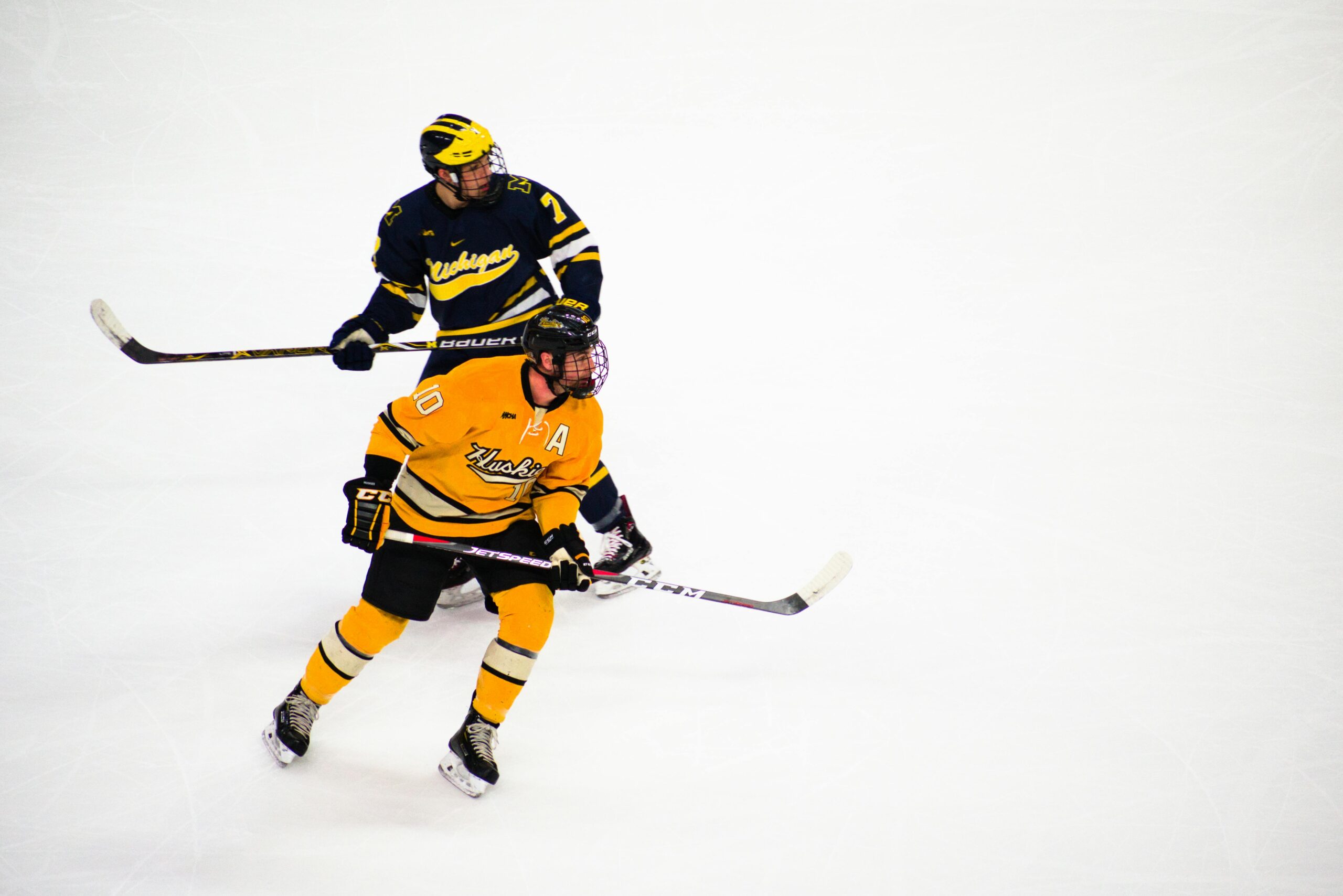
AU coaches have spent over 15 years on the ice, helping players transition from wobbly beginners in house leagues to explosive skaters on elite travel and junior rosters. When parents and athletes ask how skating technique impacts overall hockey performance, the answer is absolute: if you cannot skate, you cannot play. Hockey is the only major sport where an athlete must first master an entirely unnatural, frictionless form of locomotion before they can even begin to worry about the actual game.
Many athletes hit a developmental wall because they spend hours shooting pucks in their driveway but neglect their edge work on the ice. You can have the best stickhandling skills in the league, but if you cannot cleanly transition from forward to backward or win a race to a loose puck, those hands are useless. Proper, individualized instruction breaks down the biomechanics of the skating stride. Knowing exactly how to command your edges, maximize your stride length, and drop your center of gravity is the absolute fastest way to dominate the game.
Why Elite Skating Mechanics Matter for Player Development
Skating is the foundation of every single hockey skill. An athlete might not be the biggest player on the ice, but if they have elite edge control and balance, they become impossible to knock off the puck. Developing flawless individual mechanics—like a deep knee bend, full leg extension, and explosive crossovers—translates directly to winning 50/50 battles along the boards and creating separation in the offensive zone.
When a hockey player trusts their skating, the game slows down mentally. They stop looking down at their feet and start reading the opposing defense. In-game performance improves because an efficient skater expends significantly less energy to move at top speed, meaning they are just as fast in the third period as they were in the first. For long-term development, building a technically sound stride prevents the severe groin and hip flexor strains that plague players who try to muscle their way down the ice with poor form.
Best Drills to Accelerate Your Hockey Skating
If an athlete wants to blow past defensemen and backcheck with power, they must stop just skating laps and start isolating their edges. A top-tier AU coach will focus heavily on balance, stride recovery, and lateral mobility. Here are foundational drills used to build elite hockey skaters:
- The Single-Leg Glide and Hold (Balance and Edge Control)
- How to perform: The athlete takes three hard strides to build speed, lifts one leg entirely off the ice, and glides on the other foot in a deep, seated stance from the blue line to the red line. Repeat on the inside edge, outside edge, and flat blade.
- Why it works: You cannot shoot or pass with power if you are off-balance. This drill builds incredible unilateral ankle strength and forces the athlete to trust their edges without relying on their stick for support.
- Coaching tip: The chest must stay up, and the knee of the gliding leg should be bent directly over the toe of the skate.
- Common mistake: Standing too upright, which instantly shifts the center of gravity too high and causes the player to tip over.
- Circle C-Cuts (Power and Push-Off)
- How to perform: The athlete skates around one of the face-off circles using only their outside leg to push. They carve a continuous “C” shape into the ice, aggressively pushing outward and snapping the foot back under their body.
- Why it works: It completely isolates the power-generation phase of the stride. It forces the athlete to use the full length of the blade to push the ice away, rather than just taking choppy running steps.
- Coaching tip: The recovery is just as important as the push. Snap the pushing foot back directly under the hips quickly to prepare for the next thrust.
- Common mistake: Pushing straight back instead of pushing out to the side. A hockey stride generates power laterally, not linearly.
- Blue Line Transitions (Agility and Hip Mobility)
- How to perform: The athlete skates forward toward the blue line, sharply opens their hips (mohawk turn) to transition backward exactly on the line, takes three backward crossovers, and then transitions back to forward skating.
- Why it works: Hockey is a game of constant directional changes. This drill trains the fluid, seamless transitions required for defensemen to gap up on forwards and for forwards to open up for a pass.
- Coaching tip: Lead the transition with the head and shoulders. Where the upper body turns, the hips and skates will naturally follow.
- Common mistake: Jumping to switch directions. The skates should remain in contact with the ice to maintain speed and stability.
- The Overspeed Crossover Drill (Cornering Velocity)
- How to perform: The athlete skates the figure-eight pattern of the face-off circles at 110 percent effort, focusing entirely on driving their outside leg forcefully over their inside leg to generate speed through the curve.
- Why it works: You cannot increase your top speed unless you train at the edge of losing control. This forces the athlete to lean aggressively into their inside edges and generate acceleration through a turn.
- Coaching tip: Keep the shoulders level and parallel to the ice; do not dip the inside shoulder heavily into the circle.
- Common mistake: Just stepping the outside foot over without actively pushing under with the inside foot. Both legs must generate power.
Find a Private Ice Hockey Coach: https://athletesuntapped.com/browse/ice-hockey/
Common Mistakes Athletes Make on the Ice
Even the hardest-working players will look slow if they reinforce bad mechanical habits. A great AU coach will identify and fix these common skating mistakes immediately:
- Playing Too Tall: This is the number one issue in youth hockey. When a player stands upright with straight legs, they have zero leverage to push against the ice, making them incredibly slow and easy to knock down. The knees must be deeply bent so the hips are in a loaded, athletic stance.
- The Toe Flick: At the end of a forward stride, many players flick their toe backward, kicking ice up into the air. This wastes energy. The blade should stay close to the ice, pushing outward laterally through the heel and middle of the blade.
- Swinging the Arms Side-to-Side: When players get tired, they start swinging their arms across their chest like a windshield wiper. This twists the torso and fights forward momentum. The arms should drive straight forward and straight back, exactly like a track sprinter.
- Weak Ankles (Bending Inward): If a player’s skates are constantly leaning inward toward each other, they are not using their edges properly (or their skates are tied too loosely). This kills all agility and speed. Skates should be tied tightly, and the ankles must remain straight and strong.
How Private Coaching Accelerates Skating Development
A team practice is designed to teach forechecks, defensive zone coverage, and power plays. A head coach managing twenty players and two goalies simply does not have the time to dedicate thirty minutes to fixing a winger’s backward crossovers. This is exactly where a private hockey or power skating coach accelerates improvement.
In a one-on-one or small-group setting, an AU coach strips away the puck and focuses entirely on the biomechanics of the blade. If a defenseman is constantly getting beaten out of the corner, an AU coach will use video to show them that they are crossing their feet instead of using a proper explosive T-push. This hyper-focused, detail-oriented environment builds immense edge confidence, corrects posture instantly, and gives the hockey player the exact physical blueprint they need to become the fastest skater on their team.
Frequently Asked Questions About Hockey Skating
Can You Learn to Play Hockey if You Are a Bad Skater?
You can start, but you will not progress very far. Skating is the entry fee for the sport. If you cannot stop, turn, and accelerate comfortably, you will spend the entire game trying not to fall rather than actually playing hockey. Power skating should be the primary focus of any beginner.
How Often Should Hockey Players Practice Power Skating?
To see a dramatic difference in stride mechanics, AU coaches recommend dedicating one entire practice session per week strictly to power skating without pucks. During the off-season, intensive power skating clinics 2 to 3 times a week will yield massive results.
Are Figure Skating Lessons Good for Hockey Players?
Yes, absolutely. Many of the best NHL skaters have taken figure skating or worked with figure skating coaches. Figure skating demands absolute perfection in edge control, balance, and core strength, all of which translate directly to elite hockey agility.
What is the Most Important Part of the Hockey Stride?
The knee bend. A deep knee bend creates a longer stride, which means the blade stays in contact with the ice longer to generate more pushing force. It also lowers the player’s center of gravity, making them significantly harder to knock off the puck.
How Long Does It Take to Become a Strong Skater?
Learning the basics of stopping and turning takes a few months of consistent practice. However, building the explosive speed, seamless transitions, and deep edge control of an elite hockey player is a multi-year process that requires dedicated, specialized coaching.
Connect with a Private Ice Hockey Coach: https://athletesuntapped.com/browse/ice-hockey/
Conclusion
Elite hockey performance is not built on flashy stickhandling; it is built from the ice up. Hockey players need an instructor who will tear down their inefficient stride, correct their knee bend, and demand absolute perfection on their inside and outside edges. When athletes prioritize balance, stride recovery, and explosive crossovers over simply shooting pucks at an empty net, they elevate every single aspect of their game. Bend your knees, trust your edges, and leave the competition behind.
About Athletes Untapped
Athletes Untapped connects athletes of all sports with experienced private coaches who specialize in mental performance, sports psychology concepts, and competitive mindset training. Through personalized instruction and structured training plans, AU coaches help athletes eliminate performance anxiety, master their internal dialogue, and completely dictate their emotional response to adversity.
Find an experienced coach near you: https://athletesuntapped.com
Learn from our very best AU coaches!


