
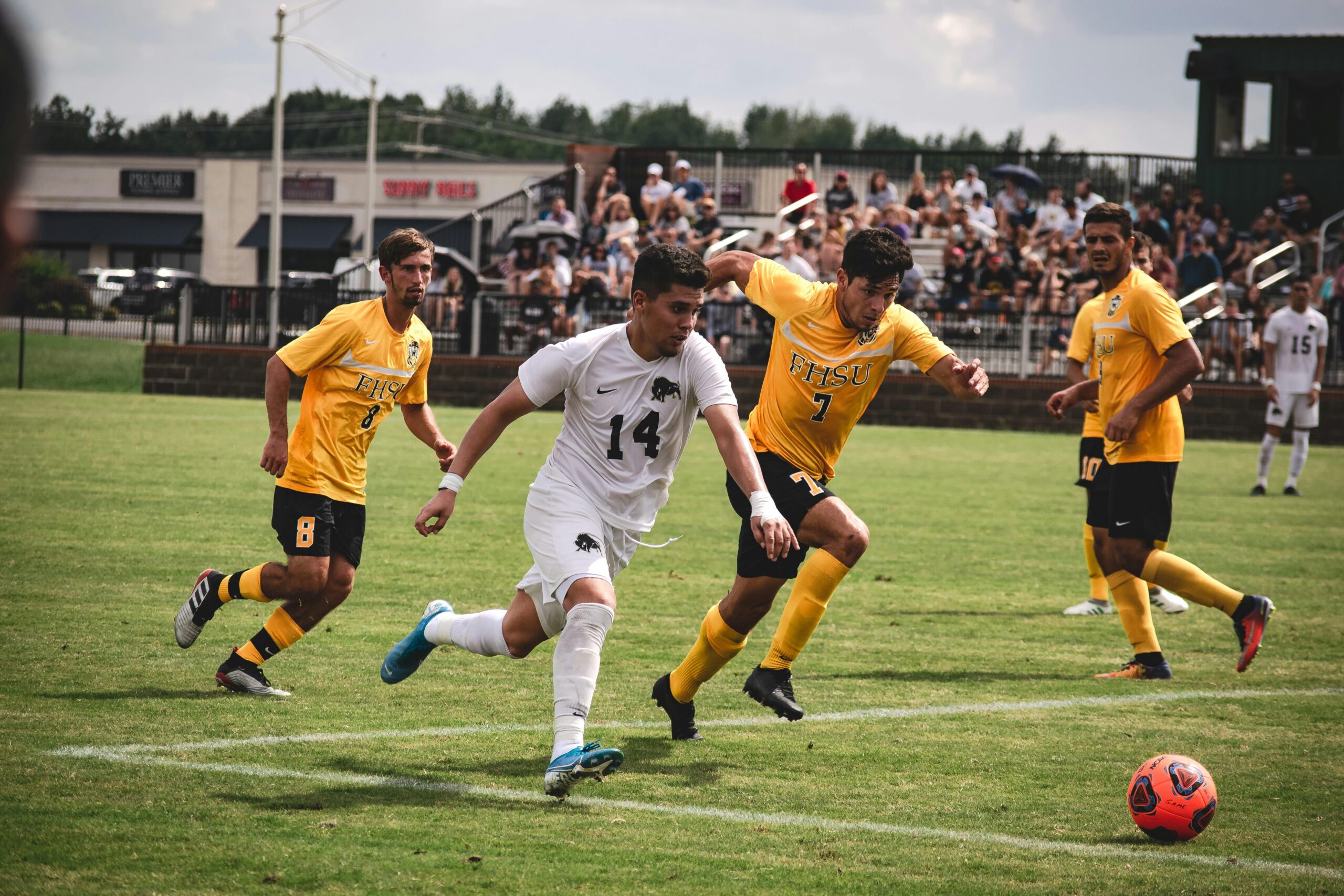
In modern soccer, the days of having endless time and space on the ball are completely gone. High-pressing tactical systems have become the global standard, meaning the exact millisecond a midfielder or defender receives a pass, two or three opponents are already sprinting at them with absolute aggressive intent. You can have the most beautiful passing range in your league, but if you cannot handle physical pressure, you will be forced into rapid, catastrophic turnovers that lead directly to goals against your team.
At Athletes Untapped, AU coaches notice that many young players treat a high press like an unsolvable crisis. They put their heads down, panic, take a heavy first touch facing their own goal, and ultimately just boot the ball aimlessly up the field to nobody. This lack of structural mechanics leads to a complete loss of possession, exhausted defenders, and an inability to build any offensive rhythm.
The secret to breaking an aggressive press and opening up the entire field lies in press resistance. Proper training fixes these cognitive and spatial issues, allowing players to scan continuously, use their body as a shield, manipulate the pressing angles, and turn defensive panic into a devastating counter-attack.
Connect with a Private Soccer Coach: https://athletesuntapped.com/browse/soccer/
Why This Skill Matters for Athlete Development
Your press resistance dictates your ability to play in the midfield or build out of the back. Without it, opposing teams will identify you as a pressing trigger and actively target you to win the ball.
- Game Performance: Elite press resistance directly translates to offensive numerical advantages. When you can receive the ball under heavy pressure, hold off a defender, and casually slip a pass to a teammate, you take two or three pressing opponents completely out of the play. This instantly creates a 4-on-3 or 3-on-2 attacking scenario for your forwards.
- Confidence: AU coaches have seen athletes improve faster when they spend dedicated time on scanning and tight-space receiving drills at the start of every session. When handling pressure becomes muscle memory, players stop hiding behind the opposing team. They gain the composure to constantly demand the ball in tight areas, trusting their first touch and their spatial awareness to escape the trap.
- Long-Term Development: As you progress to high school, academy, and collegiate soccer, the game becomes suffocatingly fast. A biomechanically and cognitively sound understanding of press resistance protects you from being overwhelmed by the speed of play. It provides the elite tactical IQ needed to execute complex build-up patterns, ensuring your value scales as you face highly organized, hyper-athletic pressing traps.
Best Drills / Tips / Techniques
You cannot master press resistance by simply dribbling unopposed through cones. You need isolated, highly chaotic reaction drills to train your peripheral vision and your first touch under distress. Here are 5 techniques AU coaches use to build an unpressable player.
1. The 360-Degree Scan (Taking the Picture)
How to perform it: Before the ball is even passed to you, you must quickly snap your head over both shoulders. You are mentally mapping the location of your teammates, the approaching defenders, and the open space. The scan must happen continuously until the exact moment the ball reaches your foot.
Why it works: Press resistance is a cognitive skill before it is a physical one. If you wait until you receive the ball to figure out where the pressure is coming from, you are already too late. Scanning allows you to pre-program your escape route, ensuring your first touch takes you directly away from the defender.
Coaching tips: The scan should be a violent, quick snap of the neck. Do not stare; take a mental photograph and immediately look back at the ball.
Common mistakes: Looking at the ball while it is traveling to you, but never looking behind you. You must check your blind spots to survive in the midfield.
2. Receiving on the Back Foot (Opening the Hips)
How to perform it: When a pass comes toward you, do not receive it with the foot closest to the ball. Instead, let the ball roll across your body and trap it with your “back foot” (the foot furthest from the pass). As you receive it, open your hips completely so you are facing up the field.
Why it works: Receiving on the front foot keeps your body facing your own goal, inviting the defender to press you from behind. Receiving on the back foot instantly opens up your field of vision to 180 degrees, allowing you to see the entire pitch and instantly play the ball forward.
Coaching tips: Your body should be positioned sideways, half-turned, before the ball even arrives.
Common mistakes: Stopping the ball dead under your body. Your first touch should always be directional, guiding the ball into the space you want to exploit.
3. The Body Shield (Using Leverage)
How to perform it: When a defender closes you down tightly, get your body completely between the ball and the opponent. Drop your center of gravity, bend your knees, and extend an arm slightly to feel the defender’s pressure while keeping the ball protected on the foot furthest away from them.
Why it works: You do not always have to outrun a pressing player; sometimes you just need to out-muscle them. This technique uses simple physics. If you maintain a low, strong base, it is physically impossible for the defender to win the ball without fouling you by going directly through your back.
Coaching tips: Do not stand up straight. The lower you are to the ground, the harder you are to push off the ball.
Common mistakes: Trying to face the defender while protecting the ball. Turn your back or shoulder to them to maximize the physical barrier.
4. La Pausa (Baiting the Press)
How to perform it: Receive the ball in space and intentionally put your foot on top of it, coming to a complete stop. Wait for the pressing defender to sprint toward you. The exact millisecond they commit their body weight to a tackle, execute a rapid pass or a quick touch past them into the space they just vacated.
Why it works: “La Pausa” (the pause) is a psychological weapon. Pressing teams rely on momentum and panic. By stopping the ball, you completely disrupt their timing. You force the defender to make the first move, allowing you to react to their over-commitment and exploit the gap they left behind.
Coaching tips: You must have ice in your veins. Let the defender get uncomfortably close before you release the ball.
Common mistakes: Pausing the ball but failing to have a pre-planned exit strategy. You must know exactly where you are going to pass or dribble before you bait the trap.
5. Directional Rondos
How to perform it: Set up a 4v2 keep-away game (rondo) in a tight grid. However, place two small target goals outside the grid. The four possession players must string together at least four consecutive passes under heavy pressure before they are allowed to pass the ball out of the grid and into one of the target goals.
Why it works: Standard rondos teach possession, but directional rondos teach progression. This drill marries tight-space ball retention with the ultimate goal of breaking the press and advancing up the pitch. It forces players to solve the immediate pressure while constantly looking for the forward escape pass.
Coaching tips: Play with minimal touches (one or two touch maximum). The ball must move faster than the defenders can run.
Common mistakes: Standing still after making a pass. In a rondo, the moment the ball leaves your foot, you must take two steps to create a new, open passing angle for your teammate.
Common Mistakes Athletes Make
Press resistance errors are incredibly common in youth and high school soccer, but they are entirely within your power to fix once you build awareness of your surroundings.
Facing Your Own Goalkeeper: Receiving the ball and immediately looking backward. This invites maximum pressure and guarantees your team will be pinned deep in their own half. How to fix it: Always scan and attempt to receive the ball on the half-turn. Try to play forward or sideways before you resort to playing backward.
The One-Touch Panic Clearance: Kicking the ball away instantly without even looking because you assume a defender is right behind you. How to fix it: Trust your scan. If your scan told you that you have three yards of space, you must have the composure to take a touch and settle the ball rather than throwing possession away.
Hiding in the Cover Shadow: Standing directly behind an opposing player while your teammate has the ball, making it impossible for them to pass to you. How to fix it: You must constantly shift your position. If you cannot see your teammate’s eyes, they cannot pass you the ball. Step out of the defender’s shadow and demand the ball in the open lane.
How Private Coaching Accelerates Improvement
Press resistance is a highly cognitive skill that requires an elite understanding of spatial geometry, timing, and first-touch mechanics. Trying to self-diagnose whether your shoulder check was a half-second too late, or if your body shape was closed off during reception, is practically impossible during the exhaustion of a live match.
This is where private coaching is essential. Private coaching provides faster technical development by utilizing expert eyes, relentless pressure simulations, and highly structured scanning drills. A private soccer coach offers personalized feedback tailored to your specific position, making it easy to catch habits like receiving on the front foot immediately. This targeted instruction allows athletes to focus on correcting their spatial awareness early before bad habits become ingrained. Ultimately, mastering your press resistance in a 1-on-1 environment provides massive confidence building, allowing you to step onto the pitch knowing you possess the tactical IQ to dictate the tempo against the most aggressive opponents.
Find a Private Soccer Coach: https://athletesuntapped.com/browse/soccer/
Frequently Asked Questions about Press Resistance in Soccer
What makes a player “press resistant”?
A press-resistant player is someone who rarely loses the ball when put under intense physical and spatial pressure. They use elite scanning, close ball control, body shielding, and quick passing to escape traps and advance the ball.
How can I stay calm when three players are running at me?
Preparation creates calm. If you have already scanned the field and know exactly where your teammates are before the ball arrives, the pressure doesn’t matter because you already have an exit plan. Panic only happens when you do not know what is going on around you.
Which positions need to be the most press-resistant?
Central defensive midfielders (the “number 6”) and center-backs absolutely must be press-resistant, as they operate in the most dangerous areas of the field during the build-up phase. However, in modern soccer, every single player on the pitch must be able to handle pressure.
s it better to dribble or pass out of a press?
IPassing is almost always faster and safer than dribbling. The ball can move infinitely faster than a human can run. However, if a defender over-commits and leaves a massive gap, a quick dribble to break the line is highly effective.
Do private coaches help with this?
Absolutely. Private soccer coaches are essential for breaking down the biomechanics of your first touch, providing live, physical pressure to simulate game situations, and isolating specific scanning flaws so you can learn to process the game like an elite midfielder.
Conclusion
Mastering press resistance is the undeniable foundation of a composed, game-controlling soccer player. Without it, you are leaving your team’s possession entirely to chance and playing directly into the hands of aggressive, trapping defenses. Improvement is highly achievable with proper technical training, but it requires extreme visual discipline, a flawless first touch, and the courage to hold the ball under fire. Encourage yourself to focus on your scanning habits and your back-foot receiving before you focus on flashy dribbling moves, and consistent practice will inevitably yield total control of the midfield and significantly more attacking opportunities.
Train With a Private Soccer Coach
- Athletes Untapped connects athletes with vetted private coaches across the country for one-on-one training.
- Private coaching helps athletes:
- improve faster
- build confidence
- receive personalized feedback
- reach their full potential
About Athletes Untapped
Athletes Untapped connects soccer players with experienced private coaches who specialize in press resistance, spatial awareness, and midfield composure. Through personalized instruction and structured training plans, AU coaches help defenders, midfielders, and forwards eliminate panic, master their scanning habits, and completely dismantle high-pressing teams.
Find an experienced coach near you: https://athletesuntapped.com
Learn from our very best AU coaches!


