
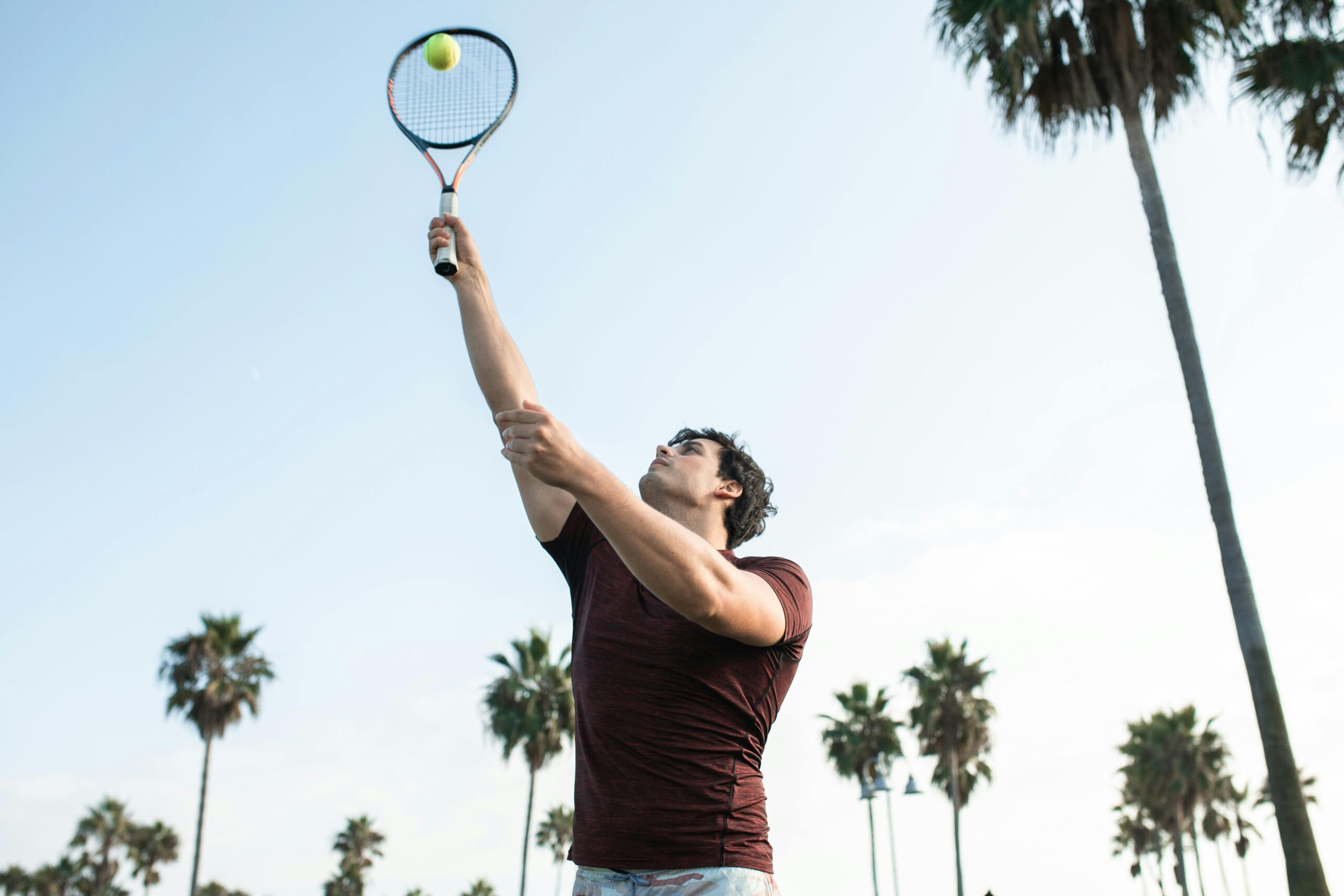
If you’ve spent any time searching “how to find the best tennis coach near me,” you already know how overwhelming it can be. As someone who has coached tennis for over 15 years—working with everyone from 8-year-old beginners to high school varsity standouts—I can tell you that not all coaching is created equal.
Tennis is an incredibly technical sport. It demands precise stroke mechanics, explosive footwork, and exceptional racquet control. You can hit a thousand balls against a backboard or a ball machine, but if your grip is slightly off or your weight transfer is backward, you are only reinforcing bad habits. Athletes and parents often struggle because they don’t know what genuinely makes a coach effective. They might pick the closest option or a former college star, only to find the athlete’s game plateauing a few months later.
Proper training fixes this. The right coach doesn’t just feed balls; they break down your mechanics, build your confidence, and teach you how to actually construct a point. Let’s dive into exactly how to find the right fit for your game and what elite coaching looks like in practice.
Why Finding the Right Coach Matters for Athlete Development
Choosing the right private coach isn’t just about improving a backhand—it completely dictates an athlete’s long-term trajectory in the sport. I’ve seen countless athletes come to me with a hitch in their serve or a choppy forehand because a previous instructor let them get away with poor fundamentals. Unlearning those bad habits takes months.
When you find the right coach, the performance impact is massive:
- Confidence: A great coach creates an environment where athletes aren’t afraid to miss while trying a new technique. When an athlete fully trusts their stroke mechanics, they swing freely under pressure in matches.
- Game Performance: The right coach bridges the gap between practice and match play. They teach you not just how to hit a topspin forehand, but where and when to hit it to exploit an opponent’s weakness.
- Long-Term Development: Good coaches protect your arm and body by teaching efficient, biomechanically sound strokes. They prioritize footwork and recovery, which prevents injuries and sets the foundation for college-level play.
Connect with a Private Tennis Coach: https://athletesuntapped.com/browse/tennis/
Best Drills and Techniques to Expect from a Top-Tier Coach
When evaluating a potential coach, pay attention to the drills they run during your first few sessions. A glorified “ball-feeder” will just have you stand on the baseline and hit. An elite coach will use targeted drills to break down specific mechanics. Here are essential drills a high-quality coach should be walking you through:
1. The Service Line Mini-Tennis Drill
- How to perform it: Both players stand on the service line and rally using only half-swings, aiming to keep the ball deep in the service box.
- Why it works: It forces the athlete to focus entirely on racquet control, feel, and watching the ball hit the strings. You cannot rely on power here.
- Coaching tips: Keep the feet moving. Do not get lazy just because you are close to the net. Focus on a clean, low-to-high swing path.
- Common mistakes: Taking a massive backswing or using too much wrist flick instead of a smooth push through the ball.
2. The Figure-8 Footwork Drill
- How to perform it: The coach places two cones about 6 feet apart behind the baseline. The athlete must hit a forehand, backpedal around the cone, side-shuffle to the other side, hit a backhand, and repeat in a figure-8 pattern.
- Why it works: Tennis is played with the feet. This builds explosive recovery and ensures the athlete is setting up properly for every single shot.
- Coaching tips: Always return to an athletic split-step in the middle. Keep your center of gravity low.
- Common mistakes: Crossing the feet lazily during the recovery or standing straight up between shots.
3. The Drop-Feed Stroke Mechanics Isolation
- How to perform it: The coach stands right next to the athlete and simply drops the ball into their strike zone. The athlete hits the ball into the open court.
- Why it works: Taking the incoming pace of the ball away allows the athlete to focus 100% on their kinetic chain—using the legs, rotating the hips, and finishing the swing over the shoulder.
- Coaching tips: Focus on the non-dominant hand pointing at the ball and ensuring weight transfers from the back foot to the front foot.
- Common mistakes: Opening the shoulders too early or “arming” the ball without using core rotation.
Find a Private Tennis Coach: https://athletesuntapped.com/browse/tennis/
Common Mistakes Athletes and Parents Make When Choosing a Coach
Finding the right fit can be tricky. Over my years of coaching, I’ve noticed a few consistent traps that families fall into:
- Prioritizing Convenience over Quality: Picking a coach simply because they teach at the neighborhood courts 5 minutes away, rather than driving 20 minutes to work with someone who actually understands stroke mechanics, will stunt an athlete’s growth.
- Assuming Great Players Make Great Coaches: A former D1 college player might hit a beautiful ball, but that doesn’t mean they know how to teach it. Look for a coach with a proven track record of developing talent, communicating clearly, and having patience.
- Accepting Vague Feedback: If a coach constantly says things like “hit it harder” or “watch the ball” without giving actionable, technical advice (e.g., “drop the racquet head below the ball to generate topspin”), they aren’t helping you improve.
- Expecting Overnight Miracles: Rebuilding a faulty serve or changing a grip takes time. Muscle memory doesn’t rewrite itself in a single 60-minute lesson. Impatience often leads to jumping from coach to coach, which only creates more confusion for the athlete.
How Private Coaching Accelerates Improvement
Group clinics are great for getting reps and playing points, but they cannot replace the value of one-on-one attention. In a group of six kids, a coach might only see your athlete hit a forehand twice in a five-minute span.
Private coaching accelerates improvement because it provides an immediate, personalized feedback loop. If your footwork is sloppy on a wide ball, a private coach catches it instantly. We can stop the drill, physically adjust your stance, and run it again until you feel the difference. This environment allows us to correct mistakes early before they become ingrained habits. Furthermore, it builds tremendous confidence. When an athlete has a dedicated expert in their corner mapping out a customized development plan, they walk onto the court with a totally different level of self-belief.
Frequently Questions About Finding the Best Tennis Coach Near Me
How often should athletes take private tennis lessons?
For consistent improvement, once a week is the standard recommendation for beginners and intermediate players, provided they are practicing on their own 1-2 times a week outside of the lesson. Competitive high school athletes often bump this to twice a week for fine-tuning.
What age should athletes start working with a private tennis coach?
Athletes can start working on fundamentals as early as 6 to 8 years old. At this age, a good coach focuses on hand-eye coordination, basic racquet control, and making the sport fun. More intense technical specialization usually begins around ages 10 to 12.
How long does it take to see improvement from private tennis lessons?
Noticeable technical improvement usually takes about 4 to 6 weeks of consistent lessons. However, translating those technical fixes into actual match play (where pressure is involved) can take a few months of dedicated practice.
Can beginners benefit from a private tennis coach?
Absolutely. In fact, beginners benefit the most because they are blank slates. A private coach ensures they learn the correct grip, footwork, and stroke mechanics from day one, preventing them from developing bad habits that are incredibly difficult to fix later.
How do I know if a tennis coach is right for me?
You know a coach is right for you if they provide clear, actionable feedback, focus heavily on fundamentals and footwork, and make the athlete feel both challenged and supported. Pay attention to how they communicate during the first lesson.
Do private coaches help with tennis strategy and mental toughness?
Yes. Elite private coaches do much more than teach stroke mechanics. They teach you how to analyze an opponent, construct points, manage your emotions after a double fault, and develop the mental resilience required to win tight matches.
Conclusion
Typing “how to find the best tennis coach near me” into a search engine is only the first step. The true test is knowing how to evaluate the person standing across the net from you. Remember to look for a coach who prioritizes fundamentals, communicates with clear technical cues, and understands how to develop footwork and racquet control. Don’t settle for a ball-feeder. When you commit to consistent practice and find a coach who genuinely cares about your long-term development, taking your game to the next level becomes a highly achievable reality.
About Athletes Untapped
Athletes Untapped connects athletes of all sports with experienced private coaches who specialize in mental performance, sports psychology concepts, and competitive mindset training. Through personalized instruction and structured training plans, AU coaches help athletes eliminate performance anxiety, master their internal dialogue, and completely dictate their emotional response to adversity.
Find an experienced coach near you: https://athletesuntapped.com
Learn from our very best AU coaches!


