
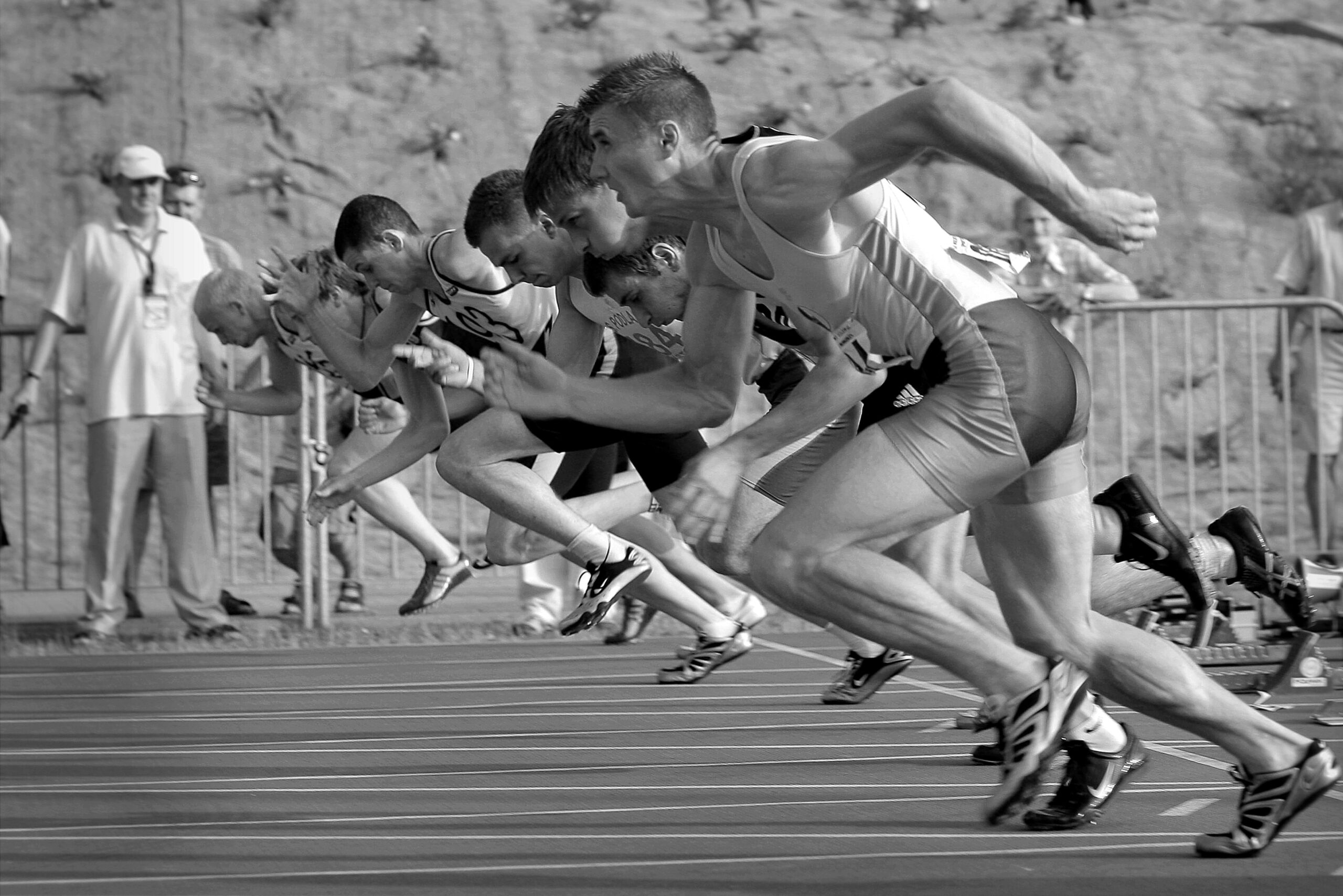
Speed kills in every sport. Whether it is a wide receiver breaking away for a touchdown, a striker chasing a through ball, or a track athlete closing the gap on the final straight, top speed changes the game.
At Athletes Untapped, we often see athletes confusing “acceleration” with “max velocity.” Acceleration is how quickly you reach your top speed (usually the first 0-20 meters). Max velocity is your absolute top gear—the fastest you can physically travel.
Most team sport athletes spend their lives training for acceleration. They push sleds and run short cone drills. While this is important, they are neglecting the ceiling of their potential. Training max velocity does not just make you faster at 40 yards; it raises your entire athletic profile. Here is how to train your body to move at its absolute limit.
Connect with a Private Strength and Speed Coach: https://athletesuntapped.com/browse/strength-and-speed/
Why Max Velocity Matters for All Athletes
You might think, “I play soccer/football/lacrosse, I never run 60 meters in a straight line.” That is a common misconception. Max velocity training improves performance at all speeds.
Speed Reserve: If your top speed is 20 mph, cruising at 15 mph takes 75% effort. If you raise your top speed to 22 mph, that same 15 mph cruising speed now only takes 68% effort. You are faster while using less energy.
Neuromuscular Efficiency: Max velocity work is the most potent stimulus for the central nervous system. It forces your brain to fire muscle fibers faster than any weight room exercise ever could.
Hamstring Health: Most hamstring injuries occur during the deceleration phase of a sprint or when an athlete is forced to sprint all-out without being prepared for it. Exposure to max velocity sprinting acts as a “vaccine” for hamstrings, strengthening them at high lengths and speeds.
Mechanics: Upright sprinting mechanics (max velocity) are different from acceleration mechanics. Learning to run tall and relaxed translates to better movement efficiency on the field.
Best Drills & Workouts to Develop Top Speed
Max velocity work is about quality, not quantity. You cannot run at top speed if you are tired. These workouts require full recovery (3-5 minutes) between reps. Here are 4 drills AU coaches use to build the engine.
1. Fly 10s (The Gold Standard)
How to perform it: Set up a 20-30 meter “build-up” zone, a 10-meter “fly” zone, and a 20-meter “deceleration” zone. Build up speed gradually so you hit the 10-meter fly zone at absolute top speed. Maintain that velocity for the 10 meters, then shut it down smoothly. Why it works: It isolates the top speed phase without the fatigue of a full 40m or 60m dash. It allows the athlete to focus purely on mechanics at high velocity. Coaching Tip: Do not strain. The face and shoulders must be relaxed. Think “fast and loose,” not “hard and tight.”
2. Wicket Runs (Mini-Hurdles)
How to perform it: Place 6-10 mini-hurdles (wickets) or cones at specific spacings based on the athlete’s height (usually increasing by a few inches each gap). The athlete sprints over them with an upright posture, focusing on stepping over and down, not jumping. Why it works: This forces “front-side mechanics” (knees up, toes up) and prevents overstriding. If you overstride, you hit the wicket. It forces you to put force into the ground vertically. Coaching Tip: Keep the hands high (cheek to pocket). Do not let the arms drop, as this lowers the hips.
3. Sprint-Float-Sprint (Ins and Outs)
How to perform it: Set up three zones of 20 meters each. Sprint the first 20m hard (acceleration). “Float” the next 20m (maintain speed but relax the effort). Then sprint the final 20m hard again. Why it works: This teaches the athlete to shift gears. The “float” phase teaches relaxation at speed, which is the secret to elite sprinting. Coaching Tip: The float is not a slow down. It is taking your foot off the gas pedal while keeping the car moving at 100 mph.
4. Assisted Sprints (Overspeed)
How to perform it: Using a specialized bungee cord or a slight downhill slope (1-2% grade), the athlete sprints while being pulled slightly faster than their natural max speed. Why it works: It tricks the nervous system into firing faster than it is used to. It breaks through speed plateaus. Coaching Tip: This is advanced. If the slope is too steep or the pull too hard, mechanics break down and injury risk increases. Only do this with a qualified coach.
Common Mistakes Athletes Make
Max velocity is a high-stress activity. Doing it wrong is a recipe for pulled muscles. Our coaches strictly monitor these errors.
- Trying too Hard: Gritting your teeth and clenching your fists actually slows you down. Tension acts as a brake. The fastest sprinters in the world look like their faces are melting because they are so relaxed.
- Overstriding: Reaching out with the foot to “grab” more ground. This causes the foot to land in front of the center of mass, acting as a brake on every step. The foot should land directly under the hips.
- Too Much Volume: You cannot run at true max velocity for more than a few reps. If you do 10 reps, the last 5 are just conditioning, not speed work. Keep the volume low (e.g., 3-5 high-quality reps).
- Not Resting Enough: If you are out of breath, you are not ready for the next rep. You need 1 minute of rest for every 10 meters sprinted.
How Private Coaching Accelerates Improvement
Sprinting is a technical skill, just like a golf swing. You cannot see your own backside mechanics while running at 20 mph. This is where private coaching is essential.
A private strength and speed coach can:
- Video Analysis: We slow down your sprint to frame-by-frame. We show you exactly where your heel recovery is too low or your pelvic tilt is wrong.
- Manage the Load: We calculate the exact yardage to ensure you stimulate the nervous system without frying it.
- Set the Spacing: For drills like wickets, the spacing must be exact to the inch based on your limb length. A coach sets this up perfectly for you.
- Cueing: We provide real-time cues like “step over the knee” or “punch the ground” that click with your brain instantly.
Find with a Private Strength and Speed Coach: https://athletesuntapped.com/browse/strength-and-speed/
Frequently Asked Questions About Max Velocity Sprint Training
How often should I do max velocity work?
For most athletes, once or twice a week is the maximum. It is very taxing on the central nervous system (CNS). Ideally, do it at the beginning of the week when you are freshest.
Can I use a treadmill for max velocity?
Generally, no. Most commercial treadmills do not go fast enough, and the mechanics of running on a moving belt are slightly different than ground reaction forces. Curved non-motorized treadmills are better, but track/grass is best.
Is this safe for younger athletes?
Yes, as long as the volume is low. Kids are naturally elastic. Teaching them to run properly at high speeds prevents injuries as they grow and get heavier.
Does weightlifting help max velocity?
Yes, but only if it translates to power. Heavy squats build force potential, but plyometrics and sprints convert that force into speed. You need both.
Conclusion
Max velocity is the frontier of athletic performance. It is what separates the good from the great.
By dedicating time to upright mechanics, prioritizing rest, and training with the intent to fly, you unlock a level of game speed that makes you impossible to ignore.
About Athletes Untapped
Athletes Untapped connects athletes with experienced private coaches who specialize in speed development, sprint mechanics, and strength and conditioning. Through personalized instruction and structured training plans, Athletes Untapped helps athletes run faster, jump higher, and dominate their sport.
Find an experienced coach near you: https://athletesuntapped.com
Learn from our very best Coach!


