
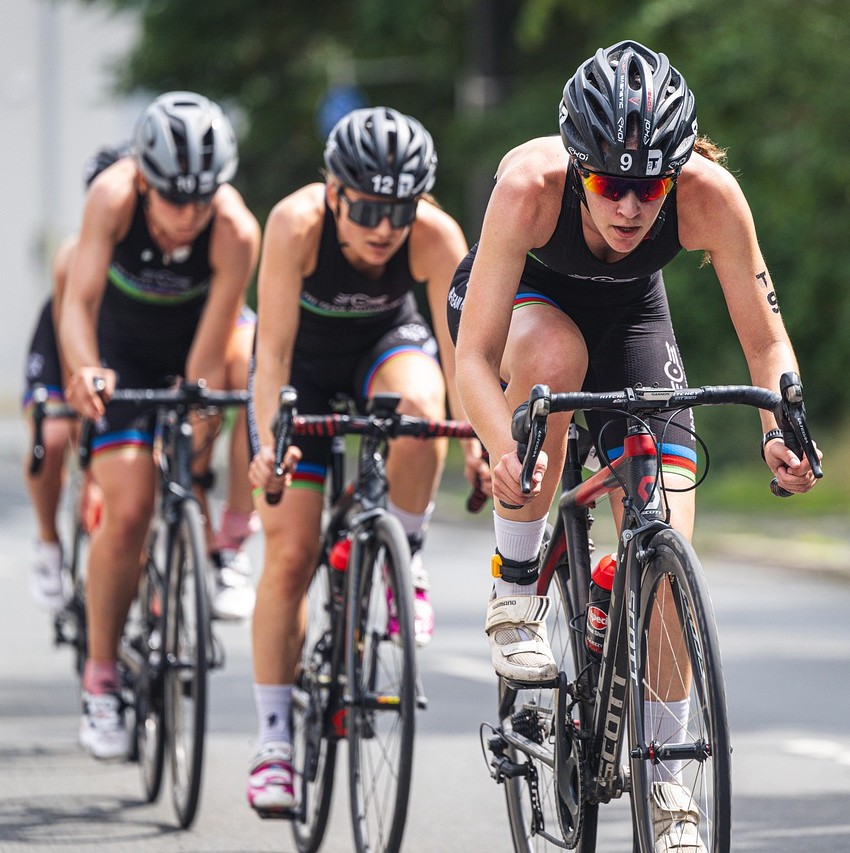
Athletes spend a lot of time practicing what their bodies need to do, but did you know that there is another way to rehearse those skills that doesn’t require a ball, field or court?
Visualization, often called imagery or mental rehearsal in sports psychology, is the practice of creating a detailed mental version of an experience before it happens. An athlete might picture a free throw routine from start to finish, mentally run through the opening moments of a race or imagine how they’ll respond after making a mistake in a game.
It doesn’t replace physical practice, but used alongside regular training, research suggests imagery can be a useful tool for improving performance and helping athletes feel more prepared for competition.
A recent analysis involving more than 3,500 athletes found an overall performance benefit from imagery practice. The researchers also found that imagery tended to be more effective when combined with other psychological skills rather than treated as a stand-alone solution.
What Does “Visualization” Mean?
The word “visualization” makes it sound like an athlete is supposed to close their eyes and picture something, but good imagery involves more than that.
The Association for Applied Sport Psychology describes sport imagery as using multiple senses to mentally recreate an athletic experience. An athlete might picture what they’re seeing, but also imagine the sound of the gym, the feel of the ball in their hands, the rhythm of their breathing or the sensation of pushing off the ground.
Think about a basketball player practicing a free throw mentally: Instead of simply picturing the ball going through the basket, they might imagine walking to the line, placing their feet, taking a breath, feeling the ball on their fingertips, going through their normal shooting motion and watching the ball finish through the net.
Imagery can also be done from different perspectives. Some athletes prefer imagining the action through their own eyes, while others find it helpful to picture themselves performing as if they’re watching a video. There isn’t necessarily one method that works for everyone.
Visualization Works Best When It’s About the Process
It’s tempting to think visualization means picturing yourself winning the championship, scoring the game-winning goal or standing on a podium. Those images can certainly be motivating, but they’re not the most useful place to spend all of your mental practice.
Athletes have much more control over how they perform than over the final outcome.
A tennis player can mentally rehearse their serve routine and contact point. They can’t control whether an opponent plays the best match of their life. A runner can rehearse their start, pacing and response to fatigue. They can’t control what the other runners do.
Recent research provides a good example. A 2024 tennis study found that mental imagery showed potential to improve serve accuracy and technique, although it didn’t improve every measure studied, including serve speed. The researchers also cautioned that the certainty of the available evidence was relatively low.
That’s a much more realistic way to think about visualization. It isn’t a shortcut to becoming better at everything. It gives athletes another way to rehearse specific skills and situations.
Use It to Prepare for Situations, Not Just Perfect Performances
Competition rarely unfolds exactly the way an athlete hopes.
You miss the first shot. The other team scores early. The crowd is louder than expected. You make an error. You’re down late in the game. The weather changes. An opponent does something you weren’t expecting.
Those situations can be practiced mentally too.
A goalkeeper might imagine giving up a goal and then resetting before the next play. A volleyball player could rehearse serving at 23-24 in a loud gym. A golfer might picture recovering after hitting into trouble. A basketball player could imagine missing a shot, sprinting back on defense and staying involved in the next possession.
This type of imagery can be especially valuable because athletes aren’t simply practicing what to do when everything goes right. They’re rehearsing how they want to respond when it doesn’t.
The goal isn’t to imagine failure repeatedly. It’s to picture a realistic challenge and then rehearse a productive response.
That can be particularly useful for athletes who tend to dwell on mistakes. Instead of trying to convince themselves that they will play a flawless game, they can prepare for the much more realistic possibility that something will go wrong and practice moving on from it.
Can Visualization Improve Confidence and Reduce Nerves?
Imagery is often used as part of a broader mental-performance routine for confidence, focus and competition anxiety.
The Association for Applied Sport Psychology recommends imagery as one tool athletes can use to prepare for competition, manage nerves and rehearse staying focused when distractions occur. The NCAA has also discussed visualization as a mental preparation strategy for student-athletes.
It’s important to note that visualization doesn’t guarantee that an athlete will suddenly feel confident. And an athlete who experiences significant anxiety shouldn’t be told to simply “picture success.”
Instead, imagery can become one piece of a larger routine that may include breathing techniques, self-talk, goal setting, pre-performance routines and work with a qualified mental-performance professional.
In fact, the recent large-scale review of imagery research found greater performance benefits when imagery was combined with one or two additional psychological skills.
That makes sense because athletic confidence usually comes from preparation, experience and learning how to respond to different situations, not from one mental trick.
Mental Practice Can Help, but It Doesn’t Replace Physical Practice
Physical training gives an athlete feedback that imagery can’t reproduce. You feel whether the shot was short. You see how your opponent reacts. Your coach corrects your footwork. Your body adapts to the physical demands of the sport.
Imagery works better as an addition to physical practice, not a replacement for it.
A 2025 study examining motor imagery and action observation found that most of the included studies reported improvements in at least some sport-performance measures, but results varied by intervention and outcome.
More recent sport-specific research tells a similar story. A 2026 review of imagery practice in basketball found an overall positive effect across basketball skills and psychological outcomes, with especially clear evidence for free-throw performance.
So if a basketball player normally shoots 100 free throws, the takeaway isn’t to lie down and imagine all 100 instead. A better approach might be to combine physical repetitions with a few minutes of focused mental rehearsal before or after practice.
How Athletes Can Start Using Visualization
Visualization doesn’t need to become another hour-long training session…in fact, shorter, focused sessions are usually a much easier place to start.
Choose one specific situation rather than trying to mentally play an entire game. A baseball player might visualize one at-bat. A soccer player could rehearse receiving the ball under pressure and making the next pass. A swimmer could mentally go through their start and first few strokes.
Then add detail:
- Where are you?
- What do you see?
- What does your body feel like?
- What sounds are around you?
- What does the movement feel like when you execute it well?
Run through the action at roughly the speed it would happen in real life rather than watching an exaggerated slow-motion highlight reel in your head.
For younger athletes, keep it even simpler. Ask them to picture one familiar situation for a minute or two.
- “What does your free throw feel like when everything is working?”
- “Picture yourself getting into the starting blocks. What happens next?”
- “Imagine the first ball coming to you in the game. What do you want to do?”
Those questions are often more approachable than telling a 10-year-old to “visualize success.”
What About Visualization During an Injury?
Imagery may also be useful when an athlete can’t fully participate in their normal sport because of an injury. This doesn’t mean athletes can mentally rehearse an injury away or use visualization instead of rehabilitation, but it can help an athlete stay mentally connected to their sport, rehearse skills they temporarily can’t perform and prepare for the psychological side of returning to play.
The Association for Applied Sport Psychology recommends imagery as one strategy that injured athletes can incorporate during rehabilitation. For example, an athlete could mentally run through sport-specific plays or movements while they are unable to physically perform them.
Any injury rehabilitation plan should still be directed by the appropriate medical and rehabilitation professionals. Imagery is an additional mental tool, not a substitute for treatment.
Visualization Is a Skill Too
Some athletes can create extremely vivid mental images immediately while others close their eyes and barely picture anything…and that’s okay!
Like most mental-performance skills, imagery can improve with practice. An athlete can start with a movement or environment they know extremely well and gradually make the mental picture more detailed.
It also doesn’t have to work exactly the same way for everyone. One athlete may focus heavily on visual details. Another might connect more strongly to the physical feeling of the movement. Someone else may find that hearing a coach’s cue or the sounds of competition makes the rehearsal feel more realistic.
Instead of vaguely picturing yourself playing well, identify what you actually want to rehearse: a skill, routine, decision, pressure situation or response to adversity.
Physical preparation will always be essential. But when athletes also learn how to prepare for what they’re likely to see, feel and experience in competition, they give themselves another way to feel ready when the moment arrives.
Build the Mental Side of Your Game
Mental skills can be trained just like other parts of athletic performance, and athletes don’t have to figure them out on their own.
Athletes Untapped connects athletes with private mental performance coaches who can help them develop strategies for areas such as confidence, focus, competition preparation, goal setting and mental rehearsal.
Visualization isn’t about convincing yourself that you’re going to play perfectly. It’s about practicing how you want to perform and respond before you’re actually asked to do it.


