
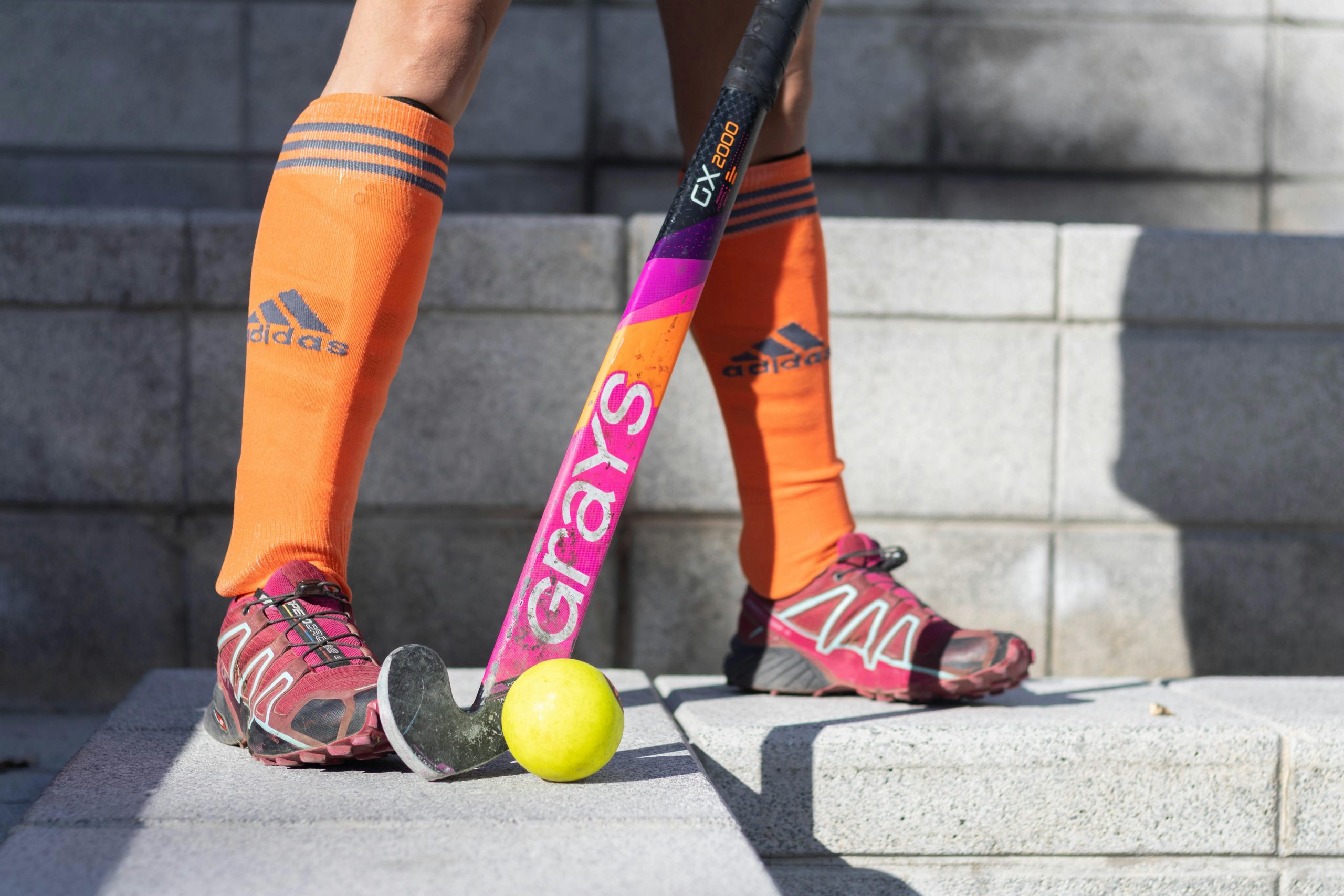
In field hockey, showing up to the pitch with boundless energy and a desire to win is a great starting point, but pure athletic effort will not build elite stick skills. You can be the fastest runner in your conference, but if you step onto the turf and spend an hour aimlessly hitting the ball into an empty net or running disorganized scrimmages, your physical effort is completely wasted. Player development is a science. The athletes who dominate the midfield and score consistently are the ones who dedicate their practice time to the absolute most efficient, game-translated exercises.
At Athletes Untapped, our coaches notice that many players and volunteer coaches struggle to build effective practice plans because they try to reinvent the wheel. They cycle through dozens of complicated, confusing drills that leave players standing in long lines, resulting in a highly frustrating lack of actual repetition. This lack of focused, foundational training leads to sloppy stickwork, poor passing vision, and a massive disconnect between practice habits and live-game execution.
The secret to maximizing every single minute you spend on the turf lies in mastering a core rotation of the best field hockey drills. Proper execution of a few elite, fundamental exercises fixes this wasted time. It allows players to build razor-sharp dribbling, lethal shooting, and a suffocating defensive presence that translates directly to dominating the opponent on game day.
Connect with a Private Field Hockey Coach: https://athletesuntapped.com/browse/field-hockey/
Why the Best Field Hockey Drills Matter for Athlete Development
Your organizational discipline and drill selection dictate the speed of your athletic growth. Without a sound, proven training plan to follow, you are essentially wandering through a maze blindfolded, hoping you accidentally stumble upon the correct technique.
- Game Performance: Elite, targeted training directly translates to executing fundamental skills under immense pressure. When you fully understand how a give-and-go passing drill maps directly to bypassing a live defender, you stop hesitating during a match. You turn a chaotic midfield battle into a clinical execution of your offensive system simply because you have run that exact spatial pattern hundreds of times.
- Confidence: Our coaches have seen athletes improve faster when they know the exact objective of their training session. When you rely on the best, most proven drills in the sport, the fear of practicing incorrectly instantly vanishes. You gain the composure to push yourself to the absolute limit, trusting your physical effort because your training is backed by expert-level curriculum.
- Long-Term Development: As you progress to high school, club, and collegiate field hockey, the complexity of the game requires an incredibly solid foundation. You no longer have the luxury of struggling to trap a basic pass. A tactically sound foundation built through the best field hockey drills protects you from plateauing, ensuring your muscle memory is flawless so your brain can focus entirely on high-level strategy.
Best Drills / Tips / Techniques
You cannot master the game by just knowing what the best drills are; you must actively execute them at game speed with flawless posture. To build a complete player, you must hit all the pillars of the sport: dribbling, passing, defending, aerials, and shooting. Here are 5 of the absolute best drills AU coaches use to build elite field hockey players.
1. Dribbling: The Forehand-to-Reverse Slalom
Line up five to ten cones in a straight line about two feet apart. Dribble the ball in a tight weaving pattern through the cones, aggressively pulling the ball from your forehand to your reverse stick with every single step, ensuring the ball never leaves the face of the stick.
This is the absolute foundation of close-quarter ball control because it trains the rapid left-to-right dragging motion required to evade defenders. It teaches the athlete that they must cup the ball by continuously rolling their wrists over to prevent it from slipping away during a match.
Focus entirely on rolling your top left wrist while keeping your bottom right hand incredibly loose, acting only as a guide ring. A frequent error here is squeezing the bottom hand too tight, which locks the shoulders and forces a rigid, sweeping arm motion rather than the quick, fluid snap of the wrists.
2. Passing: The Give-and-Go Wall Pass
Set up a dummy defender (a cone or a tall flag) in the middle of the field. The ball carrier dribbles toward the defender, executes a sharp push pass to a stationary teammate positioned off to the side, aggressively sprints past the dummy defender, and immediately receives the return pass in open space.
Beating a defender without actually dribbling is the ultimate mark of high-level hockey. This drill builds the precise timing and spatial awareness required to execute a perfect 1-2 combination. It teaches the attacker how to use a teammate to completely bypass a heavy, dangerous tackle.
Accelerate immediately after releasing your first pass to explode into the open space behind the defender. A massive trap is passing the ball and jogging lazily forward to watch what the wall player does, which gives the defender plenty of time to turn around and easily intercept the return pass.
3. Defending: The Channeling Block Tackle
Set up a wide channel near the sideline using cones. An attacker attempts to dribble down the field, and the defender must use their body angle and footwork to force the attacker directly into the sideline before dropping low to execute a clean, flat-stick block tackle.
Defensive structure is built on predictability, and this drill builds the elite jockeying footwork required to dictate the attacker’s path. It teaches the defender how to use the out-of-bounds line as an extra, immovable teammate rather than wildly lunging at the ball in the middle of the pitch.
Drop your left knee low to the turf and lay the stick flat across the attacker’s path once they are trapped on the sideline. Many players attempt to tackle by jabbing aggressively while standing upright, which easily misses the ball and usually results in a foul for a dangerous stick tackle.
4. Aerials: The 3D Lift and Carry
Place several low obstacles (like mini hurdles, laid-down sticks, or flat cones) in a row. Dribble toward the obstacles and practice popping the ball slightly into the air to clear the hurdle, catching it smoothly on the other side without breaking your running stride.
Modern field hockey requires playing the ball in the air to avoid flat-stick tackles. This drill heavily reinforces 3D stick skills, teaching the player the complex biomechanics of getting under the ball and using the turf’s bounce to elevate it safely over a defender’s reach.
Angle the stick face slightly back and pop the wrists upward to generate a controlled, legal lift. A massive trap is attempting to aggressively chop or golf-swing at the bottom of the ball, which sends it flying dangerously high into the air and results in an immediate foul.
5. Shooting: The Top-D Drag and Fire
Start outside the striking circle with the ball. Sprint at game speed toward the top of the D, execute a hard lateral drag (pulling the ball sharply to the right or left) exactly as you cross the line, and immediately fire a sweep or push shot on goal while still in stride.
Goalies perfectly align themselves with the ball as you approach. This drill trains the crucial offensive tactic of changing the shooting angle at the very last second to open up a clear lane past the goalie’s kickers and the recovering defense.
Snap your wrists forcefully immediately after the drag to surprise the defense with a quick release. Athletes frequently make the mistake of dragging the ball but then taking three more steps to regain their balance before shooting, which completely ruins the element of surprise.
Common Mistakes Athletes Make
Even when running the best field hockey drills, technical errors are incredibly common because players focus entirely on finishing the repetition rather than perfecting the technique.
- Practicing Upright with Stiff Legs: Standing completely tall with straight legs while dribbling or tackling completely destroys your center of gravity. To correct this, you must burn your quads. You must stay in a deep, athletic lunge during every single drill, mimicking the exact posture you need during a live game.
- Going Through the Motions Slowly: Dragging the ball left and right at a walking pace simply because there is no live defender happens out of laziness. To solve this, you must train at game speed. Your brain maps muscle memory based on the speed you practice; if you practice slowly, you will play slowly when the whistle blows.
- Only Using the Forehand: Constantly keeping the ball on your strong right side during drills stems from a fear of making mistakes on the reverse. Fix this by embracing the uncomfortable. You must actively force yourself to use your reverse stick in practice until it becomes just as reliable as your forehand.
- Staring Down at the Turf: Running with your chin buried in your chest to watch the ball occurs when a player lacks tactile feel. To solve this, you must force your head up. Trust the vibration of the stick in your hands and use your peripheral vision to track the ball while scanning the field.
Find a Private Field Hockey Coach: https://athletesuntapped.com/browse/field-hockey/
How Private Coaching Accelerates Improvement
Knowing the best field hockey drills is a fantastic starting point, but translating those concepts into flawless, three-dimensional biomechanics is incredibly difficult. Trying to self-diagnose your wrist roll, your block tackle angle, or your passing weight without an expert eye is practically impossible for most players.
This is where private coaching comes in. We have found that personalized instruction helps athletes take the structure of these elite drills and apply the specific cognitive and physical corrections required to master them, leading to significantly faster skill development.
A private field hockey coach acts as your technical architect. They help accelerate skill development by breaking down these foundational drills in a controlled setting, providing personalized feedback on how to properly drop your hips and loosen your bottom hand. By utilizing video analysis, coaches can correct mistakes early, showing you exactly where you lifted the ball dangerously or where your posture was too tall before those bad habits become permanent.
Ultimately, this 1-on-1 environment focuses on massive confidence building. When you possess an elite, coach-verified technical foundation, you stop guessing during practice, allowing you to step onto the turf knowing you have the precise, structured skills to completely dominate the pitch.
Frequently asked questions about Best Field Hockey Drills
What are the best field hockey drills for complete beginners?
Beginners should focus entirely on the absolute basics: the push pass, the Indian dribble (left-to-right dragging), and trapping the ball cleanly. Drills like stationary V-drags, short-distance partner passing, and weaving through a straight line of cones are the most effective ways to build initial muscle memory.
How often should I practice these drills?
To see massive improvements, you should dedicate 15 to 20 minutes to highly focused, intense stickwork every single day. Consistent, daily repetition builds the complex neuromuscular pathways required to make these foundational skills an automatic, subconscious reflex.
Can I do the best field hockey drills by myself?
Absolutely. While passing and defensive channeling drills require a partner, the vast majority of elite stickhandling, 3D lifting, and dribbling drills can be done entirely on your own in a space as small as a driveway or a garage floor.
What is the most important skill to drill in field hockey?
While all skills are important, the ability to receive and trap the ball cleanly under pressure is arguably the most critical. If you cannot stop the ball smoothly when it is passed to you, you will never have the opportunity to dribble, pass, or shoot.
Do private coaches use these specific drills?
Yes. Elite private field hockey coaches do not rely on gimmicks; they rely on the flawless execution of the basics. They will use these exact drills—often adding layers of complexity, time limits, or defensive pressure—to ensure their clients build an unbreakable fundamental foundation.
Conclusion
Mastering the best field hockey drills is the undeniable foundation of a highly disciplined, constantly improving, and elite-level player. Without a structured rotation of proven exercises, you are just an athlete burning energy on the turf, leaving your technical development to chance and allowing harder-working players to easily surpass you.
Improvement is highly achievable with proper, focused training. Encourage yourself to practice your give-and-go passes, maintain a strict, low posture during your block tackles, and embrace the discipline of daily repetition. Consistent practice will inevitably yield a much more dangerous, sharp, and confident presence on the field.
Train With a Private Field Hockey Coach
Athletes Untapped connects athletes with vetted private coaches across the country for one-on-one training.
Private coaching helps athletes:
- improve faster
- build confidence
- receive personalized feedback
- reach their full potential
About Athletes Untapped
Athletes Untapped connects field hockey players with experienced private coaches who specialize in fundamental stickwork, elite tactical mechanics, and building highly efficient practice plans. Through personalized instruction and customized drill progressions, AU coaches help players eliminate bad habits, master the best drills in the sport, and completely dictate the tempo of their careers.
Find an experienced coach near you: https://athletesuntapped.com
Learn from our very best AU coaches!


