
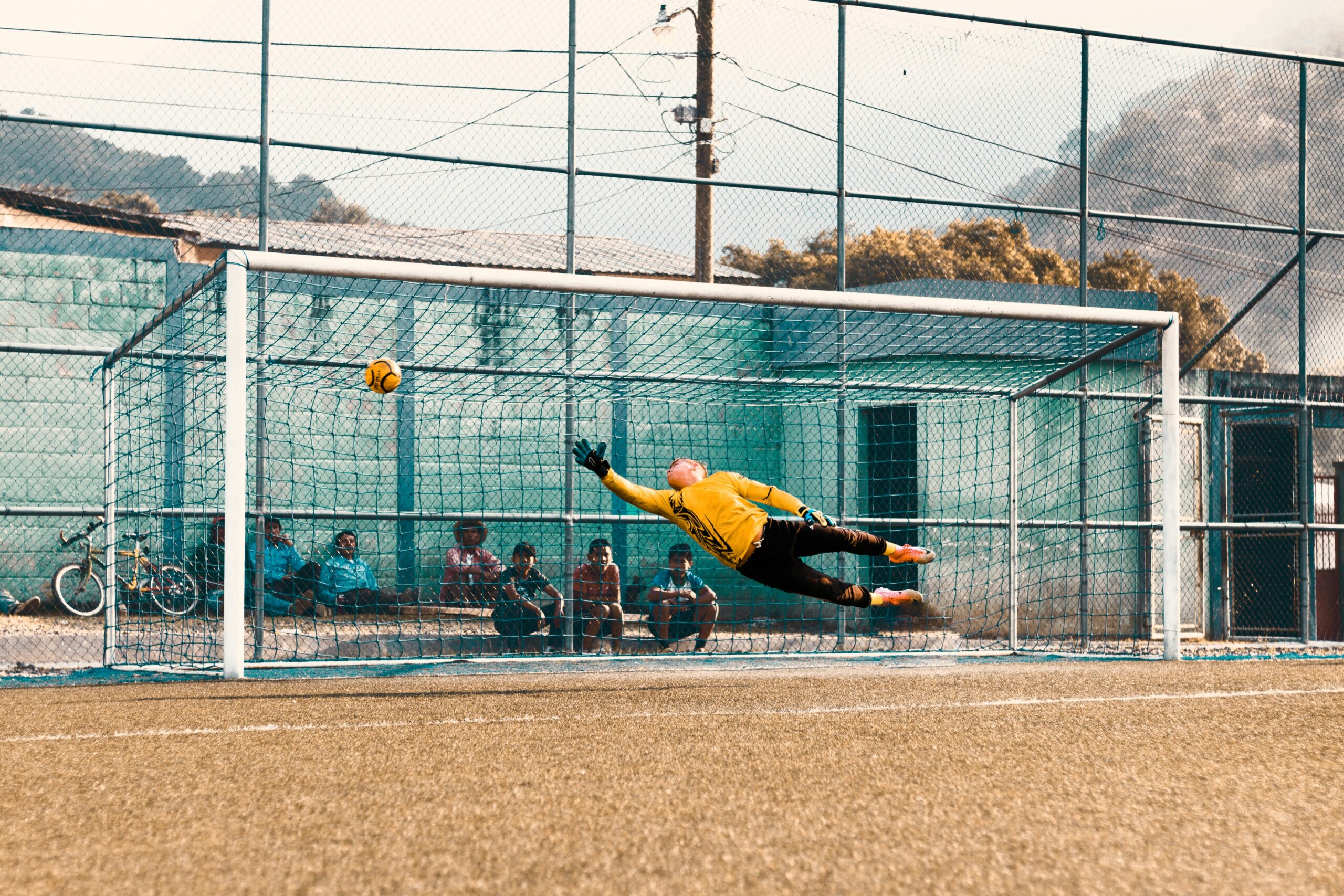
A shot from close range doesn’t give a goalkeeper much time to think and by the time the ball is moving toward the goal, there may only be an instant to get a hand, foot or body behind it.
That makes quick reactions important, but good goalkeeping isn’t only about being naturally born with fast reflexes.
A goalkeeper who is well positioned, balanced and already reading the play has a much better chance of making the save than one who is reacting late from a poor starting position. FIFA’s goalkeeper training materials consistently emphasize positioning, footwork, body posture and reading cues from the attacker alongside reaction speed.
For beginners, that is good news! You don’t have to become unbelievably quick overnight, and you can train the habits that give you more time to react.
The best reaction drills shouldn’t just make a goalkeeper move randomly as fast as possible, they should teach the goalkeeper to see the ball, adjust their position, get set and then respond to something they didn’t know was coming.
Start With the Goalkeeper’s Set Position
Before adding tennis balls, reaction lights or complicated drills, make sure the goalkeeper knows how to get ready for a shot.
FIFA describes an effective set position with the knees slightly bent, the body balanced and the goalkeeper prepared to move in either direction. The exact posture changes depending on the distance and situation, but the goalkeeper should not be standing upright and flat-footed when the shot comes.
The timing matters too. A young goalkeeper may shuffle continuously while the ball moves across the field and still be moving when the shot is struck. That makes the save harder. The goal is to adjust while the play develops and then arrive in a balanced position as the attacker prepares to shoot.
This can become the focus of the first drill: have the goalkeeper start in the center of the goal. The server moves the ball a few yards to the left or right before taking a controlled shot. The goalkeeper moves with the ball, adjusts the angle and gets set before the strike.
At first, don’t make the shots particularly difficult. Watch the goalkeeper’s feet.
- Are they moving with the ball?
- Do they get balanced before the shot?
- Are they facing the ball rather than twisting their body as they try to save it?
Once those habits start becoming natural, make the shots less predictable.
Use Simple Ball-Drop Drills for Tracking and Hand Reactions
A ball-drop drill can still be useful for a beginner, especially as a warm-up.
Have a partner stand a few feet away holding a soccer ball. Without giving a countdown, they release it and the goalkeeper reacts to catch it before another bounce. You can then vary which side the ball is released on or occasionally fake the release.
This drill asks the goalkeeper to keep their eyes on the ball, react to an unexpected movement and coordinate their hands quickly. You can make it slightly more goalkeeper-specific by having the player begin in a relaxed set position and move toward the ball rather than standing completely still.
For very young goalkeepers, this is also an easy way to build catching confidence before introducing harder shots.
FIFA’s current goalkeeper fundamentals place considerable emphasis on tracking the ball through its flight and catching with both hands together while maintaining a balanced body position. Those fundamentals are worth developing before worrying about spectacular reaction saves.
Make the Shooter Unpredictable
Once a goalkeeper can handle controlled shots, the next step is to remove some of the advance information.
Set the goalkeeper in goal with a shooter approximately 8 to 12 yards away. Instead of telling the goalkeeper where the shot is going, let the shooter choose.
Keep the first round controlled. The shooter should be trying to challenge the goalkeeper, not score as hard as possible.
The goalkeeper’s job is to follow the ball, get set and react.
From there, add different types of finishes. Mix low shots with shots around waist height. Shoot to either side. Occasionally take an extra touch before striking the ball.
That last variation is important because the goalkeeper now has to react not only to the shot but also to the attacker’s behavior. That is much closer to real goalkeeping than knowing that ten shots are coming to alternating corners.
Add Movement Before the Save
Goalkeepers rarely stand in exactly the right place and wait for someone to shoot.
They move across the goal as the ball moves. They step forward to narrow an angle. They recover toward the goal after coming out. They reposition after a pass.
Reaction training becomes more useful when the goalkeeper has to make one of those adjustments before facing the shot.
A simple version requires only two cones:
Put one cone a few yards to the goalkeeper’s left and another to the right. The goalkeeper starts centrally. The coach points toward one cone, and the goalkeeper quickly moves toward it before recovering into a good position for a shot.
The important part isn’t how quickly they touch the cone. In fact, the cone doesn’t really need to be touched at all.
Watch the transition back into the save:
- Can the goalkeeper move quickly and then regain balance?
- Do they arrive in a set position before the ball is struck?
- Do their feet get crossed or tangled during the adjustment?
As the goalkeeper improves, the coach can replace the pointing cue with movement of the ball. Pass the ball from one side to another and have the goalkeeper adjust naturally with it before the shot.
That begins to look much more like the positioning demands of an actual game.
Train Deflections and Second Saves
Some of the hardest saves aren’t clean shots directly at goal: the ball may deflect off a defender, bounce awkwardly or come back into play after the goalkeeper makes the first save.
Those situations are useful for reaction training because the goalkeeper can’t always predict the ball’s final path.
For a beginner, keep this simple:
A coach can take controlled shots that bounce once before reaching the goalkeeper. Another option is to shoot through a small group of cones or players so the goalkeeper has to track the ball around visual traffic.
You can also work on second saves:
The goalkeeper makes the first save, gets back into position quickly and immediately faces another controlled shot. Don’t fire five balls at them as quickly as possible. Give them enough time to perform the recovery movement correctly.
The lesson is that making one save doesn’t end the play, which helps make the drill both reactive and realistic.
Don’t Forget Close-Range Saves With the Feet and Body
Beginner reaction training tends to focus heavily on hands, but real experienced goalkeepers make close-range saves with much more than their hands.
Depending on the distance and angle, the right response might involve a foot, leg, hand or a blocking action with the body. FIFA’s goalkeeper framework includes several possible responses to close-range situations, including smothers, blocks, spreads and reaction saves with either the hands or feet.
You don’t need to teach every advanced technique to a new goalkeeper at once, you can start by allowing them to solve the problem on their own.
Have an attacker take controlled shots from relatively close range and encourage the goalkeeper to stay balanced and keep the ball out rather than insisting that every save look identical.
As players become more experienced, a goalkeeper coach can introduce the correct technical solutions for different distances and finishing situations.
Reaction Training Shouldn’t Be Exhaustion Training
One of the easiest ways to ruin a goalkeeper reaction drill is to turn it into conditioning.
If the goalkeeper has just faced 25 consecutive shots, sprinted to six cones and performed a series of dives, the slow reactions at the end of the drill may simply be fatigue.
For reaction and technical work, keep repetitions manageable: give the goalkeeper enough time to reset properly between shots. Work for a short period, take a break and then repeat. If technique starts breaking down, either reduce the difficulty or stop the set.
There is certainly a place for goalkeeper fitness training, but it doesn’t need to be disguised as every reaction drill.
Make the Drills More Game-Like as the Goalkeeper Improves
Reaction balls and tennis balls can be fun, and they can challenge hand-eye coordination. But the best goalkeeper training eventually needs to involve soccer balls, attackers and realistic decisions.
FIFA’s current goalkeeper development approach progresses from controlled technical exercises into situational practices where the goalkeeper has to apply the skill in a more realistic environment.
Beginners can follow the same basic progression: start with a predictable ball so the goalkeeper learns the technique. Then change the angle. Add movement. Make the shot unpredictable. Add an attacker. Include a rebound. Each step removes a little certainty.
That matters because a goalkeeper’s job isn’t simply to react quickly. It’s to gather information and choose the right response while the situation is changing.
Confidence Comes From Knowing What to Do
Goalkeeping can be intimidating for beginners because mistakes are obvious.
Reaction drills can build confidence, but the confidence shouldn’t come from telling a goalkeeper that they’ll save everything.
It comes from giving them situations they’ve seen before.
They know how to get set. They understand how to move with the ball. They’ve practiced shots from different angles. They’ve dealt with rebounds and awkward bounces. When something similar happens during a game, it doesn’t feel completely new.
Quick reactions matter, but the goalkeeper who reads the play early, moves into the right position and is ready when the shot comes often makes the difficult save look much easier than it actually was.
Improve Your Goalkeeping With Individual Training
Goalkeeper is one of the most specialized positions in soccer, and team practices don’t always provide enough time for individual goalkeeper instruction.
Working with a private soccer or goalkeeper coach can give young players more focused repetitions and feedback on catching, diving, footwork, positioning, one-on-one situations and decision-making.
Athletes Untapped connects players with private soccer coaches who can tailor training to a goalkeeper’s age, experience and specific areas for improvement.
For a beginner, that doesn’t mean jumping immediately into advanced goalkeeper exercises. It means learning good habits early so faster, more difficult saves have a stronger foundation later.


