
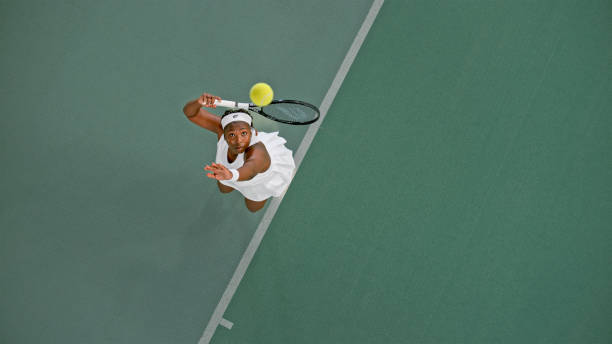
A strong tennis serve is not just about hitting the ball harder. The best servers combine consistent mechanics, good placement, spin, rhythm, and enough power to put pressure on their opponent.
For young and developing tennis players, that starts with building a repeatable motion.
A reliable toss makes it easier to find the right contact point. Good balance and leg drive help create racquet speed without forcing the swing. Target practice teaches players to control where the ball goes instead of simply hoping it lands in the service box.
The tennis serve drills below break those skills into manageable pieces so players can improve accuracy, power, and consistency one step at a time.
Tennis Serve Fundamentals to Learn First
Before focusing on speed, players need a solid serving foundation.
A tennis serve generally moves through several connected phases:
Grip: Most developing players should learn to serve with a continental grip. This grip makes it easier to develop a natural service motion and eventually add different types of spin.
Stance and setup: Start from a balanced position with the body turned slightly sideways to the net. Players may eventually use either a platform or pinpoint stance. The important thing is maintaining balance throughout the motion.
Ball toss: A consistent toss gives the player a predictable contact point. The ball should be placed where the player can reach comfortably at full extension without chasing it forward, backward, or sideways.
Loading: As the ball rises, the knees bend and the upper body prepares to rotate. The racquet moves into a loaded position behind the player.
Acceleration: The player drives upward while the trunk, shoulder, arm, and racquet work together to create racquet-head speed.
Contact: Contact should be made at a comfortable full extension above the body and slightly into the court.
Follow-through: After contact, the racquet continues through its natural path as the player lands under control and prepares for the next shot.
Players do not need to consciously think about every phase during a match. Practice is where they learn each piece so the complete motion can eventually feel smooth and automatic.
1. Continental Grip Shadow Swing Drill
A reliable serve starts with the grip.
Many beginners naturally hold the racquet with a forehand-style grip because it initially feels easier. That can make it harder to develop spin and a complete service motion later.
How to Do It
Start without a ball.
Hold the racquet using a continental grip and slowly rehearse the entire service motion. Move from the starting position into the trophy position, swing up toward an imaginary contact point, and finish across the body.
Complete 10 to 15 controlled repetitions.
Then repeat the drill while holding a ball in the non-dominant hand, but do not toss it yet.
What It Improves
This drill helps players become comfortable maintaining the continental grip throughout the serving motion without worrying about where the ball goes.
Coaching Tip
Keep the hand and forearm relaxed. A tight grip can make the service motion stiff and reduce racquet-head speed.
2. Ball Toss Target Drill
An inconsistent toss forces a player to adjust the rest of the serve.
If the ball repeatedly drifts behind the head, too far into the court, or off to the side, even good mechanics become difficult to repeat.
How to Do It
Stand in the normal serving position without swinging.
Place a target on the court where you want the ball to land if you simply let the toss fall.
Practice tossing the ball and allowing it to drop.
Try to land 7 out of 10 tosses in the target area before making the target smaller.
What It Improves
The drill develops:
- Toss placement
- Toss height
- Release consistency
- Balance
- A repeatable contact point
Coaching Tip
Release the ball smoothly from the fingertips instead of flicking it upward with the wrist.
The goal is not to throw the ball as high as possible. The goal is to create a predictable toss that matches the player’s serving rhythm.
3. Trophy-to-Contact Progression
Players sometimes rush through the middle of the service motion and lose their balance, timing, or contact point.
Breaking the motion into smaller pieces can help.
How to Do It
Begin in the normal serving stance.
Toss the ball and pause briefly in the trophy position. From there, complete the swing and serve.
Once the movement feels comfortable, gradually shorten the pause until the motion becomes continuous.
A second variation is to begin already in the trophy position. Have a coach or partner provide a controlled toss while the player focuses only on accelerating upward to contact.
What It Improves
This progression helps players work on:
- Shoulder and racquet positioning
- Timing
- Upward acceleration
- Contact at full extension
- Connecting the upper and lower body
Coaching Tip
The trophy position is a checkpoint, not a position players should freeze in during an actual serve. The final goal is one connected, fluid motion.
4. Service-Line Serve Progression
Players often try to generate power before they can consistently control the ball.
Moving closer to the net removes some of that pressure.
How to Do It
Start at the service line instead of the baseline.
Use a relaxed service motion and try to place the ball into the opposite service box.
After making several controlled serves, move a few feet backward.
Continue progressing toward the baseline while maintaining the same smooth motion.
If technique begins to break down, move forward again.
What It Improves
This drill develops:
- Serve consistency
- Racquet control
- Contact point
- Confidence
- Rhythm
It is especially useful for younger players who are still connecting the different parts of the serve.
Coaching Tip
Do not turn the drill into a contest to see how quickly the player can reach the baseline. Move back only when the serve remains controlled.
5. Leg Drive and Serve Rhythm Drill
Serve power should not come from trying to swing the arm as hard as possible.
A more powerful serve uses the body as a coordinated system.
How to Do It
Start by rehearsing the serve without a ball.
Move slowly through the beginning of the motion, bend the knees as the racquet loads, then push upward as the swing accelerates.
Think:
Slow setup. Smooth load. Fast acceleration.
After several shadow repetitions, add the ball.
Hit serves at about 60 to 70 percent effort while focusing on the timing between the knee bend, upward drive, torso rotation, and racquet acceleration.
Gradually increase pace without changing the rhythm.
What It Improves
This drill helps develop:
- Leg drive
- Coordination
- Serve rhythm
- Racquet-head speed
- Efficient power
Coaching Tip
If the serve becomes less accurate every time the player tries to hit harder, reduce the effort level.
Power is most useful when the player can still control the ball.
6. Cone Target Accuracy Drill
Serving hard is useful. Serving to the right location is often even more useful.
Players should learn to serve with a specific target in mind.
How to Do It
Place cones or flat markers in three areas of the service box:
- Wide
- Body
- Down the T
Hit five serves toward each target from both the deuce and ad courts.
Keep score:
- 2 points for hitting the target area
- 1 point for making the serve in the correct third of the service box
- 0 points for missing the box
Track the score over multiple practices.
What It Improves
This drill develops:
- Serve placement
- Directional control
- Accuracy under pressure
- Intentional serving
- Match strategy
Coaching Tip
Start with large target zones. Shrink them as accuracy improves.
Players should learn to control placement before trying to hit every serve at maximum speed.
7. Spin and Second-Serve Drill
A dependable second serve gives players more freedom to attack their first serve.
Rather than simply hitting a slower version of the first serve, developing players can learn to use spin to create more margin over the net.
How to Do It
Begin closer to the service line and practice creating spin with a relaxed continental grip.
Focus on swinging up through the ball instead of driving directly forward.
Once the player can consistently create shape on the serve, gradually move toward the baseline.
Alternate between:
- Topspin or kick-style serves
- Slice serves
- Controlled flatter serves
Then practice a first-serve and second-serve sequence.
Hit one more aggressive serve followed immediately by a higher-margin spin serve.
What It Improves
This drill helps develop:
- Second-serve confidence
- Spin
- Net clearance
- Serve variety
- Racquet control
Coaching Tip
Players should learn spin gradually. A coach can help determine the appropriate swing path and toss location for each serve type.
8. Pressure Serving Drill
A player may serve beautifully during practice and struggle when the score matters.
That is why some serve practice should include consequences and decision-making.
How to Do It
Create a simple scoring game.
The player needs to complete 10 successful service points.
For each point:
- Call the target before serving.
- Hit a first serve.
- If it misses, hit a second serve.
- A double fault loses a point.
- A serve into the called target earns a bonus point.
Another option is to start every attempt at a realistic match score such as 30-30, deuce, or break point.
What It Improves
Pressure serving develops:
- Confidence
- Serve routine
- Target selection
- Second-serve reliability
- Decision-making under pressure
Coaching Tip
The goal is not to make players nervous in practice. It is to make score-based serving feel familiar.
Common Tennis Serve Mistakes
Serve problems are often connected. One mistake early in the motion can affect everything that follows.
Inconsistent Toss
If the toss moves to a different location on every serve, the player has to change the swing to find the ball.
Spend more time practicing the toss by itself.
Trying to Create Power Only With the Arm
Swinging harder does not always produce a better serve.
Players should work on coordinating the legs, trunk, shoulder, arm, and racquet instead of forcing the motion with the upper body.
Changing the Grip
Some players begin with a continental grip but rotate toward a forehand grip during the motion.
Shadow swings and abbreviated serves can help make the continental grip more comfortable.
Rushing the Motion
A fast beginning often creates a poorly timed finish.
Develop a controlled tempo and allow the racquet to accelerate as the motion progresses.
Sacrificing Accuracy for Speed
A fast serve that rarely lands in the box is not an effective weapon.
Build consistency first. Then gradually add speed while maintaining placement.
How to Track Serve Improvement
Serving hundreds of balls without measuring anything can make it difficult to know whether practice is working.
Instead, track a few simple numbers.
For example:
First-serve percentage: How many first serves land in?
Second-serve percentage: How often can you make the second serve without double faulting?
Target accuracy: How many serves reach the intended wide, body, or T zone?
Consecutive serves: How many serves can you make in a row?
Pressure performance: Can you maintain your normal motion when the drill includes scoring?
Video can also be useful. Recording the serve from behind and from the side can help players and coaches identify changes in toss placement, balance, rhythm, contact point, and follow-through.
How Often Should Young Tennis Players Practice Their Serve?
Serve practice does not have to mean hitting at full power for long periods.
Shorter, focused sessions can be extremely useful.
A player might spend one session emphasizing toss consistency and rhythm, another focusing on target placement, and another combining first and second serves under pressure.
Quality matters more than simply accumulating repetitions.
Players should also stop if serving causes pain. Young athletes should not try to push through shoulder, elbow, or back discomfort.
Accuracy, Power, or Consistency: What Should You Work on First?
For most developing players, consistency should come first.
A repeatable toss, balanced motion, reliable contact point, and comfortable grip create the foundation for everything else.
Next comes placement. Players should begin learning to intentionally serve wide, into the body, or down the T.
Power can then be added without abandoning those fundamentals.
The long-term goal is not simply to hit the hardest possible serve. It is to develop a serve that can be trusted, directed, and adapted to different situations.
How Private Tennis Coaching Can Help
The tennis serve is one of the most technical movements in the sport. Small changes to the toss, grip, balance, rhythm, or contact point can affect the entire motion.
Individual coaching gives players a chance to work on those details without waiting for limited serving time during a team or group practice.
A private tennis coach can identify which part of the motion needs the most attention, choose drills that match the player’s current level, and adjust the progression as the serve improves.
Athletes Untapped connects athletes and families with experienced private tennis coaches for personalized training. Players can work on serve mechanics, accuracy, spin, power, footwork, and overall match development through one-on-one sessions.
Frequently Asked Questions About Tennis Serve Drills
What is the best tennis serve drill for beginners?
Ball toss practice and service-line serving are two good places to start. They allow players to develop control and a repeatable motion before worrying about speed.
How can I make my tennis serve more accurate?
Practice serving to specific targets instead of simply aiming for the service box. Divide the box into wide, body, and T zones and track how often you reach the intended location.
How can I add more power to my serve?
Focus on efficient mechanics rather than swinging harder with the arm. Better leg drive, body rotation, timing, full extension, and racquet acceleration can all contribute to a more powerful serve.
How do I make my second serve more consistent?
Develop a repeatable toss and learn to create spin. A higher-margin spin serve can give players more net clearance while still allowing them to swing confidently.
Should young players practice flat, slice, and kick serves?
Players should first build a dependable basic service motion. As their technique develops, they can gradually learn different spins and placements with appropriate coaching.
Final Thoughts
A better tennis serve is built one piece at a time.
Start with the grip and toss. Develop a balanced, repeatable motion. Learn to control the contact point and rhythm. Then add placement, spin, and power without losing consistency.
The eight tennis serve drills in this guide give players a progression they can return to as their game develops.
The goal is not simply to serve harder. It is to step to the baseline knowing you can start the point with a serve you trust.


