
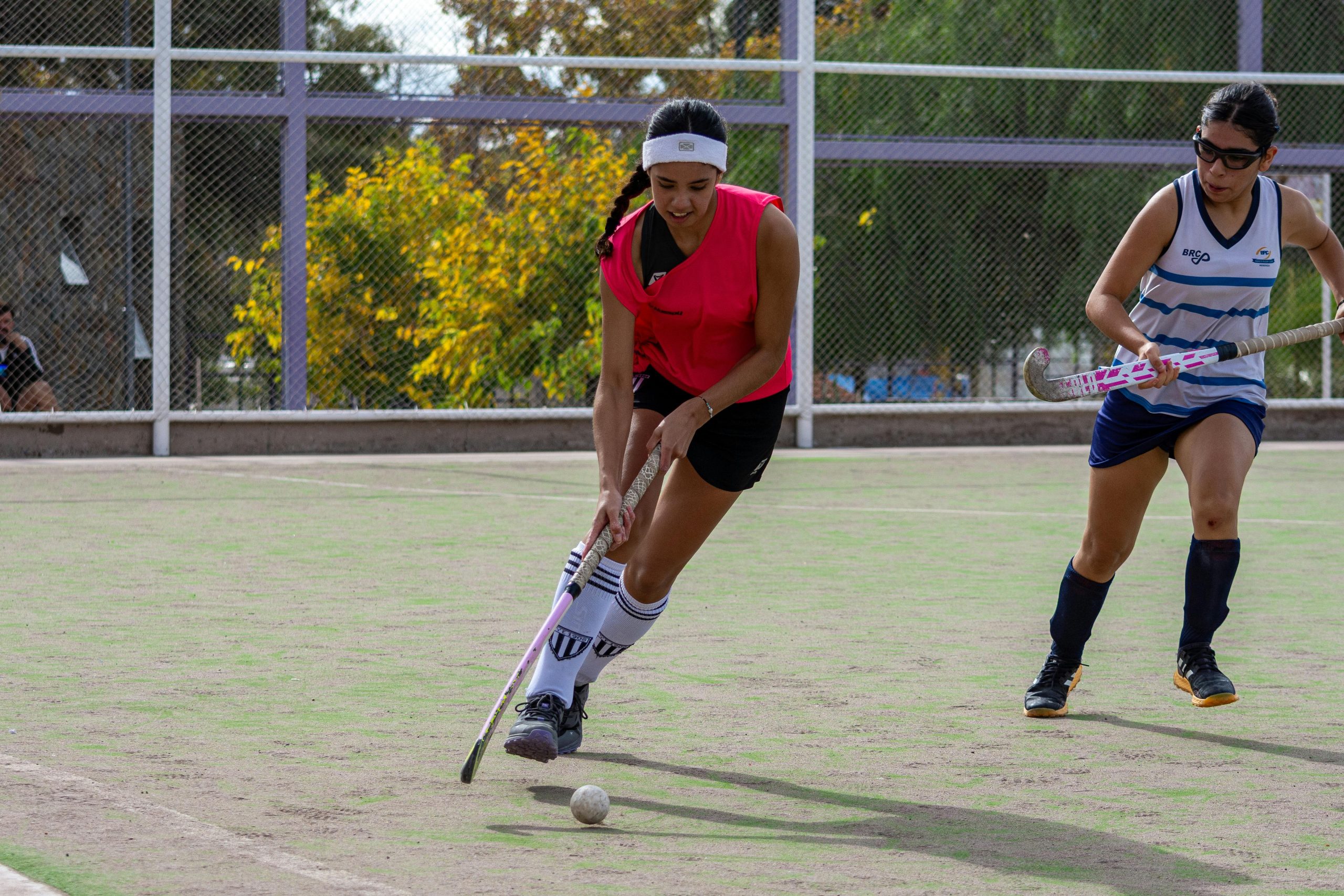
In field hockey, having access to a pristine, watered astroturf field for team practice is a fantastic luxury, but your true stick skills are built when nobody is watching. You can attend every single mandatory practice, but if you only touch your stick twice a week, you will constantly be outplayed by athletes who put in the extra hours. Field hockey is a sport of microscopic adjustments and immense muscle memory. The player who dominates the midfield is almost always the one who spent countless evenings manipulating the ball in their garage, basement, or driveway.
At Athletes Untapped, our coaches notice that many young players treat their development as something that only happens under a coach’s supervision. They step off the pitch after practice and toss their stick in the closet until the next game. This lack of independent, repetitive training leads to rigid wrists, poor close-control, and a highly frustrating tendency to lose the ball under pressure because their hands simply lack the necessary fast-twitch muscle memory.
The secret to developing lightning-fast hands and unshakeable confidence lies in mastering essential at home field hockey drills. Proper individual repetition fixes these stiff habits. It allows players to utilize soft touches, master their left-to-right pulls, and establish a fluid, deeply ingrained stickhandling foundation that completely transforms their live-game performance.
Connect with a Private Field Hockey Coach: https://athletesuntapped.com/browse/field-hockey/
Why At Home Field Hockey Drills Matter for Athlete Development
Your dedication to solo practice dictates the speed of your athletic growth. Without a sound routine to follow on your own time, you are essentially stunting your development and waiting for your coach to hand you the skills you need to succeed.
- Game Performance: Elite individual repetition directly translates to flawless execution under pressure. When you fully understand how to roll your wrists through hundreds of driveway repetitions, you stop panicking when a defender approaches. You turn a chaotic, high-pressure reception into a calm, controlled possession simply because your hands already know exactly what to do without your brain having to process it.
- Confidence: Our coaches have seen athletes improve faster when they master their fundamental mechanics in the privacy of their own home. When you are alone, the fear of making a mistake or looking foolish in front of your teammates completely vanishes. You gain the composure to try faster speeds and wider drags, trusting your hands because your experimentation is backed by a safe, stress-free training environment.
- Long-Term Development: As you progress to high school and collegiate field hockey, coaches expect you to show up to practice already possessing elite stick skills; team time is reserved for tactical systems. You no longer have the luxury of spending twenty minutes learning how to properly grip the stick. A tactically sound foundation built through at home field hockey drills protects you from falling behind. It provides the elite technical baseline needed to compete for starting minutes.
Best Drills / Tips / Techniques
You cannot master your stickwork by just mindlessly tapping the ball back and forth while watching television. You need active, structured solo training that forces you to drop your hips, rotate your wrists, and use your peripheral vision. Here are 5 essential at home drills AU coaches use to build elite stick skills in a small space.
1. The Figure-Eight Sock Weave
Place two rolled-up socks, water bottles, or small cones on your carpet or driveway about shoulder-width apart. Get into a deep athletic stance and actively weave your ball around them in a continuous figure-eight pattern, ensuring you bring the ball entirely around the outside of each obstacle.
This is the absolute foundation of close-quarter puck control because it forces you to use both the forehand and reverse sides of your stick in equal measure. It teaches the athlete that they must cup the ball by continuously rolling their wrists over to prevent it from slipping away.
Focus entirely on rolling your top left hand while keeping your bottom right hand incredibly loose, allowing the stick to rotate freely. A frequent error here is squeezing the bottom hand too tight, which locks the shoulders and forces a rigid, sweeping arm motion rather than a quick, fluid snap of the wrists.
2. The Tennis Ball Soft-Hands Challenge
Replace your standard, heavy field hockey ball with a bouncy tennis ball. Practice your basic left-to-right dribbling (the Indian dribble) on a hard surface like a garage floor or driveway, attempting to move the ball as quickly as possible without letting it bounce over your stick.
Soft hands are a premium skill at higher levels, and this drill turns a frustrating technical challenge into a highly effective training tool. It teaches the player the complex biomechanics of cushioning the ball, as rigid, hard chops will cause the tennis ball to bounce wildly out of control.
Soften your grip incredibly and angle your stick face down to trap the bouncy ball securely. Many players attempt to just aggressively block the tennis ball with stiff wrists, which completely ruins their control and sends the ball flying across the room.
3. The Stationary V-Drag Pullback
Place a single shoe or cone about two feet in front of you. Start with the ball on your right side, push it diagonally forward toward the obstacle, sharply pull it backward and across your body in a “V” shape toward your left foot, and immediately push it forward again.
The V-drag is the ultimate evasive maneuver, and practicing it in isolation builds the precise wrist dexterity required to change the angle of the ball instantly. It teaches the attacker how to show the ball to bait a tackle, only to rip it away before the defender can make contact.
Pull the ball sharply backward with authority using the toe of your stick. Many players attempt to drag the ball in a wide, slow “U” shape in front of their body, completely losing the element of surprise and leaving the ball exposed.
4. The Wall-Pass Rebounder
Find a sturdy brick wall, a heavy wooden board, or a specialized rebounder net in your garage or backyard. Stand five to ten yards away and continuously execute firm push passes against the surface, practicing cleanly receiving the rebounding ball on both your forehand and reverse stick.
Passing accuracy and receiving skills require hundreds of repetitions, and a wall is the best partner you can ask for because it never misses. This drill heavily reinforces the ability to absorb a fast-moving ball and immediately transition it into your next pass.
Step into the pass to generate power and cushion the rebound instantly upon reception. A massive trap is standing completely flat-footed and simply swatting at the ball as it returns, which kills your accuracy and builds terrible passing posture.
5. The 3D Broomstick Lift
Lay a spare field hockey stick, a broom handle, or a piece of PVC pipe flat on the grass in your backyard. Dribble toward the obstacle and practice executing a legal 3D jink, popping the ball slightly into the air to clear the handle and catching it smoothly on the other side.
Modern field hockey requires playing the ball in the air to avoid flat-stick tackles. This drill heavily reinforces 3D stick skills, teaching the player the biomechanics of getting under the ball and using the ground to elevate it safely over a defender’s reach.
Drop your hips low, angle the stick face slightly back, and pop the wrists upward to generate a controlled lift. A common instinct is to aggressively chop or golf-swing at the bottom of the ball, which sends it flying dangerously high and creates bad habits.
Find a Private Field Hockey Coach: https://athletesuntapped.com/browse/field-hockey/
Common Mistakes Athletes Make
At-home training errors are incredibly common because players lack a coach’s immediate feedback, allowing them to let their posture and focus slip.
- Practicing Upright with Stiff Legs: Standing completely tall with straight legs while stickhandling in your living room completely destroys your center of gravity. To correct this, you must burn your quads. You must stay in a deep, athletic lunge while dribbling, mimicking the exact posture you need during a live game.
- Staring Down at the Ball: Looking straight down at the floor while weaving through cones occurs when a player relies entirely on visual confirmation rather than tactile feel. You can fix this by forcing your head up. Look at a spot on the wall or watch the television while you dribble, training your peripheral vision and muscle memory.
- Going Through the Motions Slowly: Dragging the ball left and right at a walking pace happens out of laziness. To solve this, you must train at game speed. Your brain maps muscle memory based on the speed you practice; if you practice slowly at home, you will play slowly when the whistle blows on the pitch.
- Only Using the Forehand: Constantly dribbling the ball entirely on your strong right side stems from a fear of making mistakes on the reverse. Fix this by forcing a 2-to-1 practice ratio. If your reverse stick is weak, you must perform two repetitions on your weak side for every one repetition on your strong side until your hands adapt.
How Private Coaching Accelerates Improvement
At home field hockey drills are an incredible way to build repetition, but practicing a flawed technique 1,000 times will only permanently ingrain bad habits into your muscle memory. Trying to self-diagnose your wrist roll, your V-drag angle, or your receiving posture without an expert eye is practically impossible for most players.
This is where private coaching comes in. We have found that personalized instruction helps athletes take the raw effort they put in at home and perfectly align it with the specific cognitive and physical corrections required to master the sport, leading to significantly faster skill development.
A private field hockey coach acts as your technical architect. They help accelerate skill development by breaking down your fundamental mechanics in a controlled setting, providing personalized feedback on how to properly drop your hips and loosen your bottom hand. By utilizing video analysis, coaches can correct mistakes early, showing you exactly what to focus on during your solo backyard sessions before those bad habits ruin your live-game performance.
Ultimately, this 1-on-1 environment focuses on massive confidence building. When you possess an elite, coach-verified technical foundation, you stop guessing during your solo workouts, allowing you to step onto the turf knowing your at-home dedication has built an unshakeable set of skills.
Frequently asked questions about At Home Field Hockey Drills
Do I need a full turf field to practice effectively at home?
Not at all. The vast majority of elite stickhandling skills can be developed in a space as small as a 5×5 foot square. A garage floor, a smooth driveway, a short-pile carpet, or a small patch of flat grass is more than enough room to master your V-drags and figure-eights.
Will practicing on concrete ruin my field hockey stick?
Practicing heavily on rough concrete or asphalt will slowly grind down the toe and bottom edge of your composite stick. If you practice on the driveway frequently, it is highly recommended to use an older backup stick, apply protective stick tape to the toe, or purchase a cheap, smooth plastic shooting pad to stand on.
Can I use a regular field hockey ball indoors?
Using a hard, solid plastic field hockey ball indoors is incredibly loud and can easily damage baseboards or drywall. For indoor practice, it is best to use a bouncy tennis ball, a specialized soft indoor training ball, or a rolled-up pair of socks to protect your home while still developing your hand speed.
How long should I practice at home every day?
Consistency is far more important than marathon sessions. Practicing for just 15 to 20 minutes of highly focused, intense, game-speed stickwork every single day will yield dramatically better results than practicing for two hours once a week.
Do private coaches give homework for at-home training?
Yes. Elite private field hockey coaches do not just work with you for an hour and say goodbye. They meticulously design customized at-home training blueprints, assigning highly specific drills to fix your individual weaknesses so you can maximize your growth between your 1-on-1 sessions.
Conclusion
Mastering essential at home field hockey drills is the undeniable foundation of a highly disciplined, constantly improving, and elite-level player. Without a solo training routine, you are just an athlete relying entirely on team practices to grow, leaving your technical development to chance and allowing harder-working players to easily take your spot on the roster.
Improvement is highly achievable with proper, dedicated solo training. Encourage yourself to practice your figure-eights on the carpet, maintain a strict, low posture during your driveway V-drags, and embrace the discipline of daily repetition. Consistent, highly focused practice will inevitably yield a much more dangerous, sharp, and confident presence on the field.
Train With a Private Field Hockey Coach
Athletes Untapped connects athletes with vetted private coaches across the country for one-on-one training.
Private coaching helps athletes:
- improve faster
- build confidence
- receive personalized feedback
- reach their full potential
About Athletes Untapped
Athletes Untapped connects field hockey players with experienced private coaches who specialize in fundamental stickwork, elite tactical mechanics, and building comprehensive at-home training plans. Through personalized instruction and customized drill progressions, AU coaches help players eliminate bad habits, master their independent training, and completely dictate the tempo of their careers.
Find an experienced coach near you: https://athletesuntapped.com
Learn from our very best AU coaches!


