
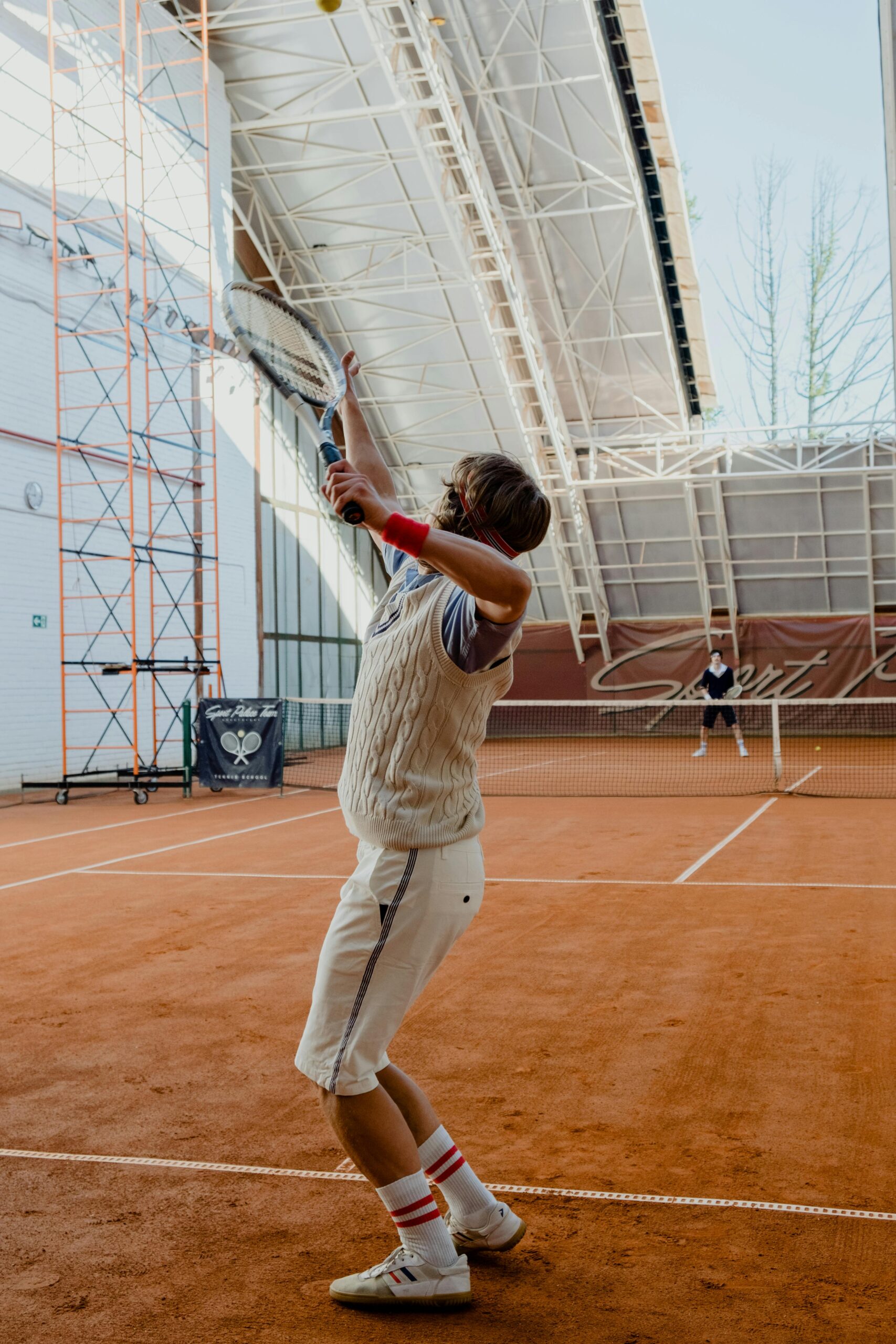
If you are a parent or player searching for the “top tennis coaches in Boston you can trust,” you already know that navigating the New England tennis scene can be uniquely challenging. Between battling the harsh winters by fighting for indoor court time and transitioning to the outdoor hard courts in the spring, Boston athletes need to be highly adaptable. But finding an open court is only part of the equation; finding an instructor who actually knows how to develop a player is the real hurdle.
As a coach with over 15 years of experience developing youth, high school, and college players, I see the same problem every season. Families pour money into overcrowded group clinics where a single instructor feeds balls to eight different players. The athlete might leave sweating, but if their continental grip is slipping on their volley or their footwork is lazy on their backhand, those flaws are simply becoming permanent muscle memory.
Proper private training fixes this immediately. An elite, trustworthy coach strips away the chaos of a group lesson, breaks down your stroke mechanics from the ground up, and builds a kinetic chain that holds up under tournament pressure. Let’s dive into what elite tennis instruction should look like and how you can identify a coach you can genuinely trust with your game.
Why Finding the Right Coach Matters for Athlete Development
Choosing the right coaching environment fundamentally dictates a player’s long-term trajectory. I have seen incredibly athletic high schoolers fail to make their varsity teams simply because their previous instructors never corrected their serve toss or taught them the proper footwork for a topspin forehand.
When you invest in high-quality, individualized coaching, the performance impact is massive:
- Confidence: The tennis court is incredibly isolating during a match. A trustworthy coach builds a foundation of technical certainty. When an athlete mathematically understands their stroke mechanics, they swing freely and confidently, rather than pushing the ball out of fear of missing.
- Game Performance: Elite coaches bridge the gap between stationary ball-feeding and live-game intensity. We teach athletes how to read the spin off their opponent’s racquet, how to use a defensive slice to buy time, and how to attack a short ball with proper approach footwork.
- Long-Term Development: Good coaches prioritize biomechanical efficiency and injury prevention. Teaching a player to generate power through hip-to-shoulder separation—rather than just whipping their arm—prevents common rotator cuff and elbow injuries, keeping them healthy for college-level play.
Best Drills and Techniques to Expect from a Top-Tier Coach
When you evaluate a private coach in Boston, watch the first 20 minutes of their session closely. If they just stand on the baseline and rally down the middle without stopping to make corrections, they are acting as a hitting partner, not a teacher. Trustworthy, elite coaches use targeted isolation drills. Here are 5 essential drills a high-quality coach will use:
1. The Service Line Mini-Tennis Drill
- How to perform it: Both the coach and the athlete stand on the service line and rally using only half-swings, aiming to keep the ball deep inside the service boxes.
- Why it works: It forces the athlete to focus entirely on racquet control, feel, and watching the ball strike the strings. You cannot rely on raw power here; it is purely about touch and clean contact.
- Coaching tips: Keep your feet constantly moving. Do not get lazy just because you are close to the net. Focus on a clean, low-to-high swing path to generate topspin.
- Common mistakes: Taking a massive baseline backswing or using too much wrist flick instead of a smooth push through the ball.
2. The Figure-8 Footwork Recovery
- How to perform it: The coach places two cones about 6 feet apart behind the center mark. The athlete must hit a forehand, backpedal around the cone, side-shuffle to the opposite side, hit a backhand, and repeat in a continuous figure-8 pattern.
- Why it works: Tennis is played primarily with the feet. This builds explosive recovery speed and ensures the athlete is setting up with the proper stance for every single shot.
- Coaching tips: Always return to an athletic split-step in the middle. Keep your center of gravity low, especially when changing direction.
- Common mistakes: Crossing the feet lazily during the recovery, which leads to tripping or being unbalanced for the next shot.
3. The Drop-Feed Kinetic Chain Isolation
- How to perform it: The coach stands right next to the athlete and drops the ball directly into their strike zone. The athlete hits the ball into the open court from a stationary position.
- Why it works: Taking the incoming pace and movement of the ball away allows the coach to focus 100% on the athlete’s kinetic chain—ensuring they are loading the back leg, rotating the hips, and finishing the swing over the shoulder.
- Coaching tips: Focus on the non-dominant hand. It should point at the ball to track it and initiate the shoulder turn.
- Common mistakes: Opening the shoulders to the net too early or “arming” the ball without firing the core and hips.
4. The Toss and Catch Serve Drill
- How to perform it: The athlete lines up to serve but does not actually hit the ball. They toss the ball and let it drop, aiming to have it land inside a racquet hoop placed slightly inside the baseline.
- Why it works: A bad serve is almost entirely the result of a bad toss. A great coach will isolate the toss until it is mechanically perfect before adding the complexity of the swing.
- Coaching tips: Keep the tossing arm perfectly straight. Release the ball at eye level, opening the hand like a flower rather than flicking it off the fingertips.
- Common mistakes: Chasing a bad toss by lunging forward or backward. Teach the discipline to catch a bad toss and reset.
5. The Continental Grip Volley Block
- How to perform it: Standing close to the net with a strict continental grip, the athlete must “block” firm feeds from the coach back into the court with almost zero backswing.
- Why it works: It teaches players that volleys are about absorbing the opponent’s pace and maintaining firm racquet control, not taking a huge swing.
- Coaching tips: Squeeze the grip right upon impact to keep the racquet face stable. Keep the racquet head above your wrist.
- Common mistakes: Dropping the racquet head below the wrist or taking a full baseline-style swing at a fast-approaching ball.
Connect with a Private Tennis Coach: https://athletesuntapped.com/browse/tennis/massachusetts/
Common Mistakes Athletes Make During Training
Even highly athletic players fall into bad habits that prevent them from reaching advanced levels. Here are the most common mistakes I see during lessons:
- Using the “Frying Pan” Grip on the Serve: Many beginners naturally grab the racquet using an Eastern forehand grip to serve because it makes flat contact easier. A trustworthy coach will force you into a Continental grip immediately. It feels awkward at first, but it is the only way to generate spin and power as you advance.
- Skipping the Split-Step: The split-step is the engine of tennis footwork. If you do not execute a small hop right as your opponent makes contact, your reaction time plummets. You must train your legs to split-step on every single ball.
- Swinging with the Arm, Not the Body: Tennis power comes from the ground up. Relying purely on arm strength leads to weak shots and eventual elbow injuries. You must learn to load the legs and rotate the core.
- Chasing a Bad Toss: Amateurs will contort their bodies backward or lunge forward to chase an erratic toss, guaranteeing a missed serve. If the toss is bad, you must learn to catch it and start over.
How Private Coaching Accelerates Improvement
While indoor group classes in Boston are a great way to stay active during the winter, they are severely limited when it comes to true skill development. In a standard group lesson, you might get a total of 10 minutes of actual hitting time, and even less direct, personalized feedback from the instructor.
Private coaching accelerates improvement because it provides an immediate, hyper-focused feedback loop. If your wrist is collapsing on your backhand slice, a private coach catches it on the very first swing. We stop the drill, physically adjust your grip, and run it again until you feel the difference. This one-on-one environment allows us to correct mistakes early before they become ingrained habits. When you have a dedicated expert mapping out a customized development plan tailored entirely to your game, you progress from a beginner to a high-level competitor at a drastically faster rate.
Frequently Questions About Top Tennis Coaches in Boston You Can Trust
How often should I take private tennis lessons?
For consistent growth, taking a private lesson once a week is highly recommended, provided you are also practicing on your own 1-2 times a week outside of the lesson. Advanced players preparing for high school seasons or New England tournaments often take lessons twice a week to refine highly specific mechanics.
What age should youth athletes start tennis training?
Kids can start working on basic hand-eye coordination and racquet control as early as 6 to 8 years old. More intense, specialized technical training usually begins around ages 10 to 12, when they have the physical strength to master complex kinetic chains.
Are private lessons better than group tennis classes?
Yes, significantly better for technical development. Group classes are great for cardiovascular fitness and socializing, but they cannot provide the immediate, personalized mechanical corrections required to fix a broken serve or a flawed forehand grip.
How long does it take to see improvement with a new coach?
Tennis is a highly technical sport, but with a trustworthy coach offering one-on-one attention, athletes typically notice a significant difference in their ball-striking and confidence within 4 to 6 weeks of consistent lessons.
How do I know if a tennis coach in Boston is the right fit?
Look for an instructor who prioritizes fundamental footwork and stroke mechanics over just aimlessly rallying. They should communicate clearly, offer specific technical cues (e.g., “drop the racquet head below the ball”), and make the athlete feel both challenged and supported. Do not settle for a coach who just feeds balls without giving feedback.
Conclusion
Typing “top tennis coaches in Boston you can trust” into a search engine is just the beginning of your tennis journey. The true test is finding an instructor who actually knows how to elevate your game and protect your long-term development. Stop settling for overcrowded group clinics where your technical flaws go uncorrected. You need a coach who is deeply invested in your mechanics, footwork, and mental toughness. When you commit to a dedicated private coach who provides actionable, expert-level guidance, you’ll see your confidence soar and your game transform faster than you ever thought possible.
Find a Private Tennis Coach: https://athletesuntapped.com/browse/tennis/massachusetts/
About Athletes Untapped
Athletes Untapped connects athletes of all sports with experienced private coaches who specialize in mental performance, sports psychology concepts, and competitive mindset training. Through personalized instruction and structured training plans, AU coaches help athletes eliminate performance anxiety, master their internal dialogue, and completely dictate their emotional response to adversity.
Find an experienced coach near you: https://athletesuntapped.com
Learn from our very best AU coaches!


