
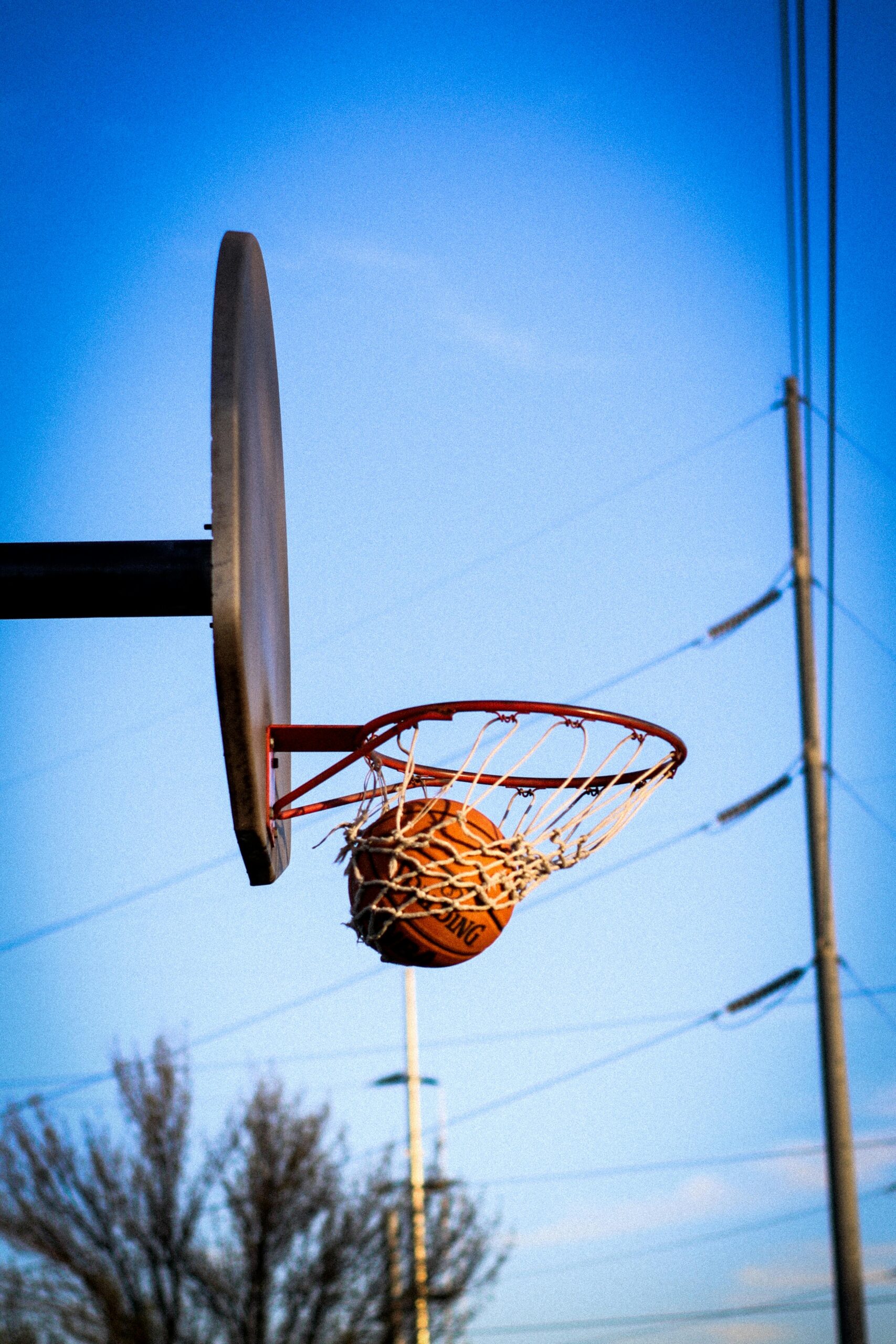
Every basketball player dreams of being the go-to shooter when the game is on the line. But shooting a basketball at an elite level is not about luck, and it is rarely about raw talent. It is about physics, repetition, and flawless mechanics.
At Athletes Untapped, we constantly remind players that a streaky shooter relies on feel, but a great shooter relies on form. When the pressure is high and your legs are tired, your feel disappears. The only thing that saves your shot in the fourth quarter is muscle memory built on optimal mechanics.
Optimizing your shot mechanics does not mean everyone has to shoot exactly like Klay Thompson or Ray Allen. It means finding the most efficient, repeatable, and tension-free energy transfer for your specific body. Here is a breakdown of how to build a shot that goes in, even on your bad days.
Learn from a Private Basket Coach: https://athletesuntapped.com/browse/basketball/
Why Shot Mechanics Matter
A broken jump shot might work in the driveway, but it will get exposed against elite defense. Here is why mechanics dictate your ceiling as a scorer.
Consistency: A mathematically sound shot has fewer moving parts. Fewer moving parts mean less room for error. When your elbow, wrist, and release point are identical every time, your percentages skyrocket.
Range: Power does not come from your arms; it comes from the kinetic chain. Proper mechanics transfer energy seamlessly from the floor, through your hips, up your torso, and out through your fingertips. Poor mechanics leak energy, resulting in airballs from deep.
Release Speed: The higher the level of basketball, the smaller the window you have to shoot. A mechanically optimized shot eliminates wasted motion, allowing you to get the ball out of your hands before the defender can contest.
Best Drills to Optimize Your Shot
You do not fix a jump shot by shooting three-pointers. You fix it close to the basket. Here are 4 drills AU coaches use to reconstruct and optimize shooting form.
1. One-Handed Form Shooting
How to perform it: Stand two feet from the rim. Place the ball in your shooting hand only. Keep your guide hand behind your back. Bend your knees, bring the ball up smoothly, and snap your wrist, holding the follow-through until the ball hits the net.
Why it works: This isolates the shooting hand and guarantees that the ball rests on the finger pads, not the palm. It builds the foundation of a pure release.
Coaching Tip: Check your elbow. It should form an L-shape and stay under the ball, not flared out to the side.
2. The Line Drill (Alignment Focus)
How to perform it: Find a straight line on the court. Stand on the line and shoot the ball straight up into the air, aiming to have it land exactly on the line in front of you.
Why it works: This drill provides instant feedback on your alignment. If the ball lands left or right of the line, your elbow is flared, or your wrist is twisting on the release.
Coaching Tip: Watch the backspin. The ball should rotate perfectly end-over-end. If the spin is tilted, your release is flawed.
3. Chair Shooting (Energy Transfer)
How to perform it: Place a chair a few feet from the basket. Sit down with the ball in your shooting pocket. In one fluid motion, stand up and shoot the ball.
Why it works: This removes the tendency to use a negative dip (bringing the ball down to your knees before shooting). It teaches players to use the upward momentum of their legs to power the shot.
Coaching Tip: Do not pause at the top of your jump. The power from your legs must flow directly into your arms without a hitch.
4. Footwork Progressions (1-2 Step and Hop)
How to perform it: Spin the ball to yourself to simulate a pass. Practice catching the ball and stepping into the shot with a 1-2 step (left-right for righties) and then alternate with a hop (landing on both feet simultaneously).
Why it works: Great mechanics start before you even catch the ball. Your feet must be loaded and pointing toward the rim the moment the ball touches your hands.
Coaching Tip: Stay low on the catch. If you stand up straight when you catch the ball, you have to dip back down to jump, which slows your release.
Common Mistakes Players Make
Our coaches spend hours correcting bad habits that have been ingrained for years. Here are the most common mechanical flaws that ruin jump shots.
- The Thumb Flick: Using the thumb of the guide hand to push the ball. This causes the ball to miss left or right and ruins the backspin. The guide hand should fall away just before the release.
- The Flying Elbow: Letting the shooting elbow flare out horizontally away from the body. This forces a pushing motion rather than an upward lifting motion, killing arc and accuracy.
- Dropping the Ball on the Catch: Catching a pass at chest level and dropping it down to your waist before bringing it back up. This wasted motion allows defenders to recover and block the shot.
- Flat Arc: Shooting the ball on a straight line at the rim. A flat shot has a smaller margin for error because the rim essentially becomes an oval. You need a high, looping arc so the ball drops straight down into the net.
Connect with a Private Basketball Coach: https://athletesuntapped.com/browse/basketball/
How Private Coaching Accelerates Improvement
It is almost impossible to diagnose your own shooting flaws in real-time. You might think your elbow is tucked, but a camera will show otherwise.
This is where private coaching is essential.
A private basketball coach can:
- Provide Video Breakdown: We film your shot from multiple angles and slow it down frame-by-frame. Seeing your own mechanics is the fastest way to understand what needs to change.
- Adjust Hand Placement: Moving a finger half an inch on the seams of the ball can completely fix a tilted rotation. We find the perfect grip for your hand size.
- Rebuild Muscle Memory: We provide the necessary repetition and immediate correction to override old, bad habits and cement the new, optimized mechanics.
- Develop Game-Speed Reps: Form shooting is great, but we eventually progress to contested, game-speed shooting to ensure your mechanics hold up under defensive pressure.
Frequently Asked Questions about Basketball Shot Mechanics
Where should my eyes look when I shoot?
Most elite shooters aim for the center of the rim, or the loops holding the net on the front or back of the rim. Find a specific, tiny target and lock your eyes on it until the ball goes through.
Should I jump high on my jump shot?
Not necessarily. The goal is a quick, fluid energy transfer, not a maximum vertical jump. Many great shooters barely leave the floor. Focus on balance and rhythm, not height.
How long does it take to fix a broken shot?
Changing your shot mechanics takes time and patience. It often feels worse before it feels better. It typically takes 4 to 8 weeks of dedicated, daily repetition to make a new mechanical tweak feel natural.
What is the ideal release angle?
Studies show that an entry angle of about 45 degrees into the basket provides the highest shooting percentage. This requires a release angle of roughly 48 to 50 degrees from the hands.
Conclusion
Optimizing your shot mechanics is a journey of a thousand tiny details. It requires discipline, patience, and a willingness to break down your game to build it back up stronger.
By focusing on balance, energy transfer, and a pure release, you can turn a streaky jumper into a lethal weapon. Get in the gym, get close to the basket, and perfect the process.
About Athletes Untapped
Athletes Untapped connects basketball players with experienced private coaches who specialize in shot mechanics, offensive footwork, and scoring efficiency. Through personalized instruction and structured training plans, Athletes Untapped helps players increase their shooting percentages and build unshakeable confidence on the court.
Find an experienced coach near you: https://athletesuntapped.com
Learn from our very best Coach!


