
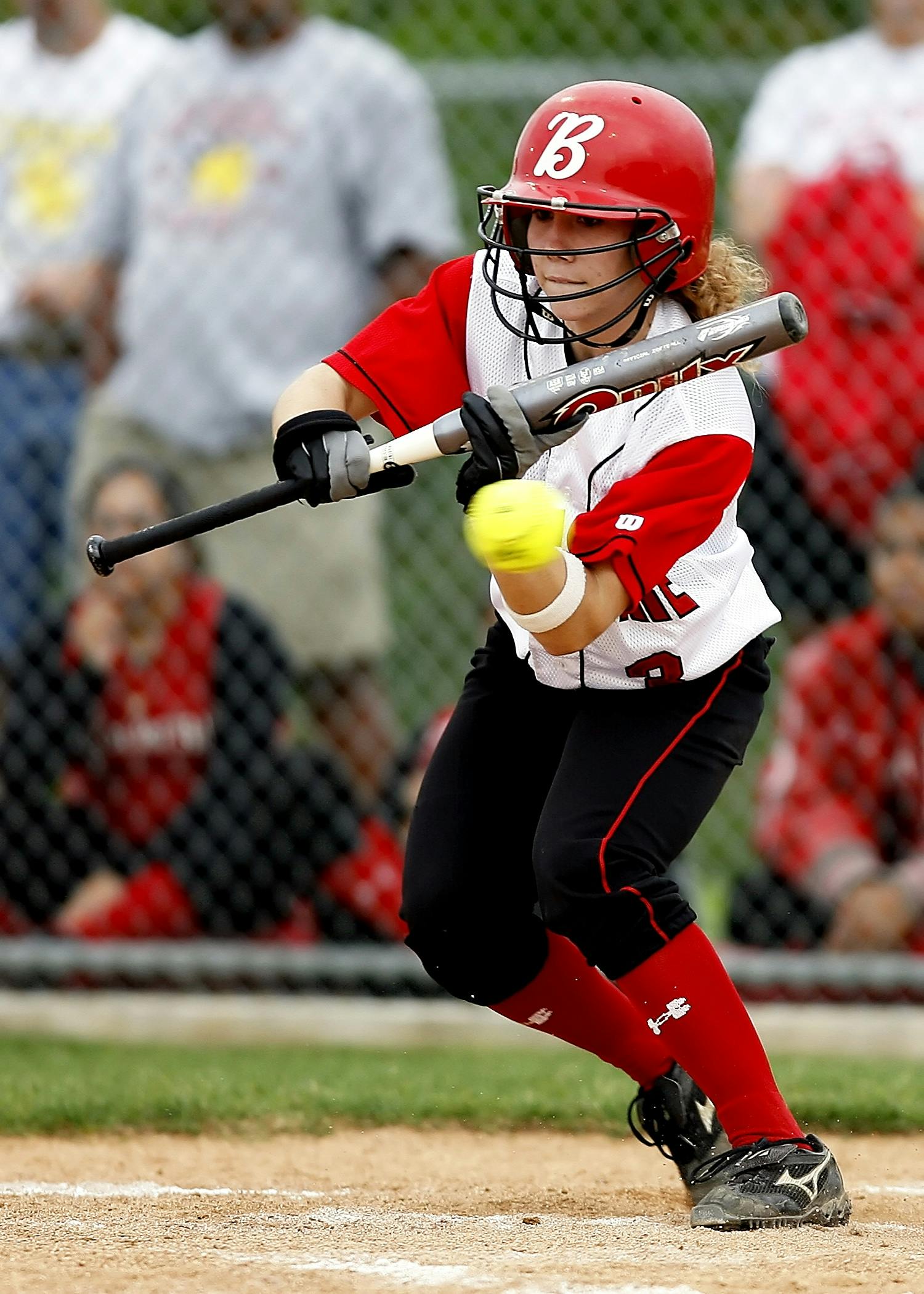
In softball, stealing bases is a fundamental part of the offensive strategy. The bases are only 60 feet apart, meaning a fast runner can easily swipe second base in under three seconds. You can have a cannon for a right arm, but if it takes you a full second just to stand up and get the ball out of your glove, the runner will be sliding in safely before your throw even crosses the pitcher’s circle.
At Athletes Untapped, we notice that many young catchers struggle because they rely entirely on their raw arm strength to throw runners out. They reach out to catch the pitch, stand completely straight up, take a long, looping wind-up, and throw flat-footed. This lack of structural mechanics leads to incredibly slow release times, sailed throws into center field, and an opposing team that runs wild on the basepaths.
The secret to completely shutting down the running game lies in optimizing your pop time. Proper training fixes these footwork and transfer issues, allowing catchers to receive the ball deeply, exchange it seamlessly into their throwing hand, and fire a laser to the base in one fluid, explosive motion.
Connect with a Private Softball Coach: https://athletesuntapped.com/browse/softball/
Why This Skill Matters for Athlete Development
Your pop time—the exact time measured from the moment the pitch hits your glove to the moment it hits the fielder’s glove at second base—dictates your team’s defensive leverage. Without an elite pop time, your pitcher is under constant stress from runners in scoring position.
- Game Performance: Elite pop time directly translates to eliminating scoring threats. When you can consistently deliver the ball to second base in under 1.8 seconds, opposing coaches simply stop sending their runners. This acts as an ultimate eraser for walks or singles, keeping double plays in order and bailing your pitcher out of tough innings.
- Confidence: I have seen athletes improve faster when they spend just 10 focused minutes on footwork and transfer drills at the start of every session. When replacing your feet becomes automatic muscle memory, catchers stop panicking when a runner takes off. They gain the composure to stick the pitch, trust their quick release, and execute a confident, aggressive throw directly onto the bag.
- Long-Term Development: As you progress to high school and collegiate softball, slap hitters and speedsters put immense pressure on the defense. A biomechanically sound throwing sequence protects your shoulder from the strain of “muscling” the ball. It provides the elite kinetic efficiency needed to generate velocity from a crouched position, ensuring your defensive value scales as you face faster, smarter baserunners.
Best Drills / Tips / Techniques
You cannot master your pop time by simply throwing from your knees in warm-ups. You need isolated, high-speed repetitions to train your footwork and your glove-to-hand transfer. Here are 5 drills AU coaches use to build an absolute wall behind home plate.
1. The Transfer-Only Drill
How to perform it: Start in your secondary catching stance (hips slightly raised, ready to throw). Have a coach rapid-fire toss softballs directly at your chest from 10 feet away. You must catch the ball, instantly transfer it from the glove to your throwing hand at your right shoulder (or left, if left-handed), and freeze. Do not throw the ball; just practice the exchange.
Why it works: A slow transfer adds massive amounts of time to the stopwatch. This drill breaks the throw down to its most crucial micro-movement, teaching the central nervous system to seamlessly transition the ball out of the webbing and into a four-seam grip without looking at it.
Coaching tips: Bring the glove to the throwing hand, not the throwing hand to the glove. The exchange must happen near your ear/shoulder to ensure a short, quick release.
Common mistakes: Dropping the glove down to the waist to grab the ball. If you drop your hands, you have to bring them all the way back up to throw, wasting critical milliseconds.
2. “Replace the Feet” Footwork
How to perform it: Draw a straight line in the dirt splitting your stance. Start in your secondary stance without a ball. On the coach’s command, aggressively drive your right foot directly to where your left foot currently is, while simultaneously striding your left foot directly toward second base.
Why it works: Catchers do not have the time to take a crow-hop like an outfielder. This drill isolates the specific “replacement” footwork required to instantly turn the hips and align the shoulders toward the target while maintaining a low, explosive center of gravity.
Coaching tips: Stay low. You should feel like you are gliding across the dirt, not jumping up into the air.
Common mistakes: Taking a false step backward with the right foot before moving forward. You must drive directly toward the target to utilize your forward momentum.
3. The Chute Drill (Staying Low)
How to perform it: Set up a PVC pipe chute, a low bungee cord, or simply have a coach hold a pool noodle just above your helmet height while you are in your stance. Receive a pitch and execute your full throw to second base without your helmet hitting the noodle.
Why it works: Standing straight up completely kills your forward momentum and forces you to throw purely with your arm. This drill forces the athlete to stay in their legs, driving their energy horizontally toward second base rather than vertically toward the sky.
Coaching tips: Your chest should be angled slightly forward over your front knee as you release the ball.
Common mistakes: Popping up and throwing flat-footed. If you hit the noodle, your legs are completely straight, meaning you left all your lower-body power behind the plate.
4. Throwing from the Knees
How to perform it: Start on both knees facing the pitcher. Have a coach throw a pitch. You must catch the ball, rotate your hips, and fire a strong throw to second base without standing up.
Why it works: Sometimes a pitch is in the dirt, and you do not have time to get to your feet to throw out a stealing runner. This drill isolates the core and upper body, teaching the catcher how to generate intense rotational torque and arm whip without relying heavily on the legs.
Coaching tips: Aggressively pull your front glove-arm into your ribcage. This action forces your throwing shoulder to snap forward violently.
Common mistakes: Decelerating the arm because it feels unnatural. You must throw with 100 percent intent and a full follow-through.
5. Deep Receive and Fire
How to perform it: Have a live pitcher throw to you. Instead of reaching out to catch the ball as far forward as possible, deliberately let the ball travel deep into the strike zone, catching it right next to your body. Instantly transfer and throw to second base.
Why it works: Reaching for the ball actually slows down your pop time, because it extends your arms away from your body, making the transfer longer. This drill teaches the athlete that letting the ball travel allows the transfer to happen naturally right next to the throwing shoulder.
Coaching tips: Soft hands. Let the ball bring your glove backward toward your shoulder, using the ball’s momentum to speed up your exchange.
Common mistakes: Stabbing at the ball. If your glove moves forward to catch it, your hand has to reverse direction to bring it back to throw, wasting time.
Common Mistakes Athletes Make
Pop time errors are incredibly common in amateur softball, but they are easy to fix once you understand the efficiency of your kinetic chain.
The Outfielder’s Arm Swing: This happens when a catcher drops the ball down past their waist behind their back to wind up for a massive throw. This long arm circle is great for throwing from center field, but it is far too slow for catching.
How to fix it: Shorten the arm path. Throw like a dart. The ball should go directly from the glove (at your chest/ear) straight back to your ear, and right past your head.
Stepping Across the Body: Landing the front foot toward the right-handed batter’s box rather than stepping directly toward second base. This locks the hips and forces the catcher to throw entirely across their body, bleeding velocity and ruining accuracy.
How to fix it: Use the “Replace the Feet” drill on a painted line. Your front toe must point directly at your target to allow your hips to open up freely.
Poor Pitch Framing While Throwing: Giving up on the strike call because you are in a rush to throw the runner out. This results in the umpire calling a “ball” on a pitch that should have been a strike, hurting your pitcher.
How to fix it: You must stick the pitch for a fraction of a second before you initiate your transfer. Secure the strike first, then throw the runner out.
Grip Inconsistency: Reaching into the glove and grabbing the ball with a palm-ball grip or a three-finger grip, resulting in a sinking, tumbling throw that bounces into center field.
How to fix it: Drill your transfers daily. You must practice spinning the ball in your hand until finding a strong four-seam grip becomes an instant, subconscious reflex.
Find a Private Softball Coach: https://athletesuntapped.com/browse/softball/
How Private Coaching Accelerates Improvement
Pop time is measured in hundredths of a second. Trying to self-diagnose whether your transfer took 0.6 seconds instead of 0.4 seconds, or if your front foot landed an inch too far to the left, is literally impossible without high-speed video and professional analysis.
This is where private coaching is essential. Private coaching provides faster skill development by utilizing expert eyes, slow-motion breakdowns, and precise radar/stopwatch tracking. A private catching coach offers personalized feedback tailored to your specific mobility and arm slot, making it easy to catch habits like taking a false step immediately. This targeted instruction allows athletes to focus on correcting mechanical inefficiencies early before they become ingrained muscle memory. Ultimately, mastering your pop time in a 1-on-1 environment provides massive confidence building, allowing you to strap on your gear knowing you are the undisputed general of the defense.
Frequently Asked Questions About Catcher Pop Time in Softball
What is considered a “good” pop time in softball?
For high school varsity softball, a strong pop time is consistently between 1.8 and 2.0 seconds. At the elite collegiate level (Division 1), catchers are frequently popping in the 1.6 to 1.7-second range.
How often should athletes practice this skill?
Catchers should work on their footwork and transfers every single day as part of their warm-up. However, full-effort throws to second base should be limited to 10-15 reps, 2-3 times a week, to preserve arm health and prevent fatigue.
What age should athletes start working on this?
Basic footwork (replacing the feet) and the concept of a quick transfer can be taught as early as 9 or 10. True pop-time tracking on a stopwatch usually begins around middle school when the athletes have the arm strength to reach the base consistently.
Is arm strength the most important part of pop time?
No. Footwork and transfer speed make up roughly 70 percent of your pop time. A catcher with an average arm but lighting-fast footwork and a flawless exchange will consistently beat a catcher with a cannon who stands up slowly and winds up.
Why are my throws always tailing to the right side of the bag?
Tailing throws usually occur because you are not getting a true four-seam grip on the transfer, or because your front foot is stepping “in the bucket” (stepping away from the target), causing your arm to drag and push the ball sideways.
Do private coaches help with this?
Absolutely. Private softball catching coaches are essential for breaking down the biomechanics of the throw, providing high-speed video analysis, and isolating specific transfer and footwork flaws so the athlete can practice effectively.
Conclusion
Pop time is the undeniable foundation of a dominant, game-controlling softball catcher. Without it, you are leaving your team’s defense entirely vulnerable to aggressive baserunning and putting unnecessary pressure on your pitching staff. Improvement is highly achievable with proper training, but it requires relentless discipline regarding your footwork and glove exchange. Encourage yourself to focus on staying low and speeding up your transfer before you focus on simply throwing harder, and consistent practice will inevitably yield an impenetrable defense and a feared reputation behind the plate.
Train With a Private Softball Coach
- Athletes Untapped connects athletes with vetted private coaches across the country for one-on-one training.
- Private coaching helps athletes:
- improve faster
- build confidence
- receive personalized feedback
- reach their full potential
About Athletes Untapped
Athletes Untapped connects softball players with experienced private coaches who specialize in catching mechanics, pop time optimization, and defensive strategy. Through personalized instruction and structured training plans, Athletes Untapped helps catchers improve their footwork speed, glove-to-hand transfers, and throwing accuracy to shut down the running game completely.
Find an experienced coach near you: https://athletesuntapped.com
Learn from our very best Coach!


