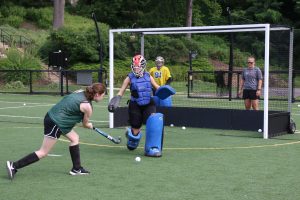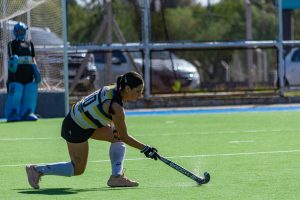
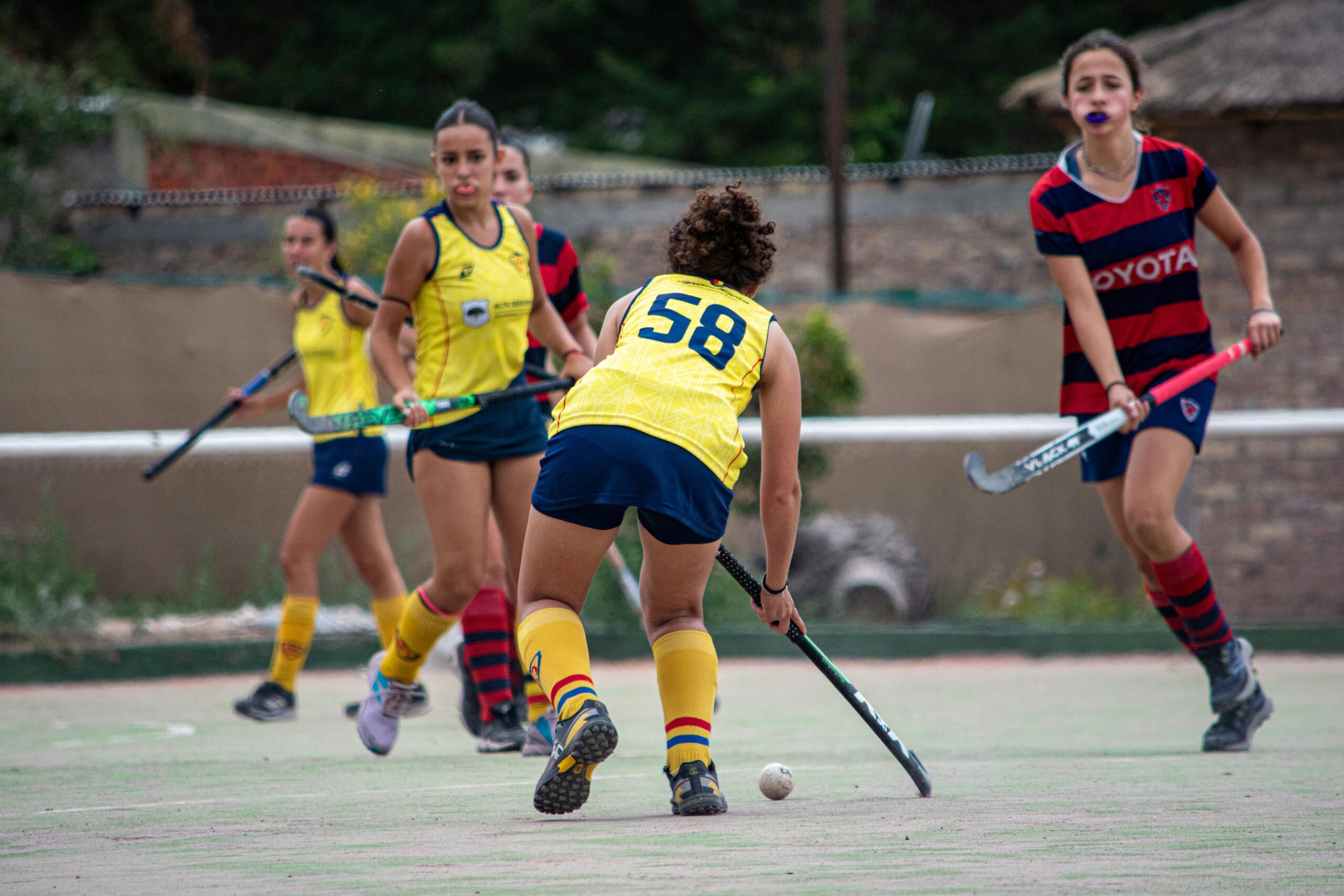
In field hockey, a team can possess the ball for 80 percent of the game, execute flawless midfield transfers, and dribble past defenders with ease, but the entire match is decided inside the 16-yard striking circle. You can have the fastest wingers on the pitch, but if your forwards freeze, take too many touches, or swing wildly the moment they enter the scoring zone, your team will consistently lose to opponents who capitalize on half the opportunities.
At Athletes Untapped, AU coaches notice that many young forwards treat entering the circle like a green light to panic. They put their heads down, ignore the position of the goalkeeper, wind up for a massive, time-consuming hit, and ultimately drive the ball directly into the goalie’s leg guards. This lack of structural mechanics leads to wasted penalty corners, blown fast breaks, and a highly frustrating inability to translate field dominance into actual points on the scoreboard.
The secret to becoming a lethal goal scorer lies in circle finishing technique. Proper training fixes these timing and spatial issues, allowing players to utilize quick releases, master deflections, and exploit the exact geometry of the goal cage before the defense can recover.
Connect with a Private Field Hockey Coach: https://athletesuntapped.com/browse/field-hockey/
Why This Skill Matters for Athlete Development
Your ability to finish in the circle dictates your ultimate value as an attacking player. Without clinical finishing, you are simply doing the hard work of building up the play only to hand the ball back to the opponent.
- Game Performance: Elite circle finishing directly translates to scoreboard pressure. When you possess the mechanical speed to execute a push shot or a reverse strike in a fraction of a second, you completely eliminate the goalkeeper’s reaction time. You turn messy, chaotic loose balls into guaranteed goals, forcing the opposing defense to play with constant anxiety.
- Confidence: AU coaches have seen athletes improve faster when they spend just 10 focused minutes on quick-release shooting drills at the start of every session. When getting a shot off under pressure becomes muscle memory, forwards stop looking for the perfect pass. They gain the composure to trust their instincts, step into the circle, and execute a confident, aggressive strike without hesitating.
- Long-Term Development: As you progress to collegiate and international field hockey, defenders will not give you the time or space to take a full wind-up hit inside the circle. A biomechanically sound repertoire of different shots protects you from being a one-dimensional player. It provides the elite kinetic efficiency needed to score from any angle, ensuring your offensive threat scales as you face faster, more physical defensive units.
Best Drills / Tips / Techniques
You cannot master circle finishing by simply lining up at the top of the D and hitting stationary balls at an empty net. You need isolated, high-intensity reaction drills to train your fast-twitch muscles and your spatial awareness. Here are 5 drills AU coaches use to build an unstoppable striker.
1. The One-Touch Deflection (The Tip-In)
How to perform it: Position yourself near the far post of the goal. A coach or teammate drives the ball hard across the face of the goal from the opposite side of the circle. You must keep your stick low to the turf and simply angle the face of the stick to redirect the ball’s momentum into the back of the net without taking a trap.
Why it works: The fastest goal in field hockey is the one that never stops moving. This drill trains hand-eye coordination and stick-face geometry, teaching the athlete that they do not need to generate power to score; they only need to change the angle of a powerful cross.
Coaching tips: Do not swing at the ball. Hold your stick incredibly firm and let the ball do the work. If you swing, you will likely miss the deflection entirely.
Common mistakes: Standing fully upright while waiting for the cross. You must be in a low, athletic crouch with your stick already touching the turf before the ball arrives.
2. The Reverse Stick Strike (The Tomahawk)
How to perform it: Dribble the ball diagonally toward the left side of the shooting circle. Plant your left foot, drop your body weight incredibly low to the ground, rotate your wrists to expose the edge of the stick, and violently strike the ball using the reverse edge, driving it into the far right corner of the goal.
Why it works: Defenders are taught to force attackers to their weak side (the left side). This drill turns a perceived weakness into a devastating weapon, giving the attacker the ability to unleash a blistering shot without having to slow down and pivot their body to the forehand side.
Coaching tips: The power comes from the rotation of the torso and the violent snap of the wrists, not just the arms. Your knuckles should practically be brushing the artificial turf.
Common mistakes: Hitting the ball too far back in your stance. The ball must be well out in front of your lead foot so you can swing completely through it.
3. The Quick-Release Push Shot
How to perform it: Receive a pass near the penalty spot. Instead of taking a touch, stepping back, and winding up, you must instantly transfer the ball to your forehand and execute a powerful push shot or flick in a single, fluid motion. The entire sequence from reception to release must take less than one second.
Why it works: Goalkeepers rely on the attacker’s backswing to time their dive. This drill eliminates the backswing entirely. By using a push shot, the ball leaves the stick before the goalie can read the trajectory or set their feet.
Coaching tips: Use the weight transfer of your lower body to generate power. Step aggressively onto your left foot as you push the ball forward.
Common mistakes: Over-stickhandling. If you take three touches to settle the ball, three defenders will have already collapsed on you.
4. The Pull Right and Shoot
How to perform it: Approach a passive defender (or a cone) at the top of the circle. Execute a hard, wide drag (pull) to the right side to completely eliminate the defender’s stick, immediately step forward, and hit a forehand shot into the left corner of the goal while still in stride.
Why it works: You will rarely get a clean shot without a defender in your face. This drill marries elimination skills with finishing skills, teaching the athlete how to create their own shooting lane and immediately capitalize on the space before the help defense arrives.
Coaching tips: The shot must happen on the very next step after the pull. If you pull right and then run forward for five yards, the shooting window will close.
Common mistakes: Pulling the ball but leaving it too close to the body, making it physically impossible to get a full swing on the shot. Ensure the ball is dragged wide outside your right foot.
5. The Rebound Reaction (Trash Cleanup)
How to perform it: A coach takes a hard shot from the top of the circle directly at the goalkeeper’s pads. As the striker, you must start near the penalty spot, anticipate the save, and sprint aggressively toward the goalie to finish the unpredictable rebound before the defenders can clear it.
Why it works: The most beautiful goals and the ugliest goals all count for one point. This drill trains anticipation, hunger, and chaos management. It teaches forwards to never watch a teammate’s shot, but to immediately hunt for the secondary opportunity.
Coaching tips: Keep your stick down as you run toward the goalie. Rebounds happen at lightning speed, and if your stick is at your waist, the ball will bounce right past you.
Common mistakes: Running in a straight line directly behind the initial shot. You must crash the goal at an angle (usually the far post) to intercept where the goalie will naturally deflect the ball.
Common Mistakes Athletes Make
Circle finishing errors are incredibly common in youth and high school field hockey, mostly due to a lack of composure in high-pressure areas.
The Massive Wind-Up: Taking the stick all the way up above the shoulders to hit the ball as hard as possible. This takes far too much time, warns the goalie exactly when the shot is coming, and frequently leads to dangerous play calls or completely whiffing the ball.
How to fix it: Shorten your backswing. Focus on a sharp, compact strike. Accuracy and a quick release will beat a slow, powerful hit every single time.
Shooting at the Goalie’s Feet: Staring directly at the goalkeeper while shooting, which inevitably results in hitting the ball directly into their heavily padded kickers.
How to fix it: Look at the empty space, not the obstacle. Pick a specific corner of the backboard (the soundboard) and lock your eyes onto it before you strike.
Failing to Follow Up: Hitting a shot and then standing perfectly still to admire it.
How to fix it: The moment the ball leaves your stick, your feet must move forward. Assume the goalie is going to save it and be the first player to arrive for the rebound.
Poor Body Positioning on Crosses: Standing flat-footed with your back to the goal while waiting for a ball from the wing.
How to fix it: Keep your chest open to the field. You should be able to see the player crossing the ball and the goal at the exact same time, allowing you to deflect the ball without having to turn blindly.
Find a Private Field Hockey Coach: https://athletesuntapped.com/browse/field-hockey/
How Private Coaching Accelerates Improvement
Circle finishing is a highly technical skill that requires an elite understanding of biomechanics, angles, and spatial awareness. Trying to self-diagnose whether your reverse stick grip was slightly off, or if your weight transfer was a fraction of a second too late on a push shot, is practically impossible during the chaos of a live match.
This is where private coaching is essential. Private coaching provides faster physical development by utilizing expert eyes, slow-motion video analysis, and highly repetitive, realistic ball feeding inside the circle. A private field hockey coach offers personalized feedback tailored to your specific hand speed and shooting tendencies, making it easy to catch habits like over-stickhandling immediately. This targeted instruction allows athletes to focus on correcting their release mechanics safely before they become ingrained, slow habits. Ultimately, mastering your finishing in a 1-on-1 environment provides massive confidence building, allowing you to step into the scoring zone knowing you possess the clinical accuracy to terminate the play.
Frequently Asked Questions about Circle Finishing in Field Hockey
What is the highest-percentage area to aim for in the goal?
The bottom corners (the low backboard) are statistically the hardest areas for a goalkeeper to reach quickly, especially if they are moving. Shots that are bouncing slightly are also incredibly difficult for goalies to clear cleanly.
When should I hit the ball versus sweep the ball?
A hit is best used when you have a clear, straight-on view of the goal and need maximum velocity. A sweep is incredibly effective on the run or when receiving a cross, as it provides a massive surface area for contact and naturally keeps the ball low.
Why do my shots always pop up dangerously in the air?
You are likely leaning backward when you strike the ball, or the ball is too far forward in your stance, causing the stick face to open up. You must keep your chest over the ball and your left shoulder pointing toward the target to keep the shot flat.
Can I score from outside the circle?
No. In field hockey, a goal only counts if the ball is touched by an attacking player’s stick inside the 16-yard striking circle before it completely crosses the goal line.
Do private coaches help with this?
Absolutely. Private field hockey coaches are essential for breaking down the biomechanics of the reverse stick hit, providing high-velocity cross-feeding for deflection practice, and isolating specific shooting flaws so you can become a vastly more dangerous forward.
Conclusion
Mastering circle finishing is the undeniable foundation of a lethal, high-scoring field hockey attacker. Without it, you are leaving your offensive potential entirely up to chance and playing directly into the hands of organized, deep-sitting defenses. Improvement is highly achievable with proper training, but it requires extreme composure, a compact swing, and a willingness to embrace the physical chaos in front of the net. Encourage yourself to focus on your quick release and your rebound reactions before you focus on sheer power, and consistent practice will inevitably yield a terrifying offensive presence and a significantly higher goal count.
Train With a Private Field Hockey Coach
- Athletes Untapped connects athletes with vetted private coaches across the country for one-on-one training.
- Private coaching helps athletes:
- improve faster
- build confidence
- receive personalized feedback
- reach their full potential
About Athletes Untapped
Athletes Untapped connects field hockey players with experienced private coaches who specialize in circle finishing, striking mechanics, and offensive positioning. Through personalized instruction and structured training plans, AU coaches help forwards and attacking midfielders eliminate hesitation, master their goal-scoring technique, and capitalize on every opportunity inside the D.
Find an experienced coach near you: https://athletesuntapped.com
Learn from our very best AU coaches!