
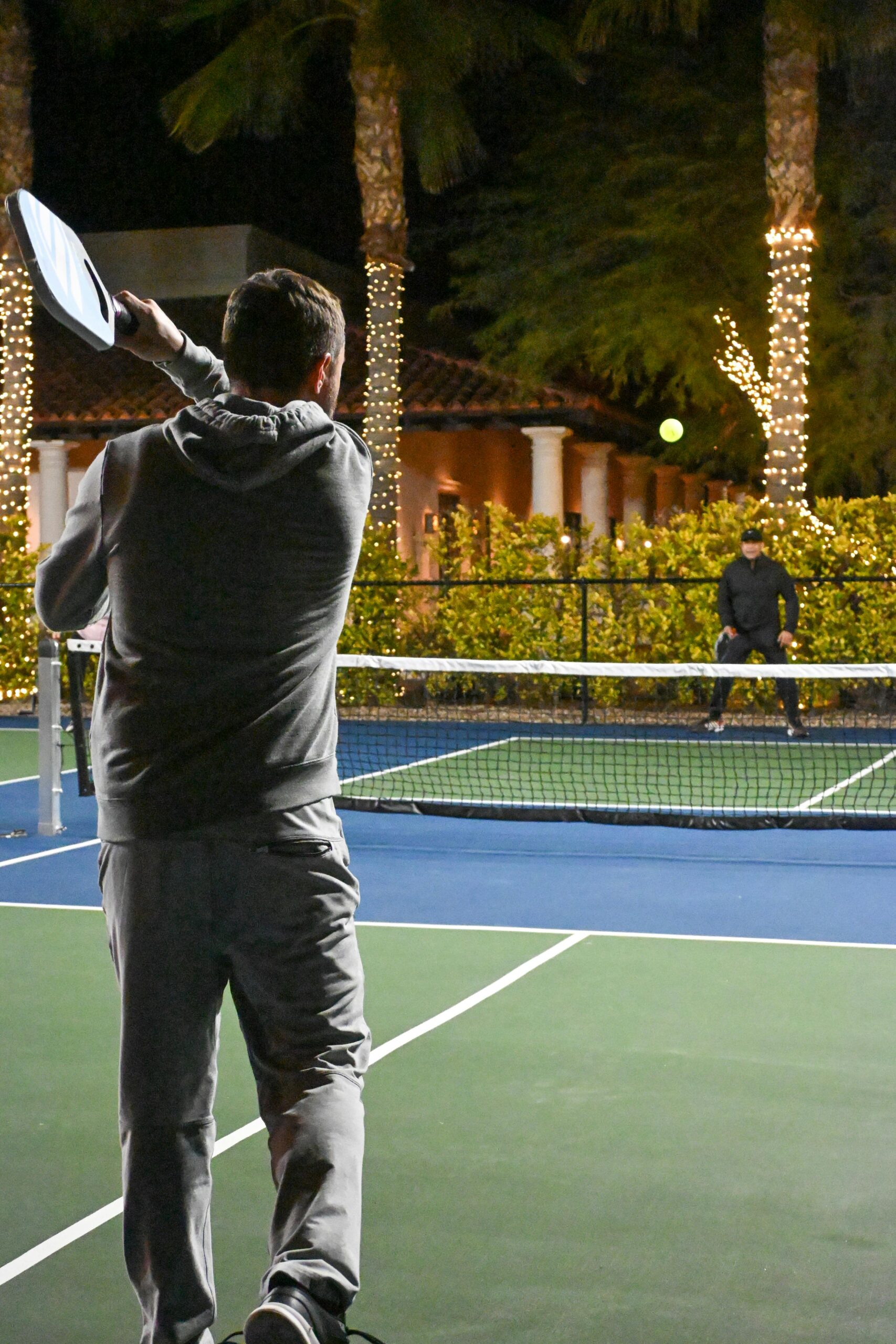
In pickleball, everyone loves the overhead smash. It looks great and feels powerful. But if you watch the pros, you will see that the game is actually won at the non-volley zone line, also known as the kitchen.
The dink is the great equalizer. It neutralizes power players (“bangers”) and forces opponents into uncomfortable positions. Yet, at Athletes Untapped, we see countless points lost not because of a bad smash but because of a missed dink. Improving dinking consistency is about patience, soft hands, and footwork. It is the art of doing less to achieve more. If you can outlast your opponent in a dink rally, you will win more matches.
Here is how to master the soft game and frustrate your opponents
Why Dinking Consistency Matters
The goal of a dink is not necessarily to hit a winner. The goal is to make your shot unattackable.
When you keep the ball low over the net and land it in the kitchen, your opponent is forced to hit the ball up. This prevents them from driving the ball at you. A consistent dinking game allows you to control the tempo of the point.
Furthermore, patience forces errors. Many players get anxious during a long dink rally and try to speed up a ball that is too low. This usually results in the ball hitting the net or flying out of bounds. By simply keeping the ball in play, you let your opponent defeat themselves.
Connect with Private Pickleball Coach: https://athletesuntapped.com/browse/pickleball/
Best Drills to Sharpen Your Soft Game
You cannot learn touch by hitting the ball hard. You need repetition with specific targets. Here are 4 drills AU coaches use to build patience and precision.
1. The Cooperative 100-Dink Challenge
How to perform it: Stand at the kitchen line with a partner directly across from you. The goal is to hit 100 dinks in a row without a mistake. If the ball hits the net or goes out, you restart at zero. Why it works: This shifts the mindset from “winning the point” to “keeping the ball alive.” It forces you to focus on margin for error. Coaching Tip: Aim for the middle of the kitchen, not the lines. Give yourself a safety buffer.
2. Cross-Court Skinny Singles
How to perform it: You and your partner stand diagonally from each other at the kitchen line (e.g., both on the right side). Play a game to 11 using only that half of the court and only dinks. Why it works: Cross-court dinking is safer because the net is lower in the middle and the court is longer diagonally. This drill builds comfort with the most common dink angle. Coaching Tip: focus on getting your body turned toward the target. Do not just reach with your arm.
3. The “Yo-Yo” Drill (Movement)
How to perform it: Have a partner feed you dinks. They should alternate hitting one short (close to the net) and one deep (near the kitchen line). You must move your feet forward and backward to catch the ball at the ideal contact point out in front. Why it works: Bad dinks happen when players get jammed or reach too far. This teaches you to move your feet to the ball. Coaching Tip: Keep your paddle out in front of you the entire time. Do not drop it by your side between shots.
4. Target Cone Dinking
How to perform it: Place a cone or a towel inside the opponent’s kitchen, near their feet. Try to land every dink on that target. Why it works: Aiming for the feet is the best strategy because it is hard for the opponent to attack a ball that is bouncing near their shoelaces. Coaching Tip: Use a gentle lifting motion with your shoulder, not a wrist flick.
Common Mistakes Players Make
Dinking looks easy, which is why mistakes are so frustrating. Our coaches often correct these bad habits.
- Tight Death Grip: Squeezing the paddle too hard is the number one cause of “popped up” dinks. Tension creates a trampoline effect. You need a loose grip (about a 3 or 4 on a scale of 10) to absorb the pace.
- Big Backswing: You do not need power for a dink. If you take a big backswing, you lose control. The paddle should barely move backward.
- Flat Feet: Standing like a statue at the line limits your range. You should be in an athletic stance with knees bent, ready to shuffle laterally.
- Impatience: Trying to hit a winner on a ball that is unattackable. If the ball is below the net, dink it back. Wait for a high ball to attack.
How Private Coaching Accelerates Improvement
It is hard to practice patience in open play where everyone wants to bang the ball. This is where private coaching is essential.
A private pickleball coach can:
- Fix your grip pressure: A coach can instantly tell if you are holding the paddle too tight and give you drills to soften your hands.
- Drill footwork patterns: We teach you how to shuffle efficiently so you are always balanced when you strike the ball.
- Teach shot selection: We help you recognize which balls to dink and which balls to attack (the “red light, green light” system).
- Provide high-volume reps: In a game, you might hit 5 dinks. In a lesson, you will hit 500.
Frequently Asked Questions About Pickleball Dinking
Should I dink cross-court or down the line?
Cross-court is statistically safer. The net is lower in the center (34 inches vs 36 inches at the post), and you have more court to work with. Down the line is effectively a smaller target.
When should I speed up the ball?
Only speed up the ball (attack) if the contact point is above the net level. If you have to hit up on the ball, dink it. If you can hit down or flat, you can attack.
How do I stop popping the ball up?
Loosen your grip and shorten your swing. Think of it as a push, not a hit. Also, make sure you are contacting the ball out in front of your body, not beside or behind you.
Is the backhand dink harder?
For most players, yes. It requires more shoulder stability. Drill your backhand specifically so it doesn’t become a target for your opponents.
Best Drills to Sharpen Your Soft Game: https://athletesuntapped.com/browse/pickleball/
Conclusion
The soft game is the hard game. It takes discipline to resist the urge to smash the ball. But once you master dinking consistency, you become the director of the court.
By keeping the ball low, moving your feet, and staying patient, you force your opponents to overplay their hand. In pickleball, the player who makes the fewer mistakes usually wins.
About Athletes Untapped
Athletes Untapped connects pickleball players with experienced private coaches who specialize in strategy, dinking mechanics, and court positioning. Through personalized instruction and structured training plans, Athletes Untapped helps players move from beginner to intermediate and beyond.
Find an experienced coach near you: https://athletesuntapped.com
Learn from our very best Coach!


