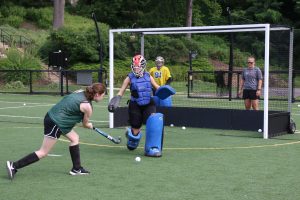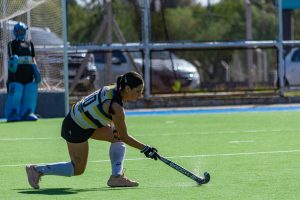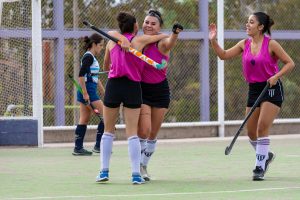
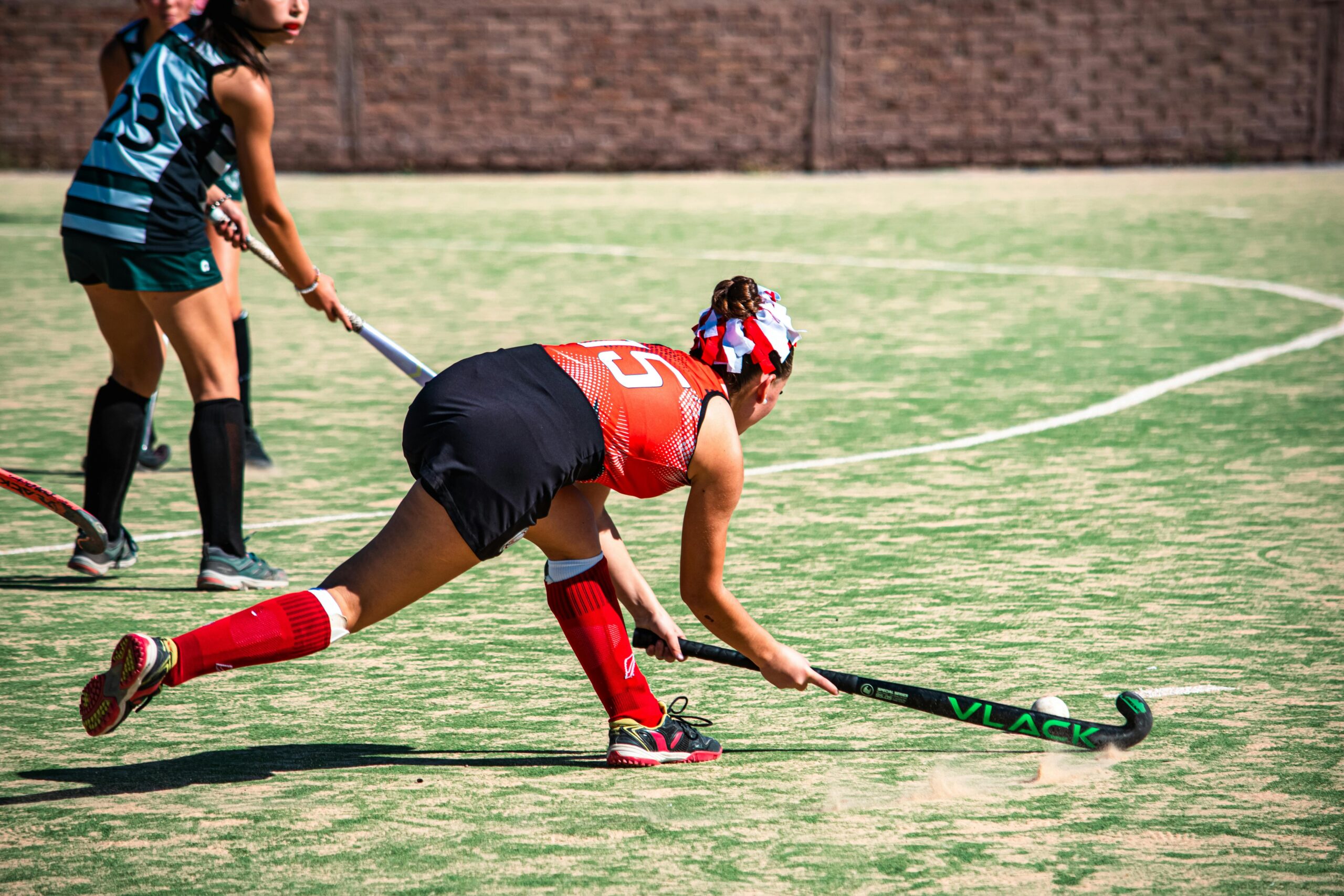
AU coaches have spent over 15 years on the turf, helping athletes transition from struggling with basic traps to dominating the midfield at the varsity and collegiate levels. When parents and athletes search for field hockey coaching near them, they are usually dealing with a player who has hit a mechanical ceiling. Field hockey is one of the most uniquely technical sports in the world because players can only use the flat side of the stick. This restriction means that poor hand placement or bad footwork is instantly exposed under pressure.
Many athletes struggle to elevate their game because team practices are heavily focused on offensive corners, defensive clears, and conditioning. A high school coach managing a large roster does not have the time to spend thirty minutes fixing the wrist rotation on a single player’s Indian dribble. Proper, individualized instruction isolates these mechanical flaws. Knowing which specific stick skills to master is the absolute first step toward becoming a dynamic, highly effective field hockey player.
Why Individual Stick Skills Matter for Athlete Development
An athlete can be the fastest runner on the turf, but if they cannot trap a hard pass or cleanly eliminate a defender in space, they become a liability in transition. Developing elite individual skills—like a seamless reverse stick trap, fluid 3D skills, and a powerful push pass—translates directly to dominating possession.
When a field hockey player trusts their stick skills, their entire field vision opens up. They stop looking down at the ball wrapped in their stick and start looking upfield to find passing lanes. In-game performance improves because the athlete is not panicking under pressure from a double team. For long-term development, mastering the fundamentals early prevents the poor postural habits that cause chronic lower back injuries, ensuring athletes can play aggressively and safely for years.
Best Drills to Accelerate Your Field Hockey Skills
If an athlete wants to see their turnover rate drop and their offensive impact increase, they must master the fundamentals of the stick. A top-tier AU coach will focus heavily on grip, posture, and repetition. Here are foundational drills used to build elite field hockey players:
- The V-Drag (Ball Control and Elimination)
- How to perform: The athlete pulls the ball diagonally backward toward their feet to avoid a defender’s stick, then immediately pushes it diagonally forward into open space, tracing the shape of a V on the turf.
- Why it works: The V-drag is the most reliable way to eliminate a flat-footed defender. It uses the defender’s momentum against them and creates an instant passing angle.
- Coaching tip: The pull backward must be a sharp, aggressive drag, not a slow roll.
- Common mistake: Leaving the ball exposed too far in front of the body before initiating the drag, allowing the defender to easily poke it away.
- The Indian Dribble (Agility and Stick Speed)
- How to perform: The athlete rapidly dribbles the ball side to side across the front of their body, continuously rolling the stick over the ball to use the flat side for both the left and right touches.
- Why it works: It forces the athlete to master the rotation of the stick using their left hand, which is the foundational movement for almost every advanced skill in field hockey.
- Coaching tip: The left hand (top hand) does all the twisting. The right hand (bottom hand) acts simply as a loose guide.
- Common mistake: Gripping the stick too tightly with the bottom hand, which completely locks the wrists and slows down the rotation.
- The Push Pass (Distribution and Accuracy)
- How to perform: With the ball resting on the stick face, the athlete steps forward with their left foot, stays low, and smoothly pushes the ball directly to a target without any backswing.
- Why it works: The push pass is the most frequently used pass in the game. It is highly accurate, easily disguised, and perfectly suited for quick ball movement on fast surfaces.
- Coaching tip: Transfer the body weight from the back foot to the front foot in sync with the push, following through with the stick head pointing at the target.
- Common mistake: Standing too upright and sweeping at the ball, which causes the pass to bounce uncontrollably.
- The Reverse Stick Receive (Trapping in Traffic)
- How to perform: The athlete rotates the stick to receive a pass on the left side of their body. The stick is held low to the turf, angled slightly forward to cushion the ball directly into the flat side.
- Why it works: Defenders constantly try to force players onto their weaker left side. A player who can confidently trap the ball on their reverse stick cannot be easily shut down.
- Coaching tip: Bend the knees deeply and get the stick parallel to the ground to create a larger surface area for the trap.
- Common mistake: Holding the stick too vertically, causing the ball to slip under the toe of the stick.
Connect with a Private Field Hockey Coach: https://athletesuntapped.com/browse/field-hockey/
Common Mistakes Athletes Make
Even the hardest workers will hit a wall if they reinforce bad habits during unstructured practice. A great AU coach will identify and fix these common mistakes immediately:
- Playing Too Upright: Field hockey requires getting incredibly low to the ground. Standing tall with straight legs limits the reach of the stick, makes trapping difficult, and slows down change of direction. Athletes must drop their hips and bend their knees.
- The Death Grip: Squeezing the stick tightly with the bottom right hand prevents the stick from turning. The top left hand must control the stick face, while the right hand loosely guides the shaft.
- Hacking Instead of Tackling: When defending, inexperienced players swing their stick wildly at the ball to clear it. This leads to fouls and dangerous play. Proper tackling requires patience, staying low, and performing clean block tackles or jab tackles.
- Overdribbling: Trying to beat three defenders solo usually results in a turnover. Elite players understand that the ball moves faster than anyone can run. Passing early and moving into open space is far more effective than forcing a dribble.
How Private Coaching Accelerates Improvement
Practicing in the backyard is great, but an athlete cannot fix a mechanical flaw if they do not know what they are doing wrong. A high school coach simply cannot pause a full-field scrimmage to show a forward how to fix their hand placement on a reverse sweep. This is exactly where a private field hockey coach accelerates improvement.
In a one-on-one setting, an AU coach can break down an athlete’s posture and stick handling frame by frame. If a midfielder is constantly losing the ball on the dribble, a private coach can instantly adjust their grip and correct their body angle to shield the ball from defenders. This hyper-focused environment builds immense confidence, fixes footwork issues instantly, and gives the field hockey player the exact blueprint they need to become a dominant threat all over the turf.
Frequently Asked Questions About Field Hockey Coaching
What Equipment Do I Need for Private Field Hockey Lessons?
Athletes need their field hockey stick, a mouthguard, shin guards, and turf shoes or cleats depending on the surface. Having plenty of practice balls is also helpful. Goalkeepers must bring their full, specialized padding kit.
How Often Should Field Hockey Players Practice Stick Skills?
To see rapid improvement in ball control, AU coaches recommend stick work for at least fifteen to twenty minutes, four to five days a week. Repetition is the ultimate equalizer in field hockey; the more touches an athlete gets, the faster their hands become.
Can Beginners Benefit From a Private Field Hockey Coach?
Absolutely. The grip and posture in field hockey are highly unnatural at first. Starting with a private coach is the smartest way for a beginner to enter the sport because they learn how to hold the stick, trap properly, and move safely before building bad, self-taught habits.
Do Private Coaches Help With Defensive Positioning?
Yes. Field hockey defense is highly strategic. Elite AU coaches teach defenders how to channel attackers to the sideline, how to establish proper body positioning, and how to execute clean, penalty-free tackles inside the shooting circle.
How Long Does It Take to Master the Reverse Stick?
It takes strict discipline and specialized coaching. Because it requires flipping the stick over to use the flat side on the left, it is often the hardest skill for young players to learn. With focused private instruction, athletes can feel a massive improvement in their reverse stick confidence within six to eight weeks.
Find a Private Field Hockey Coach: https://athletesuntapped.com/browse/field-hockey/
Conclusion
Mastering field hockey requires much more than just endurance; it requires elite stick control, a deep understanding of angles, and excellent body mechanics. Players need an instructor who will break down their grip, force them to get low to the turf, and teach them how to eliminate defenders with confidence. When athletes prioritize the Indian dribble, precise passing, and strong trapping over mindless running, they elevate their game to an entirely new level. Put in the extra reps, trust the coaching process, and dominate the field.
About Athletes Untapped
Athletes Untapped connects athletes of all sports with experienced private coaches who specialize in mental performance, sports psychology concepts, and competitive mindset training. Through personalized instruction and structured training plans, AU coaches help athletes eliminate performance anxiety, master their internal dialogue, and completely dictate their emotional response to adversity.
Find an experienced coach near you: https://athletesuntapped.com
Learn from our very best AU coaches!