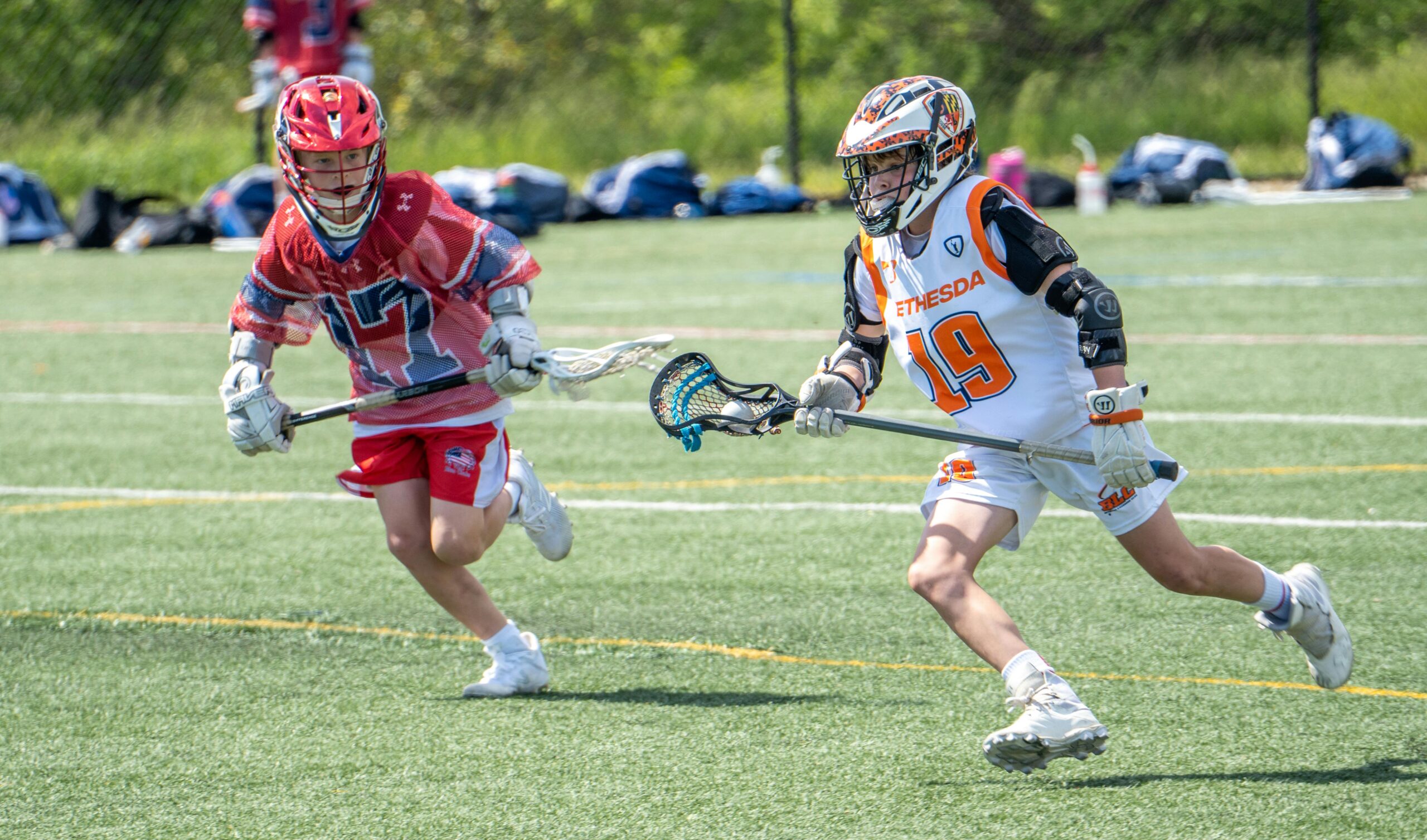
In lacrosse, an offense relies on motion, but it thrives on initiation. Getting a defender off balance and creating a numerical advantage is the entire point of the offensive game.
At Athletes Untapped, we constantly remind players that dodging is not about having the fanciest stick tricks. It is entirely about footwork, change of speed, and leverage. The stick simply comes along for the ride.
Many young players rely on their natural speed to simply run around defenders. As they level up, that stops working. Elite defenders will match that speed and strip the ball. To beat great defenders, you need flawless dodging mechanics that create separation and protect the ball. Here is how to break down your footwork and become a dodging threat from anywhere on the field.
Connect with a Private Lacrosse Coach: https://athletesuntapped.com/browse/lacrosse/
Why Dodging Mechanics Matter
A dodge is a physical conversation with the defender. You are lying to them with your body to make them step the wrong way.
Drawing the Slide: A successful dodge forces another defender to leave their man and help. This leaves a teammate open. Even if you do not score, a great dodge initiates the entire offensive sequence.
Stick Protection: Proper mechanics ensure your body is always between the defender and your stick. If your mechanics are loose, your stick is exposed, leading to easy turnovers.
Efficiency: A mechanically sound dodge takes less energy. Instead of wrestling a defender for ten yards, a sharp split or roll dodge gets you past them in two steps.
Best Drills to Build Elite Dodging Mechanics
Dodging requires explosive changes of direction and total control of the stick under pressure. Here are 4 drills AU coaches use to build those habits.
1. The Z-Drill for Change of Direction
How to perform it: Set up four cones in a zigzag pattern, each about 5 yards apart. Sprint to the first cone, plant hard on your outside foot, execute a split dodge, and explode to the next cone. Why it works: It forces you to change direction sharply rather than running in wide, rounded arcs. Coaching Tip: Sell the fake. Drop your head and shoulders in the fake direction before planting your foot.
2. The Box Roll Dodge
How to perform it: Create a small 5×5 yard box with cones. Approach the center cone, plant your lead foot, and execute a tight roll dodge. Your back to the cone should be virtually touching it as you spin. Why it works: The roll dodge is all about staying tight to the defender. If you drift away during the spin, the defender has time to recover. This box limits your space. Coaching Tip: Keep your stick tucked tight to your chest during the roll. Do not let it swing out like a helicopter.
3. Stick Protection Gauntlet
How to perform it: Have a coach or partner stand with a football blocking pad. Drive directly at them, execute a face dodge, and absorb a bump from the pad as you pass by. Why it works: In a real game, you will get hit when you dodge. You must learn to maintain your stick position and balance through contact. Coaching Tip: Keep the stick head right next to your ear on the face dodge. If it drifts out front, a defender’s stick will find it.
4. The Speed Shift (Hesitation Dodge)
How to perform it: Set up a cone at 10 yards and another at 15 yards. Jog to the first cone, completely freeze your feet and stick for a split second, then explode at absolute maximum speed to the final cone. Why it works: Changing speeds is often more effective than changing direction. The hesitation freezes the defender’s feet, allowing you to blow past them. Coaching Tip: The explosion out of the hesitation must be violent. Drop your hips and dig your cleats into the turf.
Find a Private Lacrosse Coach: https://athletesuntapped.com/browse/lacrosse/
Common Mistakes Players Make
Dodging errors usually come from bad footwork or carrying the stick incorrectly. Our coaches consistently work to eliminate these bad habits.
Exposing the Stick: Leaving the stick hanging out behind the body during a split dodge. The stick must pass across your face, tight to your helmet, so the defender cannot check it.
Rounding the Cut: Taking too many steps to change direction. A curved path gives the defender an angle to recover and cut you off. Your cuts should be sharp, planted angles.
Slowing Down After the Dodge: Many players execute a beautiful fake, get past the defender, and then slow down to look for a pass. You must accelerate out of the dodge to truly separate.
Dodging Too Close or Too Far: If you start your dodge three yards away, the defender won’t react. If you start it one foot away, you will run right into their body. The sweet spot is usually about one stick-length away.
How Private Coaching Accelerates Improvement
Dodging is highly individual. A bigger player might rely on a power bull dodge, while a smaller player needs a lightning-fast split dodge. Team practices rarely cater to these individual styles.
This is where private coaching changes the game.
A private lacrosse coach can: Fix Footwork Isolation: We break down the exact angle of your plant foot to ensure you are generating maximum power out of your cuts. Develop Weak Hand Confidence: You cannot be a great dodger if you only go one way. We force repetitions on your non-dominant hand until the defense cannot predict your path. Read the Defender: We teach you to look at the defender’s hips and feet. If their hips are turned, we teach you exactly which dodge exploits that stance. Live Resistance: A private coach provides live, game-speed defense so you can test your mechanics against a real stick checking your hands.
Frequently Asked Questions About Lacrosse Dodging Mechanics
What is the best dodge for beginners to learn?
The face dodge and the split dodge are the foundational moves. The face dodge requires no hand switching, making it great for protecting the ball quickly. The split dodge is the ultimate tool for changing direction.
Should I switch hands when I roll dodge?
Yes. As you turn your back to the defender, you must switch the stick to your outside hand. If you keep it in the inside hand, the defender will easily check it away as you complete the spin.
How do I stop losing the ball when getting checked?
Focus on your bottom hand. Your bottom hand should be tight to your hip, and your top hand tight to your shoulder. The more space between your stick and your body, the easier it is to be dislodged.
Can defenders dodge?
Absolutely. Clearing the ball requires defensemen and goalies to dodge riding attackers. A simple face dodge is an essential skill for every single player on the field, regardless of position.
Conclusion
A great dodge is a combination of deception, power, and protection. It is the spark that ignites a lacrosse offense.
By focusing on sharp footwork, keeping your stick tucked, and exploding out of your moves, you will become a nightmare for defenders to cover. Master the mechanics, and the field will open up for you.
About Athletes Untapped
Athletes Untapped connects lacrosse players with experienced private coaches who specialize in dodging mechanics, shooting, and offensive IQ. Through personalized instruction and structured training plans, Athletes Untapped helps players build the footwork and stick protection needed to dominate their matchups.
Find an experienced coach near you: https://athletesuntapped.com
Learn from our very best Coach!