
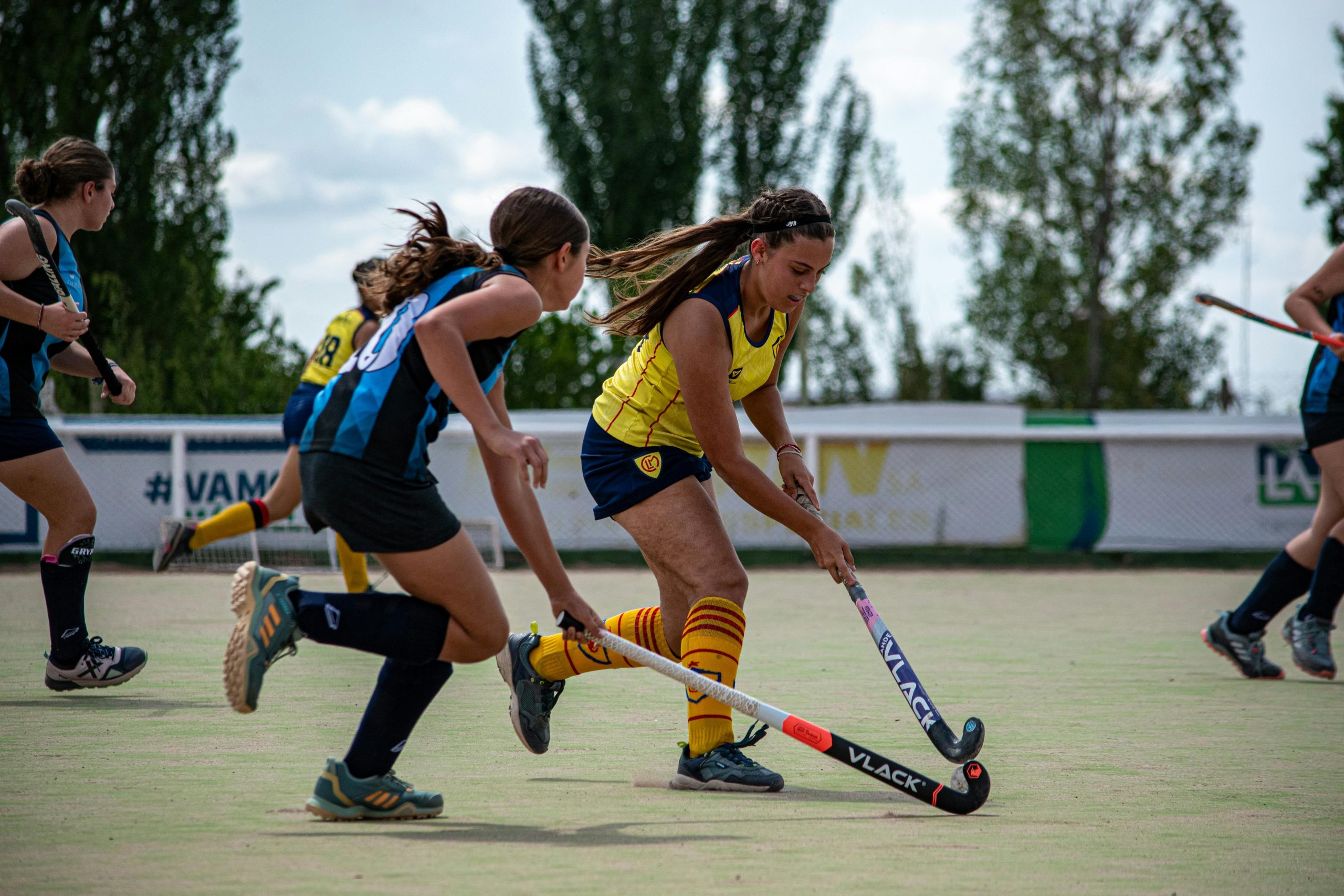
In field hockey, running endless shuttle sprints and executing repetitive passing lines will certainly build cardiovascular stamina and basic muscle memory, but it can also quickly drain the joy out of the sport. You can have a team of incredibly fit, highly skilled athletes, but if your training sessions become a monotonous, dreaded chore, their on-field creativity and passion will completely vanish. Field hockey is a physically grueling game, and maintaining player engagement throughout a long, exhausting season requires more than just blowing a whistle and demanding maximum effort.
At Athletes Untapped, our coaches notice that many youth and high school teams struggle with mid-season burnout because their practices lack imagination. Players step onto the turf with heavy legs and glazed-over eyes, mindlessly going through the motions of standard tactical grids. This lack of mental engagement leads to sloppy technique, a severe drop in vocal communication, and a highly frustrating inability to translate practice energy into live-game intensity.
The secret to revitalizing your squad and building elite stick skills without them even realizing they are working hard lies in utilizing fun field hockey training drills. Proper gamification fixes these energy slumps. It allows players to utilize competitive instincts, laugh through their mistakes, and establish a high-paced, joyful practice environment that naturally builds speed, vision, and team chemistry.
Connect with a Private Field Hockey Coach: https://athletesuntapped.com/browse/field-hockey/
Why Fun Field Hockey Training Drills Matter for Athlete Development
Your practice environment dictates your team’s overall culture and their deep-rooted love for the game. Without a sound understanding of how to balance rigorous technical training with pure enjoyment, you are essentially turning a beautiful sport into a miserable, exhausting job.
- Game Performance: Elite gamification directly translates to playing fast under pressure. When you fully understand how to disguise a high-intensity sprint within a competitive mini-game, you force players to execute at top speed without complaining about their burning lungs. You turn a grueling conditioning session into a chaotic, cheering competition simply by shifting the focus from the physical pain to the objective of the game.
- Confidence: Our coaches have seen athletes improve faster when they master new skills in a low-stakes, fun environment. When a player is allowed to try a flashy 3D skill or a reverse-stick spin in a silly knockout game, the paralyzing fear of making a mistake instantly vanishes. You gain the composure to be creative, trusting your hands because your experimentation is backed by a supportive, laughter-filled training environment.
- Long-Term Development: As players progress from youth leagues to high school and beyond, the primary reason athletes quit sports is burnout. You no longer have the luxury of treating kids like professional soldiers running drills. A tactically sound foundation built through enjoyable drills protects your players from walking away from the turf. It provides the elite emotional IQ needed to endure the grind of a season, ensuring your team retains its best athletes year after year.
Best Drills / Tips / Techniques
You cannot master team engagement by just letting players goof off and scrimmage for an hour without rules. You need active, structured gamification that forces players to use proper technique while competing fiercely. Here are 5 fun training drills AU coaches use to build skills and bring life back to practice.
1. Protect the Castle
Set up a small circle of tall cones (the “castle”) in the center of a larger grid. Place two defenders inside the grid to protect the castle, while five attackers surround the outside, passing the ball rapidly to find an opening to knock the cones down with a push pass.
This is the absolute foundation of disguised tactical training because it forces the offense to swing the ball quickly to shift the defense. It teaches the attackers that patience and rapid ball movement are the only ways to penetrate a central defensive block.
Keep your stick low and pass the ball crisply to exploit the gaps the defenders leave behind. A frequent error here is attackers selfishly holding onto the ball too long, trying to force a pass through the defenders’ legs, which completely ruins the speed of the drill and allows the castle to remain untouched.
2. Ultimate Hockey (No Dribbling Allowed)
Divide the team in half and play a scrimmage across a 30-yard grid with two designated “end zones.” The rules mimic Ultimate Frisbee: players can run anywhere on the field, but whoever has the ball cannot take a single step and must pass it to a teammate to move downfield and score in the end zone.
Vision and off-ball movement are critical in field hockey, and this game heavily reinforces the concept of letting the ball do the running. It teaches the athlete how to legally use their body to shield the ball while stationary, and forces the rest of the team to sprint into open passing lanes.
Make immediate eye contact with the ball carrier and sprint aggressively into the open green space. Athletes frequently make the mistake of standing completely still and watching the player with the ball, entirely failing to provide the dynamic passing options required to advance up the pitch.
3. Danger Zone Dodgeball Dribbling
Create a large square grid where every player has a ball and must continuously dribble to keep possession. Coaches or eliminated players stand on the outside of the grid and roll large exercise balls or soft dodgeballs into the traffic, attempting to knock the players’ hockey balls away.
Playing in tight spaces requires incredible peripheral vision, and this drill trains the extended range of motion required to protect the ball while constantly scanning for external threats. It teaches the athlete how to execute sudden changes of direction and pull-backs to evade unpredictable obstacles.
Keep your head up and rely on your tactile feel to control the hockey ball on your stick. A massive trap is staring straight down at your own blade, which instantly destroys your spatial awareness and guarantees you will get hit by a rolling ball from your blind side.
4. The 2v2 Mini-Net Showdown
Set up two tiny Pugg nets (or small cone gates) about fifteen yards apart. Create two teams on the sidelines and continuously send out players for rapid-fire, high-intensity 2v2 shifts that last exactly 60 seconds before the next group sprints on.
Game situations are exhausting, and this drill forces the brain to process spatial awareness and execute skills while dealing with massive lactic acid buildup. It teaches the player that transition speed—flipping instantly from offense to defense—is the most important phase of the game.
Communicate loudly with your partner and commit entirely to a high press when you lose the ball. A common instinct is to jog lazily back on defense after taking a shot, which immediately gives the opposing duo an easy 2v1 fast break on the tiny nets.
5. The Tennis Ball Substitution
Run a standard passing or shooting drill, but completely replace the heavy, predictable field hockey balls with bouncy, unpredictable tennis balls. Players must attempt to trap, pass, and shoot the tennis balls using their standard hockey sticks.
Soft hands are a premium skill at higher levels, and this drill turns a frustrating technical challenge into a hilarious, highly effective training tool. It teaches the player the complex biomechanics of cushioning the ball upon reception, as a hard trap will cause the tennis ball to bounce wildly over their stick.
Soften your grip incredibly and angle your stick face down to trap the bouncy ball securely. Many players attempt to just aggressively chop or block the tennis ball with rigid wrists, which completely ruins their control and sends the ball flying out of bounds.
Common Mistakes Athletes Make
Even during fun, gamified training drills, technical errors are incredibly common because players let their excitement and adrenaline completely override their foundational field hockey mechanics.
- Sacrificing Technique for Speed: Pushing the ball wildly ahead and chasing it like a track star during a competitive relay happens because players desperately want to win the race for their team. To correct this, coaches must enforce the rules strictly. If a player loses contact with the ball or breaks their form, they must go back to the start, reinforcing that speed is useless without control.
- Wild and Dangerous Swinging: Slapping aggressively at the ball during Ultimate Hockey or Mini-Net Showdowns occurs when the competitive intensity spikes. You can fix this by mandating that only push-passes or block tackles are allowed. Eliminating backswings keeps the drill entirely safe while forcing players to rely on agility rather than brute force.
- Standing Still After Elimination: Getting knocked out of a game and immediately sitting down on the turf happens because players mentally disengage from the practice. To solve this, keep them involved. Eliminated players should become the “throwers” in dodgeball drills or act as stationary passing targets on the outside of the grid.
- Playing in Absolute Silence: Running a chaotic 2v2 drill where the only sound is sticks hitting turf stems from a team lacking chemistry and communication. Fix this by stopping the drill immediately if it gets quiet. Force the players to over-communicate, demanding the ball and calling out defensive marks, which instantly translates to better vocal leadership during actual matches.
How Private Coaching Accelerates Improvement
Field hockey is a highly biomechanical sport that relies on translating low body posture, precise grip rotation, and lightning-fast footwork into seamless gameplay. Trying to self-diagnose your stick face angle, your weight transfer, or your defensive tackling while laughing and running through a chaotic, gamified drill is practically impossible for most players.
This is where private coaching comes in. We have found that personalized instruction helps athletes build the specific cognitive and physical skills required to succeed, leading to significantly faster skill development and on-field confidence.
A private field hockey coach helps accelerate skill development by breaking down your fundamental mechanics in a fun, positive, and highly controlled setting. Our coaches know how to incorporate gamified elements into 1-on-1 sessions, challenging you to hit targets, beat the clock, or engage in friendly wagers to keep the energy high. By utilizing creative drills and video analysis, coaches can correct mistakes early, showing you exactly where you lost control of the ball or where your posture was too tall before those habits ruin your game.
Ultimately, this 1-on-1 environment focuses on massive confidence building. When you associate hard work with enjoyment and elite mechanics, you stop dreading practice, allowing you to step onto the turf with the pure joy and passion needed to completely dominate the sport.
Find a Private Field Hockey Coach: https://athletesuntapped.com/browse/field-hockey/
Frequently asked questions about Fun Field Hockey Training Drills
Why should we play games instead of doing traditional fitness training?
Traditional fitness training, like shuttle runs without a stick, is excellent for building pure stamina, but games simulate the chaotic, unpredictable nature of a real match. Fun drills force players to make split-second decisions under pressure while handling the ball, masking the intense physical conditioning involved.
How do you keep competitive drills safe?
The key is establishing strict technical boundaries before the game starts. Explicitly state that anyone who takes a backswing, undercuts the ball, or uses their body to check another player is instantly eliminated. You must referee the fun drills just as strictly as a real game to prevent injuries.
Can we do these drills indoors?
Absolutely. Many of these drills, like Protect the Castle or Ultimate Hockey, can be easily adapted to a smooth gym floor or a flat indoor court. If you are playing on hardwood, simply enforce indoor rules (no lifting, no hitting) to ensure the drills remain safe and effective.
What age group benefits most from gamified training?
Every age group benefits from gamification. While youth players absolutely need fun games to stay interested in the sport, high school and collegiate athletes also desperately need them to break up the intense mental grind of a competitive season, relieve stress, and bond as a team.
Do private coaches use fun games in their training?
Yes. Elite private coaches understand that a bored athlete is a stagnant athlete. They frequently use target practice, timed obstacle courses, and friendly 1v1 competitions to keep their clients highly engaged, competitive, and smiling while they sweat.
Conclusion
Mastering field hockey is an intense physical and mental journey, but injecting fun training drills into your routine is the undeniable foundation of a passionate, tightly-knit, and highly energetic team. Without it, you are just a group of athletes mindlessly running on turf, leaving your team culture to suffer and allowing the grind of the season to extinguish your love for the game.
Improvement is highly achievable when hard work is disguised as play. Encourage yourself to embrace the chaos of a 2v2 showdown, maintain a low posture during Ultimate Hockey, and communicate loudly during passing games. Consistent, joyful practice will inevitably yield a much more dangerous, creative, and united presence on the field.
Train With a Private Field Hockey Coach
Athletes Untapped connects athletes with vetted private coaches across the country for one-on-one training.
Private coaching helps athletes:
- improve faster
- build confidence
- receive personalized feedback
- reach their full potential
About Athletes Untapped
Athletes Untapped connects field hockey players with experienced private coaches who specialize in stick skills, tactical awareness, and fostering a deep love for the game. Through personalized instruction and structured, engaging training plans, AU coaches help athletes eliminate burnout, master their technique, and completely dictate the tempo of their development.
Find an experienced coach near you: https://athletesuntapped.com
Learn from our very best AU coaches!


