
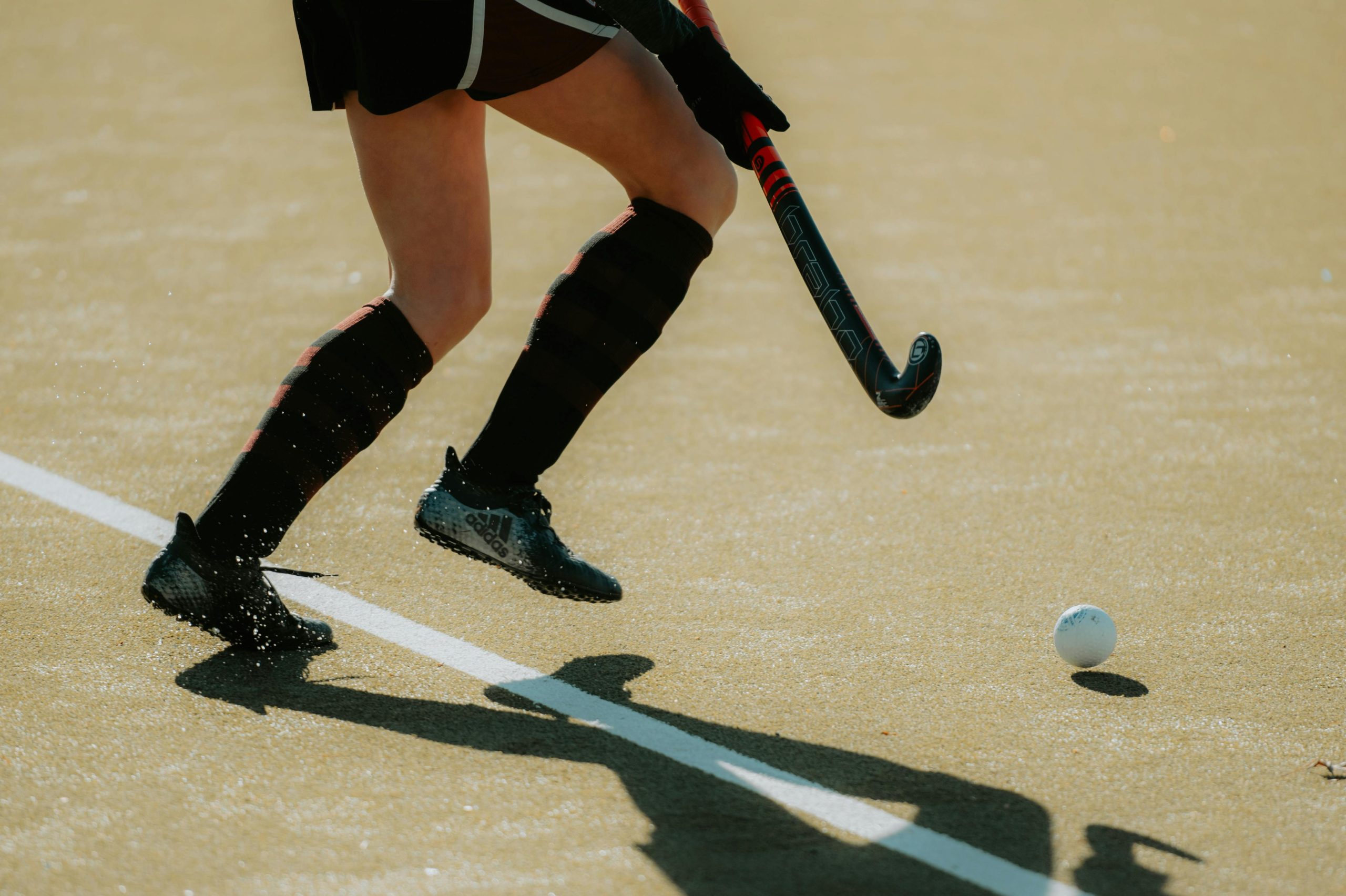
In field hockey, driving the ball down the wing and executing a perfect cross into the circle is beautiful to watch, but none of it matters if your forwards cannot put the ball in the back of the net. You can have the most aggressive, fast-paced offense in your league, but if your attackers constantly shoot the ball directly into the goalie’s pads or take massive, slow backswings that get easily blocked by recovering defenders, your possession time is completely wasted. Goal scoring is not just about swinging as hard as you can; it is a highly refined skill built on quick releases, pinpoint accuracy, and spatial awareness inside the striking circle.
At Athletes Untapped, our coaches notice that many young forwards treat shooting like a home run derby. They enter the shooting circle, completely stop their feet, wind their stick up to their shoulders, and blast the ball blindly toward the center of the cage. This lack of situational control leads to highly predictable shots, constant turnovers in the D, and a highly frustrating inability to capitalize on penalty corners or fast breaks.
The secret to becoming a clinical finisher and a nightmare for opposing goalies lies in mastering specific field hockey shooting drills. Proper repetitive training fixes these slow habits. It allows players to utilize deceptive sweeps, deadly reverse-stick tomahawks, and a lightning-fast release that completely paralyzes the defense before they can even set up their block.
Connect with a Private Field Hockey Coach: https://athletesuntapped.com/browse/field-hockey/
Why Field Hockey Shooting Drills Matter for Athlete Development
Your shooting mechanics and quick decision-making dictate your overall value as an offensive threat. Without a sound understanding of how to score under pressure, you are essentially letting the opposing goalie take a rest on every possession.
- Game Performance: Elite shooting execution directly translates to converting high-pressure chances. When you fully understand how to receive a pass and shoot in a single, fluid motion without stopping the ball completely, you rob the goalie of the critical half-second they need to set their feet. You turn a crowded scramble in front of the net into an immediate goal simply by possessing a faster release than the defender’s reaction time.
- Confidence: Our coaches have seen athletes improve faster when they master their target accuracy in practice before facing a live goalie. When you know exactly how to drag the ball to change the angle before you shoot, the fear of getting stuffed on a breakaway instantly vanishes. You gain the composure to keep your eyes up, trusting your stick skills because your muscle memory is backed by rigorous, repetitive shooting circuits.
- Long-Term Development: As you progress to high school, club, and collegiate field hockey, the defensive structure inside the circle becomes incredibly tight. You no longer have the luxury of taking three touches to set up your perfect shot. A tactically sound foundation built through specific drills protects you from being easily dispossessed. It provides the elite field hockey IQ needed to score from awkward angles, ensuring your value scales as coaches actively recruit clinical finishers who can score ugly, gritty goals.
Best Drills / Tips / Techniques
You cannot master goal scoring by simply standing at the top of the D and hitting stationary balls at an empty net. You need active, scenario-based training that forces you to shoot while moving, adjust your body angle, and hit the corners. Here are 5 drills AU coaches use with their athletes to build an unstoppable finisher.
1. The One-Touch Rebound Machine
Have a coach or partner stand just outside the circle and rapidly feed five to ten consecutive balls directly to you near the penalty spot. You must instantly redirect, sweep, or push every single ball into the net using only one or two touches maximum.
This is the absolute foundation of inside-the-circle finishing because it completely eliminates the time-consuming habit of stopping and settling the ball. It teaches the athlete that a quick, moderately paced shot to the corner is infinitely more effective than a massive, slow hit.
Focus entirely on the angle of your stick face as the ball approaches, using the momentum of the pass to generate your shot power. A frequent error here is trying to take a huge backswing on a fast-moving ball, which almost always results in a complete whiff or a dangerous, lifted ball.
2. The Top-D Drag and Fire
Start outside the striking circle with the ball. Sprint at game speed toward the top of the D, execute a hard lateral drag (pulling the ball sharply to the right or left) exactly as you cross the line, and immediately fire a shot on goal while still in stride.
Goalies perfectly align themselves with the ball as you approach. This drill trains the crucial offensive tactic of changing the shooting angle at the very last second to open up a clear lane past the goalie’s kickers.
Snap your wrists forcefully immediately after the drag to surprise the defense. Athletes frequently make the mistake of dragging the ball but then taking three more steps to regain their balance before shooting, which completely ruins the element of surprise and allows the goalie to easily slide over and cover the new angle.
3. The Reverse Stick (Tomahawk) Target Box
Set up targets in the bottom right corner of the goal. Approach the left side of the circle, drop your left knee low to the turf, flatten your stick, and execute a powerful reverse-stick hit (tomahawk) aiming exclusively for the targets.
You cannot be a one-dimensional shooter at higher levels, and this drill builds the elite weak-side scoring ability that makes forwards incredibly difficult to defend. It teaches the player the complex biomechanics of striking the ball with the edge of the stick using a “frying pan” grip.
Keep your chest completely over the ball and swing flat across the turf. A massive trap is standing up too tall or dropping the right shoulder during the swing, which causes the stick to violently chop down on top of the ball, killing the shot’s power and popping it weakly into the air.
4. The 1v1 Goalie Deception Drill
Start at the 25-yard line and execute a full-speed breakaway against a live, fully padded goalie. You must use body fakes, eye deception, and a sharp change of direction to draw the goalie out of the net before sliding the ball past them.
Breakaways are highly psychological, and this drill forces the brain to read the goalie’s momentum while handling the puck at top speed. It teaches the attacker to wait for the goalie to drop or commit their weight before making the final move.
Keep the ball tucked safely on your forehand and rely on subtle shoulder drops to sell the fake. A common instinct is to panic, put your head down, and blast the ball directly into the goalie’s chest protector the moment they step off their line, entirely defeating the purpose of a 1v1.
5. The Chaos Circle Turn and Shoot
Scatter several balls randomly throughout the striking circle. Start by facing away from the goal. On the coach’s whistle, you must locate a ball, sprint to it, pivot your body toward the cage, and get a shot off within three seconds.
Game situations inside the D are chaotic and highly contested. This drill forces the brain to process spatial awareness and execute a shot from awkward, unbalanced positions. It teaches the player that goals are rarely scored from a perfect stance.
Get your feet around quickly and trust your hands to guide the ball toward the far post. Many players easily get frustrated during this drill and attempt to spin blindly and hit the ball without ever looking at the goal, which usually sends the ball entirely wide of the target.
Common Mistakes Athletes Make
Shooting errors are incredibly common in youth and amateur field hockey, often because players let their adrenaline and desire for power completely override their technical discipline.
- The Massive Wind-Up: Taking a huge golf-swing hit inside the circle happens because players desperately want to score a highlight-reel goal. To correct this, you must rely on the sweep or the push shot when in tight. A huge wind-up takes far too long, gives the defender time to tackle you safely, and gives the goalie plenty of time to read the shot.
- Leaning Back on the Shot: Sending the ball flying wildly over the crossbar occurs when the player leans their weight onto their back foot while making contact. You can fix this by aggressively driving your weight forward. Your nose should be directly over the ball, and your momentum must follow through low toward the target to keep the shot flat and dangerous.
- Shooting Dead Center: Hitting the ball perfectly hard but directly into the goalie’s shin guards happens because the player stares directly at the goalie while shooting. To solve this, you must aim for the posts. Look at the empty netting in the corners before you drop your head to strike the ball; your hands will naturally guide the shot to where your eyes just looked.
- Ignoring the Rebound: Shooting the ball and immediately standing still to watch it happens when a player assumes the play is over. Fix this by adopting a relentless mentality. The moment the ball leaves your stick, you must sprint directly at the goalie’s pads with your stick on the turf, perfectly positioned to clean up the garbage if the goalie gives up a loose rebound.
Find a Private Field Hockey Coach: https://athletesuntapped.com/browse/field-hockey/
How Private Coaching Accelerates Improvement
Field hockey shooting is a highly biomechanical skill that relies on translating low body posture, precise grip rotation, and lightning-fast footwork into a powerful strike. Trying to self-diagnose your stick face angle, your weight transfer, or your reverse-stick mechanics during a chaotic 11v11 match is practically impossible for most players.
This is where private coaching comes in. We have found that personalized instruction helps athletes build the specific cognitive and physical skills required to score consistently, leading to significantly faster skill development and on-field confidence.
A private field hockey coach helps accelerate skill development by breaking down your sweep and tomahawk mechanics in a controlled, isolated setting. Our coaches provide personalized feedback on how to properly drop your hips on a reverse shot and how to eliminate the wasted backswing that slows down your release. By utilizing video analysis, coaches can correct mistakes early, showing you exactly where you leaned back or where you telegraphed your shot before those bad habits become permanent.
Ultimately, this 1-on-1 environment focuses on massive confidence building. When you possess elite finishing mechanics, you stop panicking inside the striking circle, allowing you to step onto the turf knowing you have the lethal stick skills to completely dictate the scoreboard.
Frequently asked questions about Field Hockey Shooting Drills
What is the most effective shot to use inside the circle?
There is no single “best” shot, as it depends entirely on the situation. However, the sweep shot is generally the most effective and frequently used shot because it offers a massive combination of power, a very quick release, and an extremely flat, accurate trajectory that is hard for goalies to kick away.
How do I stop hitting the ball directly at the goalie?
You are likely hitting the goalie because you are staring at them. Before you shoot, take a mental snapshot of the corners of the goal. Focus your aim on the bottom boards near the left or right post. Where the eyes focus, the hands will naturally follow.
When should I use a reverse stick (tomahawk) shot?
The tomahawk should be used when you are attacking from the left side of the circle and do not have the time or space to pivot your body around to use your forehand. It is a highly deceptive and powerful shot that catches goalies off guard because the release point is unusual.
How can I get more power on my shot without a huge backswing?
Power comes from core rotation and transferring your body weight from your back leg to your front leg, not just from swinging your arms. By stepping aggressively into the ball and snapping your wrists at the point of contact, you can generate massive pace on the ball with a very compact swing.
Do private coaches help with shooting technique?
Yes. Private field hockey coaches are essential for fixing fundamental grip and postural flaws that are often overlooked in team practices. They provide live, isolated feedback, correct your body angle, and run specific high-repetition shooting drills that teach you exactly how to translate raw power into goal-scoring precision.
Conclusion
Mastering field hockey shooting drills is the undeniable foundation of a lethal, highly productive, and dominant attacker. Without it, you are just an athlete moving the ball around the perimeter, leaving your offensive success entirely to luck and allowing the opposing goalie to easily pad their save statistics.
Improvement is highly achievable with proper biomechanical training. Encourage yourself to practice your top-D drags, maintain a low posture on your reverse stick, and embrace the discipline of the one-touch finish. Consistent practice will inevitably yield a much more dangerous, clinical, and unshakable presence inside the striking circle.
Train With a Private Field Hockey Coach
Athletes Untapped connects athletes with vetted private coaches across the country for one-on-one training.
Private coaching helps athletes:
- improve faster
- build confidence
- receive personalized feedback
- reach their full potential
About Athletes Untapped
Athletes Untapped connects field hockey players with experienced private coaches who specialize in shooting mechanics, circle entry tactics, and advanced goal-scoring skills. Through personalized instruction and structured training plans, AU coaches help attackers eliminate slow releases, master their sweeps and tomahawks, and completely dictate the tempo of the offense.
Find an experienced coach near you: https://athletesuntapped.com
Learn from our very best AU coaches!


