
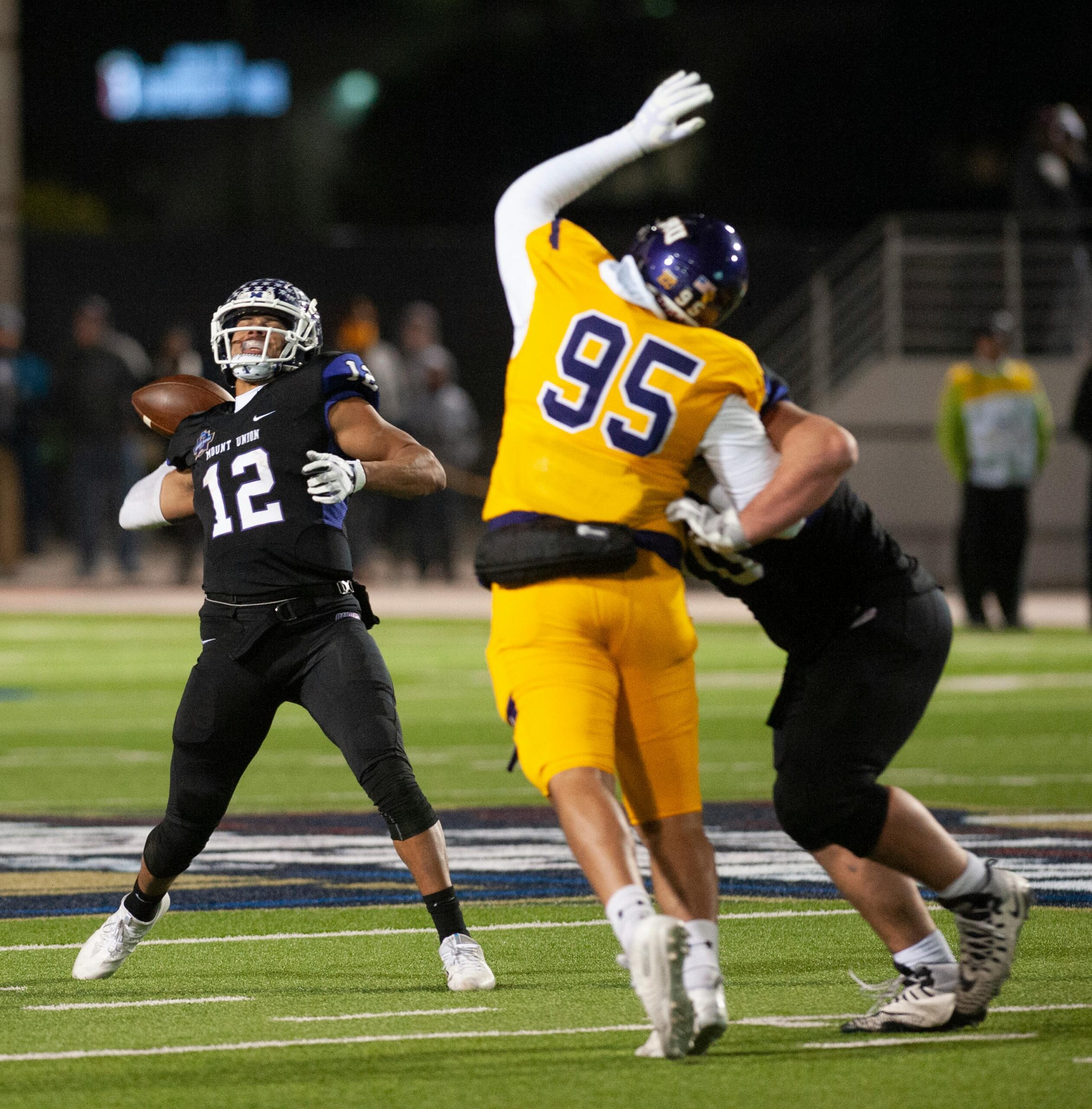
AU coaches have spent over 15 years on the gridiron, and there is one fundamental truth about football: it is not one single game. Football is actually 11 different micro-games happening on the exact same field at the exact same time. When parents and athletes ask about position-specific football training and why it matters, the answer is simple. The footwork required to block a 250-pound defensive end is completely different from the footwork required to catch a fade route in the end zone.
Many athletes hit a developmental wall because their team practices rely too heavily on general conditioning, tackling lines, and full-team offensive walk-throughs. A team coach managing fifty players simply does not have the time to dedicate forty minutes to fixing a cornerback’s backpedal. Proper, individualized instruction isolates the unique biomechanics required for each specific position. Knowing exactly how to master the techniques of your specific role is the absolute fastest way to earn a starting spot under the Friday night lights.
Why Specialized Mechanics Matter for Football Development
An athlete can be the strongest player in the weight room or the fastest sprinter on the track, but if they lack the specific technical skills for their position, raw athleticism is useless on the football field. Developing elite individual skills—like a violent hand strike for a lineman, a quiet upper body for a defensive back, or a seamless ball transfer for a running back—translates directly to winning individual matchups.
When a football player trusts their position-specific mechanics, the game slows down mentally. An offensive tackle stops worrying about their foot placement and simply reacts to the pass rusher. In-game performance improves because the athlete is no longer hesitating or overthinking. Furthermore, mastering these specialized movements early prevents the dangerous head and neck injuries associated with poor tackling or blocking form, ensuring athletes can play aggressively and safely throughout their entire career.
Best Drills to Accelerate Position-Specific Skills
If an athlete wants to dominate their matchup, they must train the exact movements they will use in a game. A top-tier AU coach will focus heavily on leverage, agility, and explosive power tailored to the athlete’s role. Here are foundational drills used to build elite football players across different positions:
- The Figure-8 Pocket Drill (Quarterbacks)
- How to perform: Set two cones three yards apart. The quarterback holds the football and moves in a continuous figure-8 pattern around the cones, maintaining a perfectly wide throwing base and keeping their eyes locked downfield.
- Why it works: Quarterbacks rarely throw from a clean, static pocket. This drill builds the ability to evade pressure, step up, and slide laterally without crossing the feet or dropping the eyes.
- Coaching tip: Keep two hands firmly on the football tightly against the chest while moving.
- Common mistake: Dropping the head to look at the cones or the pass rush instead of scanning the secondary.
- The Box Break Drill (Wide Receivers)
- How to perform: Set four cones in a ten-yard square. The receiver sprints to the first cone, violently drops their hips to break down, snaps their head around, and sharply cuts 90 degrees to the next cone, repeating the process around the box.
- Why it works: Creating separation from a defensive back requires dropping the center of gravity instantly. This trains the violent deceleration and acceleration required to run unguardable routes.
- Coaching tip: Pump the arms aggressively coming out of the break to regain top speed instantly.
- Common mistake: Rounding off the corners of the box instead of making sharp, 90-degree cuts.
- The Chute Drive (Offensive and Defensive Linemen)
- How to perform: Using a PVC training chute or a coach holding a pad at shoulder height, the lineman fires out of their three-point stance. They must stay low enough to clear the obstacle while driving forward with short, choppy steps for five yards.
- Why it works: The lowest man wins the battle in the trenches. This drill forces linemen to play with a low center of gravity, proper pad level, and maximum leverage.
- Coaching tip: Fire the hands violently inside the framework of the opponent’s chest while staying low.
- Common mistake: Bending at the waist to duck under the chute instead of dropping the hips and bending the knees.
- The W-Drill (Defensive Backs)
- How to perform: Set five cones in a W shape, spaced five yards apart. The defensive back backpedals diagonally to the first cone, plants their foot, sprints diagonally forward to the next, and repeats the pattern through the W.
- Why it works: Playing in the secondary requires moving backward and transitioning forward faster than the receiver. This drill builds fluid hip turns and eliminates wasted motion in transition.
- Coaching tip: Keep the chest over the toes when backpedaling so you do not fall backward when it is time to plant and drive forward.
- Common mistake: Standing straight up out of the backpedal before driving forward, which completely kills all momentum.
- The Fit and Shed Drill (Linebackers)
- How to perform: A coach acts as an offensive blocker and steps toward the linebacker. The linebacker must step up, strike the blocker’s chest plate with the heel of their hands, lock out their elbows, and violently rip past the blocker to the left or right.
- Why it works: Linebackers cannot make tackles if they are stuck to offensive linemen. This trains the hand violence and block-shedding techniques required to get to the ball carrier.
- Coaching tip: Keep the thumbs pointing up toward the sky when striking the blocker’s chest to maximize power.
- Common mistake: Trying to run around the blocker instead of stepping up, initiating contact, and shedding them.
Connect with a Private Field Hockey Coach: https://athletesuntapped.com/browse/field-hockey/
Common Mistakes Athletes Make in Training
Even the hardest workers will get exposed on game day if they practice bad movement habits. A great AU coach will identify and fix these common positional mistakes immediately:
- Playing With a High Pad Level: High school athletes often pop straight up as soon as the ball is snapped. Running with a high pad level exposes the chest to blockers and completely eliminates lower body strength. Power comes from the ground up.
- False Stepping on the Snap: Picking up the drive foot and placing it backward before actually moving forward is a massive waste of time. A false step by an offensive tackle will immediately result in a sack. The first step must always gain ground.
- Poor Eye Discipline: Defensive backs and linebackers who get caught staring into the backfield at the quarterback will inevitably lose their assignment. Elite defenders read their positional keys—like the offensive guard’s helmet or the receiver’s hips—before ever looking for the ball.
- Catching the Football With the Body: Wide receivers and running backs who let the football hit their chest pads will drop passes in traffic. The hands must attack the ball away from the body, forming a diamond with the index fingers and thumbs.
How Private Coaching Accelerates Position-Specific Growth
A high school football team has too many moving parts for one head coach to perfect everyone’s technique. A defensive coordinator cannot pause a live two-minute drill to show a safety the exact angle of their backpedal. This is exactly where private football training accelerates improvement and develops players faster.
In a one-on-one setting, an AU coach can break down an athlete’s stance, start, and position skills frame by frame. If a defensive end is constantly getting pushed past the quarterback, a private coach can instantly adjust their hand placement and hip flexibility to ensure they are turning the corner tightly. This hyper-focused environment builds immense confidence, fixes mechanical flaws instantly, and gives the football player the exact blueprint they need to become a dominant playmaker in their specific role.
Frequently Asked Questions About Position-Specific Football Training
What Age Should Athletes Start Position-Specific Football Training?
Athletes can start basic catching, throwing, and agility drills at ages 7 or 8 to build general coordination. However, true position-specific training becomes incredibly important around ages 11 to 13. This is when players transition to larger fields, more complex playbooks, and highly competitive middle school and high school programs.
Can a Player Train for Multiple Positions?
Absolutely. At the youth and junior varsity levels, versatility is a massive asset. Many athletes train as both a wide receiver and a defensive back, or a tight end and a linebacker. An AU coach can split a training session to develop the footwork and hand skills required for both sides of the ball.
Do Linemen Need Private Football Coaching?
Linemen arguably need private coaching more than any other position. Trench play is highly technical, relying entirely on hand placement, leverage, and micro-movements of the feet. A private coach will transform a big, strong athlete into a highly skilled, immovable blocker or an unblockable pass rusher.
How Often Should a Player Do Position-Specific Drills?
During the offseason, AU coaches recommend one or two private, highly focused sessions per week to build speed, strength, and foundational technique. During the active season, scaling back to a quick mechanical tune-up every other week ensures the player stays sharp without suffering from physical fatigue before game day.
How Long Does It Take to See On-Field Results?
An athlete will feel a difference in their balance and explosiveness during the very first lesson. However, making a permanent mechanical change to footwork or catching habits usually takes several weeks of consistent practice before the brain fully overwrites the old muscle memory.
Find a Private Field Hockey Coach: https://athletesuntapped.com/browse/field-hockey/
Conclusion
Dominating your specific position on the football field requires stepping away from general team conditioning and committing to a proven, individualized process. Football players need an instructor who will break down their stance, correct their pad level, and build their mechanics without the distractions of a chaotic team practice. When athletes prioritize leverage, precise footwork, and hand violence over mindless running, they return to their teams with a massive competitive advantage. Trust your technique, put in the focused repetitions, and own your role on the field.
About Athletes Untapped
Athletes Untapped connects athletes of all sports with experienced private coaches who specialize in mental performance, sports psychology concepts, and competitive mindset training. Through personalized instruction and structured training plans, AU coaches help athletes eliminate performance anxiety, master their internal dialogue, and completely dictate their emotional response to adversity.
Find an experienced coach near you: https://athletesuntapped.com
Learn from our very best AU coaches!


