
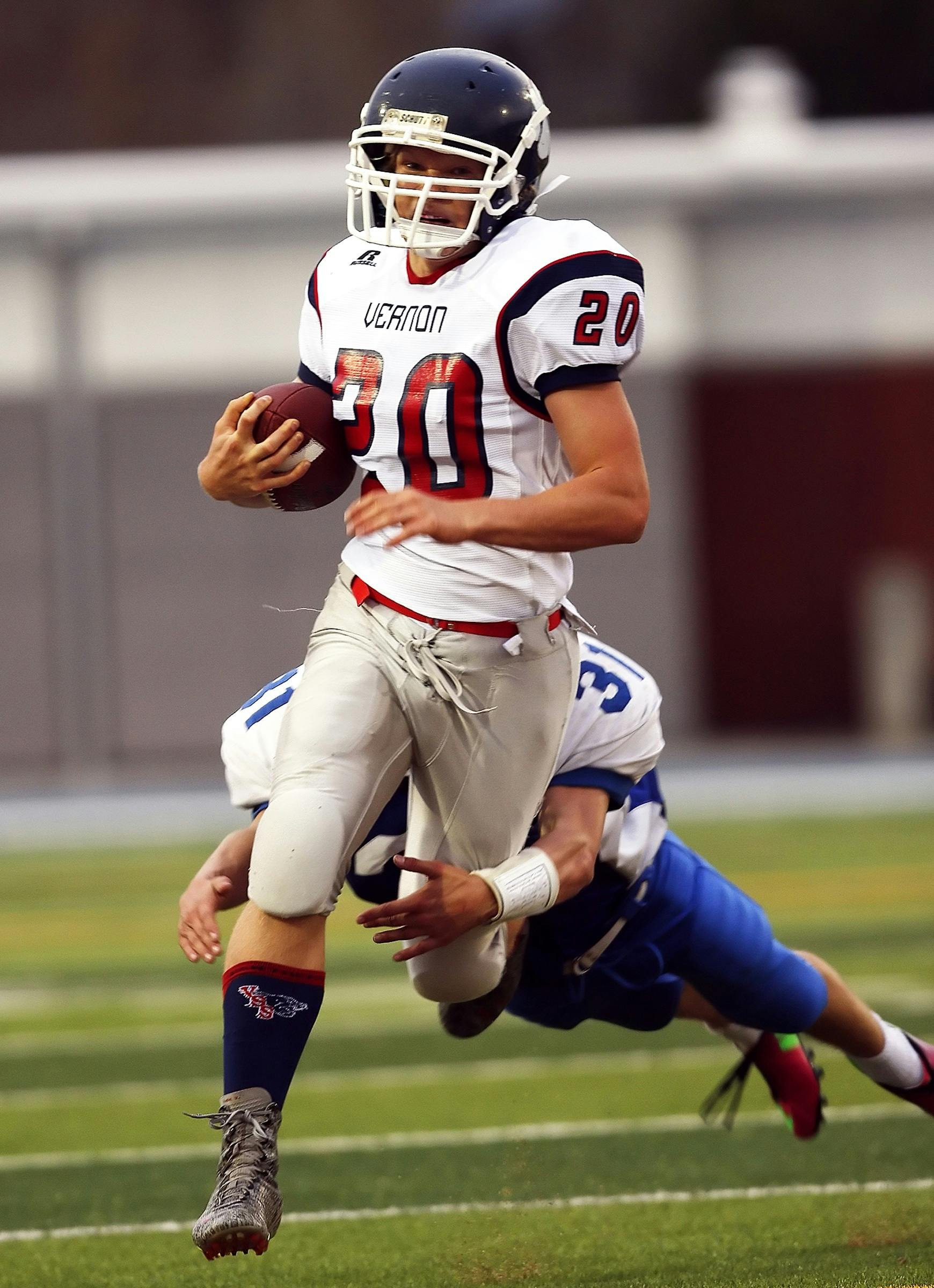
In American football, highlight reels are often filled with massive, bone-crushing hits, but defensive championships are won by the players who simply do not miss tackles. You can have the fastest 40-yard dash time and the ability to read the quarterback perfectly, but if you arrive at the ball carrier and fail to bring them to the ground, your athletic ability means absolutely nothing.
At Athletes Untapped, we notice that many young defensive players treat tackling as a reckless collision rather than a highly technical skill. They drop their heads, close their eyes, lunge from three yards away, or try to drag runners down using only their arms. This lack of structural mechanics leads to broken tackles, massive explosive plays for the offense, and, most importantly, a high risk of head and neck injuries.
The secret to becoming a feared, reliable defender lies in tackling fundamentals. Proper training fixes these spatial and biomechanical issues, allowing players to track the near hip, maintain their leverage, keep their head completely out of the play, and drive through the ball carrier safely and violently.
Connect with a Private Football Coach: https://athletesuntapped.com/browse/football/
Why This Skill Matters for Athlete Development
Your tackling ability is the ultimate metric of your defensive value. Without fundamentally sound tackling, you are a liability on the field, regardless of the position you play.
- Game Performance: Elite tackling fundamentals directly translate to limiting yards after contact. When you perfectly track the runner’s hip, break down your feet, and wrap up with leverage, you instantly kill the play. This prevents three-yard runs from turning into seventy-yard touchdowns and consistently forces the offense into difficult third-and-long situations.
- Confidence: I have seen athletes improve faster when they spend just 10 focused minutes on form-tackling progressions at the start of every session. When tracking and wrapping become muscle memory, players stop fearing physical contact. They gain the composure to trust their technique, keep their eyes open, and execute a confident, aggressive tackle without hesitation.
- Long-Term Development: As you progress to high school and collegiate football, offensive players become significantly bigger, faster, and more elusive. A biomechanically sound, rugby-style tackle protects your brain and spine from devastating impact. It provides the technical leverage needed to bring down a 220-pound running back even if you only weigh 180 pounds, ensuring your defensive impact scales safely as the game speeds up.
Best Drills / Tips / Techniques
You cannot master tackling by simply lining up and running full-speed collisions in practice every day; that only leads to exhaustion and injury. You need isolated, highly controlled drills to build the kinetic chain of a safe tackle. Here are 5 drills AU coaches use to build an elite open-field tackler.
1. The Kneeling Form Tackle (Hip Explosion)
How to perform it: Two players face each other on their knees on a soft mat. The tackler keeps their chest up and eyes open. On the whistle, the tackler shoots their hips forward, wraps both arms violently around the ball carrier’s waist, grabs their own wrist (or cloth), and squeezes tight, falling to the side.
Why it works: It completely removes the complex footwork and fear of a full-speed collision. It forces the brain to internalize the absolute core of a tackle: shooting the hips and wrapping the arms. If you cannot do it on your knees, you cannot do it running.
Coaching tips: “Eyes through the thighs.” Keep your head up and completely to the side of the ball carrier’s body to ensure player safety.
Common mistakes: Reaching with the arms without shooting the hips. Your power comes from the glutes and core; your arms are just the seatbelt.
2. The Shimmy and Shoot (Approach Drill)
How to perform it: Start five yards away from a static dummy or a walking teammate. Sprint toward the target, but exactly two yards away, abruptly drop your hips, widen your base, and take rapid, choppy steps (the shimmy). Instantly transition from the shimmy into a driving form tackle.
Why it works: A missed tackle usually happens before contact is even made because the defender is out of control. This drill marries downhill speed with necessary deceleration, teaching the athlete how to bring their body perfectly under control right before striking.
Coaching tips: Maintain your pad level. When you shimmy, your helmet should naturally drop lower than the ball carrier’s chest. The low man wins.
Common mistakes: Stopping completely. The shimmy is a deceleration phase, not a dead stop. You must maintain forward momentum into the tackle.
3. The Near-Foot, Near-Shoulder Track
How to perform it: Place a ball carrier and a defender in a 10×10 yard grid. The ball carrier jogs at a 45-degree angle toward the sideline. The defender must mirror the runner, keeping their inside shoulder perfectly aligned with the runner’s inside hip. The defender steps on the runner’s toes with their “near foot” and makes contact with their “near shoulder.”
Why it works: The geometry of tackling is all about leverage. This drill trains the athlete to track the correct part of the body (the hip, which cannot fake you out) and execute the tackle without reaching across their own body, which causes you to get stiff-armed or beaten inside.
Coaching tips: Watch the belt buckle. The shoulders and eyes will lie to you; the hips dictate exactly where the runner is going.
Common mistakes: Taking an angle that is too shallow, allowing the runner to easily outrun you to the sideline. You must intersect their path, not chase them from behind.
4. The Hawk Tackle (Roll Tackle)
How to perform it: Approach a padded tackling ring or a heavily padded teammate. Track the near hip. Dive low, wrap your arms entirely around the runner’s thighs (squeezing the knees together), and use your momentum to immediately roll like an alligator to bring the runner down.
Why it works: Popularized by the Seattle Seahawks, this rugby-style tackle takes the head completely out of the collision. It teaches the defender to attack the legs safely, making it physically impossible for a larger runner to keep moving forward.
Coaching tips: You must squeeze the legs together tightly. If their legs can still pump, they will break the tackle or fall forward for extra yardage.
Common mistakes: Placing the head across the bow (in front of the runner’s knees). Your head must stay safely behind the runner’s legs to avoid taking a knee to the helmet.
5. The Drive and Finish
How to perform it: Use a heavy tackling sled or dummy. Execute a perfect form tackle on the dummy, but the drill does not end on contact. The defender must aggressively drive their legs and push the heavy dummy backward for five full yards before releasing.
Why it works: Many defenders make great contact but simply stop their feet, allowing the offensive player’s momentum to carry them forward for three extra yards. This drill trains the “finish,” ensuring the defender delivers the blow and runs entirely through the ball carrier.
Coaching tips: Wide base, short choppy steps during the drive.
Common mistakes: Picking the dummy up into the air. Do not try to body-slam the target; focus on horizontal leg drive to push them backward into the turf.
Common Mistakes Athletes Make
Tackling errors are incredibly common in youth and high school football, and they almost always stem from poor eye discipline or a fear of contact.
Dropping the Head: The most dangerous mistake in football. A player looks straight down at the grass right before contact, leading with the crown of their helmet. This causes missed tackles and risks catastrophic spinal injuries.
How to fix it: Implement a strict “See what you hit” rule. Your eyes must be open, and your chin must be up, looking directly at your target through the entire collision.
Arm Tackling: Lunging from a distance and trying to drag the runner down using only the hands and arms, leaving the feet planted firmly in the ground.
How to fix it: “Step on their toes.” You must physically close the distance with your feet before you ever throw your arms. Bring your body to the runner, don’t just reach for them.
Leaving the Feet Too Early (Diving): Launching into the air like Superman from three yards away to try and trip the runner up. A good running back will simply step over you.
How to fix it: Keep your cleats in the grass until the absolute last millisecond. Power is generated from the ground; if you are in the air, you have zero power and zero control over your body.
Over-Pursuing the Play: Sprinting so fast toward the sideline that you lose your leverage, allowing the running back to plant their foot and cut back underneath you into wide-open space.
How to fix it: Track the inside hip. You must maintain your “inside-out” leverage, forcing the runner toward the sideline (your extra defender) rather than giving them a two-way go.
Find a Private Football Coach: https://athletesuntapped.com/browse/football/
How Private Coaching Accelerates Improvement
Tackling is a dynamic, high-speed skill that requires total body synchronization. Trying to self-diagnose whether your near-foot was planted correctly or if your head placement was dangerously across the bow is practically impossible without a trained professional managing the repetitions.
This is where private coaching is essential. Private coaching provides faster physical development by utilizing expert eyes, slow-motion video breakdown, and heavily controlled, padded drills. A private football coach offers personalized feedback tailored to your specific position (e.g., open-field safety tackling vs. in-the-box linebacker tackling), making it easy to catch habits like dropping the head immediately. This targeted instruction allows athletes to focus on correcting biomechanical flaws safely before they result in concussions or missed assignments. Ultimately, mastering your tackling form in a 1-on-1 environment provides massive confidence building, allowing you to step onto the field knowing you have the safe, violent technique to bring down any ball carrier.
Frequently Asked Questions About Tackling Fundamentals in Football
How often should athletes practice tackling fundamentals?
Form tackling (without pads or at walking speed) should be practiced every single day. Full-speed, live tackling to the ground should be strictly limited to a few times a week during team practice to protect the players’ bodies and brains.
What age should athletes start working on this?
Athletes can learn body control, leverage, and safe falling techniques in flag football as early as 6 or 7. Padded, contact tackling is typically introduced around ages 8 to 10, prioritizing head safety and rugby-style tracking above all else.
What is the best way to tackle a player who is much bigger than me?
Go low. Leverage is everything. Use the Hawk Tackle technique to wrap up the runner’s thighs and squeeze their knees together. If their legs cannot move, a 250-pound player will fall just as fast as a 150-pound player.
How do I get over my fear of contact?
Fear comes from a lack of technique. When you don’t know how to tackle safely, it hurts. Start slow. Do kneeling tackles on a soft mat, progress to walking tackles, and slowly build up speed. Once you trust your technique and pad level, the fear naturally vanishes.
Why do I keep sliding off the ball carrier?
You are likely failing to grab cloth or squeeze your arms, or you are stopping your feet on contact. You must “wrap and squeeze” while continuously driving your legs through the whistle.
Do private coaches help with this?
Absolutely. Private football coaches are essential for breaking down the biomechanics of the approach, providing safe, controlled dummy drills, and isolating specific leverage flaws so the athlete can practice effectively and safely.
Conclusion
Mastering tackling fundamentals is the undeniable foundation of a reliable, game-changing defensive football player. Without it, you are leaving your team’s success entirely up to chance and playing directly into the hands of explosive offensive playmakers. Improvement is highly achievable with proper training, but it requires extreme discipline and a commitment to player safety. Encourage yourself to focus on your eye discipline and your hip explosion before you focus on delivering massive hits, and consistent practice will inevitably yield a sure-tackling, dominant defensive presence.
Train With a Private Football Coach
- Athletes Untapped connects athletes with vetted private coaches across the country for one-on-one training.
- Private coaching helps athletes:
- improve faster
- build confidence
- receive personalized feedback
- reach their full potential
About Athletes Untapped
Athletes Untapped connects football players with experienced private coaches who specialize in tackling fundamentals, defensive leverage, and safe impact mechanics. Through personalized instruction and structured training plans, Athletes Untapped helps linebackers, defensive backs, and linemen improve their open-field tackling, tracking angles, and overall defensive reliability.
Find an experienced coach near you: https://athletesuntapped.com
Learn from our very best Coach!


