
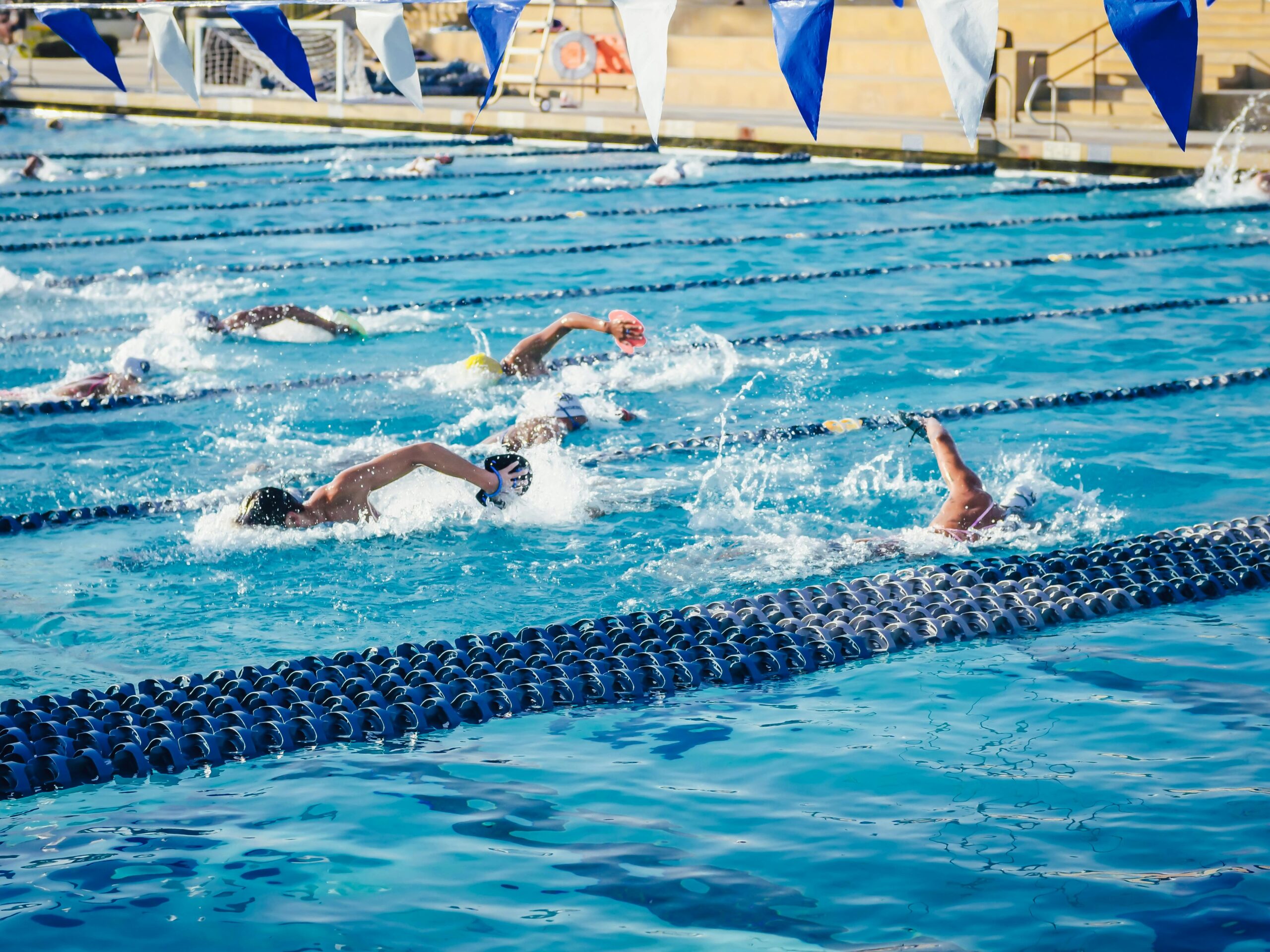
In competitive swimming, the underwater phase is often referred to as the “fifth stroke.” You can have a phenomenal dive and incredibly powerful underwater dolphin kicks, but if you butcher the transition from underwater to surface swimming—the breakout—you hit a metaphorical brick wall.
At Athletes Untapped, we notice that many young swimmers struggle to carry their underwater momentum into their surface stroke. They breathe on the very first arm pull, look straight up at the ceiling before they breach the surface, or stay underwater so long that they completely stall out. This lack of structural mechanics leads to a massive deceleration right when the swimmer should be at their fastest, forcing them to rebuild all their speed from scratch.
The secret to dominating the first 15 meters of any length lies in breakout speed. Proper training fixes these timing and postural issues, allowing swimmers to maintain a razor-tight streamline, perfectly time their first stroke, and explode through the surface of the water without losing a fraction of a second.
Connect with a Private Swimming Coach: https://athletesuntapped.com/browse/swimming/
Why This Skill Matters for Athlete Development
Your breakout speed dictates how effectively you capitalize on your starts and turns. Without a seamless transition to the surface, the oxygen deficit of underwater kicking yields zero competitive advantage.
- Game Performance: Elite breakout speed directly translates to pulling ahead of the pack. When you perfectly time your first pull to match your physical breach of the surface, you ride a wave of hydrodynamic momentum. You emerge from the water already swimming at top speed, instantly putting massive physical and psychological pressure on the swimmers in the lanes next to you.
- Confidence: I have seen athletes improve faster when they spend just 10 focused minutes on streamline-to-stroke transitions at the start of every session. When hitting the breakout perfectly becomes muscle memory, swimmers stop dreading the oxygen deprivation of long underwaters. They gain the composure to trust their kick count, keep their head down, and execute a violent, confident first stroke.
- Long-Term Development: As you progress to high school and collegiate swimming, races are won and lost underwater and off the walls. A biomechanically sound breakout protects you from the immense drag penalty of poor surface transitions. It provides the technical efficiency needed to maximize short-course (25-yard) racing, ensuring your times drop consistently as you face elite-level competition where turns dictate the winner.
Best Drills / Tips / Techniques
You cannot master your breakout by simply swimming endless laps and hoping your transition improves naturally. You need isolated, high-focus repetitions to train your timing and body position. Here are 5 drills AU coaches use to build a blistering breakout.
1. The Push, Kick, and Freeze
How to perform it: Push off the wall entirely underwater in a perfect streamline. Take exactly three powerful dolphin kicks. On the third kick, initiate your first arm pull (for freestyle or butterfly) but do not take a second stroke. Freeze your body completely the moment you break the surface and see how far you glide.
Why it works: It forces the brain to internalize the exact timing of the first pull. It breaks the breakout down to its simplest component, proving to the athlete that a perfectly timed first stroke will generate massive, sustained forward glide.
Coaching tips: Your hand should begin its catch exactly as your head begins to pierce the surface. If you pull while entirely underwater, you will drag.
Common mistakes: Looking forward at the opposite wall. Your eyes must remain looking straight down at the bottom of the pool to keep your spine aligned during the freeze.
2. Zero-Breathing Breakouts
How to perform it: Push off the wall, execute your underwater kicks, and perform a full breakout into a full sprint for 15 meters. Implement a strict rule: you are absolutely not allowed to breathe until your third full stroke cycle on the surface.
Why it works: Breathing on the first stroke is the most common momentum-killer in swimming, as it drops the hips and creates massive frontal resistance. This drill trains supreme discipline and oxygen management, teaching the body to prioritize speed over immediate comfort.
Coaching tips: Keep your chin tucked tight to your chest as you break out. “Hide your head” between your shoulders to slice through the surface tension.
Common mistakes: Turning the head to the side right as the hand breaches the water. You must suppress the panic for oxygen; trust that you can make it three strokes.
3. The Resistance Parachute Transition
How to perform it: Wear a small swimming parachute around your waist. Push off the wall and execute a 25-meter sprint, focusing entirely on an aggressive, powerful breakout.
Why it works: The parachute creates intense drag the moment you try to move forward. This drill forces the swimmer to generate an overwhelming amount of raw torque and power on their first stroke to break through the surface resistance, making a normal, un-resisted breakout feel incredibly light and fast.
Coaching tips: You must kick twice as hard as normal during the transition phase to keep the parachute from sinking your hips.
Common mistakes: Shortening the first stroke because the resistance is heavy. You must pull all the way through past your hips, even against the drag.
4. The Depth-Gauge Drill
How to perform it: Submerge in the shallow end. Push off the wall at varying depths—first, push off two feet underwater, then one foot underwater, and finally skimming right below the surface. Execute a breakout from each depth.
Why it works: Breakout timing changes depending on how deep you are coming off the wall. This drill trains the athlete’s spatial awareness, teaching them to adjust their kick count and the angle of their ascent so they always hit the surface at the perfect, shallow trajectory.
Coaching tips: The ideal breakout angle is a gradual incline. If you push off too deep, you will pop up like a cork, ruining all forward momentum.
Common mistakes: Arching the back to reach the surface faster. Keep your core tight and let your speed carry you upward.
5. Fin-Assisted Over-Speed Breakouts
How to perform it: Put on a pair of short training fins. Push off the wall and execute your underwater kicks at maximum, 110% speed, bursting through the surface into a full sprint.
Why it works: Fins allow the swimmer to travel at speeds they cannot naturally achieve. This “over-speed” training forces the central nervous system to process the breakout transition at a terrifyingly fast velocity, upgrading the brain’s timing mechanisms to handle race-pace dynamics.
Coaching tips: Because you are moving faster, you will reach the surface much sooner than you expect. Be prepared to initiate your first pull early.
Common mistakes: Getting lazy with the arm pull because the fins are doing all the work. You must still execute a violent, aggressive first stroke to capitalize on the speed.
Common Mistakes Athletes Make
Breakout errors are incredibly common in age-group and high school swimming, but they are easy to fix once you build awareness of your body line and timing.
Breathing on the First Stroke: The absolute biggest mistake in swimming. Turning the head to breathe the moment you hit the air acts like a parachute, dropping the hips, raising the chest, and destroying all the speed you built underwater.
How to fix it: Drill the Zero-Breathing Breakout relentlessly. You must force yourself to take at least two to three strokes before taking a breath.
The “Submarine” (Late Breakout): Staying underwater too long. Once you lose your push-off speed, kicking underwater becomes slower than swimming on the surface. If you wait too long, you will stall out and have to start your stroke from a dead stop.
How to fix it: Know your kick count. You should initiate your breakout the exact moment you feel your speed drop to your normal surface swimming speed.
The “Cork” (Popping Up Too Steeply): Arching the back and pointing the head straight up at the ceiling to break out, rather than rising gradually. This converts horizontal speed into vertical speed, causing you to bob up and down.
How to fix it: Keep your chin tucked. Your body should ascend on a very slight, smooth incline, piercing the surface rather than exploding out of it vertically.
Pulling While Fully Submerged: Starting the first arm pull while the body is still a foot underwater. Moving your arms outside the streamline creates massive drag if you are completely submerged.
How to fix it: Patience. Your hand should not begin its catch phase until your head and upper back have physically broken the surface tension of the water.
How Private Coaching Accelerates Improvement
A swimming breakout happens in a chaotic, bubbling fraction of a second. Trying to self-diagnose whether your first pull started a tenth of a second too early, or if your chin lifted an inch too high, is practically impossible without an external observer.
This is where private coaching is essential. Private coaching provides faster skill development by utilizing expert eyes and underwater video analysis. A private swim coach offers personalized feedback tailored to your specific buoyancy and kick power, making it easy to catch habits like the “submarine” immediately. This targeted instruction allows athletes to focus on correcting timing flaws early before they become ingrained muscle memory. Ultimately, mastering your breakouts in a 1-on-1 environment provides massive confidence building, allowing you to push off every wall knowing you will surface ahead of the competition.
Find a Private Swimming Coach: https://athletesuntapped.com/browse/swimming/
Frequently Asked Questions About Swimming Breakout Speed
How often should athletes practice breakouts?
Breakouts should be practiced on every single wall, during every single practice. It is not something you only do during sprints; it must become an automatic habit even during warm-ups and cool-downs.
What age should athletes start working on this?
As soon as a swimmer learns how to do a flip turn or a racing dive (usually ages 8 to 10), they must be taught not to breathe on the first stroke and how to hold their streamline.
How long does it take to improve?
With focused, intentional underwater video review, swimmers can fix their breakout timing in just 2 to 3 weeks. Breaking the habit of breathing on the first stroke requires high discipline and can take slightly longer.
Does the breakout change depending on the stroke?
Yes. In freestyle and backstroke, the breakout relies heavily on the timing of the first alternating arm pull. In butterfly and breaststroke, the breakout relies on a massive, simultaneous double-arm pull that must be timed perfectly with the chest breaching the water.
Why do I feel like I’m moving backward when I break out?
You are likely lifting your head to look forward, dropping your hips, and pulling too early while still deep underwater. Keep your head down and pierce the surface.
Do private coaches help with this?
Absolutely. Private swimming coaches are essential for breaking down the biomechanics of the transition, providing underwater filming, and isolating specific timing flaws so the athlete can practice effectively.
Conclusion
Breakout speed is the undeniable foundation of a highly efficient, dominant competitive swimmer. Without it, you are doing all the hard work underwater only to throw the speed away at the surface. Improvement is highly achievable with proper training, but it requires extreme discipline and breath control. Encourage yourself to focus on your head position and your delayed breath before you focus on simply spinning your arms faster, and consistent practice will inevitably yield effortless transitions and significantly faster race times.
Train With a Private Swimming Coach
- Athletes Untapped connects athletes with vetted private coaches across the country for one-on-one training.
- Private coaching helps athletes:
- improve faster
- build confidence
- receive personalized feedback
- reach their full potential
About Athletes Untapped
Athletes Untapped connects competitive swimmers with experienced private coaches who specialize in breakout speed, underwater dolphin kicking, and stroke mechanics. Through personalized instruction and structured training plans, Athletes Untapped helps sprinters and distance swimmers improve their surface transitions, eliminate drag, and maintain momentum off every wall.
Find an experienced coach near you: https://athletesuntapped.com
Learn from our very best Coach!


