
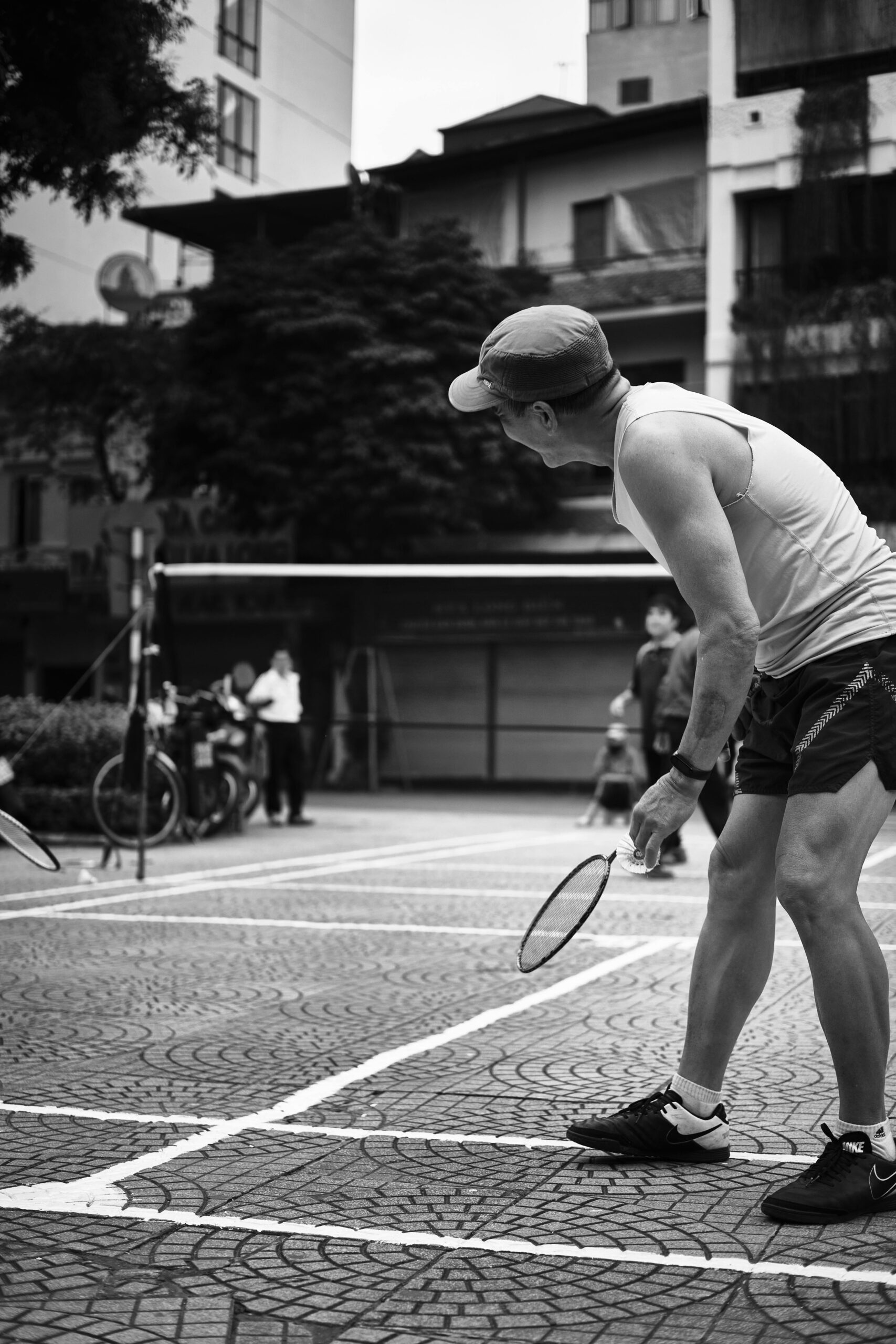
In pickleball, getting to the non-volley zone (the kitchen line) is only half the battle; holding your ground once you get there is what actually wins championships. You can have a beautiful third-shot drop, but if you panic, back up, or flail wildly the moment your opponent fires a fast volley at you, you immediately surrender your offensive advantage.
At Athletes Untapped, we notice that many players struggle immensely with spatial awareness and paddle control when they reach the NVZ. They take massive backswings, take a step backward every time the ball is hit hard, or swing at balls that are clearly flying out of bounds. This lack of structural mechanics leads to popped-up balls, frustrating unforced errors, and easily surrendered points.
The secret to dominating the pace of the game lies in kitchen line control. Proper training fixes these footwork and paddle discipline issues, allowing players to hold their ground, absorb heavy pace, let out-balls fly, and suffocate the opponent’s reaction time.
Connect with a Private Pickleball Coach: https://athletesuntapped.com/browse/pickleball/
Why This Skill Matters for Athlete Development
Your ability to control the kitchen line dictates who governs the geometry of the court. Without consistent line control, you are constantly playing defense on your heels.
- Game Performance: Elite kitchen line control directly translates to offensive pressure. When you refuse to back up and instead take the ball out of the air early, you completely cut off your opponent’s angles and drastically reduce the time they have to recover. This forces them to hit low-percentage, desperate shots just to stay in the rally.
- Confidence: I have seen athletes improve faster when they spend just 10 focused minutes on rapid-fire volley drills at the start of every session. When keeping the paddle out in front becomes muscle memory, players stop fearing “bangers” (players who hit the ball extremely hard). They gain the composure to stand tall, trust their reflexes, and execute a confident, compact block under immense pressure.
- Long-Term Development: As you progress to 4.0, 4.5, and 5.0+ levels of pickleball, the game at the net becomes a high-speed chess match of dinks and sudden speed-ups. A biomechanically sound defensive posture protects you from getting jammed in the chest or chicken-winged. It provides the elite hand speed and paddle discipline needed to win fast-paced hands battles, ensuring your net game scales as you face highly skilled opponents.
Best Drills / Tips / Techniques
You cannot master kitchen line control by simply playing recreational games and hoping your reflexes improve. You need isolated, high-repetition drills to build paddle discipline and out-ball recognition. Here are 5 drills AU coaches use to build an impenetrable wall at the net.
1. The Toe-the-Line Block
How to perform it: Stand with your toes exactly one inch behind the kitchen line. Have a partner stand at their baseline and drive the ball as hard as they can directly at your body. You must block the ball back into their kitchen without taking a single step backward.
Why it works: Human instinct tells you to back away from a fast-moving object. This drill forces the brain to override that instinct. It trains the athlete to hold their ground, absorb the pace by loosening their grip, and use the opponent’s power against them.
Coaching tips: Keep your paddle out in front of your body at all times. If the paddle gets trapped beside your hip, you will get jammed.
Common mistakes: Taking a step backward into the transition zone. The moment you step back, you give the opponent an angle to hit down at your feet.
2. “Shoulder Height, Let It Fly” (Out-Ball Recognition)
How to perform it: Stand at the kitchen line with your paddle in the ready position. A partner drives balls at you from the mid-court. You must actively dodge or duck under any ball that is traveling above your shoulders, letting it sail out of bounds. Only volley the balls that are chest-height or lower.
Why it works: One of the biggest mistakes in pickleball is hitting balls that are going out. This drill builds supreme visual discipline, teaching the nervous system how to quickly judge the trajectory and height of a speed-up.
Coaching tips: If you have to raise your paddle above your shoulders or pop up on your toes to reach the ball, it is almost certainly going long. Let it go.
Common mistakes: Reaching up and swatting at a high ball out of pure reflex, keeping the opponent in a point they should have lost.
3. The Windshield Wiper (Lateral Sliding)
How to perform it: You and a partner both stand at the kitchen line. Dribble the ball back and forth out of the air (no bouncing). Gradually begin moving side-to-side together, maintaining the volley rally. You must slide laterally without ever crossing your feet.
Why it works: You are rarely standing perfectly still during a hands battle. This drill marries lateral footwork with paddle tracking, teaching the athlete how to protect their side of the court while maintaining a strong, balanced base.
Coaching tips: Keep your stance wide and your hips low. Use a shuffle step to move laterally; never turn your hips to the sideline.
Common mistakes: Crossing the feet while moving side-to-side. If you cross your feet and the ball changes direction, you will trip or be completely out of position.
4. The Reset and Attack Drill
How to perform it: Rally at the kitchen line. Your partner will randomly speed the ball up at your chest. You must absorb the pace and hit a soft “reset” block that drops harmlessly back into the kitchen. The moment they hit a soft dink in response, you must instantly speed the ball up on the very next shot.
Why it works: Net play requires rapidly shifting gears between defense and offense. This drill trains the athlete to survive the opponent’s attack with soft hands, and then immediately flip the script and become the aggressor.
Coaching tips: Squeeze your grip tightly when attacking, but relax your grip to a 3-out-of-10 pressure when executing the soft reset block.
Common mistakes: Trying to counter-attack every single speed-up. If the ball is hit hard and low at your knees, you must respect the shot and reset it rather than swinging wildly.
5. The Compact Punch Volley
How to perform it: Stand at the kitchen line. Have a coach feed balls that sit slightly high above the net cord. Instead of taking a huge swing, start with your paddle in front of you and “punch” the ball with a short, six-inch forward pushing motion, snapping it down at the opponent’s feet.
Why it works: A big backswing takes too much time and often results in hitting the ball out of bounds. This drill isolates the short, explosive punch required to put the ball away accurately without over-swinging.
Coaching tips: Your paddle should never go behind your shoulder. The power comes from a firm wrist and a short forward push from the elbow and shoulder.
Common mistakes: Treating the volley like a tennis groundstroke. A huge, looping swing at the kitchen line will cause you to be late and hit the ball directly into the net.
Common Mistakes Athletes Make
Kitchen line errors are incredibly common in amateur pickleball, but they are easy to fix once you understand the geometry of the non-volley zone.
Giving Up the Line: This happens when a player takes a full step backward every time the ball is hit firmly in their direction. This completely ruins their court positioning, opens up angles for the opponent, and forces them to hit difficult half-volleys off their shoelaces.
How to fix it: Draw an imaginary line in the sand. Commit to holding your ground, keeping your weight slightly forward on the balls of your feet, and taking the ball out of the air.
The “Chicken Wing”: Getting jammed on the dominant-hand side of your body (e.g., the right hip for a right-handed player) because you are trying to use a forehand block to defend your body.
How to fix it: Your backhand should cover 80 percent of your body at the net. Keep your paddle slightly shaded to your backhand side, as a backhand block naturally protects your chest and torso much faster and more comfortably than a forehand.
Reaching Into the Kitchen and Faulting: Leaning so far forward to hit a volley that your momentum carries your foot into the non-volley zone, resulting in an automatic fault.
How to fix it: Bend your knees, not your waist. If you try to reach forward by bending at the waist, your head pulls you off balance. Drop your hips to stay grounded while reaching.
Swinging at the Transition Zone: Trying to hit a hard, downward put-away when you are still standing in the middle of the court (the transition zone), which almost always results in hitting the net.
How to fix it: You only earn the right to hit downward once you are fully established at the kitchen line. If you are mid-court, you must hit upward and soft to reset the point.
How Private Coaching Accelerates Improvement
Kitchen line control is a high-speed game of reflexes, paddle angles, and split-second decision-making. Trying to self-diagnose whether your backswing was slightly too large or your grip was too tight is incredibly difficult during a rapid-fire firefight at the net.
This is where private coaching is essential. Private coaching provides faster skill development by utilizing expert eyes and highly repetitive, controlled volley feeding. A private coach offers personalized feedback tailored to your specific grip and reaction time, making it easy to catch habits like the “chicken wing” immediately. This targeted instruction allows athletes to focus on correcting paddle mistakes early before they become ingrained muscle memory. Ultimately, mastering your net play in a 1-on-1 environment provides massive confidence building, allowing you to step up to the kitchen line knowing you can absorb any pace and dominate the hands battle.
Find a Private Pickleball Coach: https://athletesuntapped.com/browse/pickleball/
Frequently Asked Questions about Kitchen Line Control in Pickleball
How often should athletes practice this skill?
Athletes should spend at least 10 to 15 minutes doing rapid-fire volleys and reset drills before every match or practice session. Hand speed and paddle tracking require constant, daily stimulation.
What age should athletes start working on this?
Players of any age should learn line discipline the moment they learn the rules of the kitchen. The earlier players learn not to back up, the faster they will progress past the beginner levels.
How long does it take to improve?
With focused, intentional practice, players can see a dramatic improvement in their hand speed and out-ball recognition in just 3 to 4 weeks. Breaking the habit of taking a large tennis-style backswing may take slightly longer.
Where should I aim my put-away volleys?
Aim down at the opponent’s feet (especially their right foot if they are right-handed), or aim for the open gaps between the two players. Never aim high at their chest, as that is the easiest place for them to block it back.
Why do I keep popping the ball up when I block?
You are likely gripping the paddle too tightly, or your paddle face is angled too far upward toward the sky. Soften your grip and ensure the paddle face is perpendicular to the ground when absorbing pace.
Do private coaches help with this?
Absolutely. Private pickleball coaches are essential for breaking down the biomechanics of the punch volley, providing aggressive speed-up feeds to practice blocking, and isolating specific footwork flaws so the athlete can practice effectively.
Conclusion
Kitchen line control is the undeniable foundation of an elite, pressure-inducing pickleball player. Without it, you are leaving your offensive potential entirely to chance and playing directly into the hands of aggressive bangers. Improvement is highly achievable with proper training, but it requires supreme visual discipline and paddle control. Encourage yourself to focus on your compact swings and out-ball recognition before you focus on hitting flashy winners, and consistent practice will inevitably yield an impenetrable defense and a lethal net game.
Train With a Private Pickleball Coach
- Athletes Untapped connects athletes with vetted private coaches across the country for one-on-one training.
- Private coaching helps athletes:
- improve faster
- build confidence
- receive personalized feedback
- reach their full potential
About Athletes Untapped
Athletes Untapped connects pickleball players with experienced private coaches who specialize in kitchen line control, hand speed, and paddle mechanics. Through personalized instruction and structured training plans, Athletes Untapped helps players improve their reflexes, eliminate popped-up balls, and confidently win fast-paced exchanges at the net.
Find an experienced coach near you: https://athletesuntapped.com
Learn from our very best Coach!


