
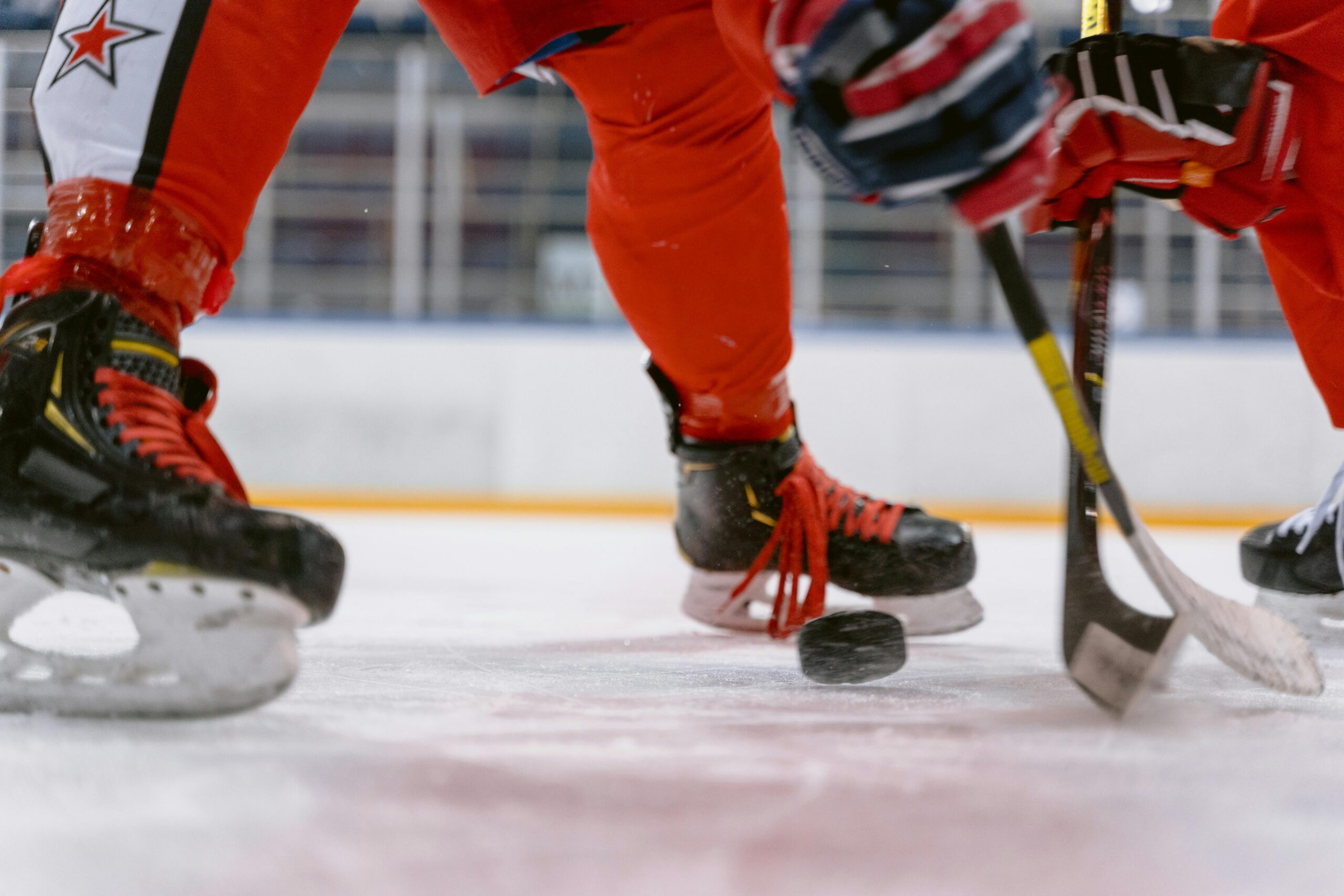
In ice hockey, flashy stickhandling might look great in warm-ups, but the game is ultimately won along the boards and in the corners. You can have the softest hands on the ice, but if you cannot shield the puck from a physically aggressive defender, you will constantly turn the puck over and spend your entire shift playing defense.
At Athletes Untapped, we notice that many young players panic the moment they feel physical pressure. They expose the puck in front of their body, stand up tall, and try to stickhandle through the defender’s skates. This lack of structural mechanics leads to easy strip checks, lost offensive zone time, and a highly inconsistent possession game.
The secret to dominating time on attack lies in puck protection. Proper training fixes these postural and spatial issues, allowing players to use their body as an impenetrable barrier, absorb contact, and maintain control of the puck until a passing lane opens up.
Connect with a Private Ice Hockey Coach: https://athletesuntapped.com/browse/ice-hockey/
Why This Skill Matters for Athlete Development
Your ability to protect the puck dictates your value in the offensive zone. Without consistent puck protection, you are a liability whenever the play gets physical.
- Game Performance: Elite puck protection directly translates to offensive dominance. When you can comfortably put your body between the defender and the puck, you force the opposition to reach and commit penalties (like hooking or tripping). This buys your teammates valuable time to get open, extending your team’s possession and tiring out the defense.
- Confidence: I have seen athletes improve faster when they spend just 10 focused minutes on live-resistance drills at the start of every session. When absorbing contact becomes muscle memory, players stop panicking under pressure. They gain the composure to drop their hips, trust their edge control, and execute a confident, patient play even with a 200-pound defenseman leaning on their back.
- Long-Term Development: As you progress to higher levels of hockey, the time and space you have to make a play shrink drastically. A biomechanically sound protection stance protects you from devastating open-ice hits because you are already in a stable, athletic posture. It provides the physical leverage needed to win board battles, ensuring your game scales as you face bigger, faster, and heavier competition.
Best Drills / Tips / Techniques
You cannot master puck protection by simply stickhandling around static orange cones. You need isolated, high-resistance drills to build core stability and edge awareness. Here are 5 drills AU coaches use to build an unbreakable puck possession game.
1. The Wide Base Glide
How to perform it: Skate forward with the puck. A coach or teammate applies light, continuous pressure to your shoulder from the side. You must glide on your skates, dropping your hips into a deep squat, and physically lean your weight back into the defender while keeping the puck completely extended on the far side of your body.
Why it works: It forces the brain to internalize the concept of “Puck, Body, Defender.” It breaks the skill down to its absolute simplest component of using the hips and back to create a physical wall, establishing the leverage needed to stay on your feet.
Coaching tips: Your bottom hand should be slid down lower on the stick than usual to maximize your reach and keep the puck as far away from the defender’s stick as possible.
Common mistakes: Leaning away from the contact. You must push into the defender’s pressure to maintain your balance; if you pull away, you will easily be knocked off the puck.
2. One-Arm Stick Control (The Ward-Off)
How to perform it: Carry the puck using only your top hand on the stick. A defender approaches from your free side. As they reach for the puck, use your free arm and shoulder to legally block their body and stick, while maneuvering the puck with your top hand.
Why it works: Hockey requires extreme multitasking. This drill isolates the independence of the top hand for puck control while training the free arm to actively engage and ward off the defender’s stick checks.
Coaching tips: Do not grab or hold the defender with your free hand (which is a penalty). Use a strong, stiff forearm to create separation.
Common mistakes: Letting the top hand drift in front of the body. The top hand must stay locked near your hip to maintain strength and control over the blade of the stick.
3. The Cutback and Seal
How to perform it: Drive hard down the wing with a defender closely trailing your inside shoulder. Abruptly stop (using a tight turn or hockey stop) to change direction back toward the blue line. Instantly step into the defender’s path, sealing them off with your back and hips while protecting the puck on the outside.
Why it works: Defenders use their momentum to angle you toward the boards. This drill marries explosive edge control with physical leverage, teaching the athlete how to use the defender’s own momentum against them to instantly create three feet of open ice.
Coaching tips: The “seal” is the most important part. You must physically step in front of the defender’s skates after you cut back to take away their pursuit angle.
Common mistakes: Cutting back but leaving the puck exposed in the middle of the ice during the turn, allowing the trailing defender to easily poke it away.
4. Board Battle Pins
How to perform it: Stand roughly two feet away from the side boards with the puck. A defender aggressively tries to pin you against the glass. You must use your skates to trap the puck against the boards while continuously rotating your hips to prevent the defender from tying up your stick or kicking the puck free.
Why it works: A massive percentage of the game is played along the walls. This drill trains the gritty, heavy mechanics of using the boards as a secondary shield, teaching the athlete how to protect the puck with their feet when their stick is tied up.
Coaching tips: Keep your feet moving. A stationary player is incredibly easy to pin. Constant small rotations and edge shifts make you incredibly difficult to contain.
Common mistakes: Facing the boards directly and putting your nose against the glass. You must keep your body turned slightly so you can still see the ice and look for a passing outlet.
5. Keepaway in the Circle
How to perform it: You and a defender stay inside a single face-off circle. You start with the puck. The defender has 30 seconds to strip you of the puck or force it outside the circle. You must use tight turns, cutbacks, and pure physical shielding to maintain possession for the entire duration.
Why it works: This is the ultimate test of endurance and edge work. It trains the athlete to chain multiple protection techniques together under exhausting, game-realistic pressure in a highly confined space.
Coaching tips: Use the net (or the concept of the net) to your advantage. Always try to keep your body positioned between the defender and the center of the circle.
Common mistakes: Staring directly down at the puck. Keep your head up on a swivel; in a real game, you need to be looking for a teammate to pass to while shielding the puck.
Common Mistakes Athletes Make
Puck protection errors are incredibly common in youth hockey, but they are easy to fix once you understand body geometry and leverage.
Exposing the Puck: This happens when a player stickhandles the puck directly in front of their skates while a defender is right next to them. This provides an incredibly easy, unprotected target for a poke check.
How to fix it: Implement a strict “far side” rule. The puck must always be kept on the side of your body furthest away from the threat.
Standing Up Tall: Straightening the legs and bending at the waist when a defender leans on you. This completely destroys your center of gravity, making it incredibly easy for the defender to push you completely off balance and take the puck.
How to fix it: Drop your hips. Your knees must be deeply bent, and your chest should be up. The lower man almost always wins the leverage battle.
Two Hands Glued to the Stick: Refusing to take the bottom hand off the stick even when the defender is actively reaching across your body. This limits your reach and prevents you from using your arm to defend your space.
How to fix it: Drill your top-hand strength heavily. You must be comfortable taking your bottom hand off the stick to ward off the defender and extend the puck out of their reach.
Turning Your Back Blindly: Spinning around to protect the puck but completely losing sight of the play, your teammates, and approaching second defenders.
How to fix it: Shoulder check constantly. Even when your back is to the defender, your chin must be over your shoulder scanning the ice for your next move.
How Private Coaching Accelerates Improvement
Puck protection is a highly physical, dynamic skill that requires resistance. Trying to self-diagnose whether your knee bend was deep enough or your stick was positioned correctly is incredibly difficult when you are fighting for your life along the boards.
This is where private coaching is essential. Private coaching provides faster skill development by utilizing expert eyes and controlled, live-resistance feeding. A private coach offers personalized feedback tailored to your specific size and skating stride, making it easy to catch habits like standing up too tall immediately. This targeted instruction allows athletes to focus on correcting leverage mistakes early before they become ingrained muscle memory. Ultimately, mastering your puck protection in a 1-on-1 environment provides massive confidence building, allowing you to step onto the ice knowing you have the physical presence to dictate the play and hold onto the puck against anyone.
Find a Private Ice Hockey Coach: https://athletesuntapped.com/browse/ice-hockey/
Frequently Asked Questions about Puck Protection in Ice Hockey
How often should athletes practice this skill?
Athletes should practice edge control and top-hand stick strength every single time they are on the ice. Live, high-resistance puck protection drills (like 1-on-1 keepaway) should be done for at least 10 to 15 minutes during team or private practices.
What age should athletes start working on this?
Players as young as 8 or 9 can begin learning the basic concepts of putting their body between the puck and the defender. The earlier they learn not to expose the puck, the better their possession game will be as hitting is introduced at older ages.
How long does it take to improve?
With focused, intentional practice and dedicated leg strength training, players can see a dramatic improvement in their balance and possession time in just 4 to 6 weeks.
Can smaller players effectively protect the puck?
Absolutely. Puck protection is about leverage and edge control, not just raw size. Some of the best puck protectors in NHL history have been smaller, highly agile players who use a deep knee bend and incredible edge work to establish an unmovable center of gravity.
Do private coaches help with this?
Absolutely. Private hockey coaches are essential for breaking down the biomechanics of the ward-off, providing live, controlled physical resistance, and isolating specific edge-work flaws so the athlete can practice effectively.
Conclusion
Puck protection is the undeniable foundation of a possession-driving, offensively dangerous ice hockey player. Without it, you are leaving your offensive zone time to chance and playing directly into the defense’s hands by being easy to strip. Improvement is highly achievable with proper training, but it requires discipline and physical toughness. Encourage yourself to focus on your knee bend and your body positioning before you focus on flashy toe drags, and consistent practice will inevitably yield massive confidence and total control of the puck.
Train With a Private Ice Hockey Coach
- Athletes Untapped connects athletes with vetted private coaches across the country for one-on-one training.
- Private coaching helps athletes:
- improve faster
- build confidence
- receive personalized feedback
- reach their full potential
About Athletes Untapped
Athletes Untapped connects ice hockey players with experienced private coaches who specialize in puck protection, edge work, and offensive zone strategy. Through personalized instruction and structured training plans, Athletes Untapped helps forwards and defensemen improve their board battle win rate, physical leverage, and overall puck possession.
Find an experienced coach near you: https://athletesuntapped.com
Learn from our very best Coach!


