
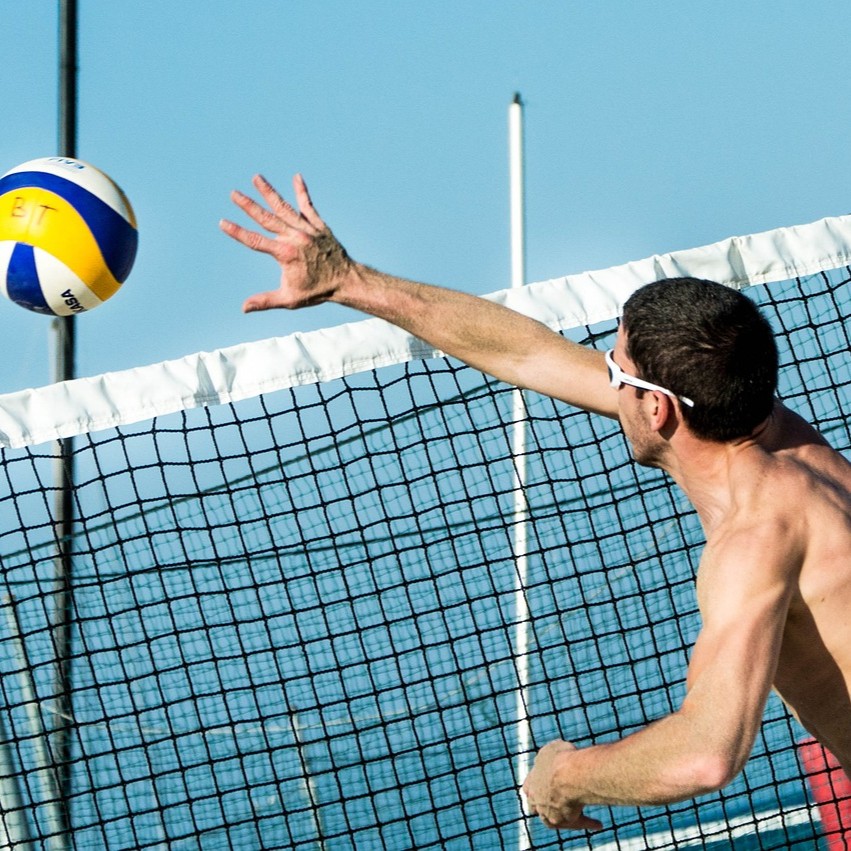
Great volleyball defense can look like pure reaction when a hitter takes a hard swing and somehow a defender is already there, balanced and ready to dig it. Usually, that player didn’t simply react faster than everyone else, they started figuring out where the ball might go several contacts earlier.
Good defenders are constantly gathering information: Where did the pass go? Is the setter in system or chasing the ball? Which hitters are available? Where is the set? What does the hitter’s approach look like? What part of the court is the block taking away?
The better a player gets at answering those questions, the less defense feels like guessing.
That doesn’t make digging technique, blocking or effort any less important, it just means those skills work better when players understand what is happening on the other side of the net.
Defense Starts Before the Attack
One of the easiest habits for young volleyball players to fall into is waiting until the ball is hit before trying to play defense. By then, especially against a hard attacker, there may not be much time left to move.
USA Volleyball teaches defenders to read the play as it develops.
- Start with the pass. A perfect pass gives the setter more options, while a pass that pulls the setter well away from the net may eliminate some attackers immediately.
- Then watch the setter and the set. Which hitter gets the ball? Is the set tight to the net, well off the net, inside or outside? Those details can change what an attacker is able to do with it.
- Finally, read the hitter. Approach angle, body position, shoulder direction, timing and the quality of the set can all provide clues.
None of those clues tells you with certainty where the ball is going…volleyball happens too quickly for that. The goal is to improve your odds. A defender who starts in a sensible position and reads the play has a much better chance than one who waits flat-footed for the swing.
Being Ready Matters More Than Diving Everywhere
Highlight-reel defensive plays are fun to watch, but throwing yourself across the floor isn’t necessarily the sign of a great defender.
Often, the best defensive play is much quieter.
The defender reads the attack, moves early, gets stopped and balanced before contact, then makes a controlled play on the ball.
USA Volleyball’s backcourt defensive guidance emphasizes being stopped by the time the attacker contacts the ball, facing the hitter and having the platform ready. Experienced defenders often make fewer dramatic movements because their positioning has already put them closer to where the ball is headed.
For younger players, this is an important shift: instead of teaching defense as “get low and dive for everything,” teach them to move while the play is developing and then become balanced when the hitter is ready to attack. And from there, digging becomes much easier.
The exact platform will change depending on where the ball is hit, but the basic goal is control. A dig doesn’t need to land perfectly in the setter’s hands to be successful. Keeping a hard-driven ball playable and giving the team a realistic second contact is already a good defensive result.
The Block and Back-Row Defense Have to Match
Blocking and digging are sometimes practiced as completely separate skills, but during a match they are part of the same defensive system.
The block takes away space. The defenders behind it cover what remains.
If blockers are taking away line, the back-row players should understand where that leaves the most likely attacking space. If the block is positioned differently, the defense behind it needs to adjust.
This is also why defenders shouldn’t simply stand directly behind their blockers. If the block is between the defender and the attacker, the defender may lose the visual information they need to read the swing.
Communication helps connect the two parts of the defense. Blockers can communicate what they’re trying to take away, and back-row players can adjust based on what they see happening at the net.
For blockers, reading matters just as much. Instead of jumping simply because an attacker is approaching, a blocker has to follow the developing play, read the setter and move into a position where their hands can actually affect the hitter’s available space.
A good block doesn’t always end with the ball hitting the floor. Sometimes a blocker gets a touch that slows the attack enough for a teammate to make an easy dig. Sometimes the block forces a hitter away from their preferred shot and directly toward a defender.
Both are successful defensive plays.
Start Learning Hitter Tendencies
As players become more experienced, defense becomes partly about remembering what they’ve already seen, and most hitters have preferences.
An outside hitter may favor the angle when the set is off the net. Another player may use a roll shot whenever they’re late to the ball. A hitter may keep attacking the same deep corner until the defense finally adjusts.
Players can begin noticing those tendencies during warmups and continue learning throughout the match.
Pay attention to what happens when a particular hitter gets a good set versus a bad one. Notice where they go when they swing hard and what they do when they can’t take a full approach. Watch whether they attack differently from the front row and back row, and then share what you’re seeing.
If one defender notices that a hitter has tipped three times when the set gets tight, the rest of the team should know. If a blocker sees that an attacker keeps trying to use their hands, that’s useful information too.
Volleyball IQ develops when players stop seeing every rally as an isolated event and start recognizing patterns.
Defense Isn’t Finished When You Dig the Ball
A great dig is only really valuable if the team can do something with it.
As soon as the ball is controlled, the team has to transition from defense into offense. Hitters need to move into positions where they can attack. The setter has to locate the ball. If the setter made the dig, another player needs to recognize that and take responsibility for the second contact.
That’s why defenders should think beyond simply keeping the ball off the floor: Where are you trying to send the dig? Can the setter realistically reach it? If the play is badly out of system, can you at least put the ball in an area where a teammate has options?
USA Volleyball training emphasizes digging playable balls toward the middle of the court rather than trying to create a perfect pass from every defensive contact.
The same principle applies after a block touch or emergency save. Sometimes the smartest defensive play isn’t beautiful. It’s just controlled enough to let your team reorganize and send a good ball back.
The teams that transition well can turn what looks like an opponent’s scoring opportunity into an attack of their own.
Practice Defense Against Real Volleyball
Defense becomes much harder to learn when every drill tells the player exactly what’s coming.
If a coach stands on a box and repeatedly hits balls directly at a defender, that can be useful for working on technique. But eventually the defender needs to see a real approach, a real set and multiple possible attacks.
USA Volleyball recommends moving toward game-like defensive training where athletes have to read hitters and make decisions rather than simply reacting to a predetermined ball.
For example:
- Let an attacker choose between hitting hard, rolling or tipping. Make the defender read the approach rather than knowing which shot is coming beforehand.
- Add a block so the back-row defender has to position around it.
- Run live rallies where the team earns points not only for spectacular digs, but for controlled defensive touches that allow the offense to transition.
The closer practice looks to the decisions players actually make during a match, the more useful the repetitions become.
Younger Players Don’t Need a Complicated Defensive System
Youth players don’t need to memorize every variation of perimeter, rotational and hybrid defense before they can become good defenders, they need to understand a few habits first.
- Watch the other side of the net.
- Move while the play develops.
- Get balanced before the hitter contacts the ball.
- Understand where your blockers are.
- Expect the ball to come to you.
- When you make the play, try to keep it usable for your teammates.
As players become more experienced, coaches can layer a team defensive system on top of those habits.
Becoming a Better Defender Takes More Than Reaction Time
Some players seem naturally fearless on defense, and others have great instincts or unusually quick reactions. Those qualities help, but defense can also be learned.
Players can get better at recognizing sets, study hitter tendencies, improve their positioning around the block and learn to stay balanced before contact. They can become more comfortable digging hard-driven balls and better at transitioning immediately into the next part of the rally.
Over time, the game starts to look a little slower because the player is recognizing what’s coming earlier.
That’s really what strong volleyball defense is about: you aren’t trying to react to everything after it happens. You’re learning to read the game well enough to give yourself a head start.
Improve Your Volleyball Defense With Individual Training
Team practices have a lot to cover, and defensive positioning or reading can be difficult to work on when a coach is responsible for an entire roster.
Individual volleyball training gives athletes more repetitions and more immediate feedback on areas such as digging technique, blocking, footwork, positioning and reading attackers.
Athletes Untapped connects athletes with private volleyball coaches who can tailor training to the player’s age, experience and specific areas for improvement.
A better defensive player isn’t simply someone willing to throw themselves on the floor for every ball. It’s someone who sees the play developing, gets into position and gives their team another chance to score.


