
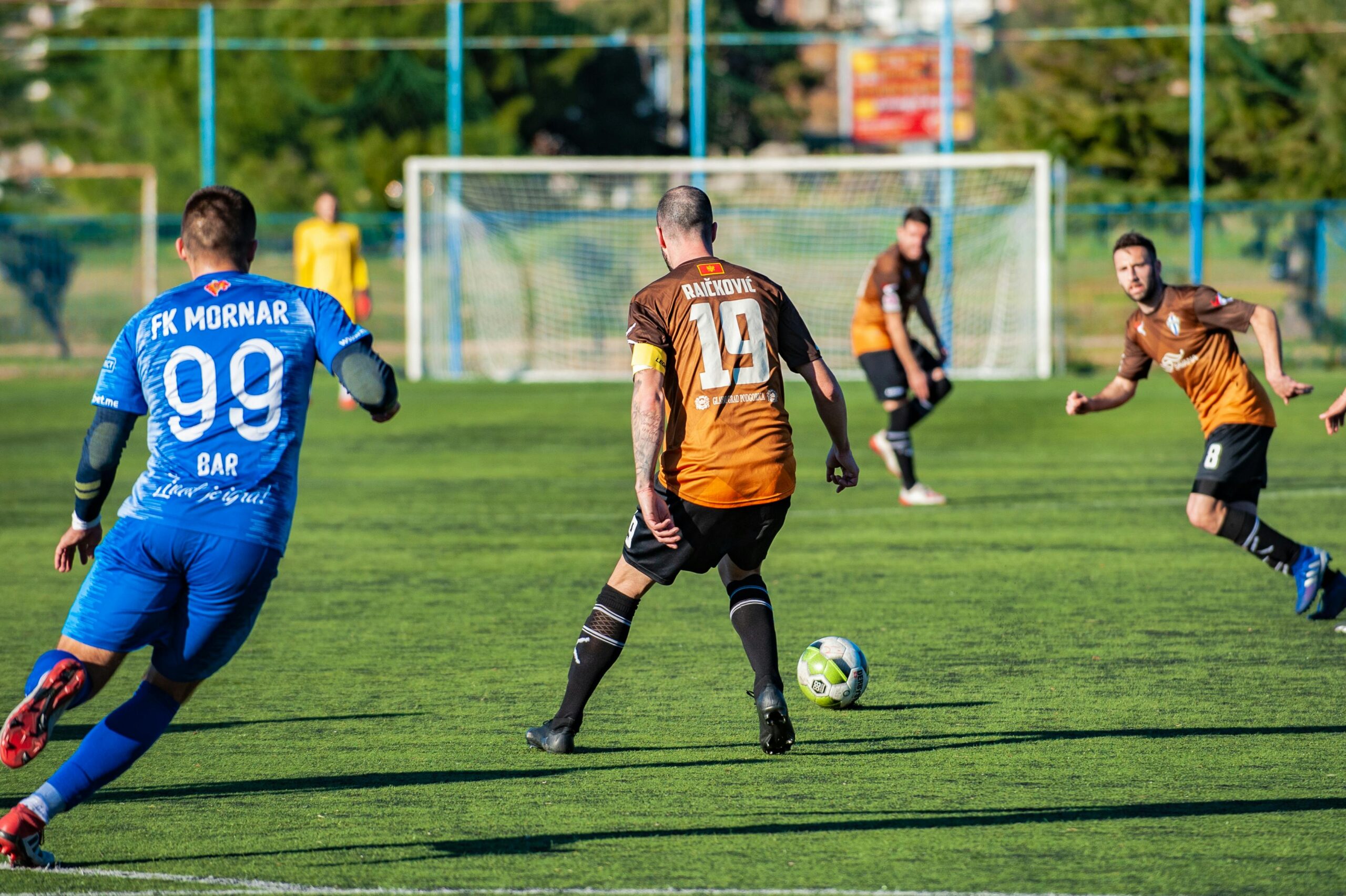
In soccer, your team can dominate possession, complete hundreds of passes, and beautifully build up the play from the back line. But if you cannot put the ball into the back of the net when you finally reach the penalty box, none of that possession actually matters.
At Athletes Untapped, we notice that many young forwards and midfielders struggle when they get into scoring positions. They panic, lean back, and try to kick the ball as hard as humanly possible, usually resulting in the ball sailing wildly over the crossbar. This lack of structural mechanics leads to wasted breakaways, easily saved shots right at the goalkeeper, and a highly inconsistent scoring record.
The secret to becoming a ruthless, clinical goalscorer lies in finishing technique. Proper training fixes these panicked physical reactions, allowing players to slow their heart rate, get their body over the ball, and simply pass the ball into the corners of the net with deadly precision.
Connect with a Private Soccer Coach: https://athletesuntapped.com/browse/soccer/
Why This Skill Matters for Athlete Development
Your finishing ability is the ultimate deciding factor in a soccer match. Without a consistent, reliable technique in front of the goal, your team will constantly leave points on the table.
- Game Performance: Elite finishing technique directly translates to changing the scoreboard. When you value placement over raw power, you force the goalkeeper to make incredibly difficult, fully extended diving saves. This makes you a constant threat inside the 18-yard box and dramatically increases your team’s goal differential.
- Confidence: I have seen athletes improve faster when they spend just 10 focused minutes on this drill at the start of every session. When striking the ball cleanly becomes muscle memory, players stop freezing up when they go 1-on-1 with the keeper. They gain the composure to pick their spot, trust their locked ankle, and execute a confident, relaxed finish under immense pressure.
- Long-Term Development: As you progress to higher levels of soccer, the defense gets tighter and scoring opportunities become incredibly rare. You might only get one good chance in a 90-minute game. A biomechanically sound finishing technique ensures you capitalize on that single moment, proving your value as an elite attacker as you face collegiate and professional-level defenders.
Best Drills / Tips / Techniques
You cannot master finishing by casually shooting from 30 yards out with no pressure. You need isolated, game-realistic repetitions inside the penalty area. Here are 5 drills AU coaches use to build an unbreakable scoring touch.
1. The Pass Into the Net
How to perform it: Stand 12 yards away from an empty goal (right on the penalty spot). Have a partner pass the ball firmly to your feet. Take one touch to set the ball out of your feet, and use the inside of your foot to firmly pass the ball into the side netting. Repeat for both the left and right foot.
Why it works: It forces the brain to internalize the concept that finishing inside the box is rarely about power; it is about accuracy. It breaks the shot down to a simple, easily repeatable inside-of-the-foot pass.
Coaching tips: Lock your ankle at a 90-degree angle. A loose, floppy ankle will result in a weak, inaccurate shot.
Common mistakes: Trying to strike the ball with the laces from close range. Unless the angle is incredibly tight, the inside of the foot provides vastly superior accuracy.
2. The Turn and Shoot
How to perform it: Stand at the top of the 18-yard box with your back to the goal. A coach plays a firm pass into your feet. You must receive the ball, turn sharply in one fluid motion, and strike the ball into the corners on your second touch.
Why it works: Strikers rarely receive the ball facing the goal with acres of space. This drill marries spatial awareness with rapid execution, teaching the nervous system how to orient the body toward the target and fire before the defense can block the shot.
Coaching tips: Your first touch is the most important part of the drill. It must take you away from the imaginary defender and perfectly set up your striking foot.
Common mistakes: Taking three or four touches to settle the ball before turning. In a real game, the center back will have already tackled you.
3. The 1-on-1 Keeper Simulation
How to perform it: Start 35 yards out with the ball. A live goalkeeper stands on their line. Dribble at game speed toward the goal. As you enter the penalty box, the goalkeeper will rush out to cut down the angle. You must read their movement and either slide it past them, chip it over them, or round them to score.
Why it works: This is the ultimate test of composure. It trains the athlete to keep their head up while dribbling at high speeds, forcing them to make a split-second tactical decision under the pressure of a charging goalie.
Coaching tips: Make up your mind early. If you hesitate and wait for the goalkeeper to make the first move, they will smother the ball at your feet.
Common mistakes: Staring directly at the goalkeeper. You will almost always kick the ball exactly where your eyes are looking. Look at the empty space in the net.
4. Near Post / Far Post Targets
How to perform it: Tie two bright pinnies to the net or place tall cones exactly one yard inside both goalposts. Have a coach serve balls from wide areas (simulating crosses). Attack the ball and finish it using one touch, aiming exclusively to hit the targets rather than the middle of the net.
Why it works: Goalkeepers are trained to protect the center of the goal. This drill builds extreme precision and visual discipline, training the striker to automatically aim for the side netting where the keeper cannot reach.
Coaching tips: When the ball comes across your body from the wing, it is usually safest to redirect it back toward the near post, using the ball’s existing momentum.
Common mistakes: Leaning back and trying to volley the cross as hard as possible. You must get your chest over the ball to keep the shot driven low.
5. The Rebound Reaction
How to perform it: Have a coach or teammate take a hard shot from outside the box aimed directly at the goalkeeper. As the shot is taken, you must instantly sprint toward the goal, anticipating that the goalkeeper will spill the ball. Finish the rebound in one touch.
Why it works: The best goalscorers in the world score dozens of “ugly” tap-ins every season simply by anticipating mistakes. This drill teaches the athlete to never stand still and watch a shot, building the aggressive mindset of a poacher.
Coaching tips: Always assume the goalkeeper is going to drop the ball. If they catch it cleanly, you simply stop your run. If they drop it, you are already there.
Common mistakes: Stopping on your heels when the initial shot is hit. You must follow the ball all the way into the goalkeeper’s hands.
Common Mistakes Athletes Make
Finishing errors are incredibly common in youth and high school soccer, but they are easy to fix once you understand the biomechanics of striking a moving ball.
Leaning Backwards: This happens when a player’s plant foot is too far behind the ball, causing their spine to tilt backward as they strike. This alters the angle of the foot and causes the ball to skyrocket over the crossbar.
How to fix it: Implement a strict “nose over the ball” rule. You must drive your chest forward and plant your non-kicking foot directly next to the ball to keep the shot low and driven.
Closing the Eyes Upon Impact: Players often flinch or close their eyes right before they kick the ball, completely losing visual contact with the center of the ball. This leads to slicing the shot or completely mis-hitting it.
How to fix it: Keep your eyes glued to the ball until it has entirely left your foot. Do not look up to see where the shot went until after your follow-through is complete.
Always Trying to “Burst the Net”: Believing that every shot must be hit with maximum power to beat the goalie. This causes extreme muscle tension, destroying all accuracy and finesse.
How to fix it: Constantly remind yourself: “Pass the ball into the net.” 80 percent of goals scored inside the penalty box are placed, not blasted.
Plant Foot Pointing the Wrong Way: Landing the non-kicking foot so that the toes are pointing toward the corner flag rather than the goal. Your hips naturally open up to wherever your plant foot points, causing you to drag the shot wide.
How to fix it: Drill your approach. Your plant foot must point directly at your intended target to align your hips and shoulders perfectly with the goal.
How Private Coaching Accelerates Improvement
Finishing a soccer ball happens in a fraction of a second, often with a defender pulling on your jersey. Trying to self-diagnose whether your plant foot was six inches too far back or your ankle wasn’t fully locked is incredibly difficult during a chaotic team scrimmage.
This is where private coaching is essential. Private coaching provides faster skill development by utilizing expert eyes and highly repetitive, structured feeding. A private coach offers personalized feedback tailored to your specific striking mechanics, making it easy to catch habits like leaning back immediately. This targeted instruction allows athletes to focus on correcting mistakes early before they become ingrained muscle memory. Ultimately, mastering your finishing technique in a 1-on-1 environment provides massive confidence building, allowing you to step into the 18-yard box knowing you have the technical precision to score from any angle.
Find a Private Soccer Coach: https://athletesuntapped.com/browse/soccer/
Frequently Asked Questions about Soccer Finishing Technique
How often should athletes practice this skill?
Athletes should practice finishing on goal for at least 15 to 20 minutes during every single practice session. Striking the ball requires constant repetition to maintain the “feel” and timing of the technique.
What age should athletes start working on this?
Players as young as 6 or 7 can begin learning the basic inside-of-the-foot finish. The earlier the mechanics of placement over power are introduced, the less un-teaching has to happen later.
How long does it take to improve?
With focused, intentional practice, players can see a dramatic improvement in their shot accuracy and low-driven technique in just 3 to 4 weeks. Breaking the habit of constantly leaning back may take slightly longer.
Should I use my laces or the inside of my foot?
If you are inside the penalty box (18 yards or closer), use the inside of your foot for maximum accuracy. If you are outside the penalty box, use your laces (instep) to generate the power needed to beat the goalkeeper from a distance.
Where should I look when I shoot?
Look up briefly to locate the goalkeeper and pick your target, then lock your eyes entirely on the ball as you strike it.
Do private coaches help with this?
Absolutely. Private soccer coaches are essential for breaking down the biomechanics of the strike, providing game-realistic crosses and passes, and isolating specific physical flaws so the athlete can practice effectively.
Conclusion
Finishing technique is the undeniable foundation of a lethal, game-changing attacking player. Without it, you are leaving your team’s hard work unrewarded and playing directly into the goalkeeper’s hands by hitting weak, predictable shots. Improvement is highly achievable with proper training, but it requires discipline. Encourage yourself to focus on your chest angle and your ankle lock before you focus on raw power, and consistent practice will inevitably yield precise, unstoppable goals.
Train With a Private Soccer Coach
- Athletes Untapped connects athletes with vetted private coaches across the country for one-on-one training.
- Private coaching helps athletes:
- improve faster
- build confidence
- receive personalized feedback
- reach their full potential
About Athletes Untapped
Athletes Untapped connects soccer players with experienced private coaches who specialize in finishing technique, striking mechanics, and attacking positioning. Through personalized instruction and structured training plans, Athletes Untapped helps forwards and midfielders improve their composure in the box, shot accuracy, and overall goalscoring output.
Find an experienced coach near you: https://athletesuntapped.com
Learn from our very best Coach!


