
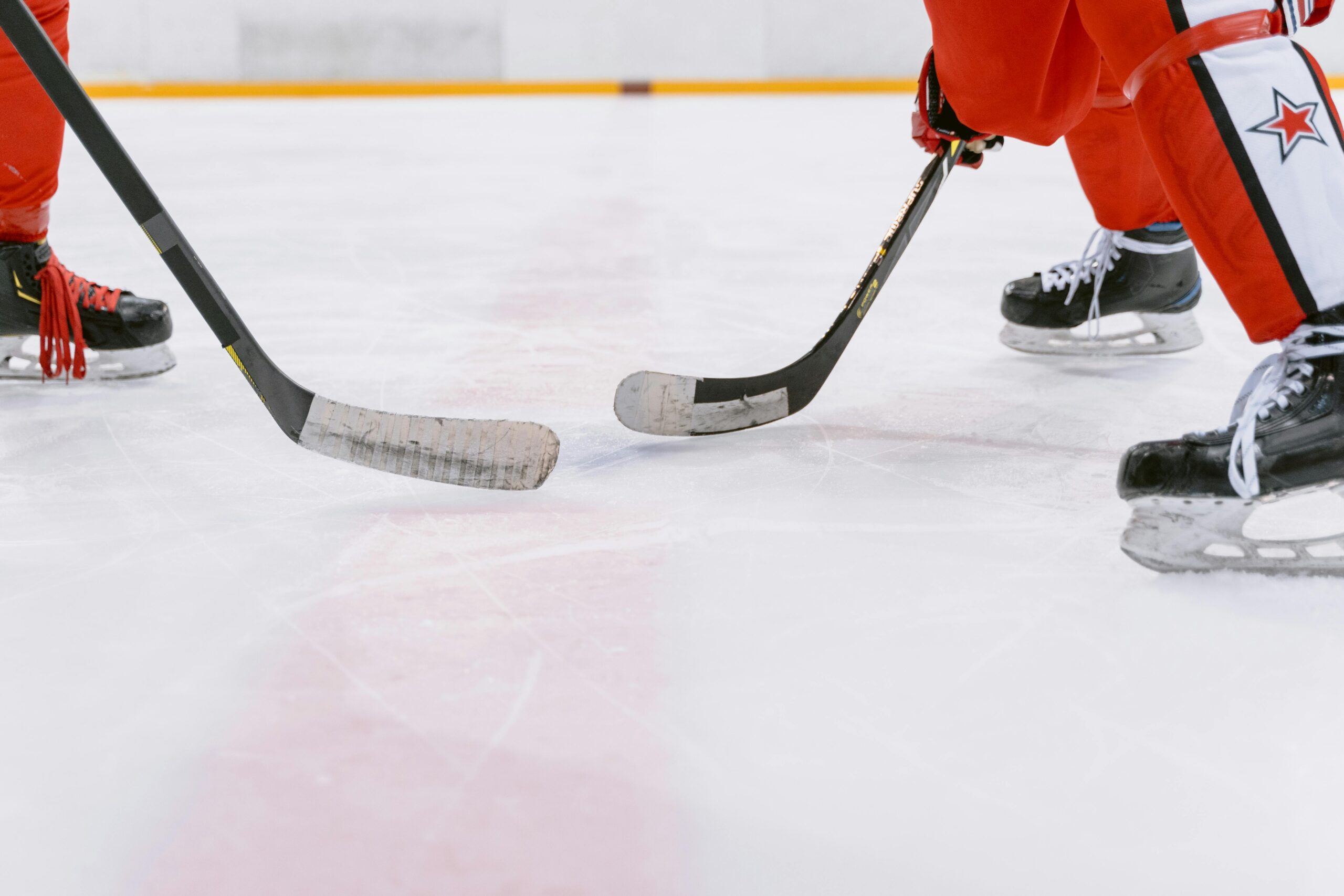
In ice hockey, your stick handles the puck, but your skates dictate your entire reality on the ice. If you cannot manipulate the four thin edges of steel beneath your feet, you cannot truly play the game.
At Athletes Untapped, we notice that many young players struggle to find stability and agility. They skate flat-footed, relying entirely on the inside edges of their skates like they are walking on the ice. This lack of structural mechanics leads to wide, slow turns, an inability to stop quickly, and constantly losing balance when engaged in physical puck battles.
The secret to elite agility lies in edge control. Proper training fixes these ankle stability issues, allowing players to carve deeply into the ice with both their inside and outside edges, resulting in explosive changes of direction and unbreakable balance.
Connect with a Private Ice Hockey Coach: https://athletesuntapped.com/browse/ice-hockey/
Why This Skill Matters for Athlete Development
Your edge control is the foundation of every single movement you make on the rink. Without a consistent, confident grip on the ice, your speed and puck handling will always suffer.
Game Performance: Elite edge control directly translates to winning one-on-one battles. When you can comfortably drop your hips and punch your outside edge into the ice, you can turn on a dime and lose your defender instantly. This makes you incredibly elusive and allows you to transition from defense to offense in a fraction of a second.
Confidence: I have seen athletes improve faster when they spend just 10 focused minutes on this drill at the start of every session. When trusting your outside edge becomes muscle memory, players stop fearing high-speed crossovers. They gain the composure to lean aggressively into their turns, trust their steel, and execute a confident, dynamic skating sequence under pressure.
Long-Term Development: As you progress to higher levels of hockey, the game becomes exponentially faster and more physical. A biomechanically sound grip on your edges protects you from devastating knee and ankle injuries. It provides the leverage needed to absorb hits and deliver power, ensuring your skating scales as you face faster, heavier competition.
Best Drills / Tips / Techniques
You cannot master edge control by simply skating laps around the rink. You need isolated, high-repetition drills to build ankle strength and proprioception. Here are 5 drills AU coaches use to build flawless edge work.
1. The One-Legged Glide
How to perform it: Skate forward to build moderate speed down the center of the ice. Lift your right skate completely off the ice and glide entirely on your left skate. Try to hold a perfectly straight line for as long as possible. Repeat on the other leg.
Why it works: It forces the brain to internalize the micro-adjustments required for absolute balance. It breaks edge control down to its simplest component of finding the exact center or flat of the blade.
Coaching tips: Keep your knee deeply bent on the gliding leg. A straight leg provides zero shock absorption and makes balance impossible.
Common mistakes: Flailing the arms to maintain balance. Keep your hands quiet and in front of you, using your core to stabilize your body.
2. Inside Edge C-Cuts
How to perform it: Stand in the basic hockey stance with feet shoulder-width apart. Shift your weight to your left leg. Using only your right skate, carve a half-moon or C shape into the ice by pushing the toe outward and then pulling the heel back in, using exclusively the inside edge. Alternate legs all the way down the ice.
Why it works: This drill isolates the push phase of the skating stride. It trains the athlete to feel the ice gripping the inside edge, which is the primary source of forward acceleration.
Coaching tips: You should hear a loud, satisfying crunching sound as your blade carves into the ice. If it is silent, you are not bending your knees enough to create friction.
Common mistakes: Letting the gliding ankle collapse inward. The supporting leg must remain strong and neutral while the working leg carves.
3. Outside Edge Figure 8s
How to perform it: Find a face-off circle. Build up speed and glide around the circle on one foot, leaning your body weight entirely to the inside of the circle so you are riding exclusively on the outside edge of your skate. Trace the circle completely, then switch legs and trace an intersecting circle to create a Figure 8.
Why it works: The outside edge is the most difficult and unnatural edge to master, but it is required for crossovers and tight turns. This drill forces the athlete to confront the fear of falling and trust the outside edge to hold their weight.
Coaching tips: Drop your inside shoulder into the center of the circle. Your body angle must match the angle of your skate blade.
Common mistakes: Trying to stay perfectly upright. If you do not lean into the turn, centrifugal force will push you off your edge and you will slide out.
4. The Iron Cross
How to perform it: Start on the goal line. Sprint forward to the blue line and execute a hard, two-foot hockey stop, spraying snow toward the far boards. Instantly transition into backward crossovers back to the goal line. Stop again, and sprint forward.
Why it works: In a real game, you must be able to stop and start instantly. This drill marries edge control with explosive power, teaching the nervous system how to transition from an aggressive stopping edge to an aggressive accelerating edge.
Coaching tips: To stop quickly, you must sink your hips backward as if sitting in a chair exactly as you turn your skates sideways.
Common mistakes: Dragging one foot weakly to slow down. A true hockey stop requires both feet to shave the ice simultaneously.
5. Tight Turns Around Cones
How to perform it: Set up four cones in a straight line down the ice. Skate toward the first cone at high speed. As you reach it, drop your hips, lead with your inside skate, and carve a massive, tight U-turn around the cone using your outside edge on the lead foot and inside edge on the trail foot.
Why it works: This drill simulates evading a defender. It teaches the athlete how to decelerate, change direction, and accelerate out of a turn using both feet cooperatively.
Coaching tips: Always enter the turn wide and exit the turn tight to the cone to maximize your exit speed.
Common mistakes: Crossing the feet over during the turn. A tight turn requires the feet to remain parallel on the ice to maximize the surface area carving the ice.
Common Mistakes Athletes Make
Skating errors are incredibly common in youth hockey, but they are easy to fix once identified on the ice.
Ankle Pronation: This happens when a player’s ankles bend inward toward each other, causing the skates to bow inward. This forces the player to skate exclusively on their inside edges, destroying all balance and agility.
How to fix it: Ensure the skates are tied tightly enough, especially around the top two eyelets. If the skates are tight and pronation continues, heavy off-ice ankle strengthening and one-legged balance drills are required.
Standing Too Tall: Players often lock their knees and bend at the waist to look at the puck. This straight-legged posture makes it physically impossible to engage the edges because the weight is not pressing down into the ice.
How to fix it: Implement a strict knee-bend rule. Your knees must always be pushed forward over the toes of your skates. If your thighs are not burning, you are not bending enough.
Looking Down at the Ice: Staring directly at the toes of the skates while trying to learn edge work. Where the heavy human head goes, the body follows, usually leading to a loss of balance falling forward.
How to fix it: Constantly remind yourself to keep your chest up. Look at the glass at the far end of the rink to maintain a stable, upright torso.
Relying Only on the Strong Side: Being able to turn sharply to the left, but completely struggling to turn to the right because the left outside edge is weak.
How to fix it: Drill your weak side exclusively for an entire week. You must eliminate the imbalance by forcing your nervous system to adapt to the uncomfortable direction.
How Private Coaching Accelerates Improvement
Edge control happens under your feet in a split second. Trying to self-diagnose whether your outside edge angle was too shallow or your weight transfer was too late is incredibly difficult while you are trying not to fall on the ice.
This is where private coaching is essential. Private coaching provides faster skill development by utilizing expert eyes and structured progression. A private coach offers personalized feedback tailored to your specific skating stride, making it easy to catch habits like ankle pronation immediately. This targeted instruction allows athletes to focus on correcting mistakes early before they become ingrained muscle memory. Ultimately, mastering your edges in a 1-on-1 environment provides massive confidence building, allowing you to step onto the rink knowing you have the foundational agility to out-skate any opponent.
Find a Private Ice Hockey Coach: https://athletesuntapped.com/browse/ice-hockey/
Frequently Asked Questions about Ice Hockey Edge Control
How often should athletes practice this skill?
Athletes should practice their edge work for at least 15 to 20 minutes before every single practice. Daily repetition is required to build the immense ankle strength needed for elite skating.
What age should athletes start working on this?
Players as young as 4 or 5 begin learning edge work the moment they step on the ice. The earlier the mechanics of the outside edge are introduced, the less fear they have of falling later.
How long does it take to improve?
With focused, intentional practice, players can see a dramatic improvement in their turning radius and balance in just 3 to 4 weeks. Breaking the habit of weak ankles may take slightly longer and requires off-ice training.
Can beginners learn this?
Yes. Edge control is the absolute first thing any beginner must learn before they ever touch a hockey stick or a puck.
Are my skates too loose if my ankles bend inward?
Usually, yes. Skates must be tied incredibly tight to provide lateral support. However, if your skates are perfectly tight and you still bend inward, your skates might be too wide for your foot or your ankles may need strengthening.
Do private coaches help with this?
Absolutely. Private power skating coaches are essential for breaking down the biomechanics of the blade, providing video analysis, and isolating specific balance flaws so the athlete can practice effectively.
Conclusion
Edge control is the undeniable foundation of a fast, elusive, and dominant ice hockey player. Without it, you are leaving your mobility to chance and playing directly into the opponent’s hands by being easy to knock off the puck. Improvement is highly achievable with proper training, but it requires discipline. Encourage yourself to focus on your knee bend and your outside edge before you focus on stickhandling, and consistent practice will inevitably yield a smooth, powerful skating stride.
Train With a Private Ice Hockey Coach
Athletes Untapped connects athletes with vetted private coaches across the country for one-on-one training.
Private coaching helps athletes:
- improve faster
- build confidence
- receive personalized feedback
- reach their full potential
About Athletes Untapped
Athletes Untapped connects ice hockey players with experienced private coaches who specialize in edge control, power skating, and agility. Through personalized instruction and structured training plans, Athletes Untapped helps defensemen and forwards improve balance, transition speed, and overall on-ice dominance.
Find an experienced coach near you: https://athletesuntapped.com
Learn from our very best Coach!


