
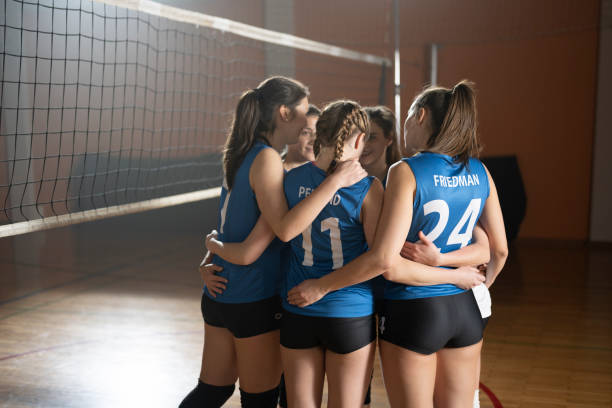
Why Communication Is Critical in Volleyball
Volleyball is one of the most communication-dependent sports. Unlike many other team sports, players must constantly talk to one another during every rally to ensure the ball is played cleanly and efficiently. Without communication, even skilled teams can struggle with confusion, missed opportunities, and unnecessary errors.
For youth players, learning how to communicate effectively is just as important as developing technical skills. Calling for the ball, signaling intentions, and encouraging teammates all contribute to smoother gameplay and stronger team performance.
Teams that communicate well often appear more organized, confident, and prepared during matches.
Calling the Ball: Eliminating Confusion
One of the most basic yet essential aspects of communication is calling for the ball. Players must clearly and confidently let their teammates know when they are going to take the next contact.
Simple phrases like:
- “Mine!”
- “Got it!”
- “Help!”
can prevent collisions and ensure that each play is executed smoothly.
Hesitation or silence often leads to mistakes. Encouraging youth athletes to call the ball loudly and early builds confidence and reduces errors on the court.
Communication Between Passers
Serve receive is one of the most critical moments for communication. Players must quickly decide who will take the ball and adjust their positioning accordingly.
Effective communication between passers includes:
- Calling seams between players
- Alerting teammates to short or deep serves
- Adjusting positioning based on server tendencies
Teams that communicate well during serve receive often produce more accurate passes and run more effective offenses.
Setter Communication and Leadership
The setter plays a major role in team communication. As the player who touches the ball on most plays, the setter often acts as a leader on the court.
Setters communicate by:
- Calling plays
- Signaling hitters
- Providing encouragement after each rally
Strong setter communication helps keep the team organized and focused during matches.
Encouragement and Positive Energy
Communication is not only about strategy—it also plays a major role in team morale. Positive communication helps players stay motivated and confident, even after mistakes.
Encouraging phrases like:
- “Nice try!”
- “We’ve got the next one!”
- “Great hustle!”
create a supportive environment where players feel comfortable taking risks and improving.
Youth athletes who develop positive communication habits often build stronger relationships with their teammates.
Non-Verbal Communication
In addition to verbal communication, players also rely on non-verbal cues during matches. Hand signals, eye contact, and body positioning all play a role in coordination.
Examples of non-verbal communication include:
- Setters signaling plays to hitters
- Players pointing to open areas on the court
- Eye contact before serves or plays
These cues help teams communicate quickly without disrupting the flow of the game.
Building Team Chemistry
Team chemistry refers to how well players work together on the court. Strong chemistry leads to better communication, improved trust, and more cohesive gameplay.
Chemistry is built through:
- Practice repetition
- Team bonding activities
- Consistent communication
- Trust in teammates’ abilities
Teams with strong chemistry often perform better under pressure because players rely on each other and stay connected.
Team chemistry is essential for both sides of the net. Read this blog to learn more about mastering defensive reads through communication!
Drills to Improve Communication
Coaches can incorporate specific drills to improve communication during practice.
No-Talk Drill
Players attempt to play without speaking, highlighting how difficult volleyball becomes without communication.
Call-Every-Ball Drill
Players are required to call every contact loudly, reinforcing communication habits.
Team Challenge Drills
Small-sided games encourage players to communicate constantly to succeed.
These drills help players understand the importance of communication and build confidence in using their voice.
Overcoming Fear of Communication
Some youth athletes hesitate to communicate because they fear making mistakes or speaking too loudly. Overcoming this fear is an important part of development.
Coaches and teammates can help by:
- Creating a supportive environment
- Encouraging effort over perfection
- Praising communication, not just performance
As players become more comfortable, communication becomes natural.
Fun Fact: The Best Teams Talk the Most
At higher levels of volleyball, constant communication is a defining characteristic of successful teams. Players talk before, during, and after every play to stay connected and organized.
This level of communication often separates average teams from elite ones.
Conclusion: Strong Communication Leads to Stronger Teams
Communication and team chemistry are essential for success in volleyball. By learning to communicate clearly, support teammates, and build trust, youth athletes can improve both their individual performance and their team’s overall success.
Developing these habits early creates a strong foundation for future growth in the sport.
Athletes Untapped: Private Volleyball Coaching
Athletes Untapped connects youth volleyball players with experienced private coaches who specialize in communication, teamwork, and overall skill development. Personalized training sessions focus on building confidence, improving on-court communication, and enhancing team performance.
Through one-on-one coaching, athletes receive individualized feedback and guidance that helps them become stronger communicators and more effective teammates. Structured drills and training strategies reinforce positive habits and improve game awareness.
With improved communication skills and stronger team chemistry, youth volleyball players can elevate their performance and contribute to a more successful team environment.
Find an experienced coach near you: https://athletesuntapped.com
Learn from our very best Coach Will and Coach Cat!