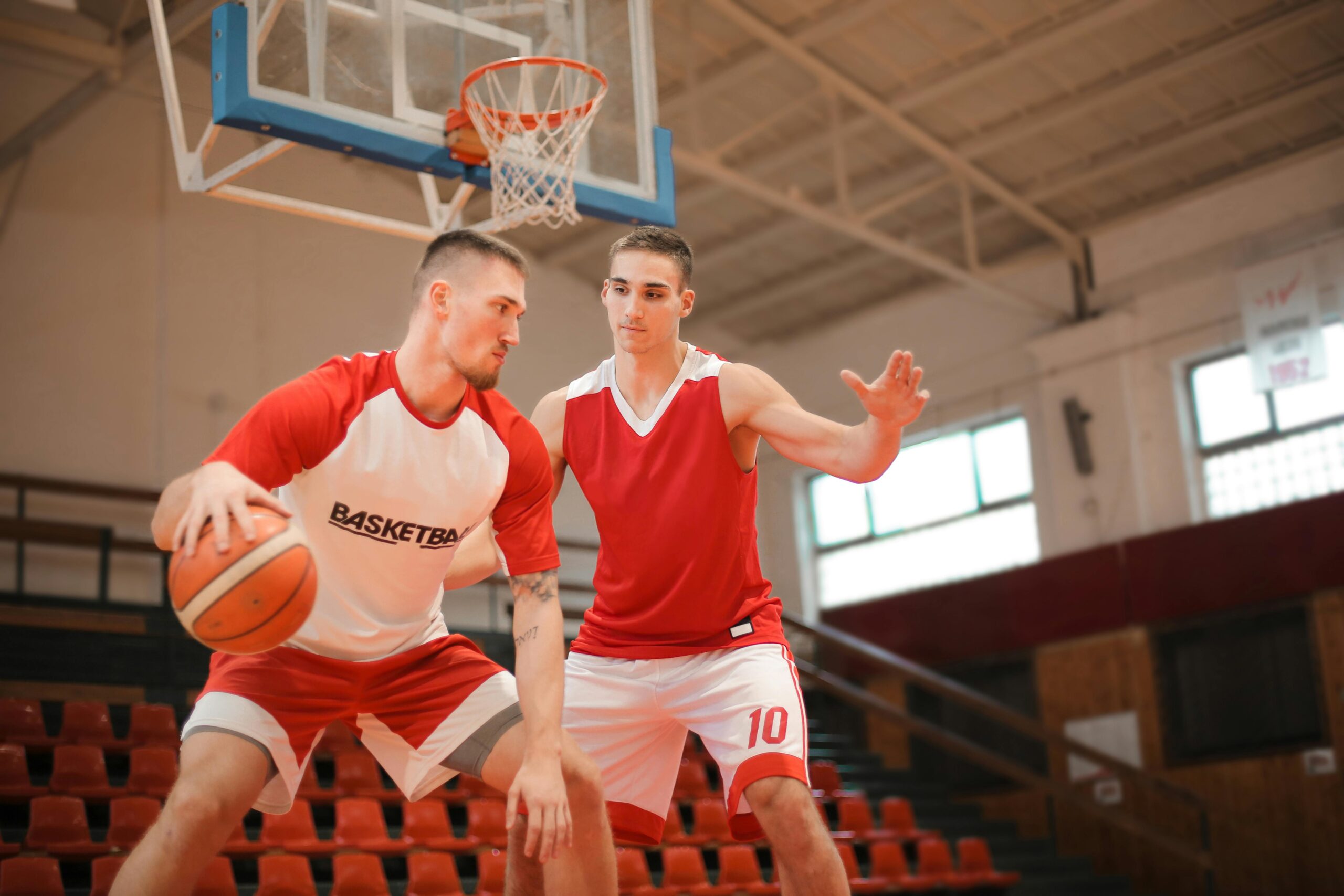
The closeout is one of the most difficult skills to master in basketball, especially for youth players. It requires an athlete to sprint as fast as they can toward an opponent, come to a controlled stop, and immediately be ready to slide laterally.
If a player runs out too fast without control, the offense drives right past them. If they close out too slowly or with their hands down, the offense gets an open shot.
At Athletes Untapped, we emphasize that a bad closeout compromises the entire team defense. Once you get beat off the dribble, everyone else has to rotate, leaving open shooters and easy layups. Teaching proper closeout technique early is the key to building a lockdown defender.
Here is a breakdown of why closeouts matter and the best drills AU coaches use to teach them to youth players.
Find an Athletes Untapped basketball coach: https://athletesuntapped.com/browse/basketball
Why the Closeout is Critical for Youth Defense
In youth basketball, offenses rely heavily on driving to the basket because outside shooting percentages are generally lower. However, as players get older and shooting improves, the defense must respect the shot.
A proper closeout accomplishes two things simultaneously. First, it takes away the rhythm jump shot by contesting the release. Second, it puts the defender in a balanced stance to stop the drive.
When a team closes out effectively, the offense is forced to take tough, contested shots or pass the ball around the perimeter without penetrating the paint. This frustrates opponents and wins games.
Best Drills to Teach Perfect Closeouts
We break the closeout down into three phases: the sprint, the breakdown (choppy steps), and the slide. Here are 5 drills AU coaches use to master these phases.
1. Sprint-to-Stutter (Line Drills)
How to perform it: Line players up on the baseline. On the whistle, they sprint to the free-throw line. About three feet before the line, they must transition from a sprint to “choppy feet” (short, quick stutter steps) while dropping their hips. Why it works: It teaches the deceleration phase. Youth players often struggle to stop their momentum. Coaching Tip: Listen to their feet. The “stutter” should sound like a drumroll—fast and rhythmic against the floor.
2. High-Hand Closeouts
How to perform it: Similar to the drill above, but add a visual cue. As they chop their feet, they must raise one hand (usually the hand matching the shooter’s dominant side) to contest the shot. Why it works: Many kids close out with hands down, which invites a shot. This builds the muscle memory of arriving with a hand high. Coaching Tip: Remind them not to jump. The goal is to discourage the shot with the hand, not block it. Jumping leads to fouls and blow-bys.
3. The Star Closeout Drill
How to perform it: Place 4 cones around the perimeter (corners and wings) and one player in the center of the paint. The coach points to a cone, and the player must sprint to close out on that cone, breakdown, and then slide back to the middle. Why it works: It simulates game-like movement where defenders have to close out from the help side to the ball. Coaching Tip: Ensure the player takes a proper angle. They shouldn’t run in a straight line if it opens up a driving lane; they should close out to the “top” shoulder.
4. 1-on-1 Closeout Live
How to perform it: Player A starts with the ball on the wing. Player B starts under the basket. Player B passes the ball out to Player A and immediately closes out. Once Player A catches it, the game is live 1-on-1 with a dribble limit (usually 3 dribbles). Why it works: This adds decision-making. The defender must read if the offense is shooting or driving. Coaching Tip: Watch the defender’s weight distribution. If they lean too far forward, they will get beat. They need to sit back in their stance.
5. Charge Circle Closeouts
How to perform it: A defender starts in the paint. An offensive player stands on the wing. The defender tosses the ball to the offense and closes out. The offense is not allowed to move, but they can pump fake and jab step. The defender must react without leaving their feet. Why it works: It teaches discipline. Youth players love to bite on pump fakes. Coaching Tip: Tell the defender to focus on the offensive player’s midsection, not the ball. The ball lies; the belly button doesn’t.
Common Mistakes Youth Players Make
Even with practice, our coaches often see players fall into bad habits. Here is what to watch for.
- Leaving their feet: This is the most common error. A player tries to block the shot on a closeout, jumps in the air, and the offense simply dribbles by them.
- Closing out flat-footed: Approaching the shooter with straight legs. If your knees aren’t bent, you cannot move laterally to stop the drive.
- Running past the offensive player: The defender doesn’t break down their steps early enough and runs right past the shooter due to momentum.
- Hands down: Closing out with hands at waist level allows the shooter a clear vision of the rim.
How Private Coaching Accelerates Improvement
Team practices are often crowded, and coaches have to focus on plays and team strategy. It is difficult to correct every single player’s footwork during a scrimmage.
This is where private coaching is invaluable.
A private basketball coach can:
- Correct footwork details: A coach can spend an entire session focusing on the specific “sprint-chop-slide” mechanics tailored to the athlete’s speed.
- Improve reaction time: Through reactive drills, a coach can train an athlete to read offensive cues faster.
- Build defensive confidence: Learning to contain a ball handler 1-on-1 takes repetition. Private sessions provide the high volume of reps needed to trust your defense.
- Agility training: Often, a poor closeout is a result of poor conditioning or agility. A private coach can prescribe specific agility ladder drills to fix this.
Common Questions About Basketball Closeouts for Youth Players
At what age should players learn to close out?
You can start teaching the basics of “sprint and stop” as early as age 7 or 8. However, the complex read-and-react mechanics usually click around age 10 or 11.
Should I block the shot on a closeout?
Rarely. The goal of a closeout is to bother the shot, not block it. If you try to block it, you usually foul or give up a drive. Keep your feet on the ground and just extend your hand.
How far away from the offense should I stop?
A general rule of thumb is “arm’s length.” If you are touching them, you are too close and will get beat off the dribble. If you are 5 feet away, they will shoot. Find the balance where you can touch their hand if you reach out.
What does “choppy feet” mean?
It refers to the short, quick steps a player takes to slow down their momentum as they approach the offensive player. It allows for a controlled stop.
Connect with an Athletes Untapped Basketball coach: https://athletesuntapped.com/browse/basketball
Conclusion
Defense is about effort and technique. The closeout is the perfect example of this combination. It takes effort to sprint out to the shooter, but it takes technique to break down and stay in front.
By mastering these drills and focusing on low hips and active hands, youth players can become elite defenders who can be trusted on the court in crunch time.
About Athletes Untapped
Athletes Untapped connects basketball players with experienced private coaches who specialize in defensive mechanics and agility training. Through personalized instruction and structured training plans, Athletes Untapped helps players improve footwork, court awareness, and defensive consistency.
Find an experienced coach near you: https://athletesuntapped.com
Learn from our very best Coach!