
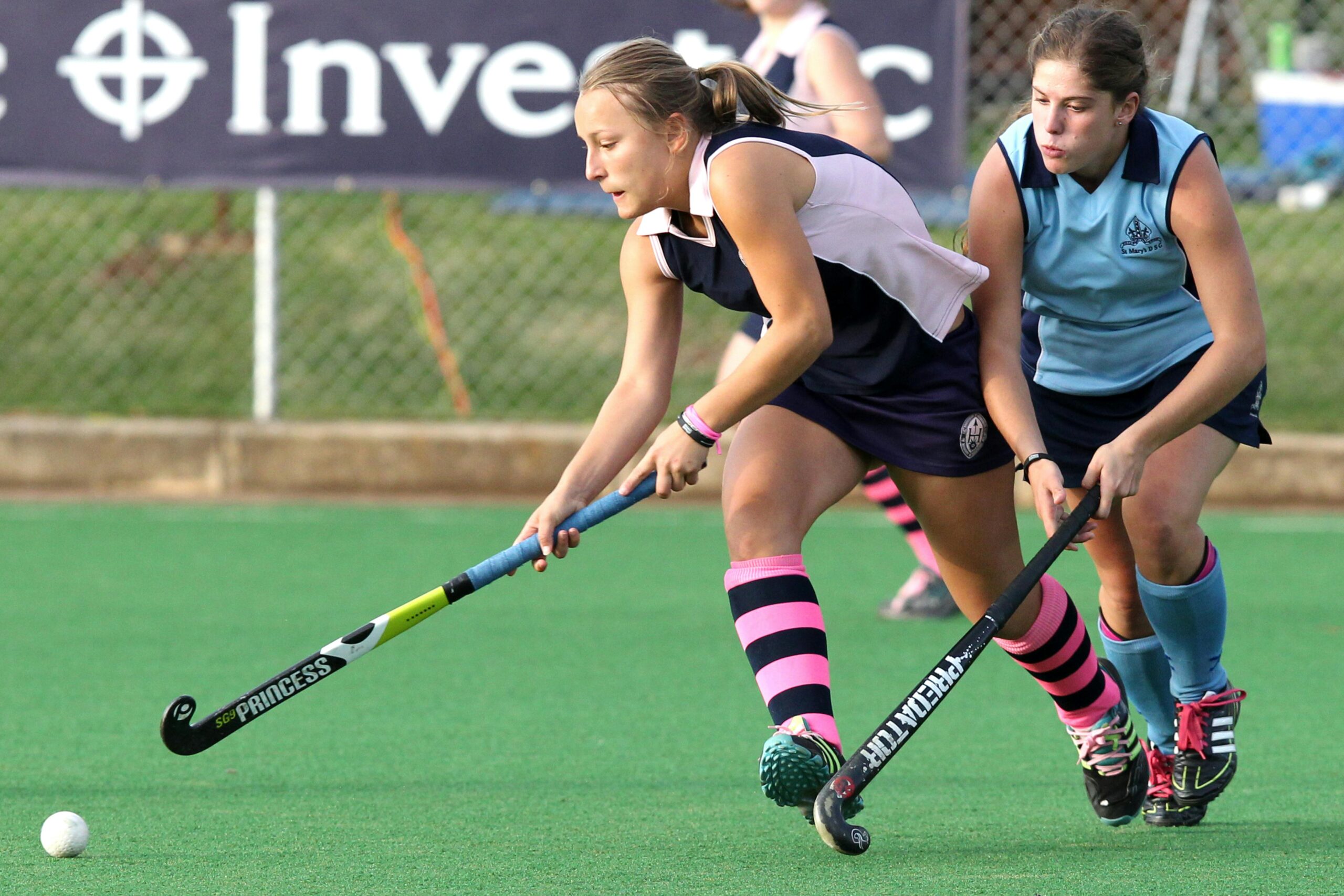
In field hockey, a team can have the most skilled ball-handlers and the fastest sprinters in the league, but if their structural positioning is flawed, they will spend the entire match chasing the game. Tactical positioning is the art of controlling space. It is knowing exactly where to be when your teammate has the ball, where to move when the opponent is attacking, and how to maintain a shape that is both difficult to penetrate and explosive on the counter-attack.
At Athletes Untapped, AU coaches notice that many young players treat the pitch like a crowded playground, with everyone chasing the ball at once. This creates a beehive effect. This lack of structural discipline leads to exhausted midfielders, massive gaps in the defensive circle, and a highly frustrating inability to find an open passing lane in the attacking third.
The secret to controlling the flow of the match lies in mastering field hockey tactical positioning. Proper training fixes these spacing and movement issues, allowing a team to utilize the full width of the pitch, execute seamless midfield rotations, and establish a suffocating defensive press that forces the opponent into constant turnovers.
Connect with a Private Field Hockey Coach: https://athletesuntapped.com/browse/field-hockey/
Why Field Hockey Tactical Positioning Matters for Athlete Development
Your tactical positioning dictates your overall efficiency and your impact on the game. Without a sound understanding of where to stand and when to move, you are working significantly harder to cover much less ground.
- Game Performance: Elite positioning directly translates to finding the spare man. When a team maintains its structural shape, they create natural numerical advantages all over the field. You turn a frantic defensive scramble into a calm, organized transition, shortening the distance you have to run and drastically increasing the time you have to make a smart decision with the ball.
- Confidence: Our coaches have seen athletes improve faster when they understand the why behind their movement. When a player knows exactly where their outlet pass is supposed to be before they receive the ball, they stop panicking under high pressure. They gain the composure to trust the system, hold their position out wide, and execute their role knowing they are in the mathematically correct spot to support the play.
- Long-Term Development: As you progress to collegiate and international field hockey, the pitch feels much smaller because opponents are faster, smarter, and incredibly organized. A tactically sound foundation protects you from being exploited by overlapping runs or slip passes through the channels. It provides the elite hockey IQ needed to read the game three steps ahead, ensuring your value to the team scales as the tactical complexity of your league increases.
Best Drills / Tips / Techniques
You cannot master tactical positioning by simply running passing drills in a straight line. You need scenario-based training that emphasizes spatial geometry and constant communication. Here are 5 drills AU coaches use with their athletes to build a tactically dominant unit on the pitch.
1. The String Defense
The Setup: Place four defenders and three midfielders in their standard defensive formation. Imagine a 5-meter string is tied between the waists of each player in a specific line.
The Action: A coach moves the ball from sideline to sideline. As the ball moves to the right sideline, the entire defensive team must shift together like a sliding wall. If the left winger stays out wide while the ball is on the right, the imaginary string breaks, and the team must reset.
Why It Works: This drill trains the cohesive unit mentality. By staying horizontally compact and moving in relation to the ball, you completely eliminate the central passing lanes that lead directly to the shooting circle. You force the opponent to play around your perimeter, where the sidelines act as an extra defender.
Coaching Cue: Move as a block. If your center half shifts two steps, the outside halves must shift two steps.
Common Mistakes: The weak-side defender falling asleep and leaving a massive gap in the middle of the pitch for a diagonal transfer pass.
2. The Triangle Support
The Setup: In a small-sided game or a possession grid, place three attackers against one or two defenders.
The Action: The player with the ball must always have two teammates forming a clear triangle with them. One teammate must offer a wide, flat pass, and the other must offer a drop pass safely behind the ball carrier.
Why It Works: A player with only one passing option is incredibly easy to mark and trap. A player with two options creates an immediate dilemma for the defending team. This drill teaches off-ball movement, ensuring the ball carrier is never isolated and the team can maintain possession through simple, high-percentage passing.
Coaching Cue: Never hide behind a defender’s stick. Step out into the open lane so your teammate can actually see you.
Common Mistakes: Standing completely still after making a pass, rather than immediately moving to form the next triangle.
3. The Banana Run
The Setup: A midfielder starts with the ball in the center of the pitch, preparing to carry it forward toward the attacking 25-yard line.
The Action: The attacking wingers must sprint toward the sideline before curving their run back toward the center, forming the shape of a banana.
Why It Works: Running in a straight line up the middle of the pitch simply clogs the space and brings more defenders to the ball. The banana run stretches the opposing defense horizontally. It forces the defenders to choose between following the winger to the sideline, which opens the middle for the ball carrier, or staying in the middle, which leaves the winger wide open for a penetrating cross.
Coaching Cue: Stay wide until the exact moment you need to cut inside. Let the ball carrier draw the pressure first.
Common Mistakes: Running way too early, which allows the defender to easily adjust their position before the pass is ever made.
4. The Outletting Box
The Setup: The goalkeeper or a deep defender sets up for a 16-yard hit. The four defenders must form a wide box or diamond shape across the back.
The Action: The midfielders push high up the pitch to pull the opposing press away from the ball. The defenders must use quick transfer passes across the backline to shift the defensive block until an open lane appears up the sideline.
Why It Works: Most disastrous turnovers happen during the outlet. This drill trains the team to use the absolute full width of the pitch to find a safe way out of their own half. It teaches defenders to be patient rather than forcing a low-percentage pass up the heavily guarded middle channel.
Coaching Cue: Let the ball do the work. A hard, flat sweep across the backline moves much faster than a forward can run.
Common Mistakes: Midfielders dropping too deep to get the ball, which brings all the opposing pressure right into the defensive zone.
5. Zonal Pressing Cues
The Setup: In a half-field scrimmage, the defending team stays in a zonal shape, guarding specific areas of the pitch rather than marking specific opposing players.
The Action: The defending team only engages and steps up to tackle when the ball enters a specific trigger zone. This is usually when the opponent makes a slow, bouncing pass, or when the ball carrier takes a heavy first touch toward the sideline.
Why It Works: Strict man-to-man marking for an entire game is exhausting and easily broken by one fast player. Zonal pressing is highly efficient. This drill trains the team to protect the center of the pitch first, and only commit to a high-energy tackle when the odds of winning the ball are heavily in their favor.
Coaching Cue: Be patient and set the trap. Let them pass it around the back until they make a mistake.
Common Mistakes: One forward sprinting out of the defensive block alone, easily getting bypassed and leaving the team short-handed.
Common Mistakes Athletes Make
Tactical errors are incredibly common in youth and high school field hockey, often because players feel the urge to be everywhere at once to help their team.
Ball Watching: Forgetting about your defensive mark or your assigned offensive space because you are completely mesmerized by the ball. Fix this by scanning the field. Every three seconds, take a quick look over your shoulder to see where the open grass is and where the dangerous opponents are lurking.
Clogging the Middle: Too many players standing in the center of the pitch, making it impossible to pass the ball through the crowd into the attacking circle. Fix this by respecting the wide lanes. If you see a teammate already occupying the middle, move out to the sideline. Width naturally creates the space that the center midfielders need to operate.
Over-Committing on the Press: Sprinting at full speed directly at the ball carrier and getting beaten by a simple pull-back dodge, leaving your teammates outnumbered behind you. Fix this by jockeying the player. Stay a stick-length away, force them onto their weaker reverse side, and wait for them to make a mistake rather than lunging in blindly.
Staying Too Flat: Midfielders and forwards standing in a straight, horizontal line directly across the field. Fix this by creating staggered depths. If the left midfielder is pushed high, the right midfielder should drop slightly lower. This creates diagonal and vertical passing lanes that are much harder for a flat defense to intercept.
Find a Private Field Hockey Coach: https://athletesuntapped.com/browse/field-hockey/
How Private Coaching Accelerates Improvement
Tactical positioning is a high-level cognitive skill that relies on reading the unseen geometry of the pitch. Trying to self-diagnose your positioning, your passing angles, or your pressing triggers while in the chaotic heat of a match is nearly impossible. This is where private coaching is a cheat code for development.
A private field hockey coach can:
- Fix Your Spatial Awareness: We watch exactly where you drift when you do not have the ball, teaching you how to constantly adjust your coordinates based on the location of the center half.
- Teach Zonal Discipline: We work on your patience and your tackling triggers, ensuring you know exactly when to step up and when to hold your defensive line.
- Video Analysis: Sometimes you need to see yourself standing in a crowd to understand why you aren’t receiving the ball. Private coaches can break down your game film to show you exactly where the open spaces were.
- Build Confidence: When you know the tactical system inside and out, you stop second-guessing your movements. You step onto the pitch with the vision and authority of a coach on the field.
Frequently Asked Questions about Field Hockey Tactical Positioning
What is field hockey tactical positioning?
It is the strategic placement and coordinated movement of players on the pitch to maximize offensive passing options, control the flow of the game, and minimize the spaces the opponent can use to attack the defensive circle.
How often should athletes practice tactical positioning?
Teams and individuals should incorporate spatial awareness and positioning drills into every single practice. Because the game is entirely about managing space, even a 15-minute walkthrough of pressing triggers builds the hockey IQ needed for game day.
At what age should players learn positional structure?
Basic concepts like staying spread out and passing into space can be taught as early as 8 to 10 years old. By age 12 to 14, players should be heavily involved in learning specific formations, outletting patterns, and the difference between zonal and man-to-man defense.
Can you practice tactical positioning alone?
While it is harder to practice without teammates, you can drastically improve your tactical positioning by studying the game. Watching high-level collegiate or international field hockey and specifically tracking the movements of players who do not have the ball is an incredible way to build your mental map.
Do private coaches help with field hockey positioning?
Absolutely. While team coaches focus on the overall unit, private coaches can isolate your specific role within that unit. We run scenario-based drills to ensure you understand exactly where you need to be during a defensive penalty corner, a 16-yard hit, or a fast break.
Conclusion
Mastering tactical positioning is the undeniable foundation of a disciplined, organized, and dominant field hockey team. Without it, you are playing a game of beehive hockey, leaving your success to luck, chaos, and individual effort.
The best players in the world are the ones who make the game look incredibly simple because they have already done the hard work, scanning the field, setting up their triangles, and moving into the perfect pocket of space before the pass is ever struck.
Start applying these positional concepts. Focus on your width and your support angles. Be the player who dictates the rhythm of the entire match through superior intelligence.
Train With a Private Field Hockey Coach
Athletes Untapped connects athletes with vetted private coaches across the country for one-on-one training.
Private coaching helps athletes:
- improve faster
- build confidence
- receive personalized feedback
- reach their full potential
About Athletes Untapped
Athletes Untapped connects field hockey players with experienced private coaches who specialize in tactical positioning, game vision, and structural discipline. Through personalized instruction and structured training plans, AU coaches help defenders, midfielders, and forwards eliminate positional leaks, master their spatial awareness, and completely dictate the flow of the match.
Find an experienced coach near you: https://athletesuntapped.com
Learn from our very best AU coaches!


