
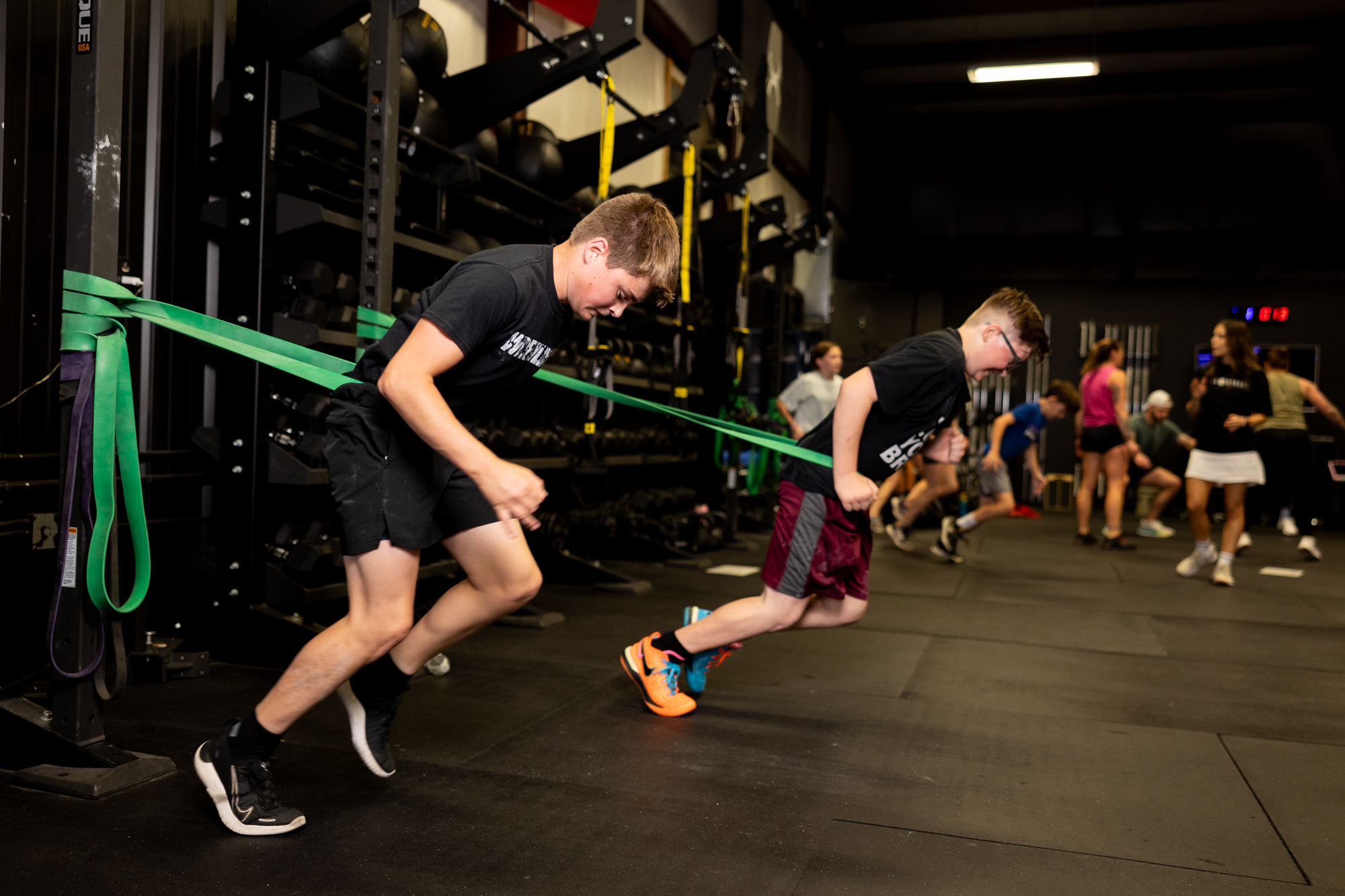
Why Resistance Training Improves Speed
Resistance training is a proven method to increase speed in youth athletes by enhancing leg drive, core strength, and overall power output. Stronger muscles generate greater force, which translates to faster sprints, higher jumps, and quicker changes of direction. In volleyball, resistance training improves explosive approach steps and spike power. In track, it enhances acceleration, stride efficiency, and top-end speed.
Youth athletes benefit most when resistance training is structured, progressive, and integrated with sport-specific drills.
Key Benefits of Resistance Training for Speed
- Improved Force Production: Stronger muscles push harder against the ground, accelerating the athlete faster.
- Enhanced Neuromuscular Coordination: Efficient recruitment of muscle fibers improves stride mechanics and reaction time.
- Injury Prevention: Strengthening stabilizers reduces strain on joints during explosive movements.
- Confidence and Mental Toughness: Successfully completing challenging resistance exercises builds resilience and focus.
Properly designed programs maximize speed improvements while keeping athletes safe.
Effective Resistance Training Exercises for Speed
- Squats and Lunges: Develop leg power, hip drive, and stability. Variations include bodyweight, dumbbells, or resistance bands.
- Deadlifts (Modified for Youth): Strengthen posterior chain muscles essential for sprinting and jumping.
- Step-Ups and Bulgarian Split Squats: Improve single-leg strength for acceleration and lateral movements.
- Hip Thrusts and Glute Bridges: Build explosive hip extension, critical for running and jumping.
- Core Resistance Work: Planks, rotational lifts, and anti-rotation exercises enhance stability, power transfer, and speed efficiency.
Athletes should progress gradually, emphasizing proper form and controlled movements.
Integrating Resistance Training with Speed Work
To maximize speed gains, combine resistance training with sport-specific drills:
- Volleyball: Follow squats and lunges with jump approach and spike practice.
- Track: Pair hip thrusts and deadlifts with sprint starts, acceleration sprints, and bounding drills.
- Soccer and Field Sports: Combine step-ups or single-leg exercises with change-of-direction and shuttle drills.
Integrating strength and sport-specific drills ensures improvements transfer directly to performance.
Structuring a Resistance Program for Youth Athletes
A well-rounded program includes:
- Warm-Up: Dynamic movements to activate muscles and prepare joints.
- Resistance Sets: Moderate loads with high-quality technique to promote strength gains.
- Power Integration: Plyometric or sprint exercises immediately after resistance sets to link strength with speed.
- Cool-Down: Stretching, foam rolling, and recovery to maintain flexibility and prevent soreness.
Frequency should balance resistance sessions with skill and sport practice, ensuring consistent progress without overtraining.
Resistance-Band training is a great way to train for strength and agility. Read this blog to learn more about these drills to bolster your game!
Mental and Cognitive Benefits
Resistance training also develops mental focus, discipline, and perseverance. Completing challenging exercises requires attention, effort, and patience—skills that translate directly into competitive performance. Athletes who train their body and mind simultaneously improve both physical output and confidence under pressure.
Fun Fact: Olympic Sprinters Use Resistance Training Year-Round
Elite sprinters integrate resistance training, Olympic lifts, and plyometric work into their routines to maximize speed. Even small improvements in leg strength and force production can shave milliseconds off sprint times. Youth athletes who adopt similar principles early gain foundational advantages in speed and power.
Common Mistakes to Avoid
- Using Too Much Weight: Overloading can lead to injury and compromise technique.
- Skipping Technique Practice: Proper form is more important than heavy loads.
- Neglecting Recovery: Muscles need rest to adapt and grow stronger.
- Isolating Strength Without Sport Transfer: Training must connect to running, jumping, or acceleration movements.
Correcting these mistakes ensures safe and effective resistance training for speed development.
Conclusion: Resistance Training as a Speed Multiplier
Resistance training is a critical tool for youth athletes seeking to improve speed, power, and athletic performance. Structured, progressive programs that emphasize technique, recovery, and sport-specific integration produce measurable gains in acceleration, stride mechanics, and explosive movement. Beyond physical benefits, resistance training builds mental toughness, confidence, and discipline.
Athletes Untapped: Private Strength and Speed Coaching
Athletes Untapped connects youth athletes with private coaches specializing in resistance training, speed development, and athletic performance. Personalized sessions focus on safe technique, progressive overload, sport-specific integration, and mental focus. One-on-one instruction allows athletes to address weaknesses and refine strengths in a results-driven environment.
Through structured resistance training programs, athletes improve acceleration, stride efficiency, and explosive power. Youth athletes who train with guidance become leaders who elevate their entire team’s performance.
Find an experienced coach near you: https://athletesuntapped.com
Learn from our very best Coach Maxwell and Coach Matthew!


