
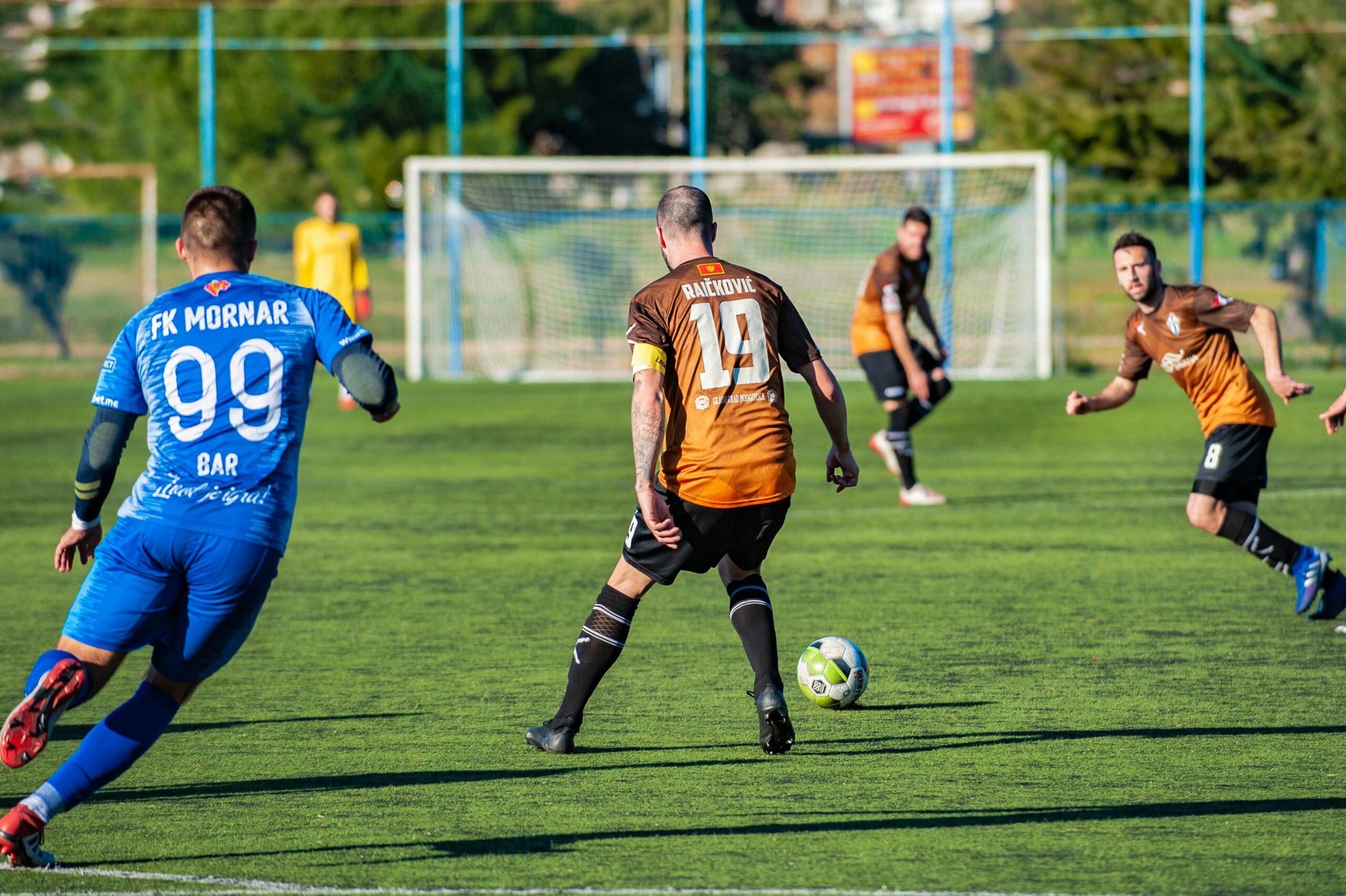
In soccer, you can have the fastest sprint speed on the pitch and the ability to juggle the ball a thousand times, but if you do not know where to be and when to be there, you are essentially running blind. The beautiful game is ultimately a giant game of physical chess. A player who thinks two passes ahead will easily outplay an athlete who relies entirely on raw athleticism.
At Athletes Untapped, we notice that many young players struggle to see the bigger picture. They put their heads down the moment they receive the ball, chase the play like a swarm of bees, and completely abandon their positional responsibilities just to be closer to the action. This lack of cognitive structure leads to massive gaps in the defense, disjointed attacks, and a team that looks completely disorganized.
The secret to dictating the flow of the game lies in tactical awareness. Proper training fixes these mental processing issues, allowing players to read the opposition, manipulate space, anticipate the next phase of play, and make game-winning decisions before the ball even arrives at their feet.
Connect with a Private Soccer Coach: https://athletesuntapped.com/browse/soccer/
Why This Skill Matters for Athlete Development
Your tactical awareness is the ceiling of your soccer potential. Without a high soccer IQ, you become a liability in complex formations, easily manipulated by smart opponents.
- Game Performance: Elite tactical awareness directly translates to controlling the tempo. When you know how to perfectly time a high press, drop into a defensive block, or exploit the half-spaces between the opponent’s midfield and defense, you force the other team to constantly react to you. You stop expending wasted energy running in circles and start making the ball do the work.
- Confidence: I have seen athletes improve faster when they spend just 10 focused minutes on spatial awareness drills at the start of every session. When scanning the field becomes an automatic reflex, players stop panicking under pressure. They gain the composure to receive the ball calmly, trust their spatial mapping, and execute a confident, progressive pass knowing exactly where the defenders are.
- Long-Term Development: As you progress to high school, academy, and collegiate soccer, the physical differences between players narrow drastically. Everyone is fast, and everyone can pass. A biomechanically sound technical foundation is useless if you cannot process complex tactical instructions. Elite awareness provides the mental leverage needed to adapt to different coaching philosophies, ensuring your game scales as tactical systems become more advanced.
Best Drills / Tips / Techniques
You cannot master tactical awareness by simply playing unstructured scrimmages and hoping your instincts improve. You need isolated, cognitively demanding drills that force you to process information rapidly. Here are 5 drills AU coaches use to build brilliant soccer minds.
1. The Continuous Scanning (Shoulder Check) Drill
How to perform it: Stand in the center circle. Have a coach or teammate pass the ball to you. Before the ball even leaves their foot, you must look over both of your shoulders. A second coach standing behind you will hold up a colored cone or a number. You must verbally shout the color or number before the ball reaches your feet, then receive and return the pass.
Why it works: Tactical awareness begins with gathering data. This drill forces the brain to break the habit of ball-watching. It trains the athlete to build a constant, updated 3D map of their surroundings, allowing them to make decisions before they are under pressure.
Coaching tips: The scan must be a quick, violent snap of the neck. Do not stare behind you, or you will miss the pass. “Look away, look back.”
Common mistakes: Looking over the shoulder after the ball has already arrived. The information is useless if you gather it too late.
2. The 4v2 Rondo (Positional Play)
How to perform it: Create a tight 10×10 yard grid. Four attacking players stand on the outside edges, and two defenders are inside. The attackers must keep possession using one or two touches maximum. The attackers cannot run around wildly; they must stay on their designated edge but slide up and down to create passing angles.
Why it works: This is the foundation of modern positional play. It forces the attackers to constantly read the shifting defenders and quickly identify the “third man” (the open player furthest from the pressure). It trains rapid decision-making in highly confined spaces.
Coaching tips: The attackers must never stand perfectly still. You should always be adjusting your feet by a few inches to ensure a clear passing lane is available.
Common mistakes: Hiding behind the defenders. If you are an attacker on the outside, it is your responsibility to move into the defender’s blind spot to give your teammate an option.
3. The Conditioned Zone Game
How to perform it: Play a standard 6v6 or 8v8 scrimmage, but divide the field into three horizontal zones (Defensive, Midfield, Attacking). Implement a strict condition: the ball must be touched by a player in the midfield zone before it can be passed into the attacking zone.
Why it works: Young players often try to bypass the midfield entirely by kicking the ball as far forward as possible. This drill forces the team to recognize spatial build-up play, teaching the midfielders how to drop into pockets of space to connect the defense to the attack.
Coaching tips: Midfielders must practice receiving the ball on the “half-turn,” facing sideways so they can instantly see both their own defense and the opponent’s goal.
Common mistakes: Forcing the ball into the midfield zone when it is heavily guarded. If the passing lane isn’t there, you must recycle the ball backward and wait for the tactical shape to shift.
4. Overload Transition (3v2 to 2v3)
How to perform it: Three attackers drive toward the goal against two defenders. The moment the play ends (a goal, a save, or a tackle), the two defenders instantly become attackers, and two new defenders step onto the field from the opposite side, forcing the original three attackers to instantly transition into defense.
Why it works: The game is won and lost in the transition moments (the three seconds immediately after the ball changes possession). This drill trains the mental switch from attacking shape (wide and expansive) to defensive shape (compact and narrow) at game speed.
Coaching tips: When transitioning to defense, the closest player to the ball must instantly apply pressure to delay the counter-attack, while the other players drop to protect the center of the pitch.
Common mistakes: Complaining about a missed shot or a bad pass while the other team is already sprinting the other way. You must have a “next play” mentality.
5. Guided Film Review
How to perform it: Sit down with a coach and watch 15 minutes of a professional soccer match or a recording of your own game. Pause the footage frequently. The coach will ask, “Where should the left-back be standing right now?” or “Why did this passing sequence fail?”
Why it works: You cannot see the tactical shape of a game while you are sweating at field level. Film review provides the “bird’s eye view,” allowing the athlete to recognize patterns, defensive blocks, and attacking triggers without the physical stress of playing.
Coaching tips: Do not just watch the ball. Watch the players who are 30 yards away from the ball to see how they are manipulating space for their teammates.
Common mistakes: Treating film study like entertainment. You must be an active participant, pausing the video to predict what the players will do next.
Common Mistakes Athletes Make
Tactical errors are incredibly common in youth soccer, but they are easy to fix once you understand how to control space.
The “Swarm” (Chasing the Ball): This happens when every player on the team abandons their position and runs directly toward the ball, leaving massive areas of the field completely empty.
How to fix it: Trust your teammates. If you are a right winger and the ball is on the left sideline, hold your width. You stretch the defense by staying away from the ball, creating space in the middle.
Playing with Tunnel Vision: Receiving the ball and staring directly down at your cleats, completely ignoring the runs your forwards are making.
How to fix it: Use the Continuous Scanning drill. Your head must be up before you touch the ball, while you touch the ball, and right before you pass it.
Reactive Defending: Waiting for the opponent to receive the ball, turn around, and start dribbling at you before you decide to apply pressure.
How to fix it: Read the passing cues. If you see the opposing center-back wind up to play a pass to the midfielder you are marking, you should already be sprinting to intercept it before the ball arrives.
Abandoning the Central Channel: Defenders getting pulled all the way out to the touchline to chase a winger, leaving the center of the penalty box completely exposed for an easy cross and finish.
How to fix it: Understand defensive priorities. The center of the goal is the most dangerous area on the pitch. You must prioritize protecting the middle; let the opponent have the wide areas if necessary.
Find a Private Soccer Coach: https://athletesuntapped.com/browse/soccer/
How Private Coaching Accelerates Improvement
Soccer tactical awareness requires a deep understanding of geometry, angles, and timing. Trying to self-diagnose whether you dropped too deep into a low block or if your pressing trigger was a half-second late is incredibly difficult during the chaos of a live 11v11 match.
This is where private coaching is essential. Private coaching provides faster cognitive development by utilizing expert film review, whiteboard sessions, and highly specific positional drills. A private soccer coach offers personalized feedback tailored to your specific role on the pitch, making it easy to catch habits like ball-watching immediately. This targeted instruction allows athletes to focus on correcting spatial mistakes early before they become ingrained structural flaws. Ultimately, mastering your tactical IQ in a 1-on-1 environment provides massive confidence building, allowing you to step onto the pitch knowing you have the mental processing speed to outsmart any opponent.
Frequently Asked Questions About Tactical Awareness in Soccer
How often should athletes practice tactical awareness?
Athletes should be training their tactical awareness in every single session. Scanning, checking shoulders, and spatial discipline should be demanded during warm-ups, passing drills, and scrimmages alike.
What age should athletes start working on this?
Basic spatial concepts (like not bunching up) can be taught around ages 7 or 8. Complex tactical systems (like the offside trap, pressing triggers, or positional rotations) are typically introduced around ages 12 to 14.
How long does it take to improve?
With focused film study and intentional scanning practice, players can see a dramatic improvement in their decision-making and composure in just 4 to 6 weeks.
What is the most important tactical skill for a beginner?
Scanning. If a player learns to look over their shoulder and identify open space before receiving the ball, they are already tactically ahead of 90 percent of players their age.
Why do I panic when I get the ball?
Because you did not gather information before the ball arrived. If you receive the ball and then look up to figure out what to do, the defender is already tackling you. Make your decision early.
Do private coaches help with this?
Absolutely. Private soccer coaches are essential for breaking down the geometry of your specific position, providing high-level film analysis, and isolating cognitive processing flaws so the athlete can practice effectively.
Conclusion
Tactical awareness is the undeniable foundation of an elite, game-controlling soccer player. Without it, you are leaving your performance entirely to chance and playing directly into the hands of smarter, more organized teams. Improvement is highly achievable with proper mental training, but it requires extreme visual discipline and the willingness to study the game off the pitch. Encourage yourself to focus on scanning the field and holding your positional shape before you focus on flashy dribbling moves, and consistent practice will inevitably yield total control of the match.
Train With a Private Soccer Coach
- Athletes Untapped connects athletes with vetted private coaches across the country for one-on-one training.
- Private coaching helps athletes:
- improve faster
- build confidence
- receive personalized feedback
- reach their full potential
About Athletes Untapped
Athletes Untapped connects soccer players with experienced private coaches who specialize in tactical awareness, positional play, and soccer IQ. Through personalized instruction and structured training plans, Athletes Untapped helps defenders, midfielders, and forwards improve their decision-making, spatial mapping, and overall understanding of the game.
Find an experienced coach near you: https://athletesuntapped.com
Learn from our very best Coach!


