
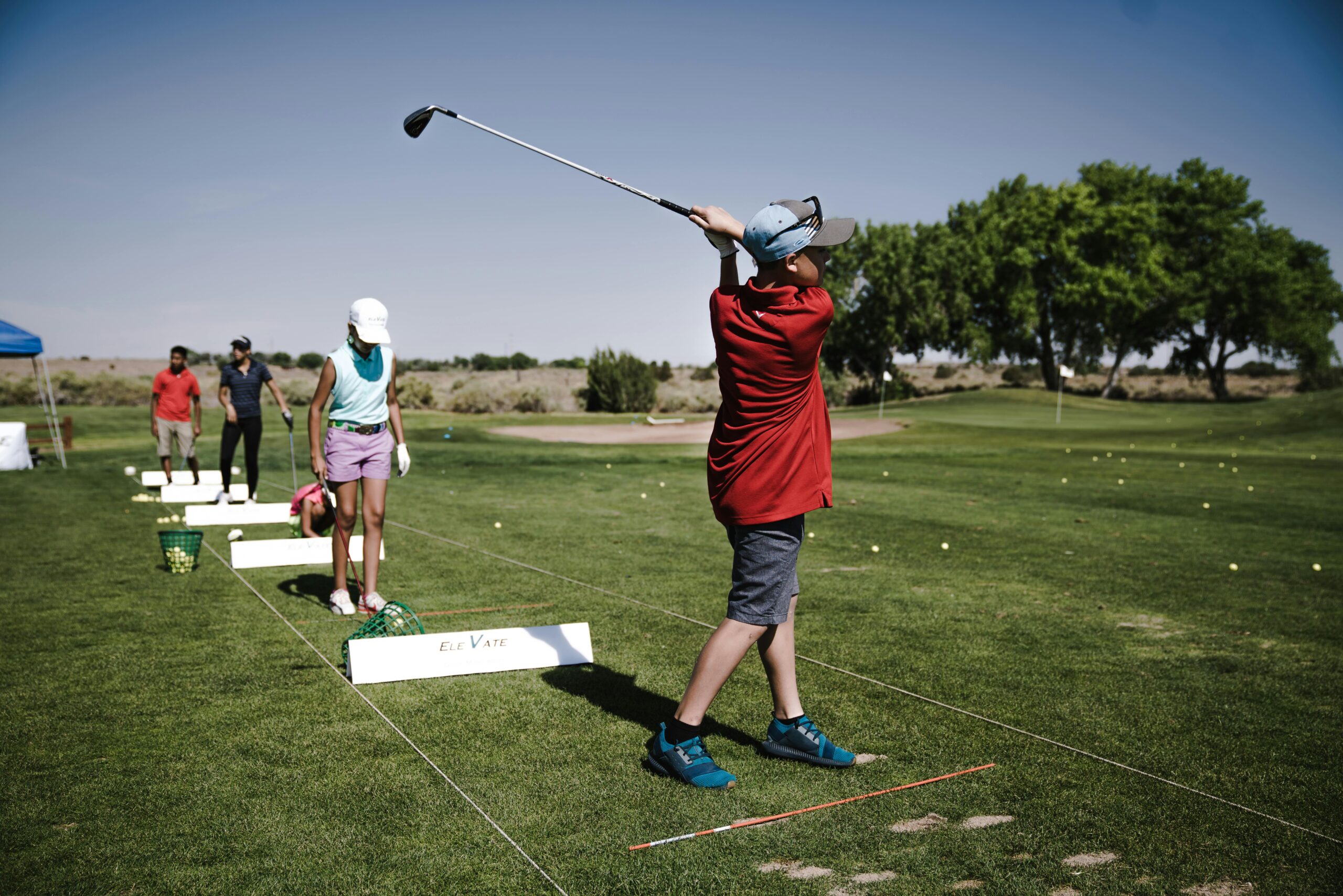
In golf, you can have the most beautiful, rhythmic, and powerful swing on the course, but if your clubface is not pointing where you want the ball to go at the moment of impact, you are going to miss your target.
At Athletes Untapped, we notice that many amateur players struggle to understand why their ball constantly slices into the woods or hooks into the water. They obsess over their swing path, changing their posture and their backswing, without realizing that the clubface angle at impact dictates up to eighty-five percent of the ball’s starting direction. This lack of alignment awareness leads to massive frustration, lost golf balls, and highly inconsistent scorecards.
The secret to hitting more fairways and sinking more putts lies in clubface alignment control. Proper training fixes these aiming issues, allowing players to square the clubface at impact, launch the ball on their intended line, and significantly lower their scores.
Connect with a Private Golf Coach: https://athletesuntapped.com/browse/golf/
Why This Skill Matters for Athlete Development
Your clubface alignment is the steering wheel of your golf ball. Without a consistent, optimized face angle at address and impact, your mechanics and raw power will always work against you.
- Game Performance: Elite clubface alignment control directly translates to hitting your targets. When you can consistently square the face to your target line, you eliminate the massive two-way miss. This keeps your ball in play, sets up easier approach shots, and makes it significantly harder for a difficult golf course to ruin your round.
- Confidence: I have seen athletes improve faster when they spend just 10 focused minutes on this drill at the start of every session. When squaring the face becomes muscle memory, players stop standing over the ball filled with doubt. They gain the composure to trust their setup, commit to their swing line, and execute a confident, aggressive strike under pressure.
- Long-Term Development: As you progress to lower handicaps, the margin for error shrinks drastically. A biomechanically sound setup and impact position protects you from having to make desperate, last-second hand manipulations to save a shot. It provides the reliable foundation needed to shape the ball intentionally, ensuring your game scales as you face tournament-level competition.
Best Drills / Tips / Techniques
You cannot master clubface alignment by simply hitting driver after driver at the driving range with no target. You need isolated, high-repetition drills to build visual awareness. Here are 5 drills AU coaches use to build flawless face control.
1. The Alignment Stick Gateway
- How to perform it: Place two alignment sticks flat on the ground parallel to each other, creating a narrow pathway pointing directly at your target. Place your golf ball in the middle of this gateway. Set your clubface squarely behind the ball so that the leading edge of the club is perfectly perpendicular to the alignment sticks.
- Why it works: It forces the brain to internalize what a square clubface actually looks like from the address position. It breaks the visual illusion that often causes players to aim their face too far right or left.
- Coaching tips: Step away from the ball and stand directly behind it to check your sticks. Your eyes can deceive you when you are standing over the ball.
- Common mistakes: Aligning your feet to the target instead of the clubface. Your clubface aims at the target; your feet should aim parallel left of the target (for a right-handed golfer).
2. The Coin Drill for Putting
- How to perform it: Place a flat coin on a straight, flat putt about five feet from the hole. Set your putter face directly behind the ball. Your goal is to roll the golf ball perfectly over the center of the coin on its way to the cup.
- Why it works: Putting is entirely about face alignment. If your putter face is open or closed by even one degree, you will miss the coin entirely. This drill isolates the feeling of striking the ball with a perfectly square face.
- Coaching tips: Do not look up at the hole. Keep your eyes locked on the space where the ball was until it rolls over the coin.
- Common mistakes: Decelerating through the putt to try and guide the ball over the coin. You must make a confident, smooth stroke.
3. The Toe-Up to Toe-Up Check
- How to perform it: Take a slow, half-swing. Stop your backswing when the club shaft is parallel to the ground; the toe of the club should be pointing straight up at the sky. Swing through to the other side and stop when the club is parallel to the ground again; the toe should again be pointing straight up.
- Why it works: By controlling the clubface dynamically through the swing, you ensure it is not fanning wide open or slamming shut. This allows you to guarantee a neutral face path on every single repetition.
- Coaching tips: Keep your grip pressure incredibly light. Tension in the forearms prevents the clubface from rotating naturally.
- Common mistakes: Rolling the wrists violently to force the toe up, which leads to unpredictable timing. The rotation should happen naturally with the turning of your torso.
4. The Impact Bag Strike
- How to perform it: Place a specialized golf impact bag (or an old duffel bag stuffed with towels) where the golf ball would normally be. Take a slow-motion swing and strike the bag, stopping your club dead upon impact. Inspect the leading edge of your club against the flat side of the bag.
- Why it works: In a real swing, impact happens too fast to see. This drill forces the athlete to freeze at the moment of truth, allowing them to physically see and feel if they are delivering a square, open, or closed face.
- Coaching tips: Your hands should be slightly ahead of the clubhead when you strike the bag, compressing the imaginary ball.
- Common mistakes: Scooping the bag by letting the clubhead pass the hands. This adds loft and usually opens the clubface.
5. The Tee in the Grip Drill
- How to perform it: Take a standard wooden golf tee and stick it into the small hole at the top of your club’s grip. Take your normal address and swing. Focus on where the tee is pointing at the halfway point of your backswing; it should be pointing directly at the target line on the ground.
- Why it works: This marries wrist angles with clubface alignment. If the tee points outside the target line, your face is closed. If it points inside, your face is open.
- Coaching tips: Maintain a flat lead wrist at the top of your backswing to keep the face perfectly square.
- Common mistakes: Cupping or bowing the lead wrist heavily, which drastically alters the clubface angle before you even begin your downswing.
Common Mistakes Athletes Make
Alignment and face control errors are incredibly common in amateur golf, but they are easy to fix once identified on the practice tee.
- Aiming with the Body Instead of the Face: This happens when a player aligns their shoulders and feet perfectly at the flag, and then sets the club down. Because the ball is sitting outside the body, this actually aims the clubface way to the right of the target.
- How to fix it: Implement a strict pre-shot routine. Always set the clubface down first, aiming it at your target. Only after the face is square should you build your stance and align your feet parallel to that target line.
- The Weak or Strong Grip Compensation: Players often hold the club with their hands rotated too far to the left or right. This forces the hands to naturally return to a neutral position at impact, which twists the clubface open or closed.
- How to fix it: Neutralize your grip. Check that the V-shapes formed by your thumbs and forefingers both point toward your trailing shoulder at address.
- Ball Position Drifting: Letting the ball drift too far forward or backward in your stance changes when the clubface meets the ball during its closing arc.
- How to fix it: Drill your setup position. Use alignment sticks to ensure the ball is positioned consistently relative to your lead heel for every single club in your bag.
- The Overactive Hands: Trying to square the clubface at the last millisecond by violently flipping the wrists at impact, leading to snap hooks and blocked slices.
- How to fix it: Keep the wrists stable through the strike zone. A square clubface is generated by rotating your body and clearing your hips, not by a desperate flick of the hands.
Find a Private Golf Coach: https://athletesuntapped.com/browse/golf/
How Private Coaching Accelerates Improvement
Clubface alignment control happens in a fraction of a second at speeds exceeding one hundred miles per hour. Trying to self-diagnose whether your face was open by two degrees or your grip was slightly weak is incredibly difficult without technology and a trained eye.
This is where private coaching is essential. Private coaching provides faster skill development by utilizing expert eyes and high-speed launch monitor analysis. A private coach offers personalized feedback tailored to your specific grip and swing path, making it easy to catch habits like a cupped wrist immediately. This targeted instruction allows athletes to focus on correcting mistakes early before they become deeply ingrained muscle memory. Ultimately, mastering your clubface in a 1-on-1 environment provides massive confidence building, allowing you to step onto the first tee knowing you have the tools to keep the ball in the short grass.
Frequently Asked Questions About Golf Clubface Alignment
How often should athletes practice this skill?
Athletes should practice their alignment and grip fundamentals for at least 10 to 15 minutes during their warm-up before every range session or round. Daily repetition is required to make the setup automatic.
What age should athletes start working on this?
Players of any age can begin learning how to aim the clubface. The earlier the mechanics of proper setup and grip are introduced, the less un-teaching has to happen later.
How long does it take to improve?
With focused, intentional practice, players can see a dramatic improvement in their accuracy and ball flight in just 3 to 4 weeks. Breaking the habit of an extreme grip compensation may take slightly longer.
Can beginners learn this?
Yes. In fact, it is often easier for true beginners to learn because they do not have the deeply ingrained habit of manipulating their hands to save a bad swing path.
Does grip affect clubface alignment?
Absolutely. Your grip is your only physical connection to the golf club. A grip that is too strong will naturally close the face at impact, while a grip that is too weak will leave it wide open.
Do private coaches help with this?
Absolutely. Private coaches are essential for breaking down the biomechanics of the swing, providing launch monitor data, and isolating specific setup flaws so the athlete can practice effectively.
Conclusion
Clubface alignment control is the undeniable foundation of an accurate, dominant golfer. Without it, you are leaving your ball flight to chance and playing directly into the hazards of the course by hitting unpredictable shots. Improvement is highly achievable with proper training, but it requires discipline. Encourage yourself to focus on your pre-shot routine and your clubface angle before you focus on hitting the ball further, and consistent practice will inevitably yield straight, penetrating golf shots.
Train With a Private Golf Coach
Athletes Untapped connects athletes with vetted private coaches across the country for one-on-one training.
Private coaching helps athletes:
- improve faster
- build confidence
- receive personalized feedback
- reach their full potential
About Athletes Untapped
Athletes Untapped connects golfers with experienced private coaches who specialize in clubface alignment control, swing mechanics, and course management. Through personalized instruction and structured training plans, Athletes Untapped helps amateur and competitive golfers improve accuracy, ball striking, and overall tournament strategy.
Find an experienced coach near you: https://athletesuntapped.com
Learn from our very best Coach!


