
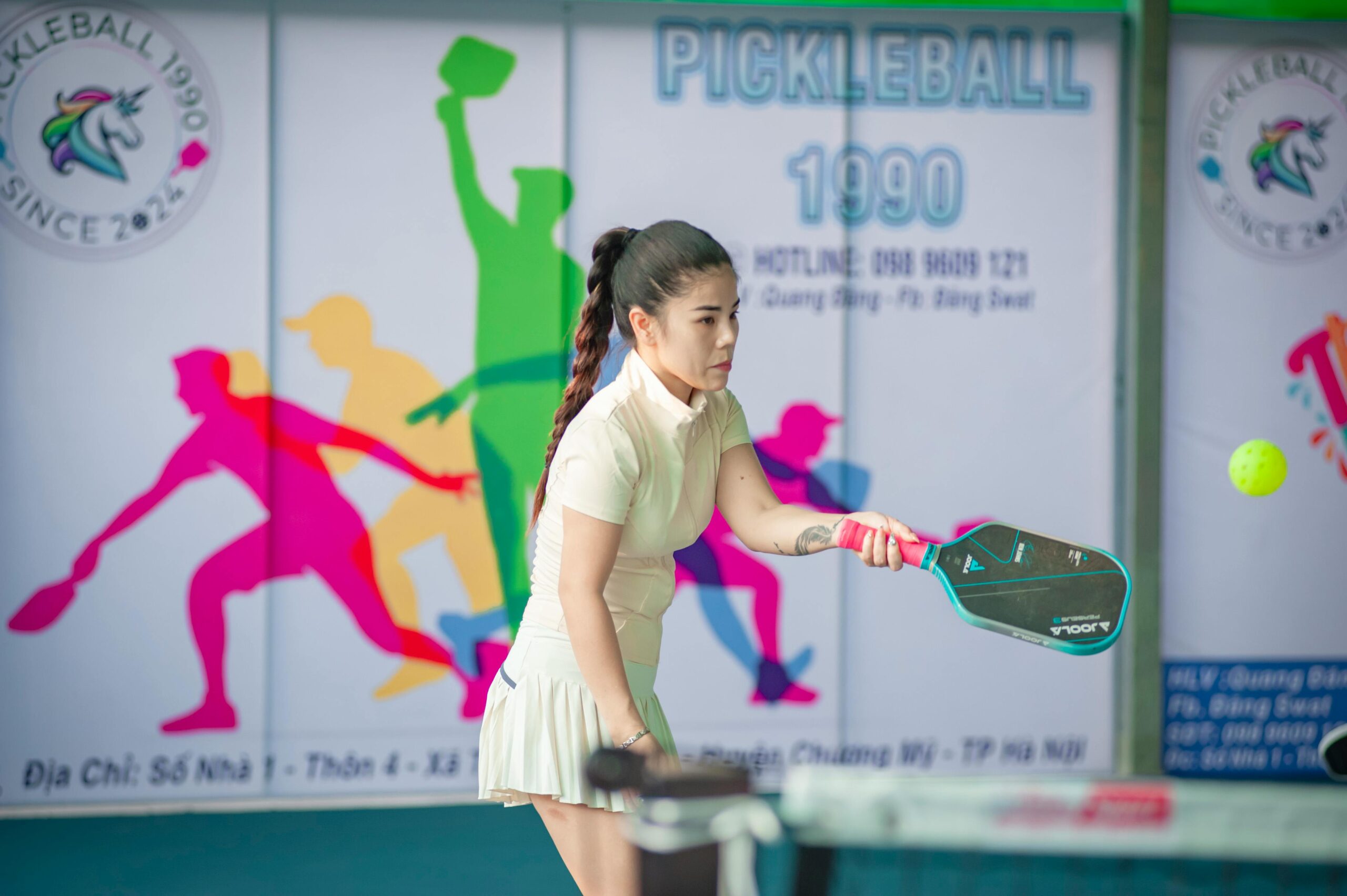
In pickleball, the serving team starts at a massive strategic disadvantage. Because the return team is already established at the kitchen line, the serving team is stuck at the baseline, desperately trying to fight their way forward.
At Athletes Untapped, we notice that many players struggle to make this critical transition. They smash the third shot as hard as they can, only to have it easily blocked back at their feet, or they try to hit a delicate shot but pop it up high into the air for an easy put-away. This lack of finesse leads to stalled rallies, frustration, and highly inconsistent scoring opportunities.
The secret to neutralizing the opponent’s advantage lies in third-shot drop precision. Proper training fixes these mechanical and timing issues, allowing players to hit a soft, unattackable ball into the opponent’s kitchen, giving the serving team the time they need to sprint forward and equalize the point.
Connect with a Private Pickleball Coach: https://athletesuntapped.com/browse/pickleball/
Why This Skill Matters for Athlete Development
Your third shot drop is the most important shot in pickleball. Without a consistent drop, your ability to score points against high-level opponents will always suffer.
- Game Performance: Elite third shot drop precision directly translates to controlling the non-volley zone. When you can consistently drop the ball into the kitchen, you force your opponents to hit upward on the ball. This prevents them from attacking and allows you and your partner to safely advance to the net to win the point.
- Confidence: I have seen athletes improve faster when they spend just 10 focused minutes on this drill at the start of every session. When hitting a soft drop becomes muscle memory, players stop panicking at the baseline. They gain the composure to loosen their grip, trust their paddle angle, and execute a confident, calculated transition.
- Long-Term Development: As you progress to higher levels of pickleball, relying purely on a powerful baseline drive stops working. Advanced players will block your drives with ease. A biomechanically sound drop shot protects you from being pinned at the baseline and provides the touch needed to dictate the pace of the game, ensuring your skills scale as you face tougher competition.
Best Drills / Tips / Techniques
You cannot master the third shot drop by simply playing recreational matches. You need isolated, high-repetition drills to develop soft hands. Here are 5 drills AU coaches use to build an unbreakable drop shot.
1. The Kitchen Line Step-Back
- How to perform it: Start with both players dinking at the kitchen line. After hitting three successful dinks, one player takes a large step backward and hits a drop shot from mid-court. After three more successful drops, they take another step back until they are hitting full third shot drops from the baseline.
- Why it works: It forces the brain to internalize the feeling of the drop shot by slowly increasing the distance. It breaks the baseline drop down to its simplest component, which is essentially just a long dink.
- Coaching tips: Maintain the exact same low-to-high paddle motion whether you are at the kitchen line or the baseline.
- Common mistakes: Changing your swing completely when you reach the baseline. You must resist the urge to take a massive backswing just because you are further away.
2. The Apex Target Drill
- How to perform it: Have a coach or partner stand at the kitchen line while you stand at the baseline. Visualize an imaginary window hovering about two to three feet above the net on your side of the court. Practice hitting your drop shots through that specific window so the ball reaches its apex on your side before descending into the opponent’s kitchen.
- Why it works: The trajectory is the secret to the drop. This drill isolates the highest point of the ball’s flight path, ensuring the ball is already falling downward by the time it crosses the net, making it unattackable.
- Coaching tips: Push from your shoulder rather than flicking your wrist to guide the ball up to the apex.
- Common mistakes: Aiming directly at the top of the net tape. This results in the ball traveling in a straight line and arriving at the opponent’s paddle at chest height, rather than dropping at their feet.
3. The Transition Zone Feed
- How to perform it: Stand in the transition zone (no-man’s land, halfway between the baseline and the kitchen). A coach stands at the net and feeds you balls aimed directly at your feet. You must absorb the pace, reset the ball softly into the kitchen, and step forward.
- Why it works: In a real game, your third shot drop might not be perfect, and you will get caught in the transition zone. This drill trains the athlete to hit a precision drop while moving and under pressure.
- Coaching tips: Get your paddle out in front of your body early. Let the ball come to the paddle rather than swinging wildly at it.
- Common mistakes: Running through the shot. You must completely stop your momentum, hit the drop, and then resume running to the net.
4. The Bucket Challenge
- How to perform it: Place a bucket or a large target circle squarely in the middle of the opponent’s kitchen. From your baseline, feed balls to yourself and attempt to land the ball directly inside the bucket using your third shot drop motion.
- Why it works: This overloads the spatial awareness and depth perception of the athlete. By shrinking the target from the entire kitchen to a single bucket, it trains extreme precision and touch.
- Coaching tips: Focus heavily on your follow-through. Your paddle face should point directly toward the bucket after contact.
- Common mistakes: Popping the ball up too high to try and drop it perfectly straight down into the bucket. Keep a natural, arc-like trajectory.
5. The Drive and Drop Mix-Up
- How to perform it: Stand at the baseline with a basket of balls. Have a partner stand at the opposite kitchen line. Hit one hard baseline drive directly at your partner, followed immediately by one soft third shot drop into the kitchen. Alternate back and forth.
- Why it works: This marries power with finesse. It teaches the nervous system how to quickly switch from an aggressive, tight muscle contraction to a soft, relaxed muscle state.
- Coaching tips: Breathe out heavily on the drop shot to naturally relax your shoulders and arms.
- Common mistakes: Gripping the paddle with the exact same pressure for both shots. You must consciously loosen your grip on the drop shot.
Find a Private Pickleball Coach: https://athletesuntapped.com/browse/pickleball/
Common Mistakes Athletes Make
Drop shot errors are incredibly common in amateur pickleball, but they are easy to fix once identified.
- The Death Grip: This happens when a player squeezes the paddle handle as tight as possible. This transfers all the tension from the arm into the paddle, causing the ball to ricochet wildly off the face and pop up for an easy smash.
- How to fix it: Loosen your grip to a 3 out of 10 pressure. You should be holding the paddle just tight enough that it does not fly out of your hand.
- Moving While Hitting: Players often try to run to the net while they are in the middle of hitting the drop shot. This destroys your balance and drastically alters the paddle angle at the point of contact.
- How to fix it: Implement the split-step. You must completely stop, establish a firm base, execute the drop shot, and only then begin your sprint to the kitchen line.
- The Bowling Swing: Taking a massive, swooping backswing that starts behind the back leg. This generates way too much power and makes it impossible to hit a soft shot.
- How to fix it: Keep your paddle out in front of your body. The drop shot is a gentle pushing motion that originates from the shoulder, not a full swing.
- Failing to Get Low: Standing completely upright and bending at the waist to reach low balls. This ruins your sightline and causes you to scoop the ball upward too sharply.
- How to fix it: Bend your knees and sink your hips. Get your eyes down to the level of the ball to ensure a clean, stable contact point.
How Private Coaching Accelerates Improvement
Third shot drop precision happens in a fraction of a second and relies entirely on subtle paddle angles and grip tension. Trying to self-diagnose whether your apex is too far forward or your grip is too tight is incredibly difficult during a fast-paced game.
This is where private coaching is essential. Private coaching provides faster skill development by utilizing expert eyes and structured repetition. A private coach offers personalized feedback tailored to your specific swing mechanics, making it easy to catch habits like the death grip immediately. This targeted instruction allows athletes to focus on correcting mistakes early before they become ingrained. Ultimately, mastering your drop shot in a 1-on-1 environment provides massive confidence building, allowing you to step onto the court knowing you have the tools to neutralize any opponent.
Frequently Asked Questions About the Third Shot Drop in Pickleball
How often should athletes practice this skill?
Athletes should practice their drop shots for at least 10 to 15 minutes before every session. Daily repetition is required to build the delicate muscle memory needed for soft hands.
What age should athletes start working on this?
Players of any age can begin learning the third shot drop immediately. The earlier the mechanics of trajectory and touch are introduced, the less un-teaching has to happen later.
How long does it take to improve?
With focused, intentional practice, players can see a dramatic improvement in their consistency in just 3 to 4 weeks. Breaking the habit of constantly driving the ball may take longer.
Can beginners learn this?
Yes. In fact, it is often easier for true beginners to learn because they do not have the deeply ingrained habit of swinging as hard as possible like former tennis players often do.
Should I always hit a third shot drop or can I drive it?
You should mix it up. The third shot drop is the gold standard for getting to the net, but occasionally driving the ball keeps the opponents guessing and prevents them from creeping too far forward.
Do private coaches help with this?
Absolutely. Private coaches are essential for breaking down the biomechanics of the swing, providing perfect feeds, and isolating specific mechanical flaws so the athlete can practice effectively.
Conclusion
Third shot drop precision is the undeniable foundation of a strategic, dominant pickleball player. Without it, you are leaving your transition game to chance and playing directly into the serving team’s disadvantage. Improvement is highly achievable with proper training, but it requires discipline. Encourage yourself to focus on your paddle angle and your grip pressure before you focus on power, and consistent practice will inevitably yield smooth, unattackable drops.
Train With a Private Pickleball Coach
Athletes Untapped connects athletes with vetted private coaches across the country for one-on-one training.
Private coaching helps athletes:
- improve faster
- build confidence
- receive personalized feedback
- reach their full potential
About Athletes Untapped
Athletes Untapped connects pickleball players with experienced private coaches who specialize in third shot drop precision, kitchen line strategy, and paddle mechanics. Through personalized instruction and structured training plans, Athletes Untapped helps players improve transition footwork, soft touch, and overall game IQ.
Find an experienced coach near you: https://athletesuntapped.com
Learn from our very best Coach!


