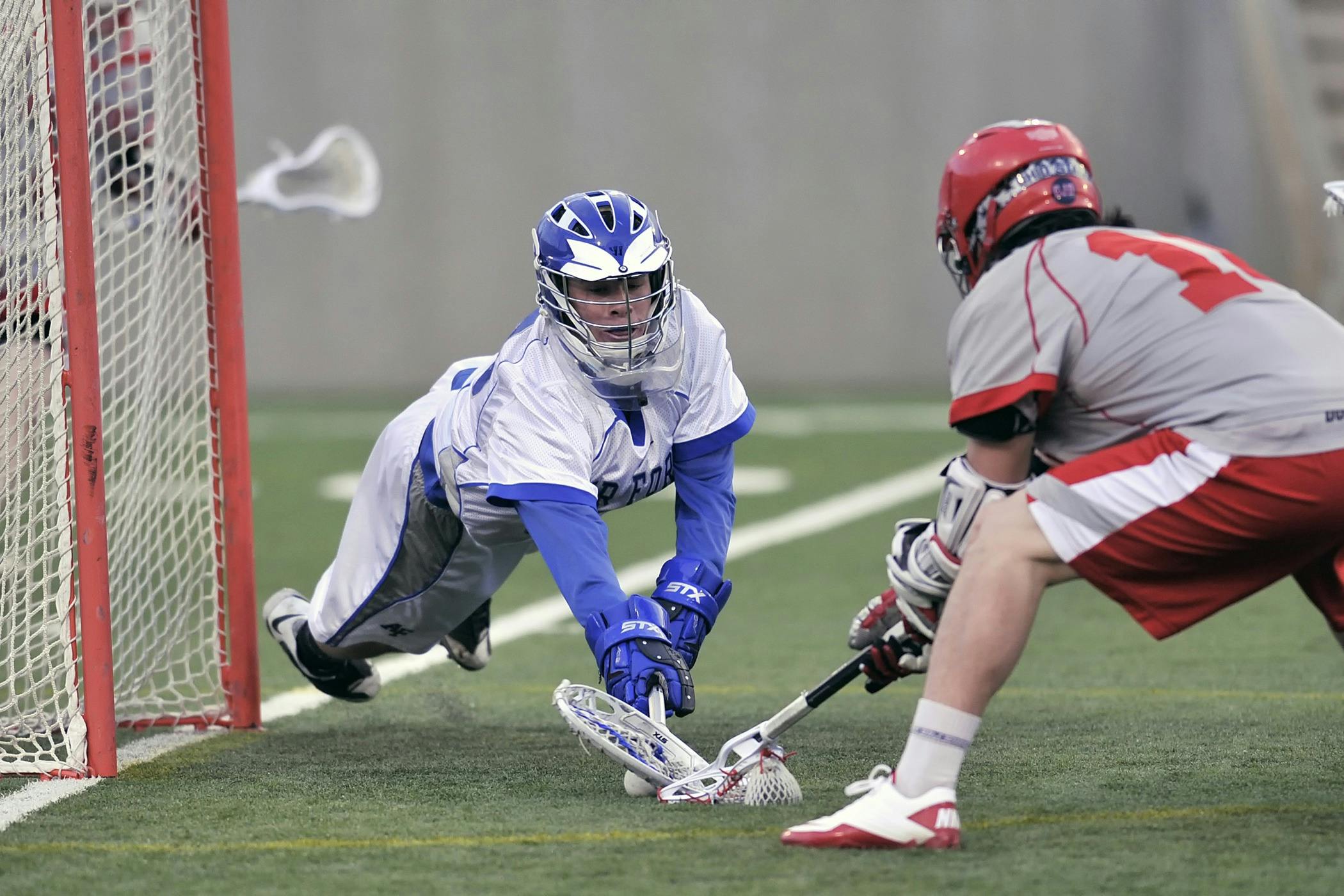
In lacrosse, standing still and winding up for a time-and-room shot is a luxury you rarely get in a competitive game. Defensemen are fast, slides come quickly, and the ability to score while moving at top speed down the alley is what separates good offensive players from elite, unguardable threats.
At Athletes Untapped, we notice that many young players struggle to generate power and accuracy when their feet are moving. They fade away from the goal, drop their hands, and shoot entirely with their arms, resulting in weak shots that sail wide or hit the goalie squarely in the chest. This lack of structural mechanics leads to wasted offensive possessions and a highly predictable attack.
The secret to scoring on the move lies in mastering shooting on the run. Proper training fixes these rotational issues, allowing players to transfer their downhill momentum into serious torque, keeping their stick vertical, and firing accurate, high-velocity shots without breaking stride.
Connect with a Private Lacrosse Coach: https://athletesuntapped.com/browse/lacrosse/
Why This Skill Matters for Athlete Development
Your ability to shoot on the run is the engine that drives a dynamic offense. Without it, defenders know they can simply force you down the alley and watch you take a harmless, off-balance shot.
- Game Performance: Elite shooting on the run directly translates to beating defensive slides. When you can aggressively dodge, create a half-step of separation, and rip a shot while still moving full speed, you take the slide completely out of the equation. This forces the defense to respect your drive, which naturally opens up passing lanes to your teammates on the crease.
- Confidence: I have seen athletes improve faster when they spend just 10 focused minutes on this mechanic at the start of every session. When rotating the torso on the run becomes muscle memory, players stop panicking when forced down the side of the field. They gain the composure to keep their eyes up, trust their momentum, and execute a confident, explosive shot under pressure.
- Long-Term Development: As you progress to higher levels of lacrosse, goalies become incredibly proficient at saving standard, stationary shots. A biomechanically sound shot on the run protects you from being a one-dimensional player. It provides the rotational leverage needed to hide the head of your stick and snap the ball into the corners, ensuring your scoring scales seamlessly as you face elite-level goaltending.
Best Drills / Tips / Techniques
You cannot master shooting on the run by simply jogging and throwing the ball at the net. You need isolated, high-repetition drills to build upper-body torque while the lower body moves. Here are 5 drills AU coaches use to build a lethal shot on the run.
1. The Walk-Through Torso Twist
How to perform it: Start without a ball at the top of the box. Walk slowly down the alley. As your left foot plants (for a right-handed shooter), aggressively twist your upper body backward so your chest faces the sideline, hiding your stick behind your helmet. As your right foot comes forward, violently snap your torso back toward the goal and follow through.
Why it works: It forces the brain to internalize the separation between the upper and lower body. It breaks the shot down to its simplest component: your feet are moving straight, but your torso must coil and uncoil to generate power.
Coaching tips: Keep your hands high and away from your body. Your back arm should be almost fully extended backward during the coil phase.
Common mistakes: Keeping the chest facing the goal the entire time. If you do not turn your shoulders away from the target, you are shooting purely with your wrists and arms.
2. The Line Drill
How to perform it: Find a straight line on the field (like the sideline or a football yard line). Run at 75 percent speed directly down the line. Execute your shot on the run, forcing your feet to stay perfectly on that line before, during, and after the release.
Why it works: This drill is the ultimate cure for fading away. It forces the athlete to maintain their downhill trajectory and push their momentum directly toward the target, rather than drifting horizontally toward the corner flag.
Coaching tips: Your momentum should naturally carry you forward a few steps after the ball leaves your stick.
Common mistakes: Stepping across the line with your lead foot, which blocks your hips from rotating and causes the shot to miss wide to the far post.
3. The Crow Hop Acceleration
How to perform it: Jog down the alley. Right before you are ready to shoot, execute a small, explosive “crow hop” (a quick stutter-step that gathers your weight onto your back foot), plant your front foot firmly, and unleash the shot at full speed.
Why it works: In a real game, you need a sudden burst of energy to snap the shot off. This drill marries downhill speed with a momentary weight gather, teaching the nervous system how to transfer horizontal running speed into rotational torque.
Coaching tips: The crow hop should be quick and low to the ground. Do not float up into the air, or you will lose your power.
Common mistakes: Slowing down entirely to take the hop. The crow hop is an accelerator, not a brake.
4. Over-the-Goalie’s-Shoulder Target Practice
How to perform it: Set up a shooting net or targets strictly in the top-offside and bottom-offside corners (the side furthest from where you are running). Run down the right alley and practice shooting the ball back across the goalie’s body to the left side of the net.
Why it works: Goalies naturally step toward the shooter’s momentum. Shooting back across the grain exploits the goalie’s shifting weight, making it incredibly difficult for them to reach back and make the save.
Coaching tips: You must aggressively snap your wrists over and pull your bottom hand tight to your ribs to get the ball to travel back across the grain.
Common mistakes: Pushing the ball directly to the near post, which is exactly where the goalie is already waiting.
5. The Live Slide Simulation
How to perform it: Have a coach or teammate stand near the crease. Dodge from the top of the box down the alley. The coach will trigger a simulated slide by stepping out toward you. You must read their approach, accelerate, and get the shot off before they cross your face.
Why it works: Practicing against air does not simulate the panic of a defender closing in. This drill teaches spacing and timing, forcing the athlete to execute their mechanics under the stress of an impending hit.
Coaching tips: Keep your stick completely vertical and hidden behind your helmet until the exact moment of the release to protect it from trail checks.
Common mistakes: Dropping the hands to the waist when the slide comes, exposing the stick and usually resulting in a stripped ball.
Common Mistakes Athletes Make
Shooting errors are incredibly common in youth lacrosse, but they are easy to fix once you build awareness of your body momentum.
Fading Away: This happens when a player gets scared of the crease defender and actively runs away from the goal toward the sideline while shooting. This bleeds all your power and drastically reduces your shooting angle.
How to fix it: Implement a strict “run to the pipe” rule. Your trajectory should be aiming slightly toward the near post, forcing you to shoot downhill rather than horizontally.
Dropping the Hands: Lowering the stick to shoulder or chest level while running. This changes the angle of the stick head, usually resulting in a weak sidearm shot that misses wide or gets easily saved.
How to fix it: Constantly remind yourself to keep your hands up by your ears. A high release point makes the shot significantly harder for the goalie to track.
Stepping Across the Body: Landing the front foot across the midline of the body (e.g., a righty stepping too far to the left). This physically locks the hips and prevents the torso from rotating toward the goal.
How to fix it: Use the Line Drill heavily. Your front foot must step directly toward your target to allow your hips to open fully.
All Arms, No Core: Trying to generate velocity simply by pushing the stick forward with the triceps.
How to fix it: Turn your chest to the sideline to load up, and violently snap your core to face the net. The arms simply follow the rotation of the torso.
How Private Coaching Accelerates Improvement
Shooting on the run happens while sprinting at top speed in the middle of a chaotic offensive set. Trying to self-diagnose whether your hands dropped three inches or your hips locked up is incredibly difficult without technology and a trained eye.
This is where private coaching is essential. Private coaching provides faster skill development by utilizing expert eyes and slow-motion video analysis. A private coach offers personalized feedback tailored to your specific stride and stick mechanics, making it easy to catch habits like fading away immediately. This targeted instruction allows athletes to focus on correcting mistakes early before they become ingrained muscle memory. Ultimately, mastering your shot on the run in a 1-on-1 environment provides massive confidence building, allowing you to dodge down the alley knowing you are a threat to score on every single possession.
Find a Private Lacrosse Coach: https://athletesuntapped.com/browse/lacrosse/
Frequently Asked Questions about Shooting on the Run in Lacrosse
How often should athletes practice this skill?
Athletes should practice their shooting on the run mechanics for at least 15 to 20 minutes during their individual stickwork sessions. Repetition is required to make the upper-body coil feel natural while the feet are moving.
What age should athletes start working on this?
Players as young as 9 or 10 can begin learning the basic walk-through torso twist. The earlier the mechanics of separating the upper and lower body are introduced, the less un-teaching has to happen later.
How long does it take to improve?
With focused, intentional practice, players can see a dramatic improvement in their velocity and accuracy on the run in just 3 to 4 weeks. Breaking the habit of fading away from the goal may take slightly longer.
Should I shoot overhand or sidearm on the run?
You should strive for an overhand or high three-quarters release. A high release hides the ball behind your helmet longer and allows you to shoot the ball sharply into the bottom corners, which is the hardest save for a goalie to make on the run.
Do private coaches help with this?
Absolutely. Private lacrosse coaches are essential for breaking down the biomechanics of the shot, providing live defensive pressure, and isolating specific kinetic flaws so the athlete can practice effectively.
Conclusion
Shooting on the run is the undeniable foundation of a dangerous, high-scoring lacrosse midfielder or attacker. Without it, you are leaving your offensive potential entirely up to stationary opportunities and playing directly into the defense’s slide packages. Improvement is highly achievable with proper training, but it requires discipline. Encourage yourself to focus on your torso rotation and downhill momentum before you focus on simply shooting harder, and consistent practice will inevitably yield explosive, unstoppable goals on the move.
Train With a Private Lacrosse Coach
- Athletes Untapped connects athletes with vetted private coaches across the country for one-on-one training.
- Private coaching helps athletes:
- improve faster
- build confidence
- receive personalized feedback
- reach their full potential
About Athletes Untapped
Athletes Untapped connects lacrosse players with experienced private coaches who specialize in shooting on the run, dodging mechanics, and offensive IQ. Through personalized instruction and structured training plans, Athletes Untapped helps attackers and midfielders improve their shot velocity, accuracy on the move, and overall scoring threat.
Find an experienced coach near you: https://athletesuntapped.com
Learn from our very best Coach!