
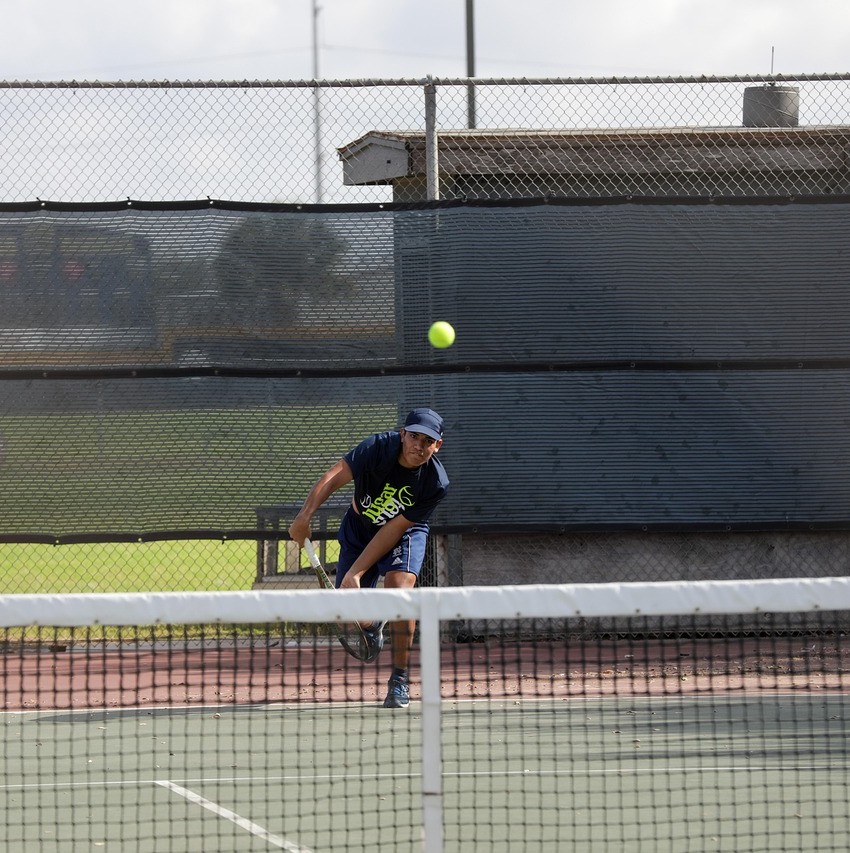
Most tennis players don’t struggle with their forehand or backhand because they need a more complicated swing, it’s because the ball doesn’t arrive in exactly the same place every time.
One shot is deeper. The next pulls them wide. Another sits up short. Sometimes they’re late, sometimes they’re crowded, and sometimes they make clean contact but send the ball long because the racquet face is slightly different.
That’s why improving groundstrokes takes more than standing in one spot and repeating the same swing.
Good forehand and backhand training should gradually combine technique, footwork, spacing, ball control and decision-making until the player can reproduce the stroke against balls that aren’t perfectly fed.
USTA’s current instructional material takes a similar approach. Beginner players first work on basic contact and racquet control, then progress toward rallying, directional control and live-ball situations. Explore USTA’s forehand and backhand instruction.
Start With Contact, Not Power
When a forehand or backhand is inconsistent, players often assume they need to swing differently.
Sometimes the bigger problem is where they’re meeting the ball.
USTA’s beginner guidance for both groundstrokes emphasizes making contact slightly in front of the body rather than allowing the ball to get too close. Racquet-face control matters too: small changes at contact can make a big difference in where the ball travels.
A simple way to work on this is with controlled hand feeds.
Have a coach or partner stand nearby and feed balls into a comfortable hitting zone. Don’t worry about hitting hard. The player should focus on moving into position, creating enough space from the ball and finding a consistent contact point.
For the forehand, USTA also teaches the idea of a unit turn—turning the hips and upper body together during preparation instead of simply pulling the racquet backward with the arm. See USTA’s forehand progression.
That is a much more useful starting point than telling a beginner to swing harder or add more topspin immediately.
Use Self-Rallying for Beginners
Self-rally drills can look almost too simple, but they’re useful when a player is still learning how the ball interacts with the racquet.
Start by dropping the ball and hitting it gently upward with the forehand. The goal is to control the height and keep the ball close enough to repeat the action. Do the same thing on the backhand side.
Once the player can control both strokes, alternate forehand and backhand.
USTA uses this exact type of progression for beginning players because it gives them time to work on grip, footwork and racquet control without worrying about an incoming ball from another player. See USTA’s alternating self-rally drill.
You aren’t trying to make the self-rally look like a match, you’re giving the player enough control over the environment that they can learn what a clean contact feels like.
From there, move into a short-court rally with a partner.
Rally Before You Worry About Winners
A lot of young players want to practice hitting winners before they can consistently rally, and that tends to create one great shot followed by three balls into the fence.
Groundstroke development should first teach players how to control enough height, spin and pace to keep the ball in play.
Start cross-court and see how many consecutive shots the pair can make. Don’t make every rally a competition immediately. Give them a number to beat.
Five balls.
Then eight.
Then ten.
USTA uses similar cooperative rally games in its youth curriculum, including drills where players count consecutive groundstrokes and gradually progress from straight-ahead rallies to cross-court patterns.
Cross-court hitting is particularly useful because there is more court to work with than on a down-the-line shot. USTA specifically recommends cross-court groundstrokes as a way to improve consistency while also moving an opponent away from the middle of the baseline. See USTA’s consistent-groundstroke drill.
Once a player can rally comfortably, then you can start asking them to do more with the ball.
Add Targets, but Don’t Make the Target Too Small
Target drills are useful for learning direction and depth, but a cone the size of a dinner plate isn’t necessarily the best target for a developing player.
Instead, use areas of the court.
For example, mark a large zone several feet inside the baseline and ask players to land the ball beyond the service line. Or create a cross-court target that gives the player enough margin to succeed repeatedly.
USTA’s own target-practice drill focuses on hitting balls deep rather than trying to pick off tiny targets. Players work cross-court and down the line while trying to keep shots behind the service line. See USTA’s target practice drill.
You can turn this into a simple scoring game.
One point for a ball that lands in the court.
Two points if it lands beyond the service line.
Three if it reaches the deeper target area.
Now players are learning to control depth without feeling like every missed cone is a failed shot.
Make Players Move Before They Hit
A forehand from a perfect stationary feed isn’t the same forehand a player hits after being pulled three steps wide.
Footwork and spacing become much more important once the ball moves.
One useful progression is to alternate feeds to the forehand and backhand sides. The player has to move, create space, hit and then recover toward the middle before the next ball arrives.
Don’t feed so quickly that the drill becomes conditioning, the goal is to teach the player to arrive in balance.
USTA’s youth curriculum includes similar “roll and rip” drills where players receive balls at different depths and have to adjust their footwork and stance before hitting.
This is also where coaches should watch for players getting too close to the ball.
A player may technically know how to hit a forehand but constantly crowd themselves when moving. Give them time to recognize the incoming ball, adjust with their feet and create a comfortable swing path.
The same applies to the backhand.
Good groundstrokes depend as much on arriving in the right place as they do on what the racquet does afterward.
Alternate Forehand and Backhand Instead of Training Them Separately Forever
There is value in isolating a stroke while you’re learning it.
Eventually, though, tennis doesn’t let you choose whether the next ball arrives to your forehand or backhand.
Once a player has reasonable control of each side, start mixing them.
Have one player rally from the middle while their partner alternates balls from side to side. The hitter has to identify the ball early, move and select the correct stroke.
You can make the feed predictable at first—forehand, backhand, forehand, backhand—and then gradually make it random.
The drill changes from “Can you hit a backhand?” to “Can you recognize, move and produce the correct stroke in time?”
That’s a much more important skill for match play.
USTA’s alternating self-rally and live-ball curricula use the same basic progression: learn the strokes individually, then combine them once the player has enough control.
Use Inside-Out Forehands After the Basics Are Stable
The inside-out forehand is a useful shot, but it shouldn’t be one of the first things a new player worries about.
Once a player has a reliable forehand and understands basic movement, you can teach them to move around a ball on the backhand side and hit the forehand cross-court toward the opponent’s backhand.
Set up a feed toward the player’s backhand side. The player moves around the ball, creates space and hits the forehand into a large cross-court target.
The footwork matters more than simply swinging hard.
If the player doesn’t get far enough around the ball, they’ll become crowded and lose control. If they move too far, they may open too much court behind them.
Eventually, let the player choose.
Feed a ball near the middle and allow them to decide whether to hit a backhand or move around it for a forehand.
Now the drill has become tactical rather than simply technical.
The Backhand Slice Has a Different Job
The backhand slice shouldn’t be taught as just another version of the topspin backhand.
It changes the height and pace of the ball and can be useful when a player is stretched, wants more time to recover or wants to keep the ball lower.
Start with controlled feeds and ask the player to send the ball deep rather than trying to make it skid perfectly.
The key for beginners is control.
Can they keep the racquet face stable?
Can they send the ball over the net without floating it high and short?
Can they maintain enough balance to recover afterward?
Once the basic shot becomes reliable, put it into a rally. Have the player alternate between a regular backhand and a slice so they begin learning when each one makes sense.
That’s more useful than spending an entire session slicing balls with no match context.
Finish With Live Points
Drills should eventually lead somewhere.
After working on contact, movement or cross-court consistency, finish with points that reward the skill you just practiced.
If the session focused on depth, award an extra point when a groundstroke lands beyond the service line.
If you worked on cross-court consistency, begin each point with three cross-court balls before the point opens up.
If the goal was forehand movement, feed the first ball to a position where the player has to move before attacking.
This is where the player finds out whether the technique holds up when they don’t know exactly what will happen next.
USTA’s current youth programs emphasize the same transition toward rallying, movement, directional control and point play rather than keeping technical practice isolated from actual tennis.
A player doesn’t need a perfect-looking forehand during an easy feed.
They need a forehand they can find when the ball is deep, wide or arriving faster than expected.
Consistency Comes Before Complexity
Players often want to know how to hit harder, create more topspin or add more advanced shot patterns.
Those things matter as players improve, but if the contact point changes constantly, the feet arrive late and the player can’t rally five balls comfortably, another advanced drill probably isn’t the answer yet.
Start with clean contact.
Then build control.
Add movement.
Add direction.
Add different spins and tactical choices after the stroke is reliable enough to support them.
That’s a much better progression than trying to “perfect” a forehand or backhand in one workout.
Individual Coaching Can Help Identify What’s Breaking Down
Two players can miss the same forehand long for completely different reasons.
One might be too close to the ball. Another may have an inconsistent racquet face. A third might simply be arriving late and making contact behind the ideal position.
That’s where individual feedback becomes useful.
Athletes Untapped connects players with private tennis coaches who can work on forehands, backhands, footwork, consistency and match play based on what the athlete actually needs.
The goal isn’t to collect more drills, it’s to figure out which drill solves the problem that’s showing up on the court.


