Why Hockey Conditioning Is Different From General Fitness
Ice hockey is played in short, intense bursts followed by brief recovery periods. Conditioning must prepare players to repeatedly sprint, battle, and change direction without losing technique. General cardio alone does not replicate the demands of a shift. Hockey-specific conditioning improves both physical output and mental sharpness.
Common Conditioning Mistakes in Youth Hockey Players
Many players rely too heavily on long-distance running. Others condition without skates, missing key movement patterns used on the ice. These approaches limit transfer to actual game performance. Conditioning must reflect how hockey is played.
Shift-Based Conditioning and Energy System Training
Most shifts last between 30–45 seconds. Conditioning drills should mirror this work-to-rest ratio. Interval-based training improves recovery between shifts. Players learn to perform at high intensity repeatedly.
On-Ice Sprint Conditioning Drills
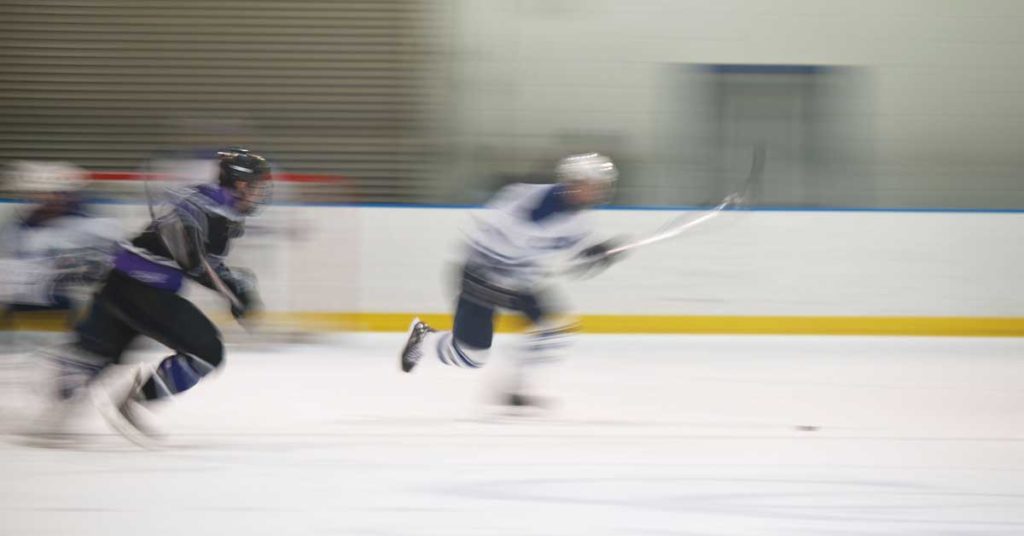
Short-distance sprints build explosive power. Blue-line-to-red-line and goal-line sprint drills simulate game skating patterns. These drills improve acceleration and recovery. Speed endurance increases over time.
Change-of-Direction Conditioning Drills
Hockey demands constant stops, starts, and pivots. Direction-change drills train players to maintain speed while transitioning. Efficient movement reduces fatigue. Balance and edge control improve under stress.
Conditioning Drills That Combine Skill Execution
Skills break down when tired. Conditioning drills that include puck handling or shooting reinforce technique under fatigue. Players learn to stay composed late in shifts. This improves in-game reliability.
Defensive Conditioning Drills for Sustained Pressure
Defense requires constant engagement. Conditioning drills that include backward skating and gap control build stamina. Players maintain proper positioning even when tired. Defensive consistency improves.
Conditioning for Forwards vs Defensemen
Forwards emphasize speed and repeated accelerations. Defensemen focus more on backward skating endurance and physical battles. Position-specific conditioning improves efficiency. Balanced development remains important.
Recovery Conditioning and Breathing Control
Fast recovery between shifts is essential. Breathing-focused recovery drills teach players to lower heart rate quickly. This improves late-game performance. Recovery becomes a skill.
Off-Ice Conditioning That Transfers to On-Ice Performance
Off-ice training supports strength and durability. Plyometrics, core work, and interval training improve skating mechanics. These exercises must complement on-ice work. Balance prevents overtraining.
Mental Conditioning and Fatigue Management
Fatigue affects decision-making. Conditioning builds confidence in high-pressure moments. Players trust their preparation late in games. Mental toughness grows alongside physical stamina.
Why Conditioning Improves Overall Hockey Performance
Well-conditioned players maintain speed, focus, and technique. Shifts stay effective from start to finish. Coaches trust players who don’t fade. Conditioning impacts every role.
Learn how to utilize your conditioning to become faster on this Ice here!
Coaching’s Role in Conditioning Development
Coaches structure workloads appropriately. Overtraining reduces performance, while undertraining limits growth. Individualized plans maximize results. Feedback ensures progression.
Final Thoughts on Ice Hockey Conditioning Training
Conditioning is a competitive advantage. Players who train intentionally outperform opponents late in games. Endurance builds confidence. Preparation separates players.
About Athletes Untapped
Athletes Untapped connects ice hockey players with experienced private coaches who design hockey-specific conditioning programs. Personalized training helps athletes sustain performance throughout every shift and game.
Find an experienced coach near you: https://athletesuntapped.com
Learn from our very best Coach Eric and Coach Ryder.