In American football, raw arm strength and lightning-fast route running are incredible physical assets, but the game is ultimately won or lost between the ears.
At Athletes Untapped, we notice that many young quarterbacks and receivers struggle to understand what the defense is trying to do. They snap the ball with zero plan, pre-determine where they are going to throw regardless of the defenders, or panic when the post-snap picture changes. This lack of cognitive structure leads to forced throws, devastating interceptions, and a highly inconsistent offensive attack.
The secret to slicing up a secondary lies in football coverage recognition. Proper training fixes these mental processing issues, allowing players to read pre-snap indicators, anticipate defensive rotations, and confidently deliver the ball to the exact weakness of any coverage shell.
Connect with a Private Football Coach: https://athletesuntapped.com/browse/football/
Why This Skill Matters for Athlete Development
Your ability to read the defense is the CPU of your entire offensive operating system. Without consistent coverage recognition, your physical mechanics are essentially operating in the dark.
- Game Performance: Elite coverage recognition directly translates to fewer turnovers and higher completion percentages. When a quarterback knows whether the defense is in Cover 3 or Cover 2, they instantly know which passing concepts will be open and which side of the field to avoid. This keeps the chains moving and neutralizes complex defensive blitz packages.
- Confidence: Athletes improve faster when they spend just 10 focused minutes on mental reps and film study before every session. When identifying the “Mike” linebacker and the safety shell becomes automatic, players stop stepping up to the line of scrimmage with anxiety. They gain the composure to dictate the tempo, trust their reads, and execute a confident, aggressive game plan.
- Long-Term Development: As you progress to higher levels of football, defensive coordinators use elaborate disguises to trick the offense. A sound mental framework for coverage recognition protects you from falling into these traps. It provides the high-level football IQ needed to process split-second information, ensuring your processing speed scales as you face complex collegiate-style defenses.
Best Drills / Tips / Techniques
You cannot master coverage recognition by simply throwing the ball against air. You need isolated, high-repetition mental and visual drills to build your processing speed. Here are 5 drills AU coaches use to build an unbreakable football IQ.
1. The MOFO / MOFC Pre-Snap Scan
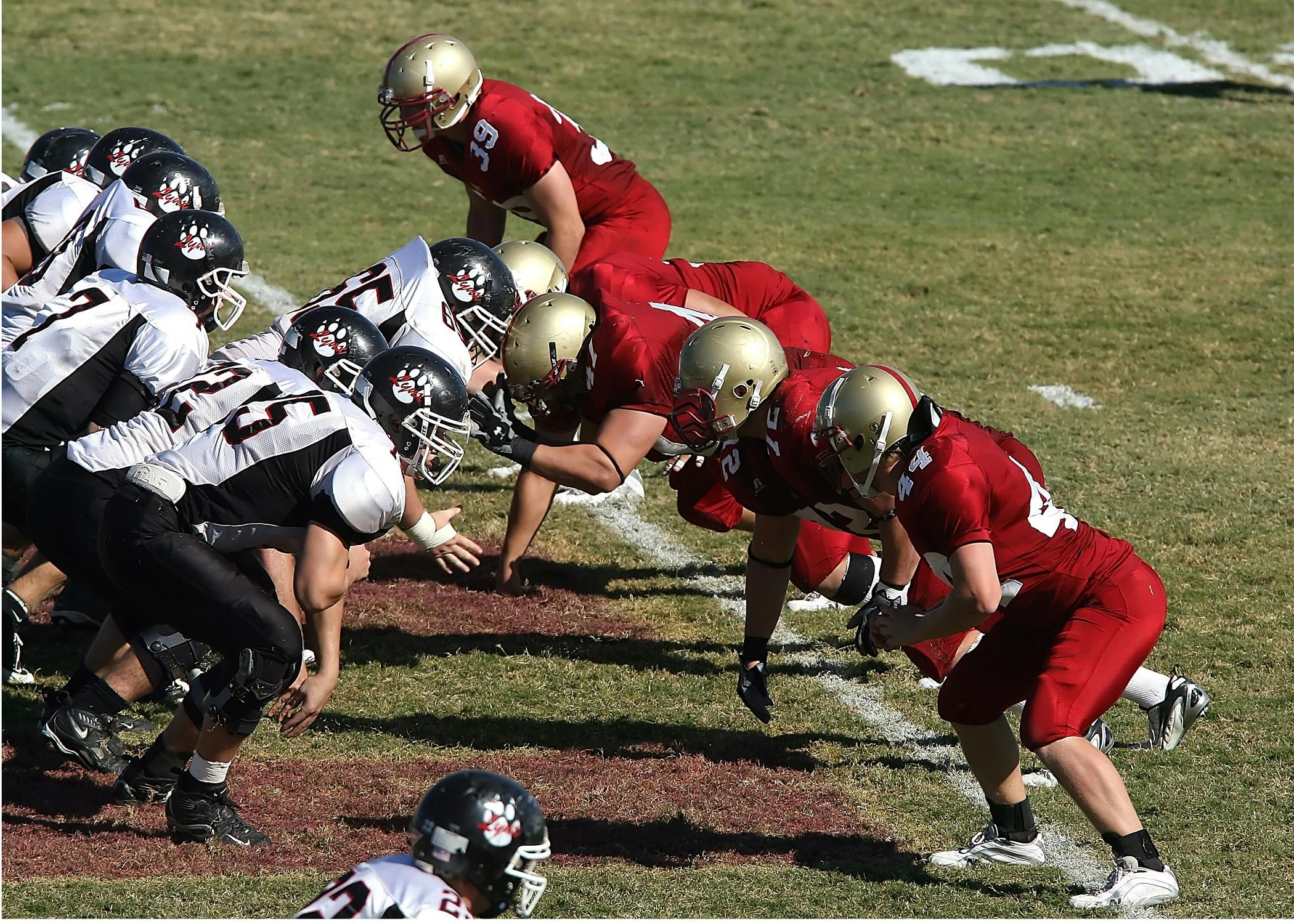
How to perform it: Line up the offense against a scout team defense. Before the snap, the quarterback must loudly call out “MOFO” (Middle of Field Open) or “MOFC” (Middle of Field Closed) based on the safety alignment. A two-high safety look is MOFO; a single-high safety look is MOFC.
Why it works: It forces the brain to internalize the very first read every quarterback must make. It breaks the entire defensive playbook down into two simple categories, instantly eliminating half of the coverage possibilities before the ball is even snapped.
Coaching tips: Safeties will lie to you, so combine this read with the cornerbacks’ depth. Two deep safeties with cornerbacks pressed at the line strongly indicates Cover 2.
Common mistakes: Staring exclusively at the defensive line. The eyes must start deep with the safeties and work their way down to the linebackers.
2. The Corner Cushion Check
How to perform it: Have a receiver line up against a defensive back. The quarterback must assess the defender’s leverage (inside or outside shade) and cushion (press, 5 yards off, or 10 yards off) and instantly signal the receiver to adjust their route based on that specific alignment.
Why it works: Cornerback alignment gives away the underneath coverage. This drill isolates the spatial relationship between the receiver and the defender, teaching the offense how to exploit the space the defense is willingly giving up.
Coaching tips: If a cornerback has outside leverage and their eyes are in the backfield rather than on the receiver, they are likely in a zone coverage (like Cover 2 or Cover 3) rather than Man-to-Man.
Common mistakes: Running a route exactly as drawn on the playbook despite the cornerback sitting directly in the throwing window. Routes must adapt to the cushion.
3. The Post-Snap Rotation Drill
How to perform it: Set up a 7-on-7 drill. The defense aligns in a specific pre-snap shell (e.g., a two-high Cover 4 look). The absolute millisecond the ball is snapped, the defense actively rotates into a completely different coverage (e.g., spinning one safety down into a Cover 3). The quarterback must identify the rotation post-snap and throw to the correct read.
Why it works: In a real game, good defenses disguise their intentions until the ball is snapped. This drill marries quick physical footwork with rapid mental processing, teaching the athlete to confirm their pre-snap read rather than blindly trusting it.
Coaching tips: Take a quick three-step drop. During those three steps, your eyes must be locked on the safeties to confirm their post-snap movement before looking at your receivers.
Common mistakes: Pre-determining the throw based solely on the pre-snap alignment and throwing directly into a rotated defender.
4. The High-Low Triangle Read
How to perform it: Run a “Smash” concept (a short hitch by the outside receiver and a deeper corner route by the inside slot receiver). The quarterback must stare exclusively at the underneath flat defender. If the defender drops to cover the corner route, throw the hitch. If the defender jumps the hitch, throw the corner.
Why it works: This completely simplifies the field. Instead of trying to look at all 11 defenders, it teaches the athlete to isolate one specific “conflict” defender and put them in a lose-lose situation.
Coaching tips: Trust the concept. You are not reading the receivers; you are reading the defender’s hips and momentum.
Common mistakes: Hesitating. The ball must come out of your hand the exact second the conflict defender commits their hips in one direction.
5. Whiteboard to Turf Translation
How to perform it: Spend 15 minutes in a film room or in front of a whiteboard drawing up Cover 1, 2, 3, 4, and 0 (Blitz). Immediately step onto the field and have the defense replicate those exact looks.
Why it works: Many athletes can understand coverages on a piece of paper, but the game looks drastically different from a helmet at field level. This drill bridges the gap between classroom theory and live-action recognition.
Coaching tips: Always identify the “Mike” (middle) linebacker first to establish the protection scheme, then move your eyes to the secondary.
Common mistakes: Failing to understand where the weaknesses of each coverage are. For example, Cover 3 is notoriously weak in the seams and the deep flats; you must know this before the play begins.
Common Mistakes Athletes Make
Mental processing errors are incredibly common in high school and amateur football, but they are easy to fix once you train your eyes where to look.
The Pre-Determined Throw: This happens when a quarterback decides they are going to throw to their star receiver no matter what coverage the defense plays. This completely ignores the tactical advantage of the play call and usually results in forced passes into double coverage.
How to fix it: Implement a strict progression rule. You must train yourself to read 1 to 2 to 3 based on what the defensive shell dictates, letting the coverage make the decision for you.
Ignoring the Underneath Linebackers: Quarterbacks often read the safeties perfectly but forget about the linebackers dropping into the underneath throwing lanes, resulting in passes batted down or intercepted by underneath zone droppers.
How to fix it: Constantly remind yourself to use your peripheral vision to track the linebackers’ drops while your eyes remain downfield.
Staring Down the Target: Locking eyes on the primary receiver from the moment the ball is snapped until the moment it is thrown. This leads the defense directly to the ball like a beacon.
How to fix it: Use your eyes as a weapon. Look off the single-high safety by staring at the opposite side of the field for a split second before snapping your head back to your actual target.
Freezing Against the Blitz: Panicking when the defense brings Cover 0 or a heavy blitz, resulting in holding the ball too long and taking a devastating sack.
How to fix it: Identify your “Hot” route before every single snap. You must know exactly which receiver is your quick outlet if the defense brings more rushers than you have blockers.
Find a Private Football Coach: https://athletesuntapped.com/browse/football/
How Private Coaching Accelerates Improvement
Football coverage recognition happens in less than three seconds while 300-pound defensive linemen are charging at you. Trying to self-diagnose whether the defense was in Cover 4 or a disguised Cover 2 is incredibly difficult during the chaos of an 11-on-11 scrimmage.
This is where private coaching is essential. Private coaching provides faster cognitive development by utilizing expert whiteboard sessions, film review, and targeted repetition. A private coach offers personalized feedback tailored to your specific offensive system, making it easy to catch mental lapses like staring down a receiver immediately. This targeted instruction allows athletes to focus on correcting their eye progression early before poor decision-making becomes a habit. Ultimately, mastering your pre-snap and post-snap reads in a 1-on-1 environment provides massive confidence building, allowing you to step into the pocket knowing you have the football IQ to outsmart any defensive coordinator.
Frequently Asked Questions about Football Coverage Recognition
How often should athletes practice coverage recognition?
Athletes should practice their mental reads through film study and 7-on-7 drills for at least 20 minutes every single day. The brain requires constant repetition to recognize spatial patterns instantly.
What age should athletes start working on this?
Quarterbacks and receivers as young as 10 or 11 can begin learning the basic difference between Man-to-Man and Zone coverage. Deep dives into Cover 2, Cover 3, and Cover 4 usually begin in middle school or early high school.
How long does it take to improve?
With focused film study and intentional practice, players can see a dramatic improvement in their decision-making and pre-snap confidence in just a few weeks. Learning to read disguised post-snap rotations takes years of experience to truly master.
Can receivers benefit from this, or just quarterbacks?
Receivers absolutely must know how to read coverages. Many offensive systems require receivers to alter their routes based on the coverage (e.g., converting a post route to a dig route if the middle of the field is closed).
What is the hardest coverage to read?
Well-disguised split-field coverages (like Cover 6) or delayed zone blitzes are generally the hardest to read because the pre-snap look intentionally lies to the quarterback, forcing them to process the entire rotation post-snap under pressure.
Do private coaches help with this?
Absolutely. Private quarterback and receiver coaches are essential for breaking down the geometry of the field, providing high-level film analysis, and isolating specific decision-making flaws so the athlete can practice effectively.
Conclusion
Football coverage recognition is the undeniable foundation of a lethal, high-IQ offensive player. Without it, you are leaving your offensive success entirely to chance and playing directly into the defense’s traps. Improvement is highly achievable with proper mental training, but it requires discipline in the film room. Encourage yourself to focus on the safeties and the defensive leverage before you focus on throwing the perfect spiral, and consistent practice will inevitably yield precision passing and total control of the offense.
Train With a Private Football Coach
Athletes Untapped connects athletes with vetted private coaches across the country for one-on-one training.
Private coaching helps athletes:
- improve faster
- build confidence
- receive personalized feedback
- reach their full potential
About Athletes Untapped
Athletes Untapped connects football players with experienced private coaches who specialize in coverage recognition, offensive mechanics, and football IQ. Through personalized instruction and structured training plans, Athletes Untapped helps quarterbacks, wide receivers, and tight ends improve decision-making, read progressions, and overall game management.
Find an experienced coach near you: https://athletesuntapped.com
Learn from our very best Coach!