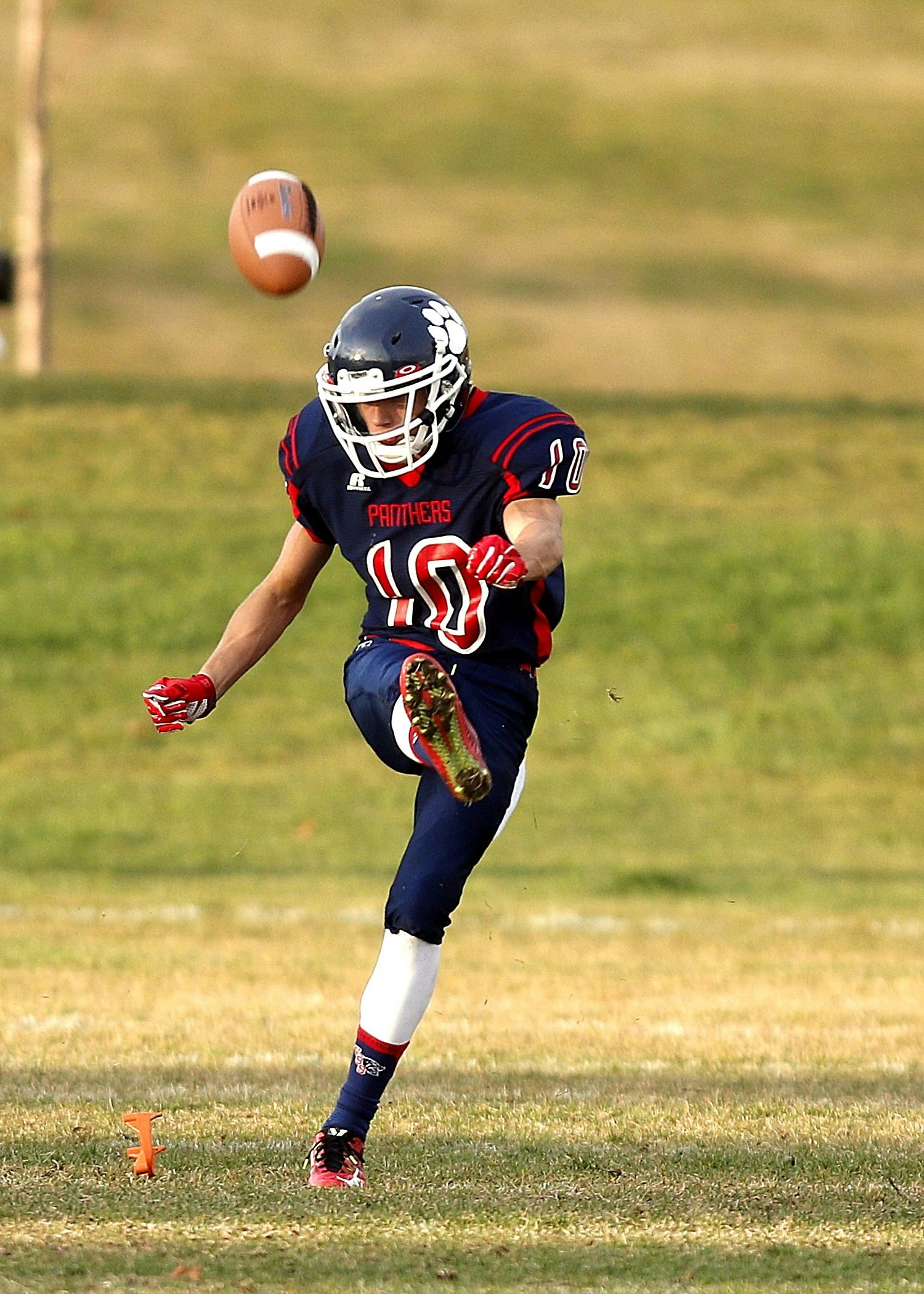
In football, straight-line speed might get you down the field, but route separation mechanics are what actually get you open.
At Athletes Untapped, we notice that many young receivers struggle to create space from defensive backs. They run their routes at one continuous speed, round off their cuts at the top of the route, and let the defense dictate their path. This lack of structural mechanics leads to highly contested catches, unnecessary interceptions, and highly inconsistent offensive production.
The secret to becoming an unguardable receiver lies in route separation mechanics. Proper training fixes these footwork and timing issues, allowing players to transfer their straight-line speed into violent, unpredictable cuts that leave defenders scrambling to recover.
Connect with a Private Football Coach: https://athletesuntapped.com/browse/football/
Why This Skill Matters for Athlete Development
Your route running ability is the engine that drives your entire offensive game. Without a consistent mechanical sequence, your timing with the quarterback and your catch rate will always suffer.
- Game Performance: Elite route separation mechanics directly translate to wider throwing windows. When you drop your hips and explode out of a break perfectly, you create instant yardage between yourself and the defender, making it significantly harder for the defense to break up the pass and giving your quarterback an easy target.
- Confidence: I have seen athletes improve faster when they spend just 10 focused minutes on this drill at the start of every session. When sinking your hips and planting your foot becomes muscle memory, players stop thinking about their feet. They gain the composure to read the coverage, trust their footwork, and execute a confident, calculated move against any defensive back.
- Long-Term Development: As you progress to higher levels of football, defenders get much faster and increasingly physical. A biomechanically sound route tree protects you from being jammed easily at the line of scrimmage and provides the leverage needed to explode out of tight coverage, ensuring your receiving skills scale as you grow and face elite competition.
Best Drills / Tips / Techniques
You cannot master route separation by simply running casual routes on air. You need isolated, high-repetition drills to build explosive changes of direction. Here are 5 drills AU coaches use to build flawless route mechanics.
1. The Box Drill
- How to perform it: Set up four cones in a five-by-five yard square. Sprint to the first cone, drop your hips, plant your outside foot hard, and break at a sharp 90-degree angle to the next cone. Repeat this sequence entirely around the box.
- Why it works: It forces the brain to internalize the extreme hip drop required for a sharp cut. It breaks the route down to its absolute simplest components of deceleration and sudden redirection.
- Coaching tips: Keep your chest pushed slightly forward over your toes as you break to prevent losing your balance backward.
- Common mistakes: Chopping your feet too early before you even reach the cone. This instantly telegraphs your route to the defender.
2. The Line Release Swipe
- How to perform it: Stand on a yard line in a receiver stance. Have a partner stand directly in front of you acting as a physical press-coverage defender. Practice your split release by throwing a quick jab step to move the defender, then violently swiping their hands away to release cleanly inside or outside.
- Why it works: A route is often won or lost in the first two seconds at the line of scrimmage. This drill isolates the explosive transition from a static stance to beating a physical jam.
- Coaching tips: Keep your hands tight to your chest until the exact moment you need to strike the defender’s arms away.
- Common mistakes: Stepping backward on the snap. Your first step must always attack forward to eat up the defender’s cushion.
3. The Top of the Route Break
- How to perform it: Sprint 10 yards straight ahead at full maximum speed. At the 10-yard mark, sink your hips rapidly, take two hard deceleration steps, turn 180 degrees, and sprint back toward the starting line to catch a passed football.
- Why it works: It trains the athlete to stop on an absolute dime. By practicing the curl or comeback route break at full speed, you learn how to handle immense eccentric braking forces safely.
- Coaching tips: Pump your arms aggressively immediately out of the break to generate instant separation speed back toward the ball.
- Common mistakes: Standing tall during the break, which causes you to drift backward slowly instead of snapping back to the quarterback.
4. The Blind Catch Transition
- How to perform it: Run a deep crossing route across the field without looking back at the quarterback. When the coach yells “Ball,” snap your head around instantly, locate the pass in the air, secure the catch, and tuck it away tightly.
- Why it works: In a real game scenario, you cannot stare at the quarterback for the entire route because it slows you down. This drill marries route running speed with late ball-tracking, making the movement incredibly game-realistic.
- Coaching tips: Snap your head around violently, but keep your hands completely relaxed until the ball arrives in your frame.
- Common mistakes: Slowing your running speed down right before turning your head. You must maintain full speed through the transition.
5. The Push-By Drill
- How to perform it: Run a vertical go-route tightly alongside a defender. As the defender turns their hips to run stride-for-stride with you, use your inside arm to gently push off their hip or back shoulder pad to create two yards of lateral separation right as the ball arrives.
- Why it works: Football is a highly physical game. This drill teaches the nuanced, legal use of hands required to create last-second space on deep balls without drawing an offensive pass interference penalty.
- Coaching tips: The push must be subtle, horizontal, and quick. Do not use a full two-handed extension to the chest.
- Common mistakes: Fully extending the arm and locking the elbow, which immediately draws a flag from the referee.
Common Mistakes Athletes Make
Route running errors are incredibly common in youth and high school football, but they are easy to fix once identified on film or the field.
- Rounding Off Cuts: This happens when a player refuses to drop their hips and instead runs their route in a large, slow, predictable circle. This allows the defensive back to easily undercut the throw and make an interception.
- How to fix it: Implement a mandatory hip-sink focus in practice. Run full speed to a cone and practice slamming the brakes to create sharp, 90-degree angles rather than curves.
- Telegraphing the Route: Players often pop their head up or look at the ground exactly where they are about to make their cut, giving the defender a massive visual clue.
- How to fix it: Constantly remind yourself to keep your eyes selling the vertical route. Look straight downfield until the exact millisecond you plant your foot to break.
- False Stepping off the Line: Taking a small step backward with the back foot before accelerating forward on the snap. This wastes valuable milliseconds and ruins explosive timing off the line of scrimmage.
- How to fix it: Drill your starting stance heavily. Put eighty percent of your weight on your front foot so your only physical option is to drive directly forward when the ball is snapped.
- Slowing Down Before the Break: Decelerating three or four yards before the actual cut location. This completely destroys all leverage, signals your intentions, and allows the defender to easily close the gap.
- How to fix it: Trust your footwork mechanics. You must train yourself to run at one hundred percent speed until the absolute last step before violently dropping your weight to stop.
How Private Coaching Accelerates Improvement
Route separation mechanics happen in the blink of an eye. Trying to self-diagnose whether your hip drop was low enough or your line release was fast enough is incredibly difficult while you are sprinting in pads.
This is where private coaching is essential. Private coaching provides faster skill development by utilizing expert eyes and slow-motion video analysis. A private coach offers personalized feedback tailored to your specific biomechanics, making it easy to catch habits like the false step immediately. This targeted instruction allows athletes to focus on correcting mistakes early before they become ingrained muscle memory. Ultimately, mastering your route tree in a 1-on-1 environment provides massive confidence building, allowing you to step onto the gridiron knowing your foundation is rock solid against any coverage.
Find a Private Football Coach: https://athletesuntapped.com/browse/football/
Frequently Asked Questions About Route Separation in Football
How often should athletes practice route running mechanics?
Athletes should practice their stance, starts, and cone breaks for at least 10 to 15 minutes before every session. Daily repetition is required to make the deceleration footwork automatic.
What age should athletes start working on route separation?
Players as young as 8 or 9 can begin learning the basic concepts of sinking their hips and planting their feet. The earlier these movement mechanics are introduced, the less un-teaching has to happen later.
How long does it take to improve route running?
With focused, intentional practice, players can see a dramatic improvement in their suddenness and separation in just 3 to 4 weeks. Breaking the habit of rounding off routes may take slightly longer.
Can beginners learn advanced route techniques?
Yes. In fact, it is often easier for true beginners to learn because they do not have any pre-existing bad habits, like false stepping, to unlearn.
What is the most important part of route running?
The most important part is deception. Every single route should look exactly like a vertical sprint down the field until the very last second when you break into your actual path.
Do private coaches help with football route running?
Absolutely. Private coaches are essential for breaking down the biomechanics of the break, providing live press coverage, and isolating specific mechanical flaws so the athlete can practice effectively.
Conclusion
Route separation mechanics are the undeniable foundation of a dominant, reliable wide receiver. Without them, you are leaving your offensive production to chance and playing directly into the defensive back’s hands. Improvement is highly achievable with proper training, but it requires discipline. Encourage yourself to focus on your stance, your hip drop, and your sharp angles before you focus on highlight catches, and consistent practice will inevitably yield explosive results on game day.
Train With a Private Football Coach
Athletes Untapped connects athletes with vetted private coaches across the country for one-on-one training.
Private coaching helps athletes:
- improve faster
- build confidence
- receive personalized feedback
- reach their full potential
About Athletes Untapped
Athletes Untapped connects football players with experienced private coaches who specialize in route separation mechanics, release techniques, and football IQ. Through personalized instruction and structured training plans, Athletes Untapped helps wide receivers and tight ends improve footwork, explosiveness, and playmaking ability.
Find an experienced coach near you: https://athletesuntapped.com
Learn from our very best Coach!